The Best Air Purifiers:Allergy Season, Smoke and Pet Homes
Air purifiers are one of the few gadget categories with hard science: HEPA filtration measurably removes allergens, smoke, and dust. What varies is noise, filter cost, and honesty about room size. We compared lab tests and long-term reviews to sort it out.
By the BYB Editorial Team
Published July 28, 2026 · Updated · Prices checked OctoberOct 5, 2026
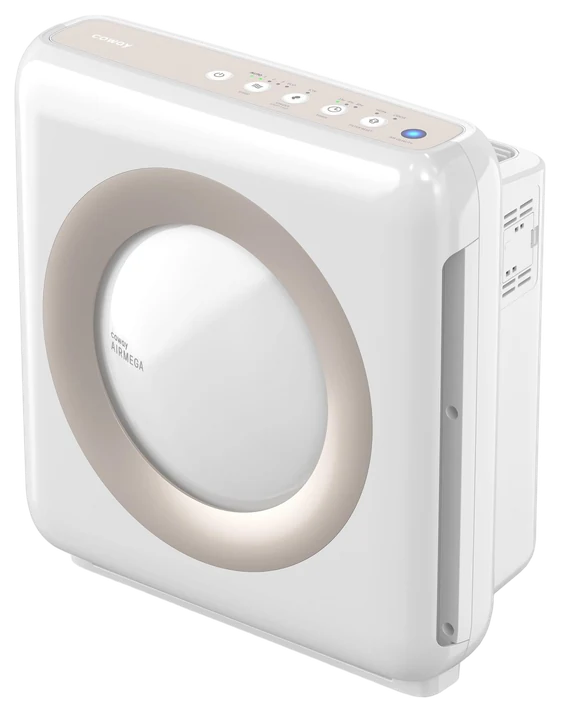
Coway AP-1512HH Mighty$145–170The Coway AP-1512HH Mighty, about $145–170 — clears a normal-sized room fast, and its filters cost about half what the fashionable brands charge.Check price
Sleeping next to it
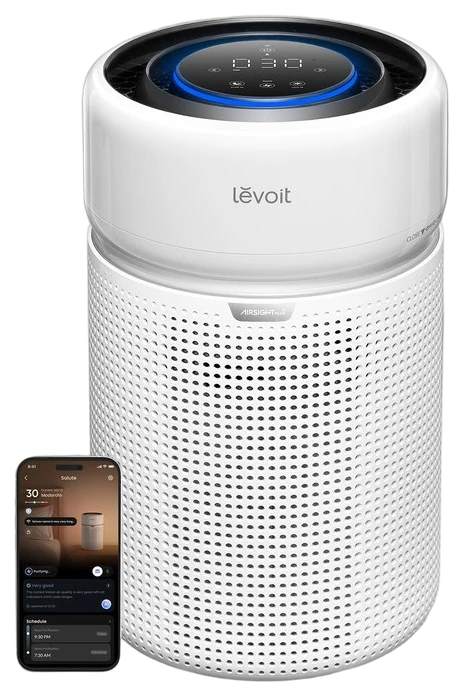
LEVOIT Eleva 300X Smart Air Purifier$120–150Levoit Eleva 300X, $120–150 — quiet enough on its lowest speed.Check price
Air purifiers are one of the few gadget categories with hard science: HEPA filtration measurably removes allergens, smoke, and dust. What varies is noise, filter cost, and honesty about room size. We compared lab tests and long-term reviews to sort it out.
Not sure which fits you? Answer two questions
Right for you?
Which pick is right for you?
Two quick questions. The answer is the guide’s own reason for one of its picks.
How we choseWhat we compared, and how we rank
We compiled CADR lab measurements, filter-cost-per-year math, and long-term owner reviews, prioritizing AHAM-verified performance over marketing room-size claims. Prices are always moving, so every button and link pulls the live listing.
How we rank
Published specifications, verified owner reviews, and independent safety or standards data where it applies — weighted the same for every pick, never sponsored placement.
What changed2 dated notes · latest 25 September 2026
CorrectedThis guide’s short answer recommended the Coway AP-1512HH Mighty, but its ranking put the Levoit Eleva 300X first. The Coway AP-1512HH Mighty now leads the ranking, so the two agree. No product or price changed.
CorrectedThe Levoit Core 300S is no longer sold new. Its successor, the Levoit Eleva 300X, replaces it as the bedroom pick at about $120–150.
Dated notes already published on this page, newest first. Every correction we make is logged on the corrections page.
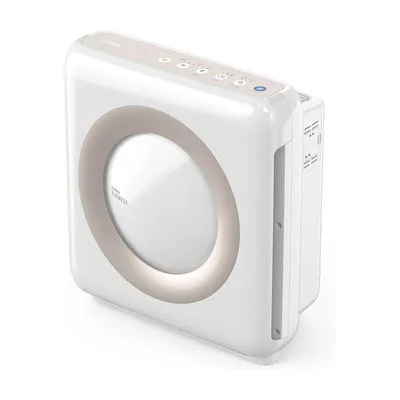
The Coway Mighty has topped Wirecutter’s testing for roughly a decade straight, an eternity in gadget years, because nothing at its price matches its measured clean-air delivery, and owners routinely report units still running past year five.
Coway publishes AHAM Verified CADR scores of 246 for dust, 240 for pollen, and 233 for smoke, numbers independently tested rather than self-reported, and that verified rating is what lets it claim proper coverage up to 361 square feet. Measured noise runs from about 24 decibels on its lowest setting to the high 50s on turbo. Maintenance is straightforward: the washable pre-filter needs a rinse every two weeks, the deodorization filter lasts about six months, and the True HEPA layer itself is rated for a full year before replacement, according to Coway’s owner’s manual.
The eco auto mode shuts the fan off entirely when air stays clean, a real electricity saver no rival matches at the price, and the true HEPA plus carbon combination handles allergens and everyday odors alike. It is, reviewers agree, the correct answer for living rooms.
Strengths
Decade-long testing champion
Proven five-plus-year longevity
Eco mode saves real power
Strong CADR per dollar
Tradeoffs
Dated plastic looks
Bright indicator light
No app, buttons only
Pick 2 of 5: No. 2Best for bedrooms~$120–150
2
LEVOIT Eleva 300X Smart Air Purifier
Budget pickBest for bedrooms
The bedroom default
Get it if the bedroom is the room you want cleaned and near-silence at night is the deciding spec.
Skip it if you’re covering a living area, size up to the picks below.
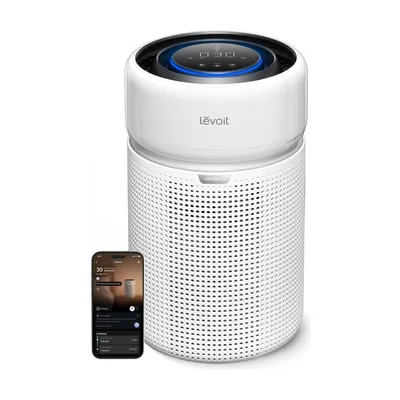
The Levoit Eleva 300X is the champion pick here for the same reason its predecessor was: it nails the bedroom brief. A sleep mode that drops to 20 decibels, a compact cylinder that fits a nightstand corner, and the VeSync app now adds real-time air-quality readings and overnight tracking instead of just a schedule.
On paper, the numbers back up the pick. Levoit’s AHAM Verified CADR for the Eleva 300X runs 161 CFM across smoke, dust and pollen, enough to properly clean a room up to about 250 square feet, ahead of Levoit’s older Core 300S on every published spec. The filter setup changed with it: a sealed HEPA layer rated for up to two years ($39.99) is now separate from an activated-carbon filter rated six to twelve months ($19.99 to $34.99), so plan on roughly $20 to $35 a year for carbon on top of the amortized HEPA cost.
The auto mode is still the daily magic: its sensor reacts visibly when you make the bed or the pollen count spikes, ramping and settling on its own. True HEPA filtration covers the allergy fundamentals, and at around $120–150 on Amazon, it’s the same bedroom-first case its predecessor made, just with better numbers behind it.
Strengths
Sleep mode as low as 20dB
Responsive auto mode
Higher verified CADR and coverage
Nightstand-friendly size
Tradeoffs
Bedroom-sized coverage only
Separate HEPA and carbon filters to track
App is optional at best
Pick 3 of 5: No. 3Best for pet homes
3
Winix 5510
Best for pet homes
The pet-home specialist
Get it if pets and their smells are the reason you’re shopping.
Skip it if odors aren’t the issue, the Coway edges pure performance.
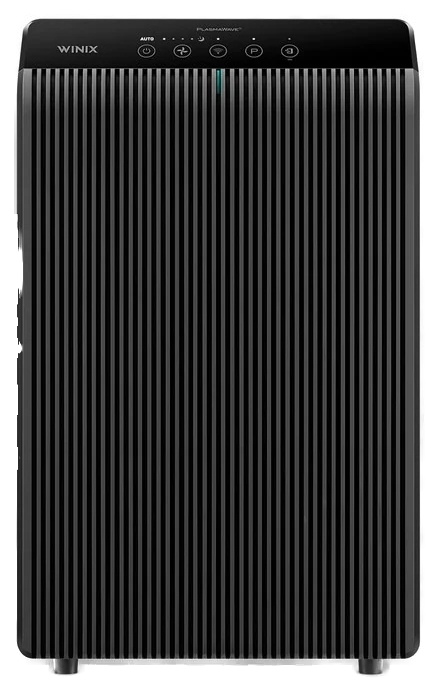
The Winix 5500-2 earned its cult following on one detail, and the 5510 update keeps it: the odor-eating carbon layer is its own replaceable panel, so saturating it with dander and cooking smells does not mean buying a whole new filter stack.
The numbers explain why: Winix rates the 5510 at 252 CADR for dust, 253 for smoke, and 247 for pollen, AHAM Verified figures that translate to real coverage of roughly 392 square feet, well above what a bedroom-sized unit offers. Noise sits around 27 to 30 decibels on the lowest setting, climbing into the high 50s or low 60s at full speed, so it can run all day without becoming background irritation.
The tradeoff for that carbon capacity is upkeep: Winix recommends replacing the activated carbon filter roughly every three months in a house with pets, versus the True HEPA element’s longer service life, a real but modest maintenance rhythm.
For homes where the purifier’s job is “make it smell like no one owns three cats,” that carbon mass is the difference. Thin coated pads on rivals can’t compete. True HEPA handles the dander itself, auto mode does the thinking, and app control is new to this generation.
Strengths
Carbon layer for real odor control
Lowest running costs for pet homes
True HEPA + responsive auto
App control added this gen
Tradeoffs
Plain appliance styling
PlasmaWave divides opinions
Mid-size room coverage
Also on the shortlist
Two more, in brief
Pick 4 of 5: No. 4Best for big rooms
4
Levoit Vital 200S
Best for big rooms
Big-room coverage without big-room pricing
Get it if an open-plan space needs one properly sized cleaner.
Skip it if a bedroom is the mission. The Eleva 300X costs meaningfully less.
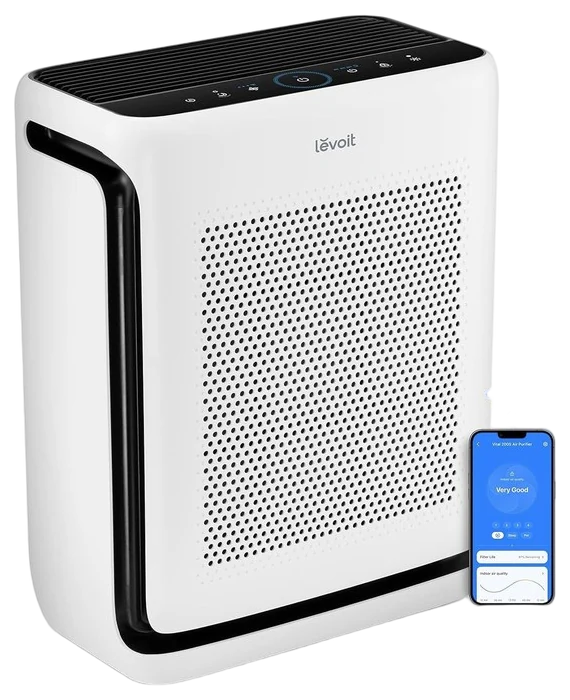
The Levoit Vital 200S is the answer when one room becomes three: well above the Eleva 300X’s clean-air delivery, covering about 380 square feet properly: open-plan kitchens, living-dining combos, primary suites.
AHAM Verifide testing backs up that room-size jump: the certified CADR here sits far above the Eleva 300X’s rating, which is how Levoit justifies the larger footprint. Noise ranges from about 24 decibels on its quietest setting, quiet enough for a primary bedroom, up to the mid-50s on turbo when it is working through a dusty room. The Vital 200S-RF filter stacks a washable pre-filter, an H13 true HEPA layer, and activated carbon in one cartridge, and Levoit rates it for six to twelve months of service depending on use, a longer stretch than many rival cartridges manage.
The washable pre-filter is the pet-home detail (it catches hair before it clogs the HEPA layer, stretching filter life) and pet mode runs harder at floor level where dander lives. The app and auto mode carry over from its small sibling.
Get it if an open-plan space needs one properly sized cleaner.
Skip it if a bedroom is the mission. The Eleva 300X costs meaningfully less.
The Levoit Vital 200S is the answer when one room becomes three: well above the Eleva 300X’s clean-air delivery, covering about 380 square feet properly: open-plan kitchens, living-dining combos, primary suites.
Read the full case
AHAM Verifide testing backs up that room-size jump: the certified CADR here sits far above the Eleva 300X’s rating, which is how Levoit justifies the larger footprint. Noise ranges from about 24 decibels on its quietest setting, quiet enough for a primary bedroom, up to the mid-50s on turbo when it is working through a dusty room. The Vital 200S-RF filter stacks a washable pre-filter, an H13 true HEPA layer, and activated carbon in one cartridge, and Levoit rates it for six to twelve months of service depending on use, a longer stretch than many rival cartridges manage.
The washable pre-filter is the pet-home detail (it catches hair before it clogs the HEPA layer, stretching filter life) and pet mode runs harder at floor level where dander lives. The app and auto mode carry over from its small sibling.
Strengths
About 380 sq ft coverage
Washable pre-filter extends HEPA life
Floor-level pet mode
Trusted Levoit auto + app
Tradeoffs
Larger physical footprint
Bigger filters, bigger costs
Noisier at maximum than small units
Pick 5 of 5: No. 5Best fan hybrid~$550
5
Dyson Purifier Cool
Upgrade pickBest fan hybrid
The design piece that also purifies
Get it if you want one beautiful object that cools and cleans.
Skip it if filtration per dollar is the metric, Coway, easily.
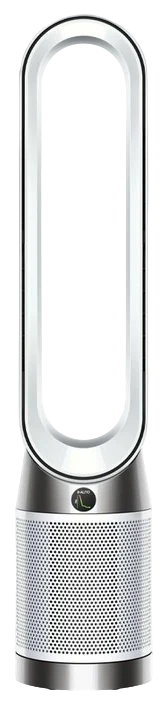
Judged purely on clean air per dollar, the Dyson Purifier Cool loses to everything above. That’s the disclosure this guide owes you. What it offers instead is a different product: a useful bladeless fan, a live air-quality display, and the only purifier here you’d happily put in the middle of a room.
Dyson doesn’t publish a CADR number the way its rivals do, a real transparency gap worth flagging, but the Purifier Cool’s fully sealed HEPA H13 filtration is rated to capture 99.97 percent of particles down to 0.3 microns and 99.95 percent down to 0.1 microns, per Dyson’s own published spec sheet. The combined HEPA and activated carbon filter handles allergens and household odors in one cartridge. It also carries Energy Star certification, notable for a machine that doubles as a fan and can run for hours at a stretch.
The display changes behavior in a way specs don’t capture: seeing particulates spike while cooking converts households to believers. As a summer fan it earns daily use the boxy rivals never get, and the build quality is Dyson-typical.
Get it if you want one beautiful object that cools and cleans.
Skip it if filtration per dollar is the metric, Coway, easily.
Judged purely on clean air per dollar, the Dyson Purifier Cool loses to everything above. That’s the disclosure this guide owes you. What it offers instead is a different product: a useful bladeless fan, a live air-quality display, and the only purifier here you’d happily put in the middle of a room.
Read the full case
Dyson doesn’t publish a CADR number the way its rivals do, a real transparency gap worth flagging, but the Purifier Cool’s fully sealed HEPA H13 filtration is rated to capture 99.97 percent of particles down to 0.3 microns and 99.95 percent down to 0.1 microns, per Dyson’s own published spec sheet. The combined HEPA and activated carbon filter handles allergens and household odors in one cartridge. It also carries Energy Star certification, notable for a machine that doubles as a fan and can run for hours at a stretch.
The display changes behavior in a way specs don’t capture: seeing particulates spike while cooking converts households to believers. As a summer fan it earns daily use the boxy rivals never get, and the build quality is Dyson-typical.
Strengths
Real bladeless fan + purifier
Live air-quality display
Room-centerpiece design
Dyson build quality
Tradeoffs
Weakest clean-air-per-dollar here
Premium filter costs
Fan is the point, know that
CADR — not the room size printed on the box — is the spec that determines performance.
Match CADR to your room: look for AHAM-verified numbers high enough to cycle your room’s air 4-5 times an hour.
True HEPA (H13-rated): matters for allergies and pets — a “HEPA-type” filter traps far less.
Noise at low speed: check the decibel rating so a bedroom unit won’t keep you up overnight.
Price tiers: compact bedroom units are cheapest; larger true-HEPA models with real AHAM ratings cost more; past that you’re usually paying for a design hybrid, not better filtration. Budget for ongoing filter costs too.
Honeywell HPA300 — loud on high speed, with pricier ongoing filter costs than the Coway pick.
Molekule Air Pro (discontinued) — priced at a premium, but independent testing found its PECO tech underperforms HEPA.
Blueair Blue Pure 211+ — well-reviewed, but its “HEPASilent” filter isn’t true HEPA like this list’s picks.
GermGuardian AC4825 — no AHAM-verified CADR; independent testing found real-world performance well below rivals.
Last updated Aug 15, 2026. Prices re-verified Aug 2, 2026. Spot something out of date? We log every correction publicly — see the log.
Air purifier FAQs
6 common questions, answered.
Do air purifiers help with allergies?
Yes. This is one of the best-evidenced gadget categories. True-HEPA filtration measurably reduces airborne pollen, dander, and dust, and the EPA’s guidance on air cleaners notes several studies showing improvement in allergy and asthma symptoms — though the agency cautions the improvement is often modest and not felt by every user.
What size air purifier do I need?
Match AHAM-verified coverage to your room and ignore the marketing number, which often assumes one air change per hour, too slow. Rule of thumb: a purifier rated near your room’s size on its verified spec cleans it 4–5 times per hour, which is what allergy guidance recommends.
How often do filters really need replacing?
HEPA filters: every 6–12 months depending on run time and air quality; carbon layers sooner if odors are the target. Budget $30–80 per year and check it before buying, filter cost divided into the sticker price is the real price of a purifier.
Should I run an air purifier all day?
Yes. That’s how they work. Clean air isn’t a state you achieve; it’s an equilibrium you maintain against continuous new dust, dander, and infiltration. Auto modes solve the guilt: they idle near-silent at good air and ramp when cooking or pollen spikes. Power draw is trivial, these sip 5–50 watts, pennies per day. Turn it off only when you leave for days.
Where should I put an air purifier?
The room you breathe in most, which for most people means the bedroom, eight hours a night. Give it a foot of clearance from walls, keep it off the floor’s dustiest corner, and resist tucking it behind furniture that blocks intake. Whole-home coverage from one unit is marketing; one right-sized purifier per important room beats one oversized unit in a hallway every time.
Do purifiers help with smoke and wildfire season?
Meaningfully, yes. HEPA filtration is the EPA-recommended standard defense for smoke particles, and units with real carbon mass (the Winix and Coway picks) also cut the smell. During smoke events, run high with windows sealed, and expect filters to age faster; a spare filter in the closet is wildfire-country wisdom. For chronic smoke exposure, size up a room class. CADR headroom is what buys clean air during spikes.
Sources
Who the write-ups above lean on, and where each one is cited.
WirecutterCited for Coway AP-1512HH Mighty.
AHAMCited for 4 of the 5 picks, and in the FAQ and the buying advice.
ENERGY STARCited for Dyson Purifier Cool, and in the buying advice.
23Sep 2026Correction, 23 September 2026The Levoit Core 300S is no longer sold new. Its successor, the Levoit Eleva 300X, replaces it as the bedroom pick at about $120–150.Every correction we’ve made ›
25Sep 2026Correction, 25 September 2026This guide’s short answer recommended the Coway AP-1512HH Mighty, but its ranking put the Levoit Eleva 300X first. The Coway AP-1512HH Mighty now leads the ranking, so the two agree. No product or price changed.Every correction we’ve made ›
New guides, re-ranked picks and the month's notable changes. No weekly filler, ever.
Unsubscribe any time. Your address goes to our newsletter provider and nowhere else — see our privacy policy.
Manage Consent
To provide the best experiences, we use technologies like cookies to store and/or access device information. Consenting to these technologies will allow us to process data such as browsing behavior or unique IDs on this site. Not consenting or withdrawing consent, may adversely affect certain features and functions.
Functional
Always active
The technical storage or access is strictly necessary for the legitimate purpose of enabling the use of a specific service explicitly requested by the subscriber or user, or for the sole purpose of carrying out the transmission of a communication over an electronic communications network.
Preferences
The technical storage or access is necessary for the legitimate purpose of storing preferences that are not requested by the subscriber or user.
Statistics
The technical storage or access that is used exclusively for statistical purposes.The technical storage or access that is used exclusively for anonymous statistical purposes. Without a subpoena, voluntary compliance on the part of your Internet Service Provider, or additional records from a third party, information stored or retrieved for this purpose alone cannot usually be used to identify you.
Marketing
The technical storage or access is required to create user profiles to send advertising, or to track the user on a website or across several websites for similar marketing purposes.