The Best Water Filters, Compared:Pitcher, Under-sink and Bottle
Water filters are sold on fear and bought on taste. We compared NSF certifications, the only claims that count, plus filter-cost math across four formats to find what is actually worth installing.
By the BYB Editorial Team
Published July 28, 2026 · Updated · Prices checked OctoberOct 5, 2026
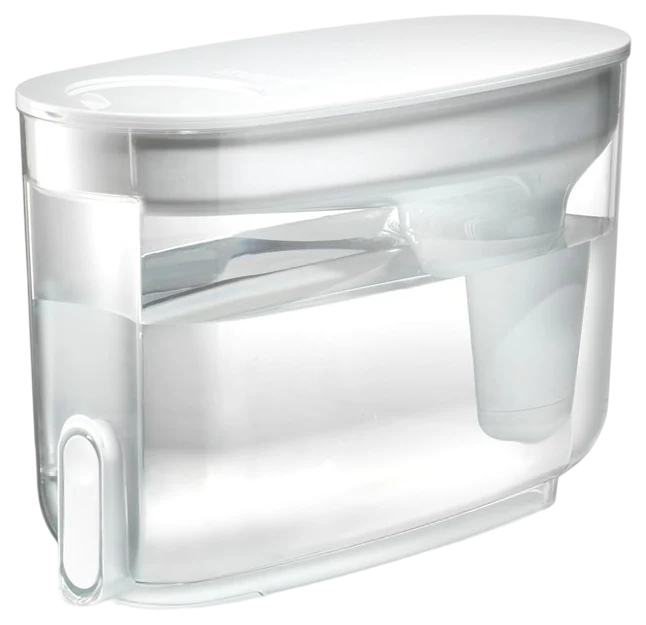
LifeStraw Home Dispenser$50–65The LifeStraw Home Dispenser, $50–65 — the format that fits your kitchen matters more than the filter media everyone argues about, and every pick here is NSF-certified for a named contaminant.Check price
Cheaper entry
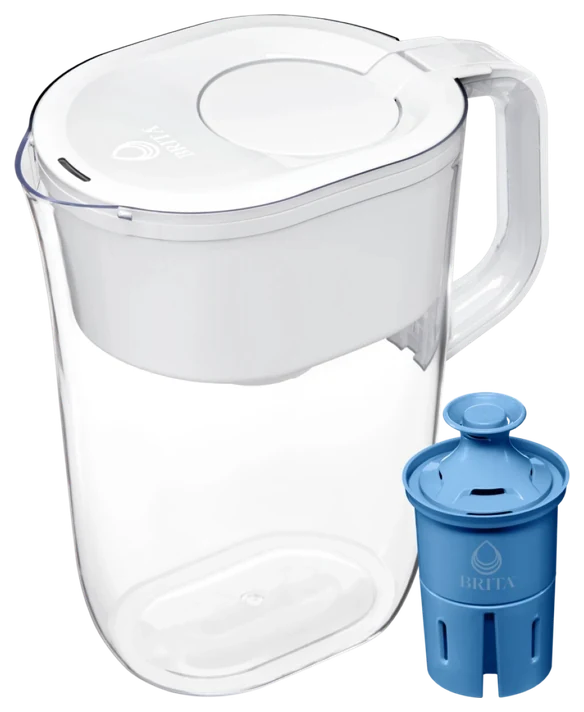
Brita Large 10-Cup Elite Water Filter Pitcher$32–41Brita Elite pitcher, $32–41.Check price
Skip
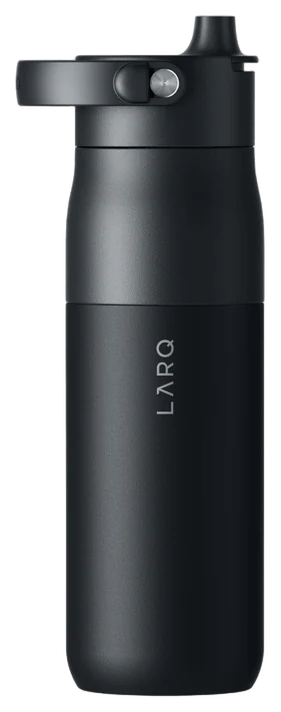
The LARQ PureVis 2, $130–140 — it’s a bottle, not a household fix, unless you drink away from home.
Water filters are sold on fear and bought on taste. We compared NSF certifications, the only claims that count, plus filter-cost math across four formats to find what is actually worth installing.
How we choseWhat we compared, and how we rank
We prioritized NSF/ANSI-certified reduction claims over marketing language, and computed per-gallon filter costs, the real price of ownership. Prices are always moving, so every button and link pulls the live listing.
How we rank
Published specifications, verified owner reviews, and independent safety or standards data where it applies — weighted the same for every pick, never sponsored placement.
What changed2 dated notes · latest 25 September 2026
CorrectedThis guide’s short answer recommended the LifeStraw Home Dispenser, but its ranking put the Brita Elite pitcher first. The LifeStraw Home Dispenser now leads the ranking, so the two agree. No product or price changed.
CorrectedBrita doesn't sell the Tahoe pitcher with an Elite filter; the Tahoe ships with its Standard filter. The pick is now the Brita Large 10-Cup Elite pitcher at about $32–41.
Dated notes already published on this page, newest first. Every correction we make is logged on the corrections page.
LifeStraw brought its humanitarian membrane technology home, and the Home Dispenser carries the longest certification list in the fridge category: PFAS “forever chemicals,” lead, microplastics, even bacteria and parasites: the actual contaminant headlines.
If your filtering motivation is those headlines rather than taste, this is the dispenser that addresses them: membrane plus activated carbon, in a glass-look design that sits handsomely on a shelf or fridge door.
Price the filters before you buy, because they are the real recurring cost here. The membrane lasts about a year, but the carbon and ion-exchange stage is rated for 40 gallons, roughly two months, so it needs replacing about six times a year against Brita’s twice. At $50–65 on Amazon, it’s the maximum-coverage pick short of plumbing anything, and each purchase funds the company’s clean-water programs.
Strengths
Longest certification list here
PFAS, lead, microplastics covered
Handsome glass-look design
Purchases fund clean-water work
Tradeoffs
Pricier two-stage refills
Unhurried flow rate
Hand-wash care
Pick 2 of 5: No. 2Best pitcher
2
Brita Large 10-Cup Elite Water Filter Pitcher
Best pitcher
The default, upgraded
Get it if you rent, or want certified filtering with zero commitment.
Skip it if the household drinks gallons daily. Go under-sink.
The Brita everyone knows quietly got serious: the Brita Elite pitcher pairs the familiar 10-cup fridge pitcher with a filter that’s NSF/ANSI 53 certified for lead reduction and lasts six months, versus the two-month standard cartridge that made pitcher ownership an errand. It also carries NSF/ANSI 42 for chlorine taste and odor and NSF/ANSI 401 for emerging contaminants, plus a reduction claim on microplastics.
That combination fixes both credibility and annoyance at once: real certification where it counts, and two filter changes a year instead of six. For renters, dorms, and taste-driven filtering, the format remains unbeatable: no installation, no landlord conversation, and no counter space claimed by an under-sink unit.
Pitchers filter slowly and hold ten cups, which heavy-drinking households outgrow. That’s the under-sink pick’s lane. At about $32–41, it is the rational default that finally earned the trust its brand always had.
Strengths
NSF-certified lead reduction
6-month filter, not 2
Zero-install renter format
Among the cheapest credible entries
Tradeoffs
Slow refill rhythm
10-cup capacity limits families
Fridge space required
Pick 3 of 5: No. 3Best under-sink
3
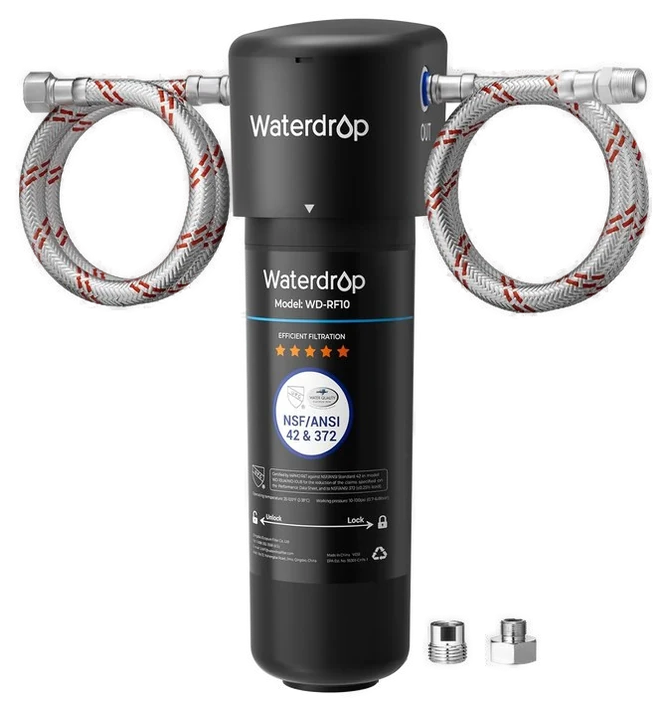
Waterdrop 10UA Under-Sink
Best under-sink
The invisible upgrade
Get it if you want filtered water to be automatic, forever.
Skip it if heavy-metal certifications drive you. Check LifeStraw.
The under-sink format is filtration for people done with pitchers, and the Waterdrop 10UA is its value champion: it plumbs inline to the cold tap, filters at full flow rate, and its cartridge handles roughly 8,000 gallons: a year-plus of family use.
Installation is a genuine fifteen-minute DIY job with the included hardware (no drilling, no plumber) and once it’s in, filtered water becomes what the tap does. No pitcher queue, no fridge space, no thinking.
It certifies for chlorine, taste, and particulates rather than the heaviest-metal list. Households chasing lead or PFAS coverage should verify the specific model’s sheet or look to the LifeStraw. At $42 to $70 depending on where you buy, it makes filtered water effortless, which is what makes it consumed.
Strengths
Filters at full tap flow
8,000-gallon annual cartridge
Real 15-minute DIY install
Invisible once installed
Tradeoffs
Lighter certification list
Cold line only
Renters may hesitate at plumbing
Also on the shortlist
Two more, in brief
Pick 4 of 5: No. 4Best on the go~$130–140
4
LARQ PureVis 2 Bottle
Upgrade pickBest on the go
The self-cleaning travel answer
Get it if your water life happens away from home.
Skip it if home is where you hydrate, the other formats serve better.
The LARQ PureVis solves the two problems of reusable-bottle life: airport-fountain taste (a carbon filter in the cap) and the biofilm funk every bottle develops (a UV-C light that self-sanitizes the interior on a timer).
It’s three products in one beautifully made object (insulated bottle, filter, sanitizer) and the difference shows in week three, when it still smells like nothing. Refill anywhere with confidence; the UV cycle runs itself every two hours.
Buy by generation. The original PureVis is $99 and has no filter at all, only the UV-C lamp; the PureVis 2 described here is $130 for 23oz or $140 for 34oz. It is premium-priced for a bottle at $130–140 on Amazon, with filter caps as a modest recurring cost, and it wants a USB charge every month or so. For commuters, travelers, and gym bags, it retires both the bottle brush and the bottled-water habit.
Skip it if home is where you hydrate, the other formats serve better.
The LARQ PureVis solves the two problems of reusable-bottle life: airport-fountain taste (a carbon filter in the cap) and the biofilm funk every bottle develops (a UV-C light that self-sanitizes the interior on a timer).
Read the full case
It’s three products in one beautifully made object (insulated bottle, filter, sanitizer) and the difference shows in week three, when it still smells like nothing. Refill anywhere with confidence; the UV cycle runs itself every two hours.
Buy by generation. The original PureVis is $99 and has no filter at all, only the UV-C lamp; the PureVis 2 described here is $130 for 23oz or $140 for 34oz. It is premium-priced for a bottle at $130–140 on Amazon, with filter caps as a modest recurring cost, and it wants a USB charge every month or so. For commuters, travelers, and gym bags, it retires both the bottle brush and the bottled-water habit.
Strengths
UV-C self-sanitizing interior
Filter fixes fountain taste
Insulated, well-made
Ends the bottle-funk cycle
Tradeoffs
Premium bottle pricing
Monthly-ish USB charging
Cap filters recur
Pick 5 of 5: No. 5Best at the tap~$28–34
5
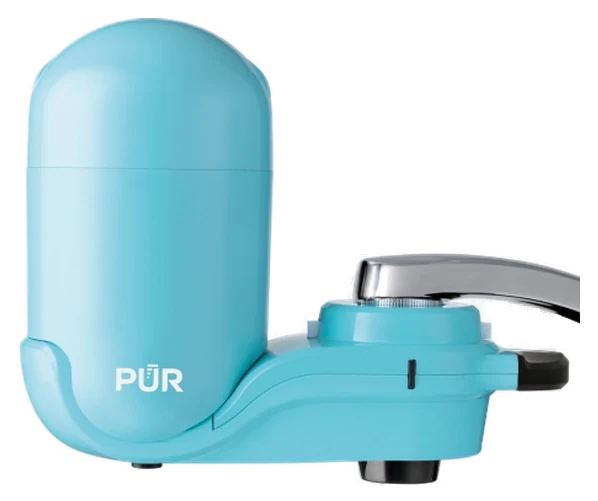
PUR PLUS Faucet Mount Filtration System
Budget pickBest at the tap
Filtered water at the tap, no plumbing required
Get it if you want filtered water straight from the kitchen tap, with no plumbing, no pitcher to refill and no counter space surrendered.
Skip it if you have a pull-out sprayer faucet, or you drink enough that swapping a cartridge every three months would wear thin.
The guide covers a pitcher, an under-sink unit, a gravity dispenser and a bottle. Every one of them puts a step between you and filtered water: refill, plumb, wait, or carry. The PUR PLUS screws onto the faucet and filters on demand, and it is the only pick here that gives you treated water straight from the tap without touching the plumbing.
PUR lists the PFM400H as NSF and WQA certified to reduce 70 contaminants, including lead and mercury, with the certifications covering NSF/ANSI standards 42, 53 and 401. The included RF-9999 cartridge is rated for 100 gallons or roughly three months, and replacement cartridges run about $15 each, so a year of them lands near $59.
The tradeoff is cartridge life and fit. A 100-gallon rating means four swaps a year, and the annual cartridge bill runs higher than the unit itself. It needs a faucet with an external aerator, so pull-out and handheld sprayers are out. If your faucet is one of those, or you rent and would rather not touch it, the Brita Elite pitcher does the same job more slowly.
Strengths
Mounts on the faucet without tools, plumbing work or counter space
NSF and WQA certified to reduce 70 contaminants including lead and mercury
Filtered water on demand, with no pitcher to refill and no waiting
Certification covers NSF/ANSI 401, which addresses pharmaceuticals and other emerging contaminants
Tradeoffs
The 100-gallon cartridge rating means roughly four replacements a year
A year of cartridges costs more than the system itself
Will not fit pull-out or handheld sprayer faucets, which rules out many modern kitchens
Carbon filtration, so it is not the answer for nitrates or arsenic
Get it if you want filtered water straight from the kitchen tap, with no plumbing, no pitcher to refill and no counter space surrendered.
Skip it if you have a pull-out sprayer faucet, or you drink enough that swapping a cartridge every three months would wear thin.
The guide covers a pitcher, an under-sink unit, a gravity dispenser and a bottle. Every one of them puts a step between you and filtered water: refill, plumb, wait, or carry. The PUR PLUS screws onto the faucet and filters on demand, and it is the only pick here that gives you treated water straight from the tap without touching the plumbing.
Read the full case
PUR lists the PFM400H as NSF and WQA certified to reduce 70 contaminants, including lead and mercury, with the certifications covering NSF/ANSI standards 42, 53 and 401. The included RF-9999 cartridge is rated for 100 gallons or roughly three months, and replacement cartridges run about $15 each, so a year of them lands near $59.
The tradeoff is cartridge life and fit. A 100-gallon rating means four swaps a year, and the annual cartridge bill runs higher than the unit itself. It needs a faucet with an external aerator, so pull-out and handheld sprayers are out. If your faucet is one of those, or you rent and would rather not touch it, the Brita Elite pitcher does the same job more slowly.
Strengths
Mounts on the faucet without tools, plumbing work or counter space
NSF and WQA certified to reduce 70 contaminants including lead and mercury
Filtered water on demand, with no pitcher to refill and no waiting
Certification covers NSF/ANSI 401, which addresses pharmaceuticals and other emerging contaminants
Tradeoffs
The 100-gallon cartridge rating means roughly four replacements a year
A year of cartridges costs more than the system itself
Will not fit pull-out or handheld sprayer faucets, which rules out many modern kitchens
Carbon filtration, so it is not the answer for nitrates or arsenic
Start with what’s in your water, then buy the format you’ll realistically keep up with.
Test your water first: get a test kit or read your utility’s report so you’re removing real contaminants, not marketing fears.
Look for the certification number: a specific NSF/ANSI standard for the contaminant means something; “filters 99%” with no standard behind it doesn’t.
Weigh the upkeep: pitchers are cheap upfront but clog and need frequent cartridge swaps, while under-sink systems cost more but run far longer.
Don’t over-buy: reverse osmosis pulls out the most, but it needs plumbing and wastes several gallons per clean gallon, so it’s overkill if your water is already decent.
ZeroWater Pitcher — it’s the only pitcher that gets your TDS meter to zero, but the filters clog and need swapping every 30 to 40 gallons, and stripping every mineral can leave the water tasting flat.
APEC ROES-50 Reverse Osmosis System — a top-rated 5-stage system that pulls lead, PFAS, and arsenic, but it needs under-sink plumbing and wastes about three gallons for every clean gallon.
Big Berkey — a popular gravity countertop unit, but its Black Berkey elements aren’t NSF-certified and the brand has been tangled in an EPA stop-sale and a class-action lawsuit, so we can’t recommend it right now.
Clearly Filtered Water Pitcher — strong independent lab results on PFAS and fluoride, but at around $110 with $55 filters and a 15-to-30-minute fill time, it’s slow and pricey for everyday use.
Water filter FAQs
6 common questions, answered.
Do I need to filter my tap water?
Municipal U.S. water is generally safe, but your building’s pipes can add lead, and taste/chlorine are legitimate reasons alone. Check your utility’s annual water report, then match a filter certified for whatever it flags. For many homes the answer is “for taste, and that’s fine.”
What does NSF certification mean?
It means an independent lab verified the filter removes the specific contaminant it claims, at the stated capacity. “Filters 99% of contaminants” without an NSF/ANSI standard number is marketing. Every pick above carries real certifications. Always check the claim sheet.
Pitcher or under-sink filter?
Pitchers win on zero installation and portability between rentals; under-sink wins on convenience, capacity, and per-gallon cost once installed. If you refill a pitcher more than twice a day, the under-sink math already favors switching.
How do I find out what’s in my tap water?
Two free routes: your utility’s annual Consumer Confidence Report (legally required, searchable by ZIP at EPA.gov) tells you what left the plant, and the EWG Tap Water Database translates it into plain English. What reports can’t see is your own building’s pipes, lead risk lives in pre-1986 plumbing, which is what at-home lead test strips ($15) settle in ten minutes. Test first, then buy the filter that matches what you find.
Do filters remove healthy minerals or fluoride?
Carbon filters, every pick here, leave minerals and fluoride essentially alone; they target lead, chlorine, PFAS, and friends while your calcium and magnesium pass through. Removing fluoride or dissolving everything to near-zero requires reverse osmosis, a different (pricier, slower, water-wasting) technology. For most households, carbon’s selective approach is the feature, not the limitation.
How often do I need to change filter cartridges?
On schedule, not on taste, by the time water tastes off, the filter has been exhausted for weeks, and a saturated carbon block can begin shedding what it caught. The picks here range from six months (Brita Elite) to a year-plus (Waterdrop’s 8,000 gallons). Set a phone reminder at install; it’s the entire maintenance burden of owning any of these, and the step everyone skips.
Sources
Who the write-ups above lean on, and where each one is cited.
NSFCited for Brita Elite Pitcher and PUR PLUS Faucet Mount Filtration System, and in the FAQ and the buying advice.
EWGCited in the FAQ.
23Sep 2026Correction, 23 September 2026Brita doesn’t sell the Tahoe pitcher with an Elite filter; the Tahoe ships with its Standard filter. The pick is now the Brita Large 10-Cup Elite pitcher at about $32–41.Every correction we’ve made ›
25Sep 2026Correction, 25 September 2026This guide’s short answer recommended the LifeStraw Home Dispenser, but its ranking put the Brita Elite pitcher first. The LifeStraw Home Dispenser now leads the ranking, so the two agree. No product or price changed.Every correction we’ve made ›
New guides, re-ranked picks and the month's notable changes. No weekly filler, ever.
Unsubscribe any time. Your address goes to our newsletter provider and nowhere else — see our privacy policy.
Manage Consent
To provide the best experiences, we use technologies like cookies to store and/or access device information. Consenting to these technologies will allow us to process data such as browsing behavior or unique IDs on this site. Not consenting or withdrawing consent, may adversely affect certain features and functions.
Functional
Always active
The technical storage or access is strictly necessary for the legitimate purpose of enabling the use of a specific service explicitly requested by the subscriber or user, or for the sole purpose of carrying out the transmission of a communication over an electronic communications network.
Preferences
The technical storage or access is necessary for the legitimate purpose of storing preferences that are not requested by the subscriber or user.
Statistics
The technical storage or access that is used exclusively for statistical purposes.The technical storage or access that is used exclusively for anonymous statistical purposes. Without a subpoena, voluntary compliance on the part of your Internet Service Provider, or additional records from a third party, information stored or retrieved for this purpose alone cannot usually be used to identify you.
Marketing
The technical storage or access is required to create user profiles to send advertising, or to track the user on a website or across several websites for similar marketing purposes.