The Best Wellness Gadgets of 2026 for Recovery, Sleep and Tracking
Wellness tech is where marketing outruns science fastest. We filtered for devices with actual clinical support or overwhelming long-term owner satisfaction. Six survived.
By the BYB Editorial Team
Published July 28, 2026 · Prices checked OctoberOct 5, 2026
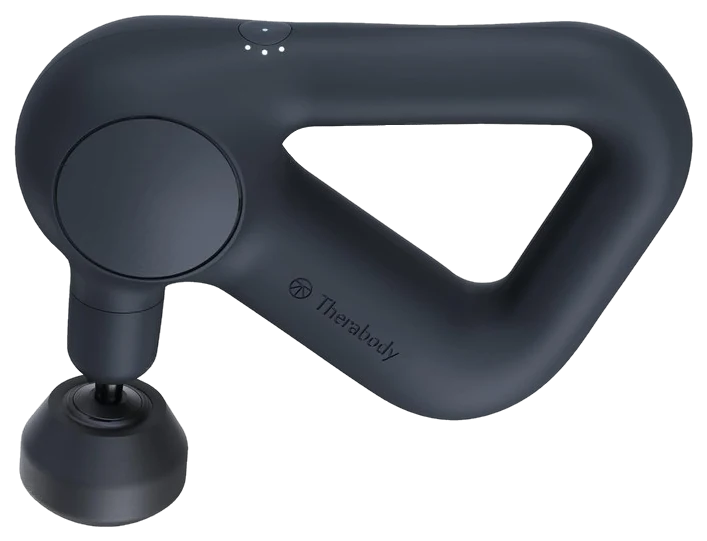
Therabody TheraGun$160–330The Therabody TheraGun, $160–330 by model — it survives month two because it attaches to a habit you already have.Check price
Want the deepest data
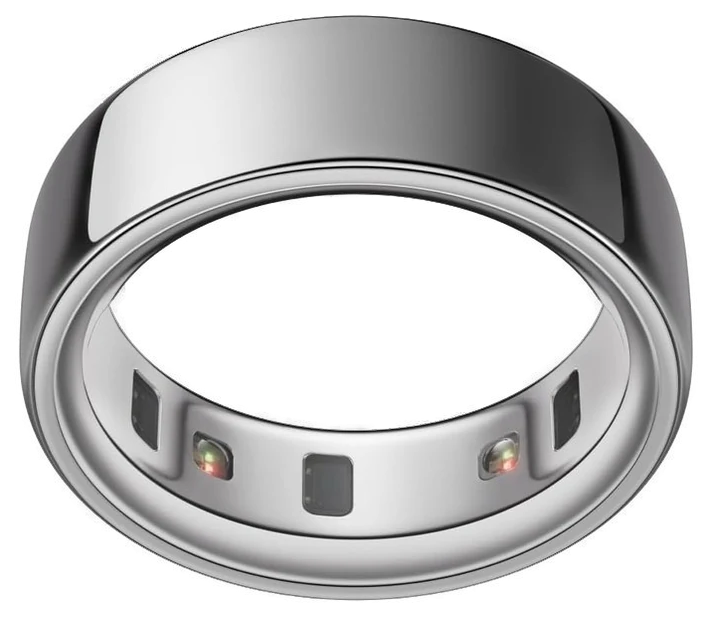
Oura Ring 4$300–400Oura Ring 4, $300–400 plus a subscription — the only recurring bill here.Check price
Skip
The RENPHO Eyeris ($50–60) — a screen-day treat, not a health device.
Wellness tech is where marketing outruns science fastest. We filtered for devices with actual clinical support or overwhelming long-term owner satisfaction. Six survived.
How we choseWhat we compared, and how we rank
We prioritized devices with peer-reviewed support or FDA clearance where applicable, cross-referenced with expert reviews and long-term owner ratings. Nothing here is medical advice, talk to a doctor about health concerns. Prices are always moving, so every button and link pulls the live listing.
How we rank
Published specifications, verified owner reviews, and independent safety or standards data where it applies — weighted the same for every pick, never sponsored placement.
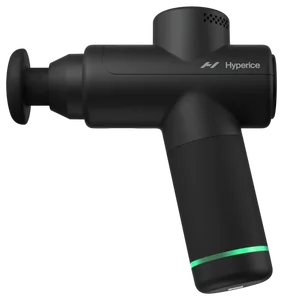
Massage guns went from locker-room curiosity to household standard in five years, and Therabody is the brand that did it, with actual sponsored research on soreness and range of motion rather than pure vibes.
Specs separate the lineup more than marketing copy does. The entry Relief manages 10mm amplitude and 20 pounds of stall force, enough for casual soreness but not deep tissue, while the Prime steps up to 16mm and the PRO pushes stall force to roughly 60 pounds for knots that fight back. Garage Gym Reviews, which tested the full current lineup, found the PRO’s battery delivers about 150 minutes per charge, with noise ranging roughly 50 to 77 decibels depending on speed. Weight climbs with power too, so shoppers prioritizing portability should look below the PRO.
The mid-range models hit the sweet spot: 16mm amplitude deep enough to matter for real training loads, brushless motors quiet enough for the couch, and the triangular grip that reaches your own back without assistance. Post-workout and end-of-desk-day are its natural habitats.
Strengths
Research-backed category leader
Deep 16mm professional amplitude
Quiet enough for couch use
Self-reach ergonomic grip
Tradeoffs
Budget guns cover casual needs
Premium pricing
Overkill without real training
Pick 2 of 6: No. 2Best health data~$300–400 + subscription
2
Oura Ring 4
Upgrade pickBest health data
The screenless health tracker
Get it if you want health data that gathers itself, no screen attached.
Skip it if subscriptions are a dealbreaker, a Garmin tracks free.
Oura’s bet, that people want health data without another screen, keeps winning converts, and the Oura Ring 4 is the mature version: sleep stages, heart-rate variability, and readiness scores with accuracy independent testing places near the top of consumer wearables.
A 2025 validation study in Physiological Reports, which ran five consumer wearables against an ECG reference across 536 nights of sleep, found Oura Ring Gen 4 posted the highest heart rate variability and resting-heart-rate accuracy of the group.
Sleep-stage detection is less precise: compared with polysomnography, deep sleep can run underestimated by up to 20 minutes and REM overestimated by up to 17 minutes, typical of any ring or wrist sensor reading movement and pulse rather than brainwaves. Battery life runs five to eight days per charge in real-world testing, though keeping blood oxygen sensing on trims roughly two days off that runway.
It disappears on your finger for a week per charge, which is the entire trick: no screen to check, no charging ritual every night, just a morning readiness briefing that quietly changes how you schedule hard days. Athletes and burnout-prone professionals are its twin fanbases.
Strengths
Top-tier sleep/HRV accuracy
Week-long battery, no screen
Readiness scores guide training
Invisible on a finger
Tradeoffs
Subscription effectively required
Premium total cost
No workout screen, by design
Pick 3 of 6: No. 3Best for sleep
3
Hatch Restore 3
Best for sleep
The sunrise alarm that fixes wake-ups
Get it if mornings are violent and the phone sleeps beside you.
Skip it if you wake fine, this solves a specific misery.
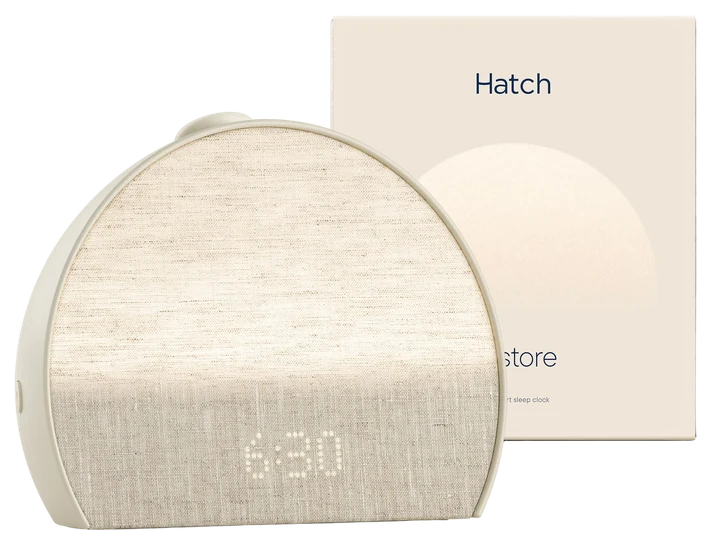
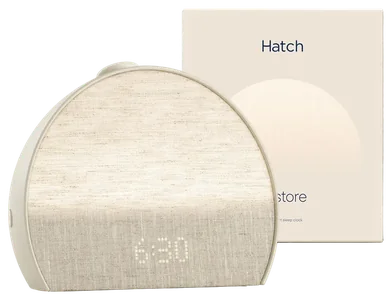
Light-based waking has solid circadian science behind it, and the Hatch Restore 3 packaged it into the bedside device with a cult following: gradual sunrise, a library of wind-down sounds, and, crucially, a reason to leave the phone charging in another room.
The Restore 3 ships with dozens of free sleep sounds and sunrise tones, with a larger library of guided meditations and sleep stories unlocked through the companion app. It runs on a continuous USB-C connection rather than battery, weighs about 1.27 pounds, and its Bluetooth link exists only to sync settings from your phone, not to stream Spotify or podcasts through the speaker. The sunrise sequence runs up to an hour, fading from amber to full brightness until the oversized Big Button silences it.
Waking mid-sunrise instead of mid-alarm feels different, and the phone-exile side effect may be the biggest sleep improvement of all.
Strengths
Circadian science, well packaged
Exiles the phone from bed
Two-week convert effect
Wind-down routines that stick
Tradeoffs
Optional subscription upsell
Bedside footprint
Heavy sleepers may need sound too
Also on the shortlist
Three more, in brief
Pick 4 of 6: No. 4Best passive tracking
4
Withings Body Smart
Best passive tracking
The scale that quietly builds a health record
Get it if you want trends without logging anything, ever.
Skip it if scale data stresses you. Skip the category entirely.
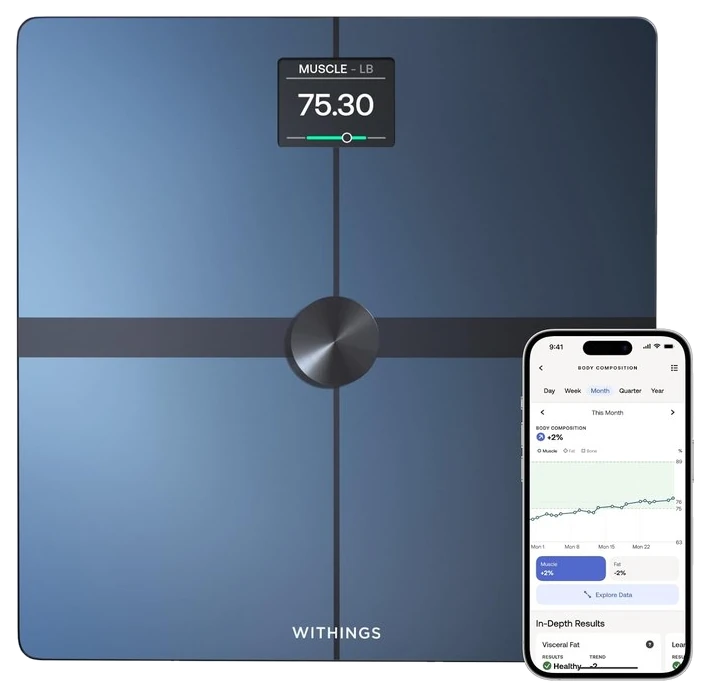
A scale you don’t think about beats a fitness app you must remember: step on the Withings Body Smart, and weight plus body-composition trends sync themselves to Apple Health or Google Fit, for every member of the household, automatically recognized.
Under the hood is multifrequency bioelectrical impedance analysis, sending a barely perceptible current through the feet to estimate body fat percentage, muscle mass, bone mass, visceral fat index, and basal metabolic rate alongside the weight reading, across a 9 to 440 pound range at 0.1 pound precision. Like any bioimpedance scale, its body-fat readings are rough estimates that can drift from a DEXA scan, the clinical gold standard, which is why single readings matter less than the trend line. Recognition works by weight proximity, prompting a lean left or right to confirm identity when household members land close together.
Withings has led this category’s reliability for a decade, and the trend view is the entire point: single weigh-ins lie, but the 90-day line tells the truth about whatever you’re trying. The data accumulates, which is why it works.
Get it if you want trends without logging anything, ever.
Skip it if scale data stresses you. Skip the category entirely.
A scale you don’t think about beats a fitness app you must remember: step on the Withings Body Smart, and weight plus body-composition trends sync themselves to Apple Health or Google Fit, for every member of the household, automatically recognized.
Read the full case
Under the hood is multifrequency bioelectrical impedance analysis, sending a barely perceptible current through the feet to estimate body fat percentage, muscle mass, bone mass, visceral fat index, and basal metabolic rate alongside the weight reading, across a 9 to 440 pound range at 0.1 pound precision. Like any bioimpedance scale, its body-fat readings are rough estimates that can drift from a DEXA scan, the clinical gold standard, which is why single readings matter less than the trend line. Recognition works by weight proximity, prompting a lean left or right to confirm identity when household members land close together.
Withings has led this category’s reliability for a decade, and the trend view is the entire point: single weigh-ins lie, but the 90-day line tells the truth about whatever you’re trying. The data accumulates, which is why it works.
Strengths
Zero-effort automatic tracking
Decade-long reliability lead
Multi-user auto-recognition
Trends beat single readings
Tradeoffs
Composition figures are estimates
App upsells Withings+
Wi-Fi setup occasionally fussy
Pick 5 of 6: No. 5Best screen-day recovery
5
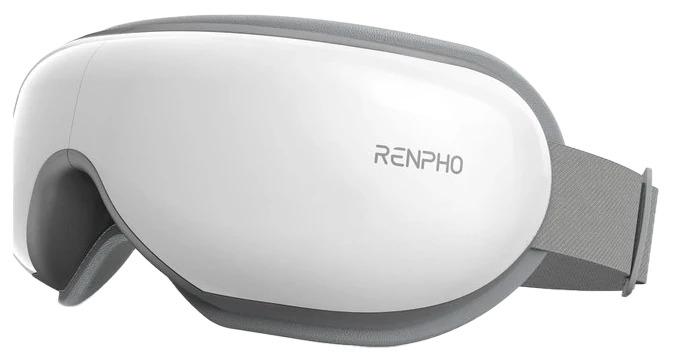
RENPHO Eyeris Eye Massager
Best screen-day recovery
The screen-strain wind-down
Get it if your eyes clock out hours before you do.
Skip it if eye conditions are in play, doctor first.
The RENPHO Eyeris is the most-reviewed product in its odd little category: warm compression and gentle rhythmic massage around the eyes for fifteen minutes at the end of a screen-heavy day.
Renpho’s current Eyeris 3 heats to a user-selectable 104 to 113 degrees Fahrenheit and adds three compression modes across three pressure levels, layering oscillating squeeze, rhythmic percussion, and heat rather than one fixed sensation like earlier models in this category. A 1500mAh battery charges in about ninety minutes over USB-C and covers roughly five sessions before needing the cord again.
The Eyeris 3’s wider eye cushion extends onto the temples, which helps with tension that isn’t confined to the eyes, plus a removable cooling gel insert as an alternative to heat on puffy mornings and voice commands for switching programs without fumbling for buttons with your eyes covered.
Tens of thousands of reviews converge on the same three use cases: tension headaches, tired dry-feeling eyes, and falling asleep faster afterward. It’s a modest device with outsized satisfaction scores, which is exactly the wellness-gadget profile worth buying. The fifteen-minute auto-shutoff makes it an easy nightly default, one that starts without deciding whether to stay awake for the whole cycle.
Get it if your eyes clock out hours before you do.
Skip it if eye conditions are in play, doctor first.
The RENPHO Eyeris is the most-reviewed product in its odd little category: warm compression and gentle rhythmic massage around the eyes for fifteen minutes at the end of a screen-heavy day.
Read the full case
Renpho’s current Eyeris 3 heats to a user-selectable 104 to 113 degrees Fahrenheit and adds three compression modes across three pressure levels, layering oscillating squeeze, rhythmic percussion, and heat rather than one fixed sensation like earlier models in this category. A 1500mAh battery charges in about ninety minutes over USB-C and covers roughly five sessions before needing the cord again.
The Eyeris 3’s wider eye cushion extends onto the temples, which helps with tension that isn’t confined to the eyes, plus a removable cooling gel insert as an alternative to heat on puffy mornings and voice commands for switching programs without fumbling for buttons with your eyes covered.
Tens of thousands of reviews converge on the same three use cases: tension headaches, tired dry-feeling eyes, and falling asleep faster afterward. It’s a modest device with outsized satisfaction scores, which is exactly the wellness-gadget profile worth buying. The fifteen-minute auto-shutoff makes it an easy nightly default, one that starts without deciding whether to stay awake for the whole cycle.
Strengths
Screen-strain wind-down that works
Category’s biggest review base
Heat + massage combination
Folds flat for travel
Tradeoffs
Comfort device, not treatment
Looks absurd (worn in private)
Bluetooth music is skippable
Pick 6 of 6: No. 6Best under $50~$30–40
6
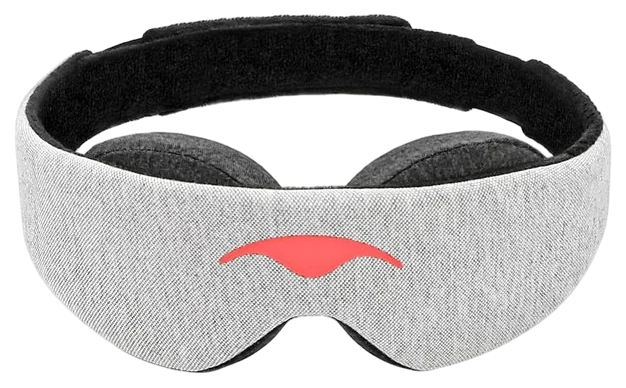
Manta Sleep Mask
Budget pickBest under $50
The blackout upgrade insomniacs swear by
Get it if light touches your sleep: streetlights, shifts, travel.
The Manta Sleep Mask’s contoured eye cups produce true blackout with zero pressure on the eyelids, the specific detail that converts people who “can’t sleep in masks,” because ordinary flat masks press and leak light.
The eye cups themselves are lined in Modal fabric, a moisture-wicking material soft enough not to irritate skin over repeated nights, while the head strap combines polycotton and polyester velour so it breathes rather than trapping heat against the scalp. Each cup is detachable and slides independently along the strap, with a roughly two-inch-wide cavity per eye, positioned and angled to whatever fits your face rather than a single molded shape for everyone.
Health Review Desk’s 90-night test of the mask found the strap, about 29 inches around with elastic give built in, is what lets it seal against light at the temples and nose bridge without the tightness that gives most masks headaches by morning.
Total darkness is the cheapest circadian upgrade available, and the Manta’s adjustable cups accommodate side sleepers, lash wearers, and midnight-shift schedules alike. Shift workers and travelers treat it as equipment, not accessory. The deep cups also mean you can blink freely, which is what makes long-haul flights and naps comfortable in it.
Get it if light touches your sleep: streetlights, shifts, travel.
Skip it if your bedroom is already cave-dark.
The Manta Sleep Mask’s contoured eye cups produce true blackout with zero pressure on the eyelids, the specific detail that converts people who “can’t sleep in masks,” because ordinary flat masks press and leak light.
Read the full case
The eye cups themselves are lined in Modal fabric, a moisture-wicking material soft enough not to irritate skin over repeated nights, while the head strap combines polycotton and polyester velour so it breathes rather than trapping heat against the scalp. Each cup is detachable and slides independently along the strap, with a roughly two-inch-wide cavity per eye, positioned and angled to whatever fits your face rather than a single molded shape for everyone.
Health Review Desk’s 90-night test of the mask found the strap, about 29 inches around with elastic give built in, is what lets it seal against light at the temples and nose bridge without the tightness that gives most masks headaches by morning.
Total darkness is the cheapest circadian upgrade available, and the Manta’s adjustable cups accommodate side sleepers, lash wearers, and midnight-shift schedules alike. Shift workers and travelers treat it as equipment, not accessory. The deep cups also mean you can blink freely, which is what makes long-haul flights and naps comfortable in it.
Strengths
True blackout, zero eye pressure
Converts mask skeptics
Side-sleeper friendly cups
Cheapest real sleep upgrade
Tradeoffs
Industrial bedroom aesthetics
Triple pharmacy-mask price
Hand-wash care
Wellness gadgets only pay off if you keep using them, so pick tools that fit your routine and answer a question you have.
Start with the metric you care about: Sleep, activity, heart rate, or stress. Pick a device built around the one thing you’ll check, rather than a gadget that tracks everything and overwhelms you.
Check for a subscription before you buy: Some trackers include their app for free, while others put the useful insights behind a monthly fee. Know which camp you’re buying into.
Mind the charging and wearing habit: A ring or band you have to remember to charge and wear every day only helps if it fits your life; something passive like an under-mattress sleep tracker asks nothing of you.
The common mistake, buying data you won’t act on: More numbers aren’t the goal. A device that nudges one habit you’ll change beats a dashboard you glance at once and forget.
Whoop 5.0 — a screenless band with detailed sleep and strain tracking, but it only works with a paid membership, so there’s no version you can use without an ongoing fee.
Eight Sleep Pod 4 — a mattress cover that warms and cools each side of the bed, but it’s a several-thousand-dollar system with its own subscription, well beyond a starter gadget.
Withings ScanWatch 2 — a handsome hybrid watch with a month of battery and ECG, but it overlaps with the trackers already here and its best coaching sits behind a premium plan.
Muse S (Gen 2) — an EEG headband for meditation and sleep feedback, but it’s a niche, pricier tool that asks you to wear a band to bed, which won’t suit everyone.
Wellness device FAQs
6 common questions, answered.
Do massage guns help recovery?
The research supports modest, real benefits: reduced perceived soreness and short-term range-of-motion improvement. They will not add muscle or replace mobility work, but as a five-minute post-workout ritual, the effect is real and the habit sticks.
Is the Oura Ring better than a smartwatch for health?
For sleep and recovery data, generally yes. You’ll wear it to bed, battery lasts a week, and there’s no screen feeding you notifications. For workouts and GPS, a watch wins. Many people run both: watch by day, ring always.
What’s the best sleep gadget under $50?
The Manta mask. True blackout has an immediate, measurable effect on sleep quality, and it requires no app, charger, or subscription: the rare wellness product with zero failure modes.
Which of these improves sleep the most?
Ranked by our assessment of sleep impact per dollar: the Manta mask (total darkness is the cheapest circadian win), then the Hatch (light-based waking plus the phone-out-of-the-bedroom effect), then the Oura (it doesn’t improve sleep: it makes you negotiate with your own data, which changes behavior). The hierarchy: darkness and consistent wake times outperform every gadget; these tools mostly enforce those two things.
Do I need a subscription for these devices?
Two of six: the Oura’s subscription is genuinely required for its insights (the ring is half-useless without it, budget it as part of the price), and Hatch offers optional premium content most owners skip. The scale, massage gear, and mask are subscription-free forever. The pattern worth noticing: data products monetize monthly, hardware products don’t. Decide which relationship you want before buying.
Wellness gadgets or gym membership. Where does money go first?
The boring truth: movement beats monitoring, so a membership you’ll use (or running shoes) outranks everything here. These gadgets earn their place around the edges. Recovery from training, sleep that makes training possible, data that keeps habits honest. The Theragun assumes you’re sore from something. Buy the workout first, the recovery second, and the tracking third; reversed order is how drawers fill.
Sources
Who the write-ups above lean on, and where each one is cited.
New guides, re-ranked picks and the month's notable changes. No weekly filler, ever.
Unsubscribe any time. Your address goes to our newsletter provider and nowhere else — see our privacy policy.
Manage Consent
To provide the best experiences, we use technologies like cookies to store and/or access device information. Consenting to these technologies will allow us to process data such as browsing behavior or unique IDs on this site. Not consenting or withdrawing consent, may adversely affect certain features and functions.
Functional
Always active
The technical storage or access is strictly necessary for the legitimate purpose of enabling the use of a specific service explicitly requested by the subscriber or user, or for the sole purpose of carrying out the transmission of a communication over an electronic communications network.
Preferences
The technical storage or access is necessary for the legitimate purpose of storing preferences that are not requested by the subscriber or user.
Statistics
The technical storage or access that is used exclusively for statistical purposes.The technical storage or access that is used exclusively for anonymous statistical purposes. Without a subpoena, voluntary compliance on the part of your Internet Service Provider, or additional records from a third party, information stored or retrieved for this purpose alone cannot usually be used to identify you.
Marketing
The technical storage or access is required to create user profiles to send advertising, or to track the user on a website or across several websites for similar marketing purposes.