The Best Massage Guns and Recovery Tools, Weighed Against the Evidence
Recovery tools went mainstream with wildly uneven science attached. We sorted the percussion guns, rollers and back devices by what research supports, and by what thousands of sore users report.
By the BYB Editorial Team
Published July 28, 2026 · Prices checked OctoberOct 5, 2026
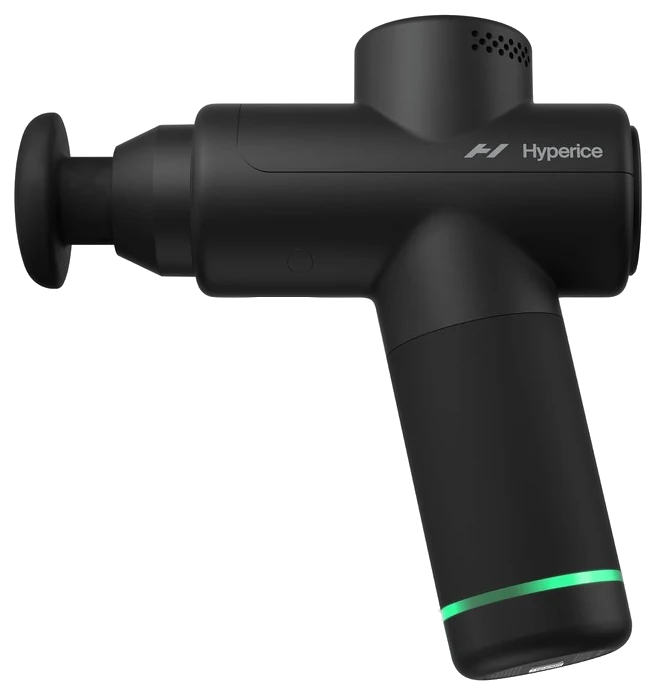
Hyperice Hypervolt Go 2$139The Hyperice Hypervolt Go 2, about $139 — percussion is one of only two things in this guide with real evidence behind it.Check price
The evidence pick
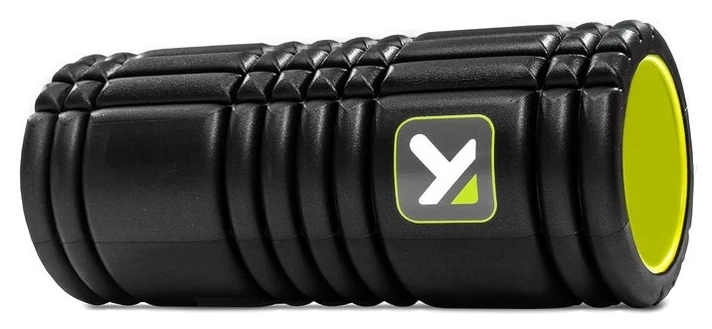
TriggerPoint GRID$40TriggerPoint GRID, $40 — the cheapest pick here is also the best-supported one.Check price
The comfort upgrade
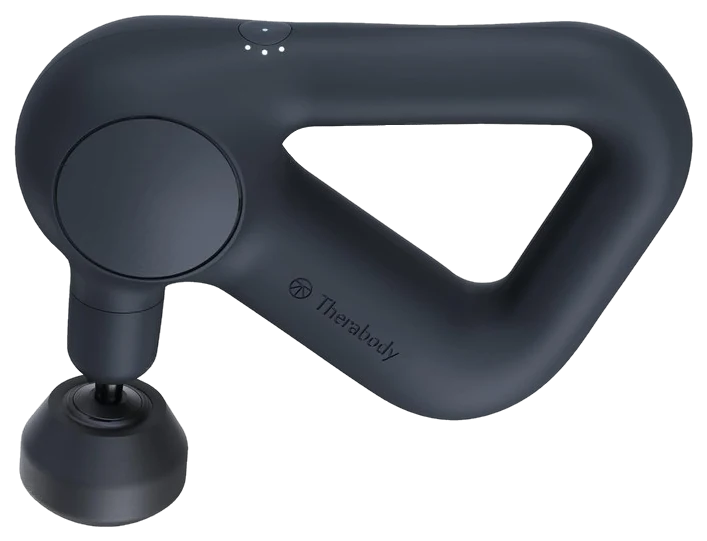
Therabody TheraGun$160–330Therabody TheraGun, $160–330 by model — comfort is a perfectly good reason to spend. Just don’t pay evidence prices for it.Check price
Recovery tools went mainstream with wildly uneven science attached. We sorted the percussion guns, rollers and back devices by what research supports, and by what thousands of sore users report.
How we choseWhat we compared, and how we rank
We compiled sports-medicine research on percussion and foam rolling, plus durability and long-term-use reviews. Prices are always moving, so every button and link pulls the live listing.
How we rank
Published specifications, verified owner reviews, and independent safety or standards data where it applies — weighted the same for every pick, never sponsored placement.
Hyperice supplies professional sports training rooms, and the Hypervolt Go 2 packs that pedigree into the size people carry: a pound and a half, office-quiet, and strong enough for quads.
The right-sizing is the insight. Full-size guns mostly add weight that keeps them home, while the Go 2 lives in gym bags and desk drawers, which is where recovery happens. The glide motor’s quietness makes couch use socially acceptable.
Its amplitude sits below the full Theraguns. Serious lifters chasing deep glute work will feel the ceiling, and attachments are minimal. At about $139 on Amazon, it’s the percussion pick for most bodies and most lives.
Hyperice doesn’t publish amplitude or stall-force numbers, but third-party testing puts the Go 2 around 12mm of amplitude and roughly 10 to 15 pounds of stall force, on the low end for the category, which lines up with reviewers’ most common complaint: the motor visibly slows once you lean into it with real pressure. Three speed settings top out around 3,200 percussions per minute, and the 3-hour battery covers a normal week of use before it needs the included charging stand.
Strengths
Pro training-room pedigree
Portable pound-and-a-half
Office-quiet operation
The size that gets used
Tradeoffs
Less amplitude than full-size
Two attachments only
Case costs extra
Pick 2 of 5: No. 2Best under $70~$40–70
2
RENPHO Massage Gun
Budget pickBest under $70
The budget percussion workhorse
Get it if you want to find out whether percussion becomes a habit before paying premium-brand money.
Skip it if quiet and portability are the point, Hypervolt Go.
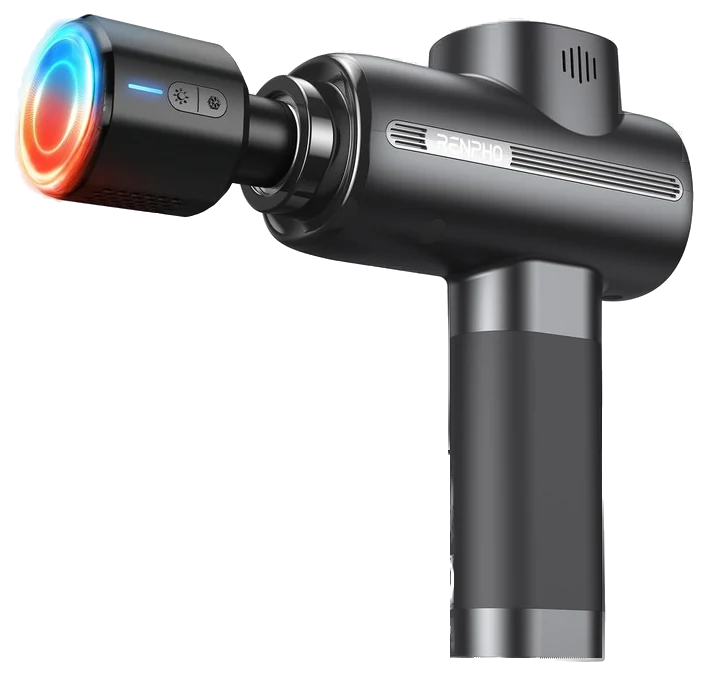
RENPHO’s guns are the review-volume champions of the budget tier: real amplitude, a case full of attachments, and reliability reports that embarrass some premium brands: the pattern across hundreds of thousands of ratings.
At this price the entire risk of trying percussion therapy disappears: if it becomes a daily habit, upgrade later with knowledge; if it doesn’t, you’re out a dinner. Most owners discover the budget gun was enough.
It’s louder and heavier than the Hyperice, and the brand cachet is nil. At $40–70 on Amazon with permanent coupon coverage, it’s the rational first gun, and often the last.
RENPHO’s mainstream models spec 10 to 12mm of amplitude and an advertised 50-pound stall force, though independent testers consistently measure real-world stall force below the marketing number, still enough for most muscle groups, just not the number on the box. The brushless motor keeps noise around 45 decibels, quiet enough for a shared living room, and the bundled attachment case covers everything from a broad flat head for large muscle groups to a bullet tip for trigger points.
Strengths
Real percussion at trial pricing
Attachment kit and case included
Massive positive review base
Removes all trial risk
Tradeoffs
Louder than premium guns
Heavier in hand
No pro-sports pedigree
Pick 3 of 5: No. 3The evidence pick
3
TriggerPoint GRID
The evidence pick
The foam roller that started it
Get it if you want the maximum-evidence, minimum-cost recovery habit.
Skip it if you won’t get on the floor, the guns meet you on the couch.
Foam rolling has the deepest evidence base in this category, modest but consistent improvements in soreness and short-term range of motion, and the TriggerPoint GRID is the roller that professionalized it.
The firm core never pancakes (the fate of every soft foam tube within months), the patterned surface varies pressure like hands do, and the 13-inch length travels. Physical therapists’ waiting rooms are furnished with these for a reason.
It’s a roller: your body weight does the work, and tender first sessions are the honest initiation. At $37–40 on Amazon, it’s the evidence pick of the entire recovery aisle, the $40 that outlasts every gadget.
The evidence behind foam rolling itself, not just this roller, holds up under review: a 2022 systematic review and meta-analysis found a moderate-to-large effect on range of motion, strongest for hamstrings and quads, with gains building over four or more weeks of regular use rather than one session. DOMS relief is less settled science, some trials show real pain reduction at 24 hours, others don’t, but nothing in the research suggests rolling causes harm.
Strengths
Deepest evidence in the category
Firm core lasts for years
PT-clinic standard equipment
Cheapest pick on the page
Tradeoffs
Effort required. It’s exercise
First sessions are tender
No off switch for lazy days
Also on the shortlist
Two more, in brief
Pick 4 of 5: No. 4Best for desk backs
4
Chirp Wheel
Best for desk backs
The back-cracker people swear by
Get it if your upper back files complaints by 3 p.m. daily.
Skip it if back issues are clinical, see a professional first.
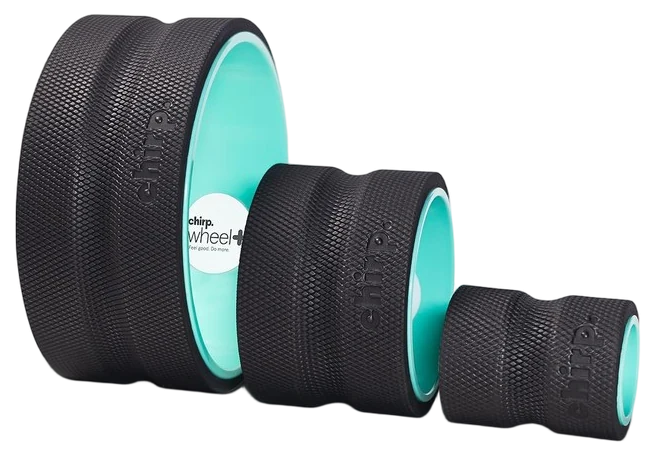
The Chirp Wheel targets what foam rollers reach awkwardly: rolling the spine into extension against desk-hunch posture, with a center groove that spares the vertebrae while the padded rim works the muscles alongside.
The testimonials are emotional; the mechanism, thoracic extension and mobility work, is legitimate, and the satisfying mid-back release converts skeptics in one session. Three sizes trade intensity: bigger is gentler. Five minutes against the floor or a wall covers the whole thoracic span, and the portability beats any table-sized alternative.
Start with the largest wheel and short sessions; it’s a mobility tool, not a treatment for actual back conditions, which deserve professionals. At $70–90 for the three-pack on Amazon, it’s the desk worker’s five-minute counterpose.
Chirp sells the wheel in three diameters, 12, 10, and 6 inches, all the same 5-inch width so the rim lands on the muscles flanking the spine rather than the spine itself; smaller diameter means more pressure, so the maker’s advice is to start with the 12-inch and work down as your back adapts. Each wheel is rated to 500 pounds of user weight, sold individually or as a stacking three-pack.
Get it if your upper back files complaints by 3 p.m. daily.
Skip it if back issues are clinical, see a professional first.
The Chirp Wheel targets what foam rollers reach awkwardly: rolling the spine into extension against desk-hunch posture, with a center groove that spares the vertebrae while the padded rim works the muscles alongside.
Read the full case
The testimonials are emotional; the mechanism, thoracic extension and mobility work, is legitimate, and the satisfying mid-back release converts skeptics in one session. Three sizes trade intensity: bigger is gentler. Five minutes against the floor or a wall covers the whole thoracic span, and the portability beats any table-sized alternative.
Start with the largest wheel and short sessions; it’s a mobility tool, not a treatment for actual back conditions, which deserve professionals. At $70–90 for the three-pack on Amazon, it’s the desk worker’s five-minute counterpose.
Chirp sells the wheel in three diameters, 12, 10, and 6 inches, all the same 5-inch width so the rim lands on the muscles flanking the spine rather than the spine itself; smaller diameter means more pressure, so the maker’s advice is to start with the 12-inch and work down as your back adapts. Each wheel is rated to 500 pounds of user weight, sold individually or as a stacking three-pack.
Strengths
Direct desk-posture counterpose
Spine-sparing center groove
One-session convert effect
Three intensities by size
Tradeoffs
Learning curve for balance
Not for acute back conditions
Set pricing beats singles. Plan
Pick 5 of 5: No. 5The deep-tissue upgrade~$160–330 by model
5
Therabody TheraGun
Upgrade pickThe deep-tissue upgrade
The deep-amplitude flagship
Get it if you train heavily and lighter guns bog down on your glutes and quads.
Skip it if tension is casual. The budget tier already covers you.
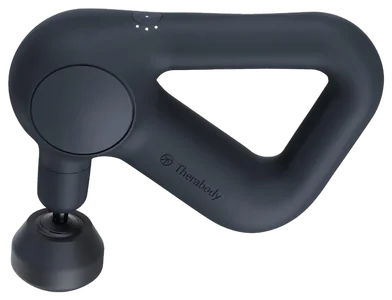
Therabody’s Theraguns reach where compact guns can’t: 16 millimeters of professional amplitude, the difference serious lifters and runners feel in glutes and quads that shrug off lighter percussion.
The triangular grip is ergonomics rather than branding, it lets you reach your own back without wrist origami, and the brand’s sponsored research on soreness and range of motion is the closest this category gets to receipts. The quiet brushless motors ended the power-drill era.
It’s the upgrade, not the starting point: $160–330 by model on Amazon, and its depth is wasted on casual tension. When the Go-sized guns stop feeling like enough, this is what enough looks like.
Stall force is what separates the lineup: the entry Prime holds 30 pounds before the motor bogs down, the Elite steps up to 40, and the Pro tops out at 60, the number that matters once you’re leaning body weight into a glute or IT band. Battery runs about two hours on the Prime and Elite; the Pro ships with two swappable batteries at 2.5 hours each, so it doesn’t sit on a charger between sessions.
Strengths
16mm pro-depth amplitude
Reach-your-own-back ergonomics
Actual sponsored research base
Quiet for its power
Tradeoffs
Priciest guns in the aisle
Depth is overkill for light use
Heavier daily-carry
Pick 5 of 5: No. 5The deep-tissue upgrade~$160–330 by model
Get it if you train heavily and lighter guns bog down on your glutes and quads.
Skip it if tension is casual. The budget tier already covers you.
Therabody’s Theraguns reach where compact guns can’t: 16 millimeters of professional amplitude, the difference serious lifters and runners feel in glutes and quads that shrug off lighter percussion.
Read the full case
The triangular grip is ergonomics rather than branding, it lets you reach your own back without wrist origami, and the brand’s sponsored research on soreness and range of motion is the closest this category gets to receipts. The quiet brushless motors ended the power-drill era.
It’s the upgrade, not the starting point: $160–330 by model on Amazon, and its depth is wasted on casual tension. When the Go-sized guns stop feeling like enough, this is what enough looks like.
Stall force is what separates the lineup: the entry Prime holds 30 pounds before the motor bogs down, the Elite steps up to 40, and the Pro tops out at 60, the number that matters once you’re leaning body weight into a glute or IT band. Battery runs about two hours on the Prime and Elite; the Pro ships with two swappable batteries at 2.5 hours each, so it doesn’t sit on a charger between sessions.
Strengths
16mm pro-depth amplitude
Reach-your-own-back ergonomics
Actual sponsored research base
Quiet for its power
Tradeoffs
Priciest guns in the aisle
Depth is overkill for light use
Heavier daily-carry
Recovery tools are personal, so the right pick depends on where you’re sore, how much pressure you like, and whether you’ll use it.
Match the tool to the muscle: A percussion gun targets a specific spot, a foam roller covers big areas like legs and back, and compression sleeves wrap a whole limb. Pick for the area that bothers you most.
Look at stall force and noise, not just speed: A gun’s stall force (how hard you can press before it stalls) tells you more than its top RPM, and a quiet motor is one you’ll reach for more often.
Check the weight and battery: A lighter gun is easier to hold against your own back and shoulders, and a longer battery means less charging between sessions.
The common mistake, buying more power than you’ll use: The strongest pro-grade device does nothing in a drawer. A comfortable tool you use daily beats a punishing one you avoid.
Bob and Brad C2 — a well-priced massage gun from two physical therapists with a quiet motor, but it overlaps with the percussion guns already in our list, so we kept things from repeating.
Ekrin Athletics B37 — a strong, ergonomic gun with a lifetime warranty, but it costs more than our budget pick without pulling clearly ahead for everyday use.
Hyperice Normatec 3 — air-compression boots that wrap the legs, but at several hundred dollars for one job they’re a big commitment next to the more flexible tools here.
Therabody Wave Roller — a vibrating foam roller that’s nice for large muscle groups, but a plain roller does much of the same job for a fraction of the price.
Recovery FAQs
6 common questions, answered.
Do massage guns work?
For what they claim, reduced perceived soreness and short-term mobility gains, yes, with growing research support. They don’t speed muscle repair or replace mobility training. As a five-minute ritual that makes hard training sustainable, they’ve earned the ubiquity.
Massage gun or foam roller?
Both, ideally, they’re complements: the roller for broad pre-workout prep and spine-adjacent areas, the gun for targeted post-workout work and precision. Budget-forced choice: the $35 roller delivers the most evidence per dollar in recovery.
How long and how hard should I use a massage gun?
60–120 seconds per muscle group, floating, never digging, and staying off bones, joints, and the neck. More pressure isn’t more recovery; bruising is a sign you’re fighting your muscles, not helping them.
When should I use recovery tools, before or after workouts?
Both, differently: before training, brief foam rolling or light percussion (30–60 seconds per muscle) primes range of motion without sapping strength; after training and on rest days, longer, slower sessions address soreness. The evening-couch session is where most successful routines live. Attached to TV time, not to gym discipline. Consistency beats protocol precision by a mile.
What spots should massage guns avoid?
Bones, joints, and anywhere nerves and vessels run shallow: the front of the neck (always), the spine itself, behind the knee, the inner elbow, and anywhere with acute injury, swelling, or bruising. Muscles love percussion; everything else doesn’t. Numbness or tingling means stop. People on blood thinners or with clotting or vascular conditions should clear it with a doctor first, standard-of-care advice the manuals bury on page nine.
Do recovery tools replace stretching or massage therapy?
They’re the daily maintenance layer, not the replacement. Percussion and rolling handle the every-day tightness a monthly massage can’t reach in time, while a good therapist finds and works patterns no gun will. Stretching remains its own tool for range of motion. The realistic stack: tools daily because they’re there, professional hands occasionally because they’re better, and the combination outperforms either alone.
New guides, re-ranked picks and the month's notable changes. No weekly filler, ever.
Unsubscribe any time. Your address goes to our newsletter provider and nowhere else — see our privacy policy.
Manage Consent
To provide the best experiences, we use technologies like cookies to store and/or access device information. Consenting to these technologies will allow us to process data such as browsing behavior or unique IDs on this site. Not consenting or withdrawing consent, may adversely affect certain features and functions.
Functional
Always active
The technical storage or access is strictly necessary for the legitimate purpose of enabling the use of a specific service explicitly requested by the subscriber or user, or for the sole purpose of carrying out the transmission of a communication over an electronic communications network.
Preferences
The technical storage or access is necessary for the legitimate purpose of storing preferences that are not requested by the subscriber or user.
Statistics
The technical storage or access that is used exclusively for statistical purposes.The technical storage or access that is used exclusively for anonymous statistical purposes. Without a subpoena, voluntary compliance on the part of your Internet Service Provider, or additional records from a third party, information stored or retrieved for this purpose alone cannot usually be used to identify you.
Marketing
The technical storage or access is required to create user profiles to send advertising, or to track the user on a website or across several websites for similar marketing purposes.