The Best Sleep Products of 2026:Five Upgrades With Evidence Behind Them
Sleep gear splits into science and placebo. We compared sleep-lab commentary, materials testing, and thousands of long-term reviews to find five purchases that measurably improve nights.
By the BYB Editorial Team
Published July 28, 2026 · Prices checked OctoberOct 5, 2026
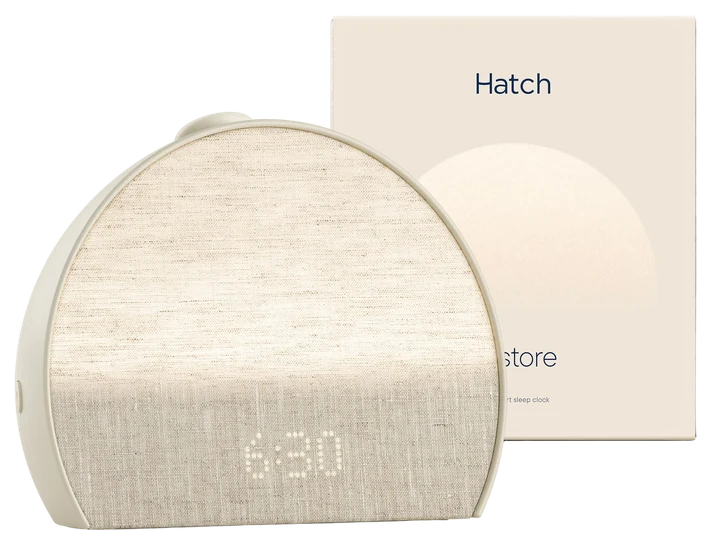
Hatch Restore 3$170–180The Hatch Restore 3, $170–180 — the expensive pick on an otherwise cheap list; it earns that by replacing the phone on the nightstand, the actual reason people lie awake.Check price
Cheaper wins
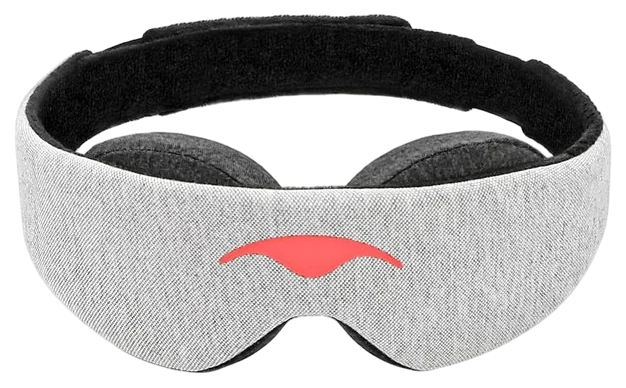
Manta Sleep Mask$30–40The Manta Sleep Mask, $30–40 — blocks light properly because the eye cups adjust instead of pressing.Check price
Before buying any of it
Set the bedroom to 65–68°F — the thermostat costs nothing.
Sleep gear splits into science and placebo. We compared sleep-lab commentary, materials testing, and thousands of long-term reviews to find five purchases that measurably improve nights.
How we choseWhat we compared, and how we rank
We compiled sleep-medicine commentary, published materials testing, and verified long-term owner reviews across the category. Prices are always moving, so every button and link pulls the live listing.
How we rank
Published specifications, verified owner reviews, and independent safety or standards data where it applies — weighted the same for every pick, never sponsored placement.
The Hatch Restore 3 works because it automates behavior instead of tracking it: the light dims on schedule, the soundscape starts, and the sunrise alarm replaces the adrenal jolt of a phone alarm with ten minutes of gradual dawn. Tom’s Guide’s review called it worthy of replacing the Restore 2 as the best sunrise alarm clock available, and singled out the physical Big Button as the reason a phone doesn’t need to be within reach at bedtime.
Sleep reviewers consistently rank it the most-kept device in the category, people abandon trackers and keep Restores, and the phone-exile side effect may be the biggest single improvement: the alarm clock role removes the last excuse for bedside doomscrolling.
Some content sits behind an optional subscription most owners skip, and it claims bedside real estate. At $170–180 on Amazon, it’s the anchor purchase of the sleep-gear category.
Hatch specs the sunrise ramp at roughly 250 lux measured 18 inches from the unit, and testers note the ramp itself runs gentler than some rival clocks — welcome if you wake easily, too subtle if you sleep through anything short of a fire alarm. It runs on wall power only, no battery backup, and its routines depend on a steady 2.4GHz Wi-Fi connection; drop that connection overnight and the alarm can fail to fire.
Strengths
Automates the whole wind-down
Sunrise waking converts skeptics
Exiles the phone from bed
Most-kept device in the category
Tradeoffs
Optional subscription upsell
Bedside footprint
Premium for a clock-plus
Pick 2 of 5: No. 2Best under $40~$30–40
2
Manta Sleep Mask
Budget pickBest under $40
True blackout, zero eye pressure
Get it if any light reaches your sleeping face — at $30–40 it’s the cheapest fix on this page.
Skip it if your bedroom already achieves cave darkness.
Ordinary sleep masks press on your eyes and leak light at the nose. The Manta’s repositionable molded cups fix both, true blackout with zero eyelid pressure, which is why it wins nearly every sleep-mask roundup on the internet. CNN Underscored’s review of the standard Manta confirmed the cup design blocks light without crushing lashes, though its testers who sleep on their stomachs needed a few nights to adjust to the raised cups.
Melatonin production responds directly to darkness, making this the cheapest genuine sleep upgrade on the list. Side sleepers, lash wearers, shift workers, and can’t-sleep-in-masks converts fill the review base, and free blinking makes long flights comfortable.
It looks industrial and costs triple a pharmacy mask. At $30–40 on Amazon, it’s the highest sleep-improvement-per-dollar purchase available: streetlights, shift work, and travel all surrender.
Each eye cup repositions independently for angle and depth rather than sitting fixed, and Manta sells a separate accessory kit with flatter or temperature-adjustable inserts for anyone who finds the standard dome too pronounced. The strap blends polycotton and velour instead of raw elastic, skipping the red crease line a cheap band leaves by morning, and reviewers who’ve tried it stomach-down report it holds position without migrating. It comes in one adult size only, and the Velcro closure wants long hair tucked first.
Strengths
True blackout, zero eye pressure
Converts mask skeptics reliably
Side-sleeper repositionable cups
Cheapest real upgrade here
Tradeoffs
Industrial bedroom looks
Triple pharmacy-mask price
Hand-wash care
Pick 3 of 5: No. 3Best pillow
3
Coop Home Goods Original Pillow
Best pillow
The adjustable-fill favorite
Get it if no store pillow has ever been quite right, and $70–90 is cheaper than most rivals it beats.
Skip it if you love your current pillow, rare and precious.
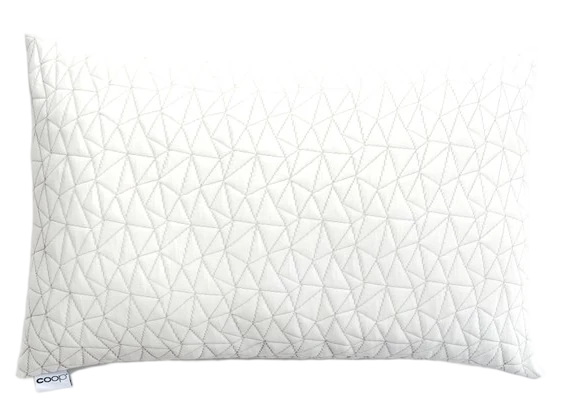
Pillow height is a fit problem, and fixed pillows force one size on every neck. The Coop Original’s unzip-and-adjust shredded fill is the review-consensus fix: side, back, and stomach sleepers all tune it to their own loft.
It has held a spot in nearly every major pillow roundup for years, remarkable for an $89 pillow against $200 rivals, and the machine-washable everything keeps it fresh through years the disposable-pillow cycle never sees.
Tuning takes two or three nights of iteration and the foam carries a day of new-foam scent. At about $89 on Amazon, it’s the last stop of most pillow searches.
The included half-pound refill bag is the whole adjustment system: side sleepers add fill until the head sits level with the spine, back sleepers usually pull some out, and stomach sleepers go thinnest of all. Tom’s Guide testers found the Lulltra cover’s bamboo-derived rayon blend kept them sleeping cooler than a standard poly-cotton case, though the shredded fill needs a fluff most mornings to hold its shape. Extra refill bags are sold separately if the first adjustment undershoots.
Strengths
Adjusts to any sleep position
Years of roundup dominance
Fully machine washable
Ends the pillow search
Tradeoffs
Few nights of loft-tuning
Brief new-foam scent
Heavier than plush pillows
Also on the shortlist
Two more, in brief
Pick 4 of 5: No. 4Best calm-per-dollar
4
Sivio Weighted Blanket (15 lb)
Best calm-per-dollar
The pressure switch
Get it if racing thoughts meet you at lights-out, and $40–70 is a fair price to test the theory.
Skip it if you already overheat under a plain duvet.
Weighted-blanket evidence is mixed on hard sleep metrics but consistent on one thing: subjective calm at lights-out, especially for anxious sleepers. The Sivio 15-pounder is the right-priced way to run the experiment.
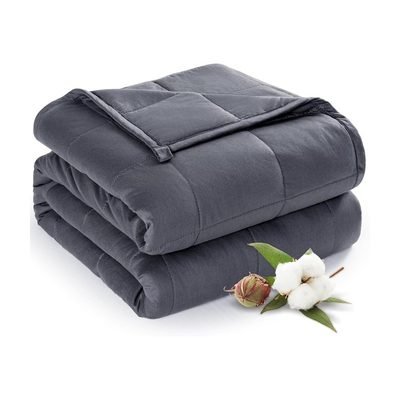
The construction does the quality job: fine glass beads in tight quilted channels (no pooling), a breathable cotton shell, and machine washability. The same recipe the $200 brands charge triple for. The quilted channels also keep the weight silent, cheap blankets rustle their beads with every turn.
The 10%-of-body-weight rule sizes it, it runs warm by nature, and couples generally need their own. At $40–70 on Amazon, it’s the highest-upside experiment in the category, and the risk is a blanket.
The fill sits in a seven-layer quilted build with individually stitched channels, which keeps the glass beads from migrating into corners the way a single-compartment blanket does after a few washes; testers who’ve compared budget weighted blankets flag bead clumping as the most common failure, and the channel stitching here is the fix. Sivio sizes by the standard 10%-of-body-weight guideline, so a 150-pound sleeper wants this 15-pound queen, not a lighter throw sized for looks.
Get it if racing thoughts meet you at lights-out, and $40–70 is a fair price to test the theory.
Skip it if you already overheat under a plain duvet.
Weighted-blanket evidence is mixed on hard sleep metrics but consistent on one thing: subjective calm at lights-out, especially for anxious sleepers. The Sivio 15-pounder is the right-priced way to run the experiment.
Read the full case
The construction does the quality job: fine glass beads in tight quilted channels (no pooling), a breathable cotton shell, and machine washability. The same recipe the $200 brands charge triple for. The quilted channels also keep the weight silent, cheap blankets rustle their beads with every turn.
The 10%-of-body-weight rule sizes it, it runs warm by nature, and couples generally need their own. At $40–70 on Amazon, it’s the highest-upside experiment in the category, and the risk is a blanket.
The fill sits in a seven-layer quilted build with individually stitched channels, which keeps the glass beads from migrating into corners the way a single-compartment blanket does after a few washes; testers who’ve compared budget weighted blankets flag bead clumping as the most common failure, and the channel stitching here is the fix. Sivio sizes by the standard 10%-of-body-weight guideline, so a 150-pound sleeper wants this 15-pound queen, not a lighter throw sized for looks.
Strengths
Real deep-pressure calm effect
Brand-name recipe, third the price
Glass beads stay put in channels
Machine washable
Tradeoffs
Warm by physics
Personal, one per sleeper
Heavy to launder
Pick 5 of 5: No. 5Best sheet value
5
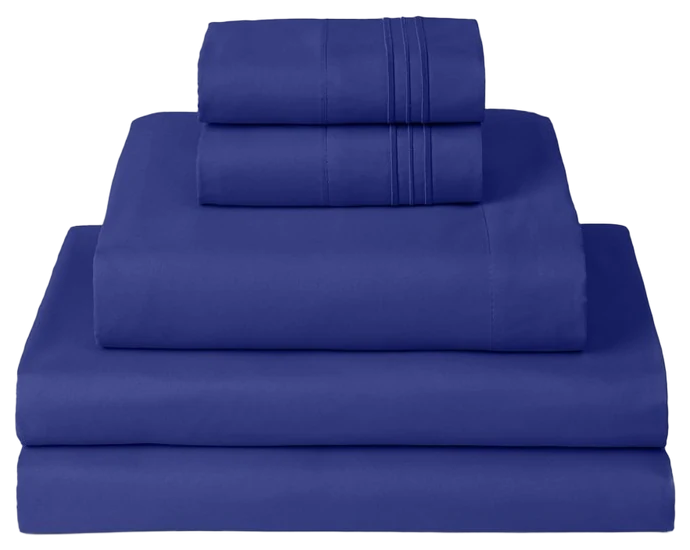
Mellanni Brushed Microfiber Sheets
Best sheet value
The review-count phenomenon
Get it if the beds deserve better without linen-store math, and $30–45 is cheap enough to try it.
Skip it if you sleep hot. Percale is your material.
With hundreds of thousands of reviews, the Mellanni set is less a product than a data set: soft immediately, wrinkle-resistant out of the dryer, and durable through years of weekly washing: at a price that reads like a typo.
The lifetime replacement policy is honored (the reviews confirm it), deep pockets grip thick modern mattresses, and the color range survives fading. It’s the guest-room, kid-room, and honest-main-bed workhorse. Two sets in rotation is the veteran move, both last longer and wash day stops being urgent.
Hot sleepers should prefer cotton percale. Microfiber runs slightly warmer, the one real trade. At $30–45 on Amazon, it’s the biggest comfort-per-dollar swap in bedding.
Mellanni’s sheets run about 90 GSM, the microfiber-specific measure that matters more than thread count once you’re off cotton, and reviewers who track the category put that in the durable, not-too-thin range rather than the flimsy 55-gsm sets that pill within a season. Wirecutter’s most recent sheet guide lists Mellanni among its budget-microfiber recommendations for that reason. The deep pockets are cut for mattresses up to 18 inches, so oversized pillow-tops seat properly instead of popping loose.
Get it if the beds deserve better without linen-store math, and $30–45 is cheap enough to try it.
Skip it if you sleep hot. Percale is your material.
With hundreds of thousands of reviews, the Mellanni set is less a product than a data set: soft immediately, wrinkle-resistant out of the dryer, and durable through years of weekly washing: at a price that reads like a typo.
Read the full case
The lifetime replacement policy is honored (the reviews confirm it), deep pockets grip thick modern mattresses, and the color range survives fading. It’s the guest-room, kid-room, and honest-main-bed workhorse. Two sets in rotation is the veteran move, both last longer and wash day stops being urgent.
Hot sleepers should prefer cotton percale. Microfiber runs slightly warmer, the one real trade. At $30–45 on Amazon, it’s the biggest comfort-per-dollar swap in bedding.
Mellanni’s sheets run about 90 GSM, the microfiber-specific measure that matters more than thread count once you’re off cotton, and reviewers who track the category put that in the durable, not-too-thin range rather than the flimsy 55-gsm sets that pill within a season. Wirecutter’s most recent sheet guide lists Mellanni among its budget-microfiber recommendations for that reason. The deep pockets are cut for mattresses up to 18 inches, so oversized pillow-tops seat properly instead of popping loose.
Strengths
Absurd softness per dollar
Honored lifetime replacement
Wrinkle- and fade-resistant
Deep pockets fit thick mattresses
Tradeoffs
Warmer than cotton percale
No crisp-cotton hand
Winter static, occasionally
Darkness and a consistent wind-down do more than any gadget, so buy the one thing that fixes your actual sleep problem and stop there.
Name the problem first: noise calls for a sound machine or earplugs, light calls for a blackout mask, a restless mind might want weight. Buying the wrong category is the usual waste.
Lean on darkness and routine: total blackout and a fixed bedtime are the two levers sleep research cares most about. Gear should support those, not replace them.
Check it’s washable or returnable: pillows, masks, and blankets sit against your face and skin every night. Make sure you can clean it, and that you can send it back if the fit is off.
The common mistake: stacking up gadgets instead of fixing the room and the routine. One good fix usually beats three half-measures.
Yogasleep Dohm Classic — a mechanical fan-based white noise machine with no loops or tracks to notice. Our Hatch pick does sound too, but this is the simpler, cheaper choice if masking noise is all you want.
Loop Quiet Earplugs — soft reusable earplugs for the snoring partner or thin walls a mask can’t touch. They solve a noise problem, not a light one, so they didn’t fit the main lineup.
MUSICOZY Sleep Headphones — flat speakers in a soft headband so side-sleepers can listen to audio without earbuds digging in. A niche pick for people who fall asleep to podcasts, which is why it’s here.
Sleep gear FAQs
6 common questions, answered.
Do sunrise alarms help?
Yes — gradually brightening light before wake time is one of the better-supported interventions in consumer sleep tech, particularly for dark winter mornings and heavy sleepers who hate jolting alarms.
Is a weighted blanket safe for everyone?
Healthy adults, yes. Pick roughly 10% of body weight. The American Academy of Pediatrics advises against any weighted blanket, sleeper or swaddle for infants, and they are not recommended for other young children or anyone with respiratory or circulation conditions without medical advice.
What should I fix first for better sleep?
Darkness and consistency beat gadgets: total blackout (the Manta) and a fixed wind-down time (the Hatch automates this) address the two levers sleep medicine cares most about. Everything else on this list is comfort layered on top.
What bedroom temperature helps sleep?
Cooler than most homes run: the research consistently favors roughly 65–68°F for sleep onset, because core temperature needs to drop to initiate sleep. The gear implications: breathable bedding (the microfiber-vs-percale question is really a temperature question), warm hands and feet paradoxically help (socks are evidence-backed), and the weighted blanket’s warmth is why hot sleepers size down. Cheapest experiment on this list: drop the thermostat two degrees tonight.
How long should I trial a new sleep setup?
Two weeks per change, one change at a time, sleep adapts slowly and first nights lie in both directions. The Coop pillow needs three nights of loft-tuning; the sunrise alarm converts skeptics in the second week per its own review pattern; weighted blankets feel strange for several nights before they feel essential (or don’t, that’s real too). Track just one metric, morning grogginess, rather than instrumenting the experiment to death.
What’s the right wind-down routine with this gear?
The sequence that compounds: screens docked outside the bedroom (the Restore’s alarm role is what makes this possible), lights amber and dimming an hour out, the sunset routine automates it, then mask on, sounds on, blanket weighted. The routine’s power is its sameness: identical cues nightly train the association until the wind-down itself triggers drowsiness. Twenty minutes of consistency beats any single device on this page, the devices exist to make consistency effortless.
Sources
Who the write-ups above lean on, and where each one is cited.
Tom’s GuideCited for Hatch Restore 3 and Coop Home Goods Original Pillow.
WirecutterCited for Mellanni Brushed Microfiber Sheets, and in the buying advice.
New guides, re-ranked picks and the month's notable changes. No weekly filler, ever.
Unsubscribe any time. Your address goes to our newsletter provider and nowhere else — see our privacy policy.
Manage Consent
To provide the best experiences, we use technologies like cookies to store and/or access device information. Consenting to these technologies will allow us to process data such as browsing behavior or unique IDs on this site. Not consenting or withdrawing consent, may adversely affect certain features and functions.
Functional
Always active
The technical storage or access is strictly necessary for the legitimate purpose of enabling the use of a specific service explicitly requested by the subscriber or user, or for the sole purpose of carrying out the transmission of a communication over an electronic communications network.
Preferences
The technical storage or access is necessary for the legitimate purpose of storing preferences that are not requested by the subscriber or user.
Statistics
The technical storage or access that is used exclusively for statistical purposes.The technical storage or access that is used exclusively for anonymous statistical purposes. Without a subpoena, voluntary compliance on the part of your Internet Service Provider, or additional records from a third party, information stored or retrieved for this purpose alone cannot usually be used to identify you.
Marketing
The technical storage or access is required to create user profiles to send advertising, or to track the user on a website or across several websites for similar marketing purposes.