The Best Kitchen Upgrades for 2026:Buy-it-for-life, Not Buy-it-again
Kitchen gear splits into two categories: appliances you use twice and donate, and workhorses you use for a decade. We compared lab tests, longevity data, and owner reviews to find six upgrades from the second category.
By the BYB Editorial Team
Published July 28, 2026 · Updated · Prices checked OctoberOct 12, 2026
We compiled test-kitchen results (America’s Test Kitchen, Serious Eats, Wirecutter), warranty and longevity records, and thousands of verified owner reviews.How we chose·How we verify·Corrections logged publicly
Kitchen gear splits into two categories: appliances you use twice and donate, and workhorses you use for a decade. We compared lab tests, longevity data, and owner reviews to find six upgrades from the second category.
Not sure which fits you? Answer two questions
Right for you?
Which pick is right for you?
Two quick questions. The answer is the guide’s own reason for one of its picks.
How we choseWhat we compared, and how we rank
We compiled test-kitchen results (America’s Test Kitchen, Serious Eats, Wirecutter), warranty and longevity records, and thousands of verified owner reviews. Prices are always moving, so every button and link pulls the live listing.
How we rank
Published specifications, verified owner reviews, and independent safety or standards data where it applies — weighted the same for every pick, never sponsored placement.
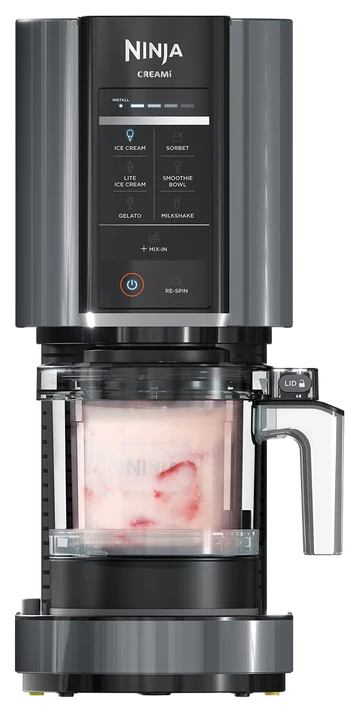
The Ninja CREAMi broke the pattern of dessert gadgets that die in cabinets: because it processes a frozen pint in about two minutes, people use it weekly, and the protein-ice-cream crowd built an entire internet subculture on it.
The pint-based system is the insight: freeze any base overnight, spin it on demand, and refreeze the rest. Sorbets, gelato, dairy-free, high-protein. The recipe universe is enormous and the community keeps expanding it.
It’s loud for those two minutes, and pints must freeze a full day ahead. Spontaneity requires planning. At $170–230 on Amazon with constant sales, it’s the dessert machine that stays in rotation.
It’s not churning anything: a spinning blade shaves the rock-solid frozen pint into fine ribbons, essentially a countertop Pacojet, which is why the base has to freeze fully solid overnight rather than the slushy stage other ice cream makers accept. A standard decibel meter puts the roughly two-minute cycle in the 85 to 90 decibel range, comparable to a blender or a hair dryer at close range, so running it while the household sleeps isn’t an option.
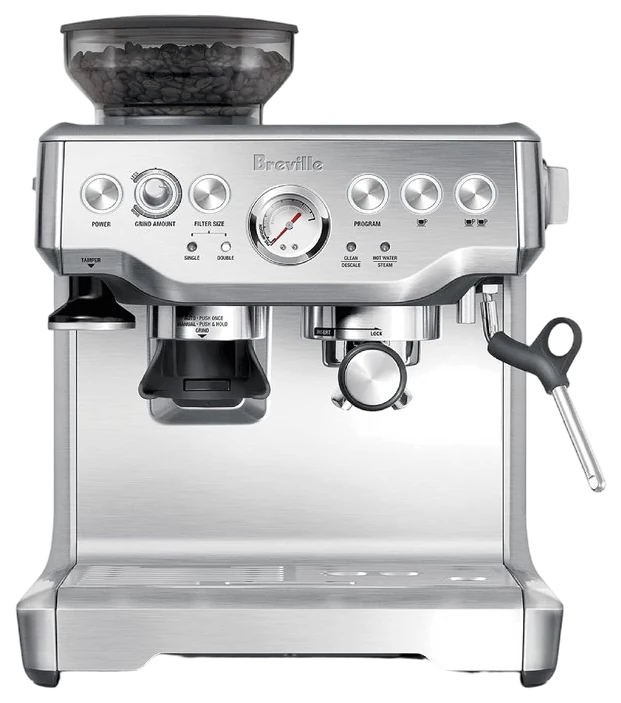
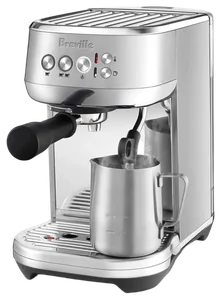
Ten years of best-espresso-for-beginners lists have the same machine at the top: the Breville Barista Express bundles a good burr grinder with a forgiving semi-automatic machine, so the two skills that make espresso hard arrive with guardrails.
Do the math that sells it: a daily latte habit runs $2,000-plus a year, and this machine pays itself off by spring: while the learning curve (a real but pleasurable two weeks) turns into an actual skill.
It demands counter space and a cleaning rhythm, and serious hobbyists eventually split into separate grinder and machine. At $600–750 on Amazon, it’s the complete espresso education in one box.
The built-in conical burr grinder offers 18 settings plus a micro-adjustment collar for dozens of finer increments, and the digital PID temperature control holds the water within 2 to 3 degrees through the shot, real consistency most machines this price skip. Regulars on the home-barista.com forums note the same grinder is the eventual ceiling: fine for learning and for most home espresso, but pickier drinkers chasing light-roast clarity eventually want a standalone grinder, the usual second purchase, not a sign this one failed.
Strengths
Grinder + machine, one box
Pays off a latte habit by spring
Decade atop beginner lists
Real skill with guardrails
Tradeoffs
Counter real estate required
Cleaning rhythm non-optional
Hobbyists outgrow it eventually
Pick 3 of 6: No. 3Buy it for life
3
KitchenAid Artisan Stand Mixer
Buy it for life
The heirloom appliance
Get it if baking is a lifestyle or about to become one, and $500 is a one-time buy, not a recurring one.
Skip it if you bake twice a year, a $40 hand mixer copes.
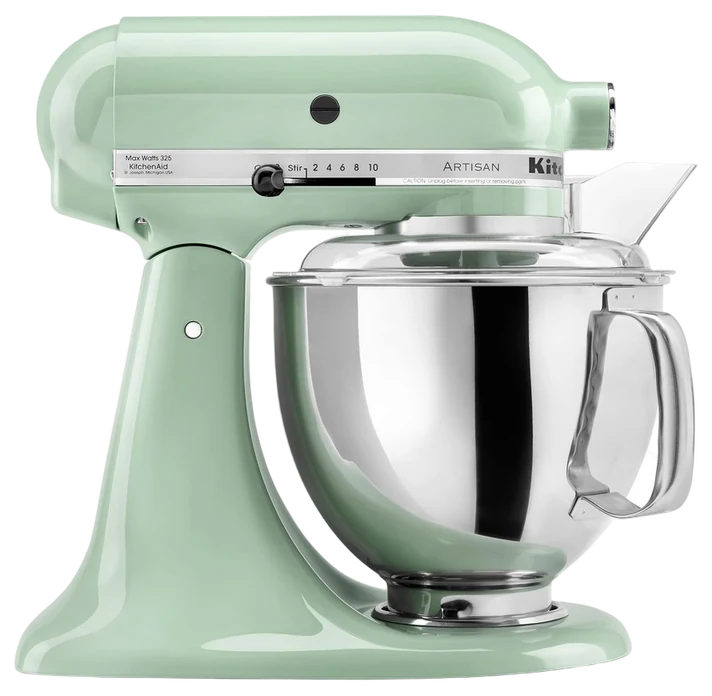
There are three kitchen things people pass down: cast iron, good knives, and a KitchenAid. The Artisan stand mixer’s all-metal build routinely outlives its owner’s first house, and the review base spans literal generations.
The attachment hub is the quiet superpower: pasta roller, meat grinder, ice-cream bowl. The mixer becomes the motor for a dozen machines you now don’t buy. Bakers know the rest: doughs, batters, and meringues that hand mixers fear.
It’s heavy by design (it stays put while kneading) and premium by heritage. At $500 on Amazon, with color sales constant. It’s the definition of buy-it-for-life.
The motor is rated at 325 watts, modest on paper next to commercial mixers, but the planetary action (the beater orbits while the bowl stays still) means it doesn’t need brute wattage to knead stiff dough the way a straight-paddle mixer would. KitchenAid says the 5-quart bowl handles up to nine dozen cookies in a single batch, and the same power hub that runs the whisk and dough hook also drives every third-party attachment on the market, not just KitchenAid’s own pasta roller and grinder.
Strengths
Generational build quality
Attachment hub replaces machines
Kneads what hand mixers can’t
Holiday-sale pricing rituals
Tradeoffs
Deliberately heavy
Premium entry price
Attachment collecting begins
Also on the shortlist
Three more, in brief
Pick 4 of 6: No. 4Best value icon
4
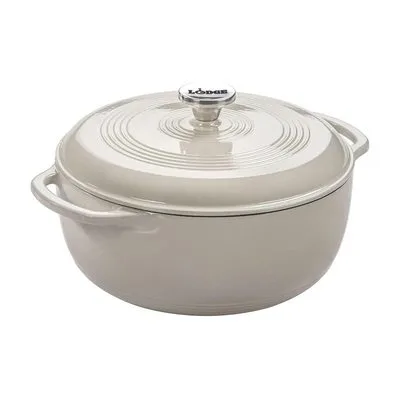
Lodge Enameled Dutch Oven
Best value icon
Le Creuset results at a fifth the price
Get it if slow Sunday cooking deserves its centerpiece pot, and $70–100 buys the $420-pot experience.
Skip it if nothing simmers at your house. The skillet covers you.
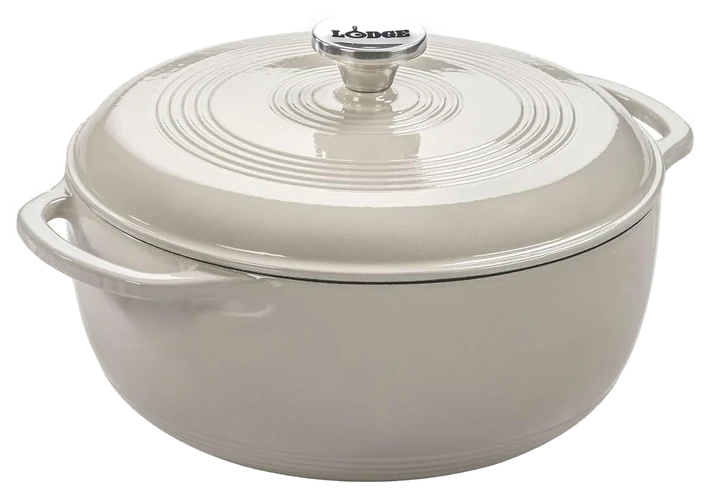
America’s Test Kitchen has spent years failing to find a meaningful cooking difference between the $90 Lodge and a Le Creuset costing four times more, the most useful failure in cookware journalism.
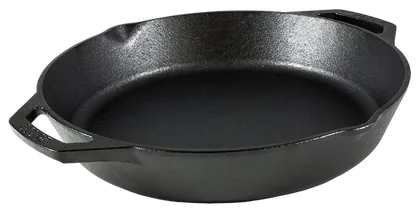
Braises, no-knead bread, soups, stocks: enameled cast iron does the work and the badge does not. The six-quart size hits the family sweet spot, the enamel skips seasoning rituals and welcomes acids, and the colors earn open-shelf placement. The wide handles stay grippable with oven mitts on, a detail the budget clones reliably get wrong.
Treat the enamel kindly (wooden utensils, no thermal shock) and it serves decades. At $70–100 on Amazon, it’s the highest confidence-per-dollar purchase in cookware.
Side-by-side testing between Lodge and pricier French ovens found the two close enough to call a wash: the Lodge runs a touch slower to come up to temperature, and its thicker walls hold heat at least as well once it gets there, differences testers called minor for the braises, soups, and no-knead loaves this size is built for. The enamel interior is lighter-colored than some rivals, too, making it easier to judge fond and browning by eye rather than guessing through a dark glaze.
Get it if slow Sunday cooking deserves its centerpiece pot, and $70–100 buys the $420-pot experience.
Skip it if nothing simmers at your house. The skillet covers you.
America’s Test Kitchen has spent years failing to find a meaningful cooking difference between the $90 Lodge and a Le Creuset costing four times more, the most useful failure in cookware journalism.
Read the full case
Braises, no-knead bread, soups, stocks: enameled cast iron does the work and the badge does not. The six-quart size hits the family sweet spot, the enamel skips seasoning rituals and welcomes acids, and the colors earn open-shelf placement. The wide handles stay grippable with oven mitts on, a detail the budget clones reliably get wrong.
Treat the enamel kindly (wooden utensils, no thermal shock) and it serves decades. At $70–100 on Amazon, it’s the highest confidence-per-dollar purchase in cookware.
Side-by-side testing between Lodge and pricier French ovens found the two close enough to call a wash: the Lodge runs a touch slower to come up to temperature, and its thicker walls hold heat at least as well once it gets there, differences testers called minor for the braises, soups, and no-knead loaves this size is built for. The enamel interior is lighter-colored than some rivals, too, making it easier to judge fond and browning by eye rather than guessing through a dark glaze.
Strengths
Blind-test rival to $420 pots
Bread, braises, everything slow
No seasoning, acid-friendly
Heirloom looks at outlet price
Tradeoffs
Enamel chips if abused
Heavy when loaded
Hand-wash preferred
Pick 5 of 6: No. 5Buy-once blender
5
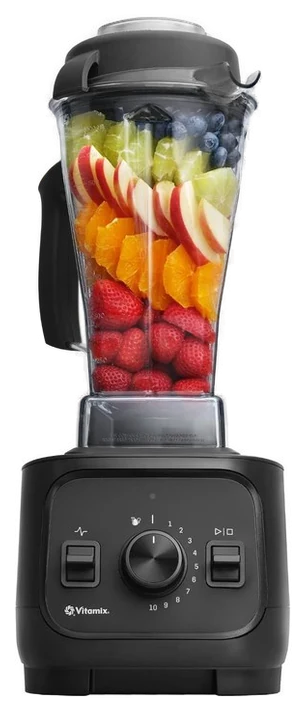
Vitamix VX1 Professional-Grade Blender
Buy-once blender
The last blender you buy
Get it if blending is daily and burnout blenders have burned you, and $375–385 ends the replacement cycle for good.
Skip it if occasional smoothies, a $100 blender suffices.
The Vitamix VX1 is the current affordable door into Vitamix, replacing the E310 Explorian as the brand’s entry-level full-size blender: the same motor philosophy, the same blend-anything capability, the same legendary durability. It ships with the Classic 64 oz container, up from the E310’s 48 oz, so bigger batches fit in one pass.
The 2.2 HP motor (1,440 watts) handles smoothies with fibrous greens, nut butters, and hot soup from blade friction alone, no burner involved. Variable speed control and pulse cover the manual range, and a built-in self-cleaning program means a drop of soap and 30 seconds of running water replaces scrubbing. The tamper — the accessory that looks like a gimmick — is what makes thick blends like nut butter possible.
It’s loud at full power and tall under low cabinets, the class trades, and the 5-year warranty is shorter than the 7-to-10-year terms on Vitamix’s pricier full-size machines. At $375–385 on Amazon, it replaces the blender-every-three-years cycle with one purchase and a decade of service.
Get it if blending is daily and burnout blenders have burned you, and $375–385 ends the replacement cycle for good.
Skip it if occasional smoothies, a $100 blender suffices.
The Vitamix VX1 is the current affordable door into Vitamix, replacing the E310 Explorian as the brand’s entry-level full-size blender: the same motor philosophy, the same blend-anything capability, the same legendary durability. It ships with the Classic 64 oz container, up from the E310’s 48 oz, so bigger batches fit in one pass.
Read the full case
The 2.2 HP motor (1,440 watts) handles smoothies with fibrous greens, nut butters, and hot soup from blade friction alone, no burner involved. Variable speed control and pulse cover the manual range, and a built-in self-cleaning program means a drop of soap and 30 seconds of running water replaces scrubbing. The tamper — the accessory that looks like a gimmick — is what makes thick blends like nut butter possible.
It’s loud at full power and tall under low cabinets, the class trades, and the 5-year warranty is shorter than the 7-to-10-year terms on Vitamix’s pricier full-size machines. At $375–385 on Amazon, it replaces the blender-every-three-years cycle with one purchase and a decade of service.
Strengths
True blend-anything power
5-year full warranty
Self-clean program built in
Ends the replacement cycle
Tradeoffs
Full-power loud
Tall for low cabinets
Real upfront price
Pick 6 of 6: No. 6The pantry system~$30–100 by set size
6
OXO POP Container Set
Budget pickThe pantry system
The organization upgrade that sticks
Get it if pantry chaos and stale flour are recurring characters, and $30–100 by set fits the pantry you have.
Skip it if dry goods barely feature in your kitchen.
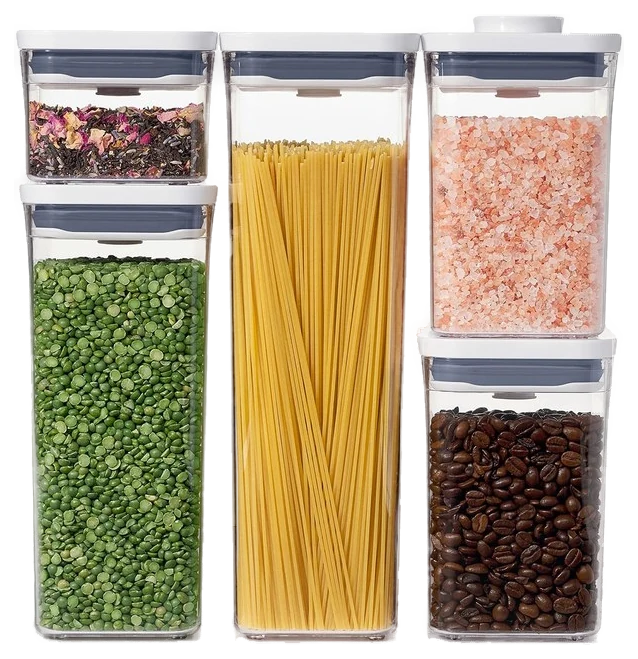
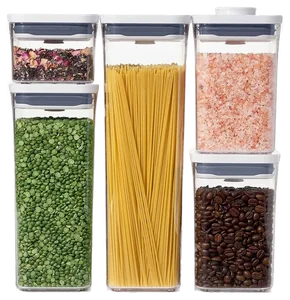
Unglamorous, universally loved: OXO’s POP containers are the rare organization product with five-star consensus across tens of thousands of reviews. Flour stays fresh, pantries stack true, and the modular sizing grows with you.
The one-touch airtight button is the daily habit-former, and the clear walls turn shelves into inventory, the quiet fix for buying a third bag of something you already owned twice. Square footprints waste no shelf space, and the lids interchange across sizes when sets grow.
Premium per container, and lids prefer hand-washing. At $30–100 by set on Amazon, start with five staples; every reviewer’s arc ends with a matching shelf.
The seal isn’t just a snug lid: pressing the button expands a silicone gasket that pushes outward against the container wall, which is why it holds air out even on containers that have been dropped or knocked around a cabinet for years. Lids and bodies are top-rack dishwasher safe, and when a gasket does eventually compress and loosen after years of hard use, OXO sells replacement gaskets separately for a few dollars rather than requiring a whole new lid.
Strengths
Five-star consensus at scale
One-touch airtight habit
Clear-walled inventory shelves
Modular growth path
Tradeoffs
Premium per container
Hand-wash lid mechanisms
Set expansion is inevitable
Pick 6 of 6: No. 6The pantry system~$30–100 by set size
Get it if pantry chaos and stale flour are recurring characters, and $30–100 by set fits the pantry you have.
Skip it if dry goods barely feature in your kitchen.
Unglamorous, universally loved: OXO’s POP containers are the rare organization product with five-star consensus across tens of thousands of reviews. Flour stays fresh, pantries stack true, and the modular sizing grows with you.
Read the full case
The one-touch airtight button is the daily habit-former, and the clear walls turn shelves into inventory, the quiet fix for buying a third bag of something you already owned twice. Square footprints waste no shelf space, and the lids interchange across sizes when sets grow.
Premium per container, and lids prefer hand-washing. At $30–100 by set on Amazon, start with five staples; every reviewer’s arc ends with a matching shelf.
The seal isn’t just a snug lid: pressing the button expands a silicone gasket that pushes outward against the container wall, which is why it holds air out even on containers that have been dropped or knocked around a cabinet for years. Lids and bodies are top-rack dishwasher safe, and when a gasket does eventually compress and loosen after years of hard use, OXO sells replacement gaskets separately for a few dollars rather than requiring a whole new lid.
Strengths
Five-star consensus at scale
One-touch airtight habit
Clear-walled inventory shelves
Modular growth path
Tradeoffs
Premium per container
Hand-wash lid mechanisms
Set expansion is inevitable
A real upgrade is a tool you’ll use for years, not a gadget that ends up in the back of a cabinet.
Buy for how you cook: a mixer you use every week beats a bread machine you’ll use twice and forget, so be honest about your habits.
Favor simple, repairable builds: the fewer electronics and proprietary parts, the longer it lasts and the easier it is to fix.
Watch for overlap: a good blender, food processor, and stand mixer cover a lot of the same ground, so you rarely need all three.
Counter space is the real cost: if a machine can’t earn a permanent spot on your counter, it’ll live in a cupboard unused.
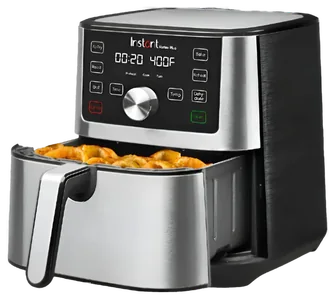
Instant Pot Duo Crisp + Air Fryer — handy, but a buy-it-for-life list leans on simple durable tools, and the pressure-cooker electronics are exactly the part most likely to die and strand you.
Zojirushi Neuro Fuzzy Rice Cooker — it makes flawless rice even when you mismeasure, but it’s a single-tasker that only earns its counter space if rice is a weekly staple for you.
Cuisinart 14-Cup Food Processor — a 720-watt workhorse that lasts, but between the stand mixer and blender already on this list, most kitchens don’t need a third motorized bowl.
Kitchen upgrade FAQs
6 common questions, answered.
What’s the best first “serious” kitchen upgrade?
The Lodge Dutch oven, and it isn’t close: under $100, does braises, bread, soups, and frying, and performs at the level of pots four times its price. After that, upgrade whatever you use daily, coffee gear if that’s your ritual, the mixer if you bake.
Is a Vitamix worth it over a $100 blender?
If you blend a few times a week, yes, the difference shows up in texture (smooth nut butters, silky soups) and in year five, when the cheap blender is in a landfill and the Vitamix is mid-warranty.
Does the Ninja CREAMi replace an ice cream maker?
It replaces the entire concept for most homes. Traditional churners make better classic ice cream in larger batches; the CREAMi wins on speed, portion control, and the protein/light recipes people make weekly.
Which of these earn permanent counter space?
The countertop hierarchy by use frequency: the espresso machine (daily) and stand mixer (heavy, and beautiful enough to justify itself) live out; the Vitamix earns counter status in smoothie households and cabinet status otherwise; the CREAMi, Dutch oven, and containers store between uses. The rule: anything requiring a cabinet excavation gets used half as often, so give counter space to the habit you’re trying to keep, not the one you already have.
What’s the right way to maintain these for the long haul?
The rituals that make decade-machines last decades: backflush and descale the Breville on schedule (water hardness decides frequency, a $10 test strip tells you), never dishwasher the KitchenAid bowl-lifter attachments or Vitamix container (hand-rinse immediately instead), skip thermal shock on the Dutch oven, and run the CREAMi’s blade through the dishwasher guilt-free. Fifteen minutes of monthly care across the whole list; the warranty periods assume you skip it.
Which pick makes the best wedding or housewarming gift?
The gift hierarchy by delight-per-dollar: the Dutch oven wins weddings (beautiful, useful, $90 reads as $200), the POP containers win housewarmings (universally useful, zero taste-risk), and the KitchenAid is the group-gift grail: the one registry item that outlives the marriage’s first house. The CREAMi is the wildcard for the right recipient. Skip gifting espresso gear; grinder-and-machine preferences are too personal, and the Breville is a self-purchase.
Sources
Who the write-ups above lean on, and where each one is cited.
America’s Test KitchenCited for Lodge Enameled Dutch Oven, and in the buying advice.
WirecutterCited in the buying advice.
Serious EatsCited in the buying advice.
23Sep 2026Correction, 23 September 2026The Vitamix E310 Explorian is discontinued. Its successor, the Vitamix VX1, takes its place at about $375–385.Every correction we’ve made ›
Prices on this page are re-checked weekly — see the full Home & Kitchen price index for every product we cover.
Keep reading
Where to go next.
The close calls side by side, then related guides.
New guides, re-ranked picks and the month's notable changes. No weekly filler, ever.
Unsubscribe any time. Your address goes to our newsletter provider and nowhere else — see our privacy policy.
Manage Consent
To provide the best experiences, we use technologies like cookies to store and/or access device information. Consenting to these technologies will allow us to process data such as browsing behavior or unique IDs on this site. Not consenting or withdrawing consent, may adversely affect certain features and functions.
Functional
Always active
The technical storage or access is strictly necessary for the legitimate purpose of enabling the use of a specific service explicitly requested by the subscriber or user, or for the sole purpose of carrying out the transmission of a communication over an electronic communications network.
Preferences
The technical storage or access is necessary for the legitimate purpose of storing preferences that are not requested by the subscriber or user.
Statistics
The technical storage or access that is used exclusively for statistical purposes.The technical storage or access that is used exclusively for anonymous statistical purposes. Without a subpoena, voluntary compliance on the part of your Internet Service Provider, or additional records from a third party, information stored or retrieved for this purpose alone cannot usually be used to identify you.
Marketing
The technical storage or access is required to create user profiles to send advertising, or to track the user on a website or across several websites for similar marketing purposes.