The Best Home Organization Systems:Still Tidy in Month Six
Organization products fail when they are prettier than they are useful. We picked the five systems professional organizers deploy on real jobs, the unglamorous workhorses with tens of thousands of repurchase reviews.
By the BYB Editorial Team
Published July 28, 2026 · Updated · Prices checked OctoberOct 5, 2026
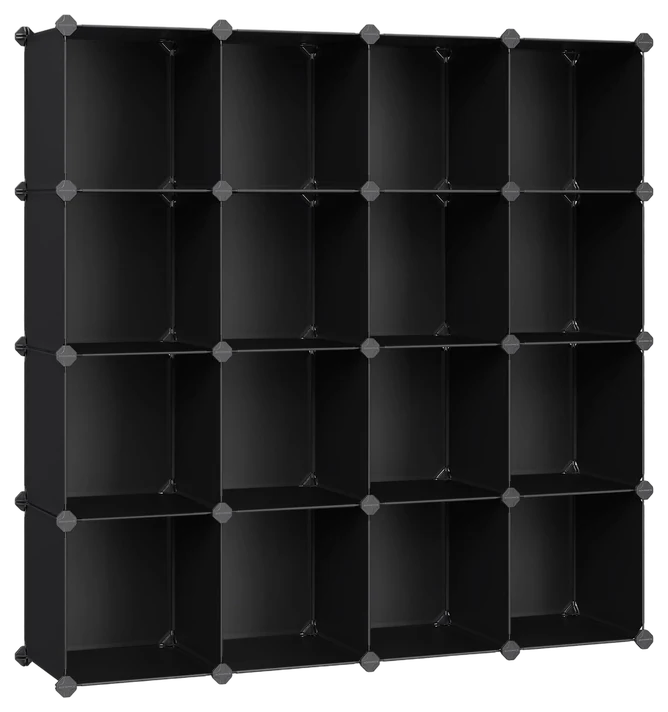
SONGMICS Cube Organizer$40–70The SONGMICS cube organizer, $40–70 — a rare storage buy that gives every object a fixed address rather than a tidier pile.Check price
For the pantry
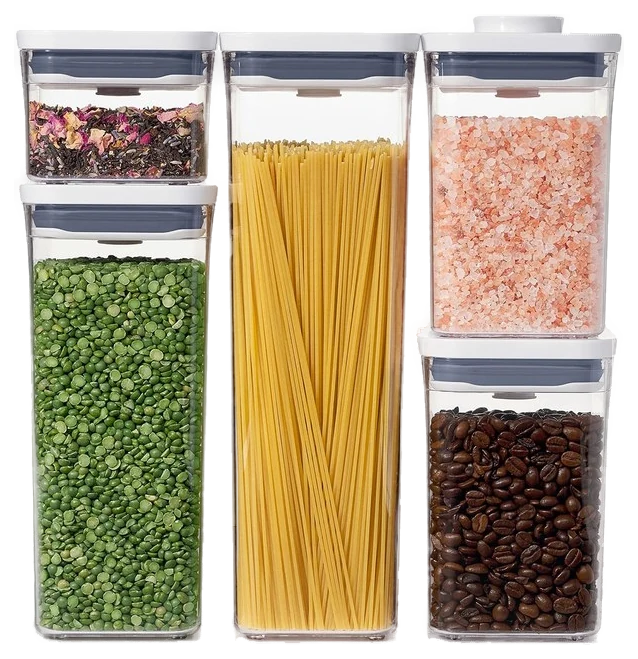
OXO POP Containers$33–113OXO POP containers, $33–113 by set — makes it readable at a glance.Check price
Rule of thumb
Containers don’t organize, systems do — buy for month six, not the January photograph.
Organization products fail when they are prettier than they are useful. We picked the five systems professional organizers deploy on real jobs, the unglamorous workhorses with tens of thousands of repurchase reviews.
How we choseWhat we compared, and how we rank
We compiled professional-organizer recommendations and repurchase-heavy owner reviews, weighting systems that survive real households. Prices are always moving, so every button and link pulls the live listing.
How we rank
Published specifications, verified owner reviews, and independent safety or standards data where it applies — weighted the same for every pick, never sponsored placement.
What changed1 dated note · latest 25 September 2026
CorrectedThis guide’s short answer recommended the SONGMICS cube organizer, but its ranking put the OXO POP containers first. The SONGMICS cube organizer now leads the ranking, so the two agree. No product or price changed.
Dated notes already published on this page, newest first. Every correction we make is logged on the corrections page.
One step before any of this: purge first. A labeled bin for things you do not need is still clutter, just tidier clutter, and the fastest way to end up buying storage twice is to organize what should have been donated or thrown out. Go through the zone you are about to tackle, pull anything broken, expired, or untouched in the last year, and only measure and buy containers for what survives that pass.
Cube organizers are the LEGO of storage, and the SONGMICS system owns the value tier: snap together a closet system, a toy wall, or a rental-friendly bookshelf, then rebuild it differently at the next apartment.
The honest test of the category is surviving re-assembly, and the PP-plastic panels with ABS corner connectors are built to take it. Fabric drawer inserts turn open cubes into closed storage wherever mess needs hiding. Anchor tall configurations to the wall, the one assembly step that isn’t optional with kids around.
It’s wire-and-panel furniture: capacity per cube is real but not bookcase-grade, and the rubber mallet moment during assembly is traditional. At $40–70 on Amazon, it’s renter-proof organization that moves with you.
Each cube is rated for about 22 pounds of static load on the plastic-panel versions, roughly a stack of hardcover books, though fabric-bin configurations top out closer to 11 pounds since the load rests on cloth rather than a panel. The panels are PP plastic reinforced with a metal wire frame and ABS corner connectors, the combination that lets the system survive repeated reconfiguration without the corners rounding out.
Strengths
Reconfigures for every life change
Survives disassembly and moves
Tool-free (mallet-optional) build
Drawer inserts hide the mess
Tradeoffs
Panel capacity has limits
Not fine-furniture looks
Assembly patience required
Pick 2 of 5: No. 2Best pantry system~$33–113 by set
2
OXO POP Containers
Upgrade pickBest pantry system
The pantry standard
Get it if the pantry is your chaos zone and staleness your tax.
Skip it if dry goods barely live in your kitchen. Skip ahead.
The OXO POP system endures because it solves all three pantry failures at once: staleness (one-touch airtight seals), chaos (modular sizes that stack true), and buying a third bag of flour because the first two were hiding.
The push-button lid is the habit-former (one hand, one touch, sealed) and the clear walls turn the pantry into an inventory system. Owner reviews run years deep with the same arc: started with five, now the whole shelf matches. Good Housekeeping’s product lab awarded the line its Seal after testing, praising the one-handed lid, though its reviewers noted the lid can still be lifted without pressing the release button.
They’re premium per container, and hand-washing the lids preserves the seals. At $33–113 by set on Amazon, start with five staples; the system will expand on its own merits.
Sizes span from a 0.6-quart spice-jar container up to a 6-quart big square tall, which is why the system scales from a spice drawer to a 25-pound bag of flour without switching brands or shapes halfway through the pantry. Every size shares the same footprint grid and push-button lid mechanism, so mismatched containers still stack flush, and unlike some competitors, OXO rates the whole lineup dishwasher safe rather than hand-wash-only for the lids.
Strengths
One-touch airtight habit-former
Modular stacking, zero waste
Clear inventory at a glance
Years-deep loyal reviews
Tradeoffs
Premium per-container price
Hand-wash the lid mechanisms
Addictive set expansion
Pick 3 of 5: No. 3Best for garage + attic
3
IRIS WeatherPro Bins
Best for garage + attic
The storage-tote endgame
Get it if garage or attic storage protects things you value.
Skip it if climate-controlled closet storage, cheaper bins suffice.
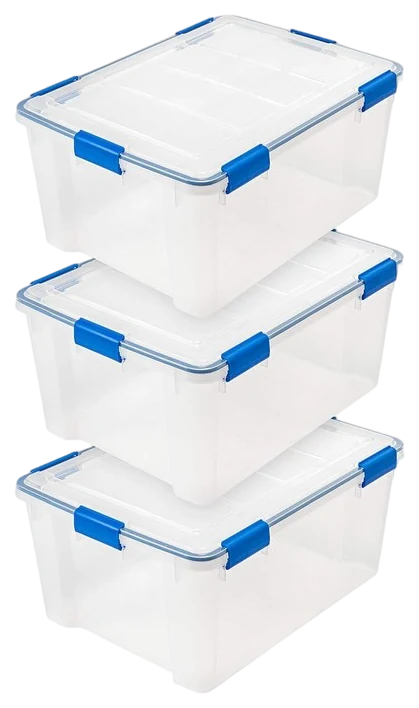
Cardboard boxes in a garage are a slow-motion loss of everything inside them. IRIS WeatherPro totes use a rubber gasket seal under six latches to keep out damp and insects, instead of the snap-fit lid on basic totes, and clear sides end archaeology digs.
The stacking survives actual stacking, the failure point of flimsy totes, and the gasket seal is the difference between opening holiday decorations and opening regrets. Photograph the contents and tape it to the end panel. The veteran move that ends every future search.
They cost more than basic bins and reward measuring shelves first. At $40–50 per 3-pack on Amazon, they’re the last totes the garage and attic need. Buy once, label, done.
IRIS rates its gasket totes by size: the 16-quart holds up to 25 pounds, the 40-quart up to 40, and the 60-quart up to 50, numbers worth checking against what you’re storing before sizing up for headroom you won’t use. Six separate buckle latches run the lid perimeter rather than the two or four on cheaper totes, which is most of why the seal holds under a stack’s worth of weight instead of popping at the corners.
Strengths
Real gasket seal vs. damp + bugs
Clear sides end the digging
Stacks that survive stacking
Community-consensus pick
Tradeoffs
Premium over basic totes
Measure shelves first
Latches want two hands
Also on the shortlist
Two more, in brief
Pick 4 of 5: No. 4Best under $30
4
Lifewit Under-Bed Storage
Best under $30
The seasonal-swap solution
Get it if seasonal clothes are fighting your closet for space.
Skip it if under-bed clearance is already claimed. Measure first.
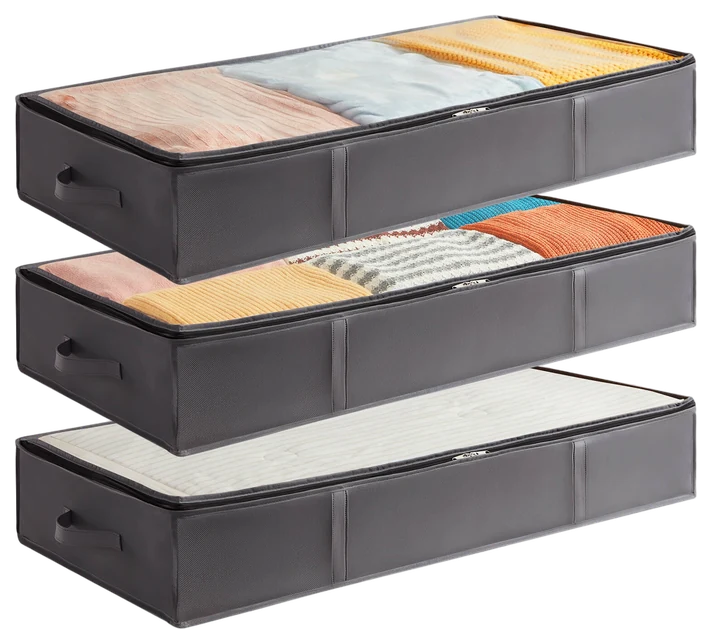
The seasonal wardrobe swap needs exactly this: Lifewit’s zippered bags with clear windows and real reinforced handles that slide under the bed holding a season of bulky clothes.
Tens of thousands of reviews agree on why soft-sided wins here: the bags flex into spaces rigid totes can’t reach, the windows end mystery-bag syndrome, and the handles survive the twice-yearly drag. Cedar blocks tossed inside keep the stored season smelling like a closet instead of a void. PEOPLE’s shopping desk calls the bags “the MVPs of my closet,” and owner reviews back that reputation in volume.
They’re fabric. Sharp bed frames and damp basements are their enemies (that’s the IRIS bins’ turf). At $20–30 for a set on Amazon, they reclaim a closet’s worth of space from the void under the mattress.
The 65-liter size measures roughly 35 by 19 by 6 inches flat, sized to slide under a standard bed frame’s clearance, and Lifewit says it holds about 10 blankets or 15 sweaters, a reasonable proxy for a full off-season wardrobe swap. The zipper is a number-5 stainless-steel track rather than the plastic coil that splits on cheaper bags after a season or two of the twice-yearly drag in and out.
Get it if seasonal clothes are fighting your closet for space.
Skip it if under-bed clearance is already claimed. Measure first.
The seasonal wardrobe swap needs exactly this: Lifewit’s zippered bags with clear windows and real reinforced handles that slide under the bed holding a season of bulky clothes.
Read the full case
Tens of thousands of reviews agree on why soft-sided wins here: the bags flex into spaces rigid totes can’t reach, the windows end mystery-bag syndrome, and the handles survive the twice-yearly drag. Cedar blocks tossed inside keep the stored season smelling like a closet instead of a void. PEOPLE’s shopping desk calls the bags “the MVPs of my closet,” and owner reviews back that reputation in volume.
They’re fabric. Sharp bed frames and damp basements are their enemies (that’s the IRIS bins’ turf). At $20–30 for a set on Amazon, they reclaim a closet’s worth of space from the void under the mattress.
The 65-liter size measures roughly 35 by 19 by 6 inches flat, sized to slide under a standard bed frame’s clearance, and Lifewit says it holds about 10 blankets or 15 sweaters, a reasonable proxy for a full off-season wardrobe swap. The zipper is a number-5 stainless-steel track rather than the plastic coil that splits on cheaper bags after a season or two of the twice-yearly drag in and out.
Strengths
Reclaims the under-bed void
Clear windows end mystery bags
Real handles survive the drag
Cheapest space-per-dollar here
Tradeoffs
Fabric vs. damp. Keep them dry
No rigid protection
Zippers are the wear point
Pick 5 of 5: No. 5The renter’s tool~$8–20 by pack size
5
Command Hooks (Value Pack)
Budget pickThe renter’s tool
Vertical space, no drill required
Get it if vertical space is going unused and deposits matter.
Skip it if you own the walls and drills hold more, screw hooks win.
Half of home clutter is things that belong on walls (bags, cords, brooms, keys) and Command hooks put them there without consequences, which is why they’re the renter’s organizing tool of record.
The damage-free promise holds when the instructions do: clean the wall, press firmly, wait the hour, and respect the weight ratings. The large hooks hold more than intuition suggests, and removal leaves paint intact. Good Housekeeping calls Command hooks one of the most popular products its readers turn to for exactly this job, and its product testers confirm the straight-down pull-tab removal leaves paint intact when the instructions are followed.
Humid bathrooms and textured walls are the known failure zones. Check the specialty variants. At $8–20 for the value pack on Amazon, the variety pack solves a dozen micro-clutters in an afternoon.
The value pack mixes weight classes: most large hooks in these sets hold up to 10 pounds and the heaviest XL variants stretch to 15, so it’s worth matching the rated hook to the actual coat or bag rather than grabbing whichever one is left in the drawer. Removal depends on pulling the tab slowly and straight down, parallel to the wall rather than outward, which stretches the adhesive to release its grip instead of yanking paint off with it.
Strengths
Walls without landlord consequences
Large hooks hold real weight
Clean removal that works
Solves a dozen clutters cheap
Tradeoffs
Humidity is the enemy
Textured walls need variants
Weight ratings are real limits
Pick 5 of 5: No. 5The renter’s tool~$8–20 by pack size
Get it if vertical space is going unused and deposits matter.
Skip it if you own the walls and drills hold more, screw hooks win.
Half of home clutter is things that belong on walls (bags, cords, brooms, keys) and Command hooks put them there without consequences, which is why they’re the renter’s organizing tool of record.
Read the full case
The damage-free promise holds when the instructions do: clean the wall, press firmly, wait the hour, and respect the weight ratings. The large hooks hold more than intuition suggests, and removal leaves paint intact. Good Housekeeping calls Command hooks one of the most popular products its readers turn to for exactly this job, and its product testers confirm the straight-down pull-tab removal leaves paint intact when the instructions are followed.
Humid bathrooms and textured walls are the known failure zones. Check the specialty variants. At $8–20 for the value pack on Amazon, the variety pack solves a dozen micro-clutters in an afternoon.
The value pack mixes weight classes: most large hooks in these sets hold up to 10 pounds and the heaviest XL variants stretch to 15, so it’s worth matching the rated hook to the actual coat or bag rather than grabbing whichever one is left in the drawer. Removal depends on pulling the tab slowly and straight down, parallel to the wall rather than outward, which stretches the adhesive to release its grip instead of yanking paint off with it.
Strengths
Walls without landlord consequences
Large hooks hold real weight
Clean removal that works
Solves a dozen clutters cheap
Tradeoffs
Humidity is the enemy
Textured walls need variants
Weight ratings are real limits
Buy for the space and the job, not for how the bins look in a photo.
Measure the shelf or drawer first: the prettiest bins are useless if they’re an inch too tall for the cabinet, so grab a tape measure before you order.
Match the seal to the setting: airtight containers keep pantry food fresh, while gasketed totes are what you want against dust and damp in a garage or attic.
Favor stackable, modular pieces: systems that add on and stack let your storage grow instead of forcing a do-over when you buy more.
The common mistake: buying containers before you declutter, so you end up neatly storing stuff you should have tossed.
mDesign Plastic Storage Bins — handy open-front bins for a fridge or pantry, but they’re open on top, so they don’t seal out air or pests the way our pantry pick does.
Rubbermaid Brilliance Food Storage — excellent leak-proof containers, but they’re for leftovers in the fridge, not the dry-goods pantry job this guide is about.
YouCopia SpiceStack — a clever pull-down spice rack, but it only solves one narrow cabinet problem, so it’s a nice add-on rather than a core system.
The zone that annoys you daily, usually the pantry or entryway, not the garage. A quick visible win builds the habit; professional organizers sequence jobs exactly this way. And declutter before you containerize: organizing things you should discard is expensive procrastination.
Clear bins or opaque bins?
Clear, almost always. Visibility is retrieval. The exception is display shelving where visual calm matters; there, opaque bins with labels win. For garages, attics, and closets, if you can’t see it, you effectively don’t own it.
Do Command hooks not damage walls?
Pulled correctly (stretch the tab straight down, slowly) they release clean from paint, which is why landlords stopped arguing about them. Follow the weight ratings; the failures in reviews are almost all overloading.
How do I keep an organized space organized?
The professionals’ three rules: every category gets one labeled home (the POP and IRIS systems enforce this physically), one-in-one-out keeps volume constant, and a ten-minute weekly reset beats a seasonal overhaul every time. The deeper trick is friction design. The reason these picks work is that putting things away becomes easier than putting them down. Systems that require willpower fail; systems that remove decisions survive.
What should I declutter before buying storage?
The professional sequence is always: purge first, measure second, buy third. Reversed order is how containers become clutter. The fast pass: expired pantry goods, single-use gadgets untouched in a year, clothes that missed the last two seasons, and every mystery cable (photograph, then recycle). Only what survives earns a container. Most people who do the purge buy half the storage they expected to, which the budget appreciates.
How do I label and maintain the system?
Label the container’s home, not just the container. A strip on the shelf edge means anyone can restock correctly, which is how systems survive housemates and kids. A $20 label maker earns cult status here, but masking tape and a marker run the same play. Photograph bin contents for attic and garage totes (tape the photo to the end), and date anything perishable. The maintenance rhythm: relabel when contents drift, which the clear containers will tell you at a glance.
25Sep 2026Correction, 25 September 2026This guide’s short answer recommended the SONGMICS cube organizer, but its ranking put the OXO POP containers first. The SONGMICS cube organizer now leads the ranking, so the two agree. No product or price changed.Every correction we’ve made ›
Prices on this page are re-checked weekly — see the full Home & Kitchen price index for every product we cover.
Keep reading
Where to go next.
Related guides, then every guide in the department.
New guides, re-ranked picks and the month's notable changes. No weekly filler, ever.
Unsubscribe any time. Your address goes to our newsletter provider and nowhere else — see our privacy policy.
Manage Consent
To provide the best experiences, we use technologies like cookies to store and/or access device information. Consenting to these technologies will allow us to process data such as browsing behavior or unique IDs on this site. Not consenting or withdrawing consent, may adversely affect certain features and functions.
Functional
Always active
The technical storage or access is strictly necessary for the legitimate purpose of enabling the use of a specific service explicitly requested by the subscriber or user, or for the sole purpose of carrying out the transmission of a communication over an electronic communications network.
Preferences
The technical storage or access is necessary for the legitimate purpose of storing preferences that are not requested by the subscriber or user.
Statistics
The technical storage or access that is used exclusively for statistical purposes.The technical storage or access that is used exclusively for anonymous statistical purposes. Without a subpoena, voluntary compliance on the part of your Internet Service Provider, or additional records from a third party, information stored or retrieved for this purpose alone cannot usually be used to identify you.
Marketing
The technical storage or access is required to create user profiles to send advertising, or to track the user on a website or across several websites for similar marketing purposes.