The Best Cookware of 2026:Five Pieces That Replace a Full Set
Cookware sets are how brands sell you six pans you don’t need. Serious kitchens run on a handful of specialists. We compared test-kitchen results and decade-long durability records to pick the five that matter.
By the BYB Editorial Team
Published July 28, 2026 · Updated · Prices checked OctoberOct 5, 2026
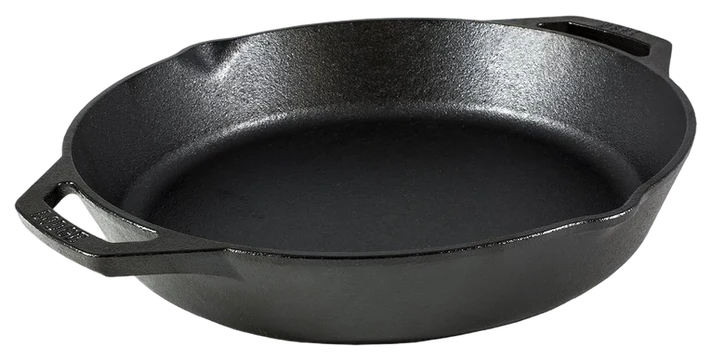
Lodge Cast Iron Skillet$25–45The Lodge cast iron skillet, about $25–45 — it sears better than pans costing ten times more and will outlive whoever buys it.Check price
Worth paying up for
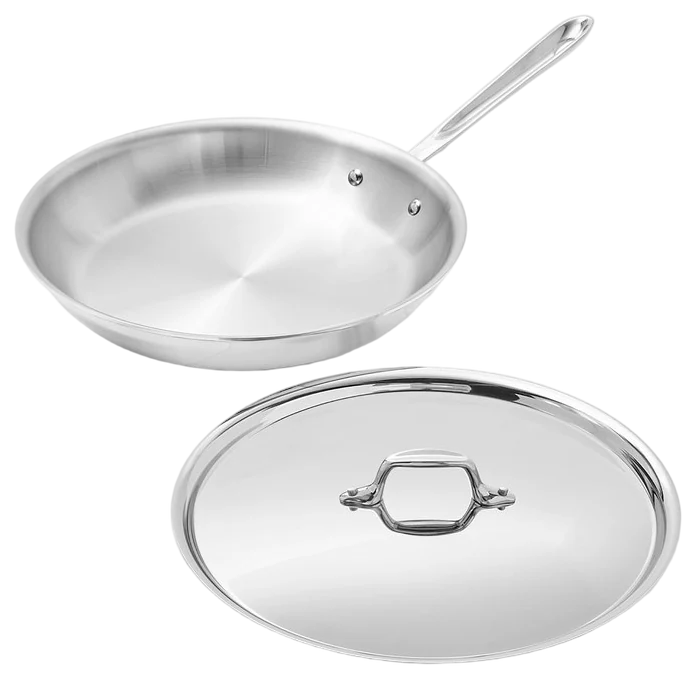
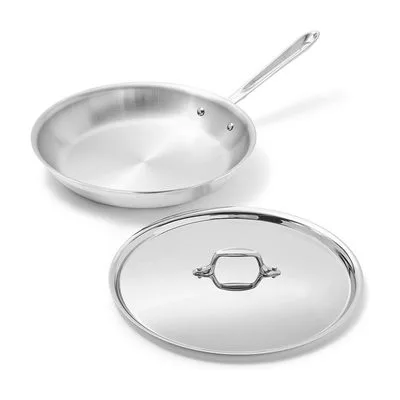
All-Clad D3 Stainless Pan$110–160All-Clad D3 stainless pan, $110–160 — the one you build a sauce in.Check price
Round out the five
Tramontina nonstick ($25–45) for eggs, and a Victorinox Fibrox chef’s knife ($50–67) — no matched set to buy. They also double as a strong start on the best housewarming gifts for a new kitchen.
Cookware sets are how brands sell you six pans you don’t need. Serious kitchens run on a handful of specialists. We compared test-kitchen results and decade-long durability records to pick the five that matter.
How we choseWhat we compared, and how we rank
We compiled America’s Test Kitchen and Serious Eats results, material science on each pan type, and long-term owner reviews. Prices are always moving, so every button and link pulls the live listing.
How we rank
Published specifications, verified owner reviews, and independent safety or standards data where it applies — weighted the same for every pick, never sponsored placement.
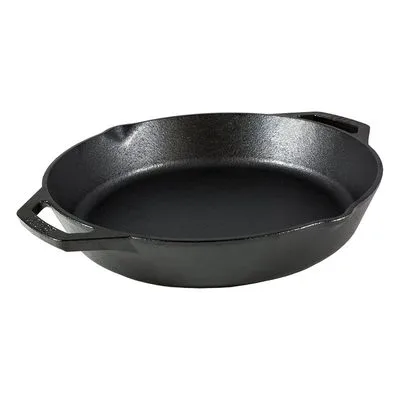
The Lodge skillet is American cookware’s great equalizer: thirty-odd dollars buys the same steakhouse sear, cornbread crust, and oven-to-fire versatility as boutique iron at ten times the price. A fact blind cooking tests keep confirming.
The 12-inch size, the one America’s Test Kitchen named its Best Buy pick in cast-iron skillet testing, weighs about 8 pounds, substantial enough to hold heat through a cold steak without warping. ATK noted the surface arrived slightly pebbly and a touch sticky out of the box but released food reliably within a few cooking sessions.
Lodge rates its cast iron oven-safe to 500 degrees Fahrenheit, a conservative ceiling set more for handles and factory seasoning than the iron itself. Every pan carries the Made Right lifetime warranty, covering material and workmanship defects for the original owner, a guarantee rare at this end of the cookware aisle.
Pre-seasoned out of the box and effectively indestructible, it does the jobs nonstick can’t survive: screaming-hot sears, broiler finishes, campfire duty. The care ritual is thirty seconds (rinse, dry, wipe of oil) and it repays that with decades. Literally: these get inherited.
Strengths
Steakhouse sear for $30
Oven, broiler, and fire safe
Effectively immortal
Pre-seasoned and ready
Tradeoffs
Heavy. Wrists will notice
Handle gets branding-hot
Needs its 30-second care ritual
Pick 2 of 5: No. 2The workhorse~$110–160
2
All-Clad D3 Stainless Pan
Upgrade pickThe workhorse
The pan chefs own
Get it if you cook often enough to want real pan sauces, and you want the pan to outlast the kitchen.
Skip it if eggs and gentle cooking dominate. That’s nonstick’s job, at a quarter of the price.
When test kitchens name a stainless pan, the All-Clad D3 is the pan: bonded tri-ply that spreads heat evenly to the rim, browning that behaves predictably, and the fond-building that turns pan drippings into actual sauce.
Construction is a core of aluminum bonded between two layers of stainless steel, extending full tri-ply from base to rim rather than stopping at a stamped disk bottom, so heat and warranty coverage both reach the sides, not just the cooking surface. All-Clad rates the line oven and broiler safe to 600 degrees Fahrenheit, well past most home ovens’ ceiling. The manufacturer backs D3 with a Limited Lifetime Warranty against manufacturing defects, transferable to a new owner and honored on pans decades old, a policy few competitors in stainless cookware can match.
This is the piece that makes cooking feel like technique instead of luck: sauté, sear, deglaze, finish in the oven, then dishwasher it without guilt. The lifetime warranty is real and honored; D3 pans from the nineties are still working America’s dinners.
Strengths
Even edge-to-edge heating
Builds fond for real pan sauces
Lifetime warranty, honored
Dishwasher and oven safe
Tradeoffs
Premium price
Divisive handle shape
Demands heat-management skills
Pick 3 of 5: No. 3Best under $50
3
Tramontina Professional Nonstick
Best under $50
The egg pan, solved cheaply
Get it if breakfast happens daily and you like winning the value game.
Skip it if you expect nonstick to sear steaks. That’s the Lodge’s job.
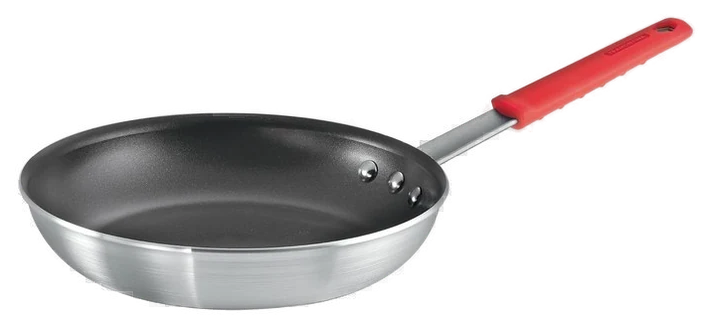
Nonstick coatings all wear out (that’s chemistry, not brand failure) so the winning move is the best cheap one, replaced every few years. The Tramontina Professional has won America’s Test Kitchen’s nonstick testing for years against pans at triple its price.
The pan is heavy-gauge aluminum with a reinforced nonstick coating that Tramontina markets as PFOA-free, bonded to a triple-riveted stainless steel handle rather than a screwed-on one that eventually wobbles. It’s oven-safe to 500 degrees Fahrenheit bare, dropping to 400 with the removable silicone grip attached, and dishwasher-safe despite the nonstick coating’s usual dishwasher aversion.
One real limitation is that it isn’t induction-compatible, so cooktop shoppers converting to induction need a different pan; the quick way to check any pan you’re considering is the magnet test, and it fails here, since a magnet won’t grip plain aluminum. Tramontina backs it with a lifetime warranty against manufacturing defects, though coating wear from use isn’t a defect.
Eggs slide, crepes flip, fish releases. The restaurant-supply build takes daily heat without warping, and the price makes replacement guilt-free when the coating eventually tires. That replaceability mindset is the entire correct approach to nonstick.
Strengths
Beats triple-price pans in testing
Restaurant-supply durability
Guilt-free replacement economics
Eggs slide off clean
Tradeoffs
All coatings wear. Plan on it
Not for max-heat searing
Utilitarian looks
Also on the shortlist
Two more, in brief
Pick 4 of 5: No. 4The braising pot
4
Lodge Enameled Dutch Oven
The braising pot
The everything pot
Get it if braises, soups, or bread are calling your name.
Skip it if you never cook low-and-slow. The skillet covers you.
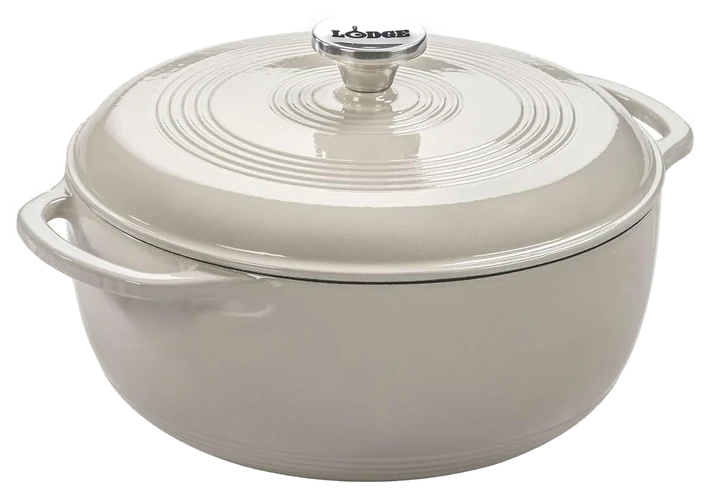
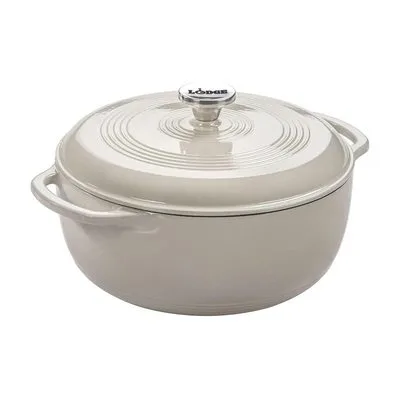
The Dutch oven handles everything liquid and slow (braises, stews, stocks, and the no-knead bread that made these pots famous) and the Lodge enameled version keeps matching Le Creuset in blind cooking tests at one-fifth the price.
At six quarts, the pot measures roughly 10.75 inches across the cooking surface and weighs about 13 to 14 pounds empty, heavy enough that lifting it full of braising liquid is a two-hand job. Lodge rates the enamel safe up to 500 degrees Fahrenheit and compatible with gas, electric, ceramic, and induction cooktops, covering the range most kitchens have. The Made Right limited lifetime warranty covers defects in material and workmanship for the original owner, though it excludes commercial use, overheating, and empty-pan abuse, the kind of misuse that cracks enamel regardless of brand.
Enameled means no seasoning ritual and no acid anxiety: tomato sauces, wine braises, and citrus all welcome. Six quarts is the family sweet spot, one pot roast, one batch of chili, one boule of bread at a time: and the colors earn their spot on open shelving.
Get it if braises, soups, or bread are calling your name.
Skip it if you never cook low-and-slow. The skillet covers you.
The Dutch oven handles everything liquid and slow (braises, stews, stocks, and the no-knead bread that made these pots famous) and the Lodge enameled version keeps matching Le Creuset in blind cooking tests at one-fifth the price.
Read the full case
At six quarts, the pot measures roughly 10.75 inches across the cooking surface and weighs about 13 to 14 pounds empty, heavy enough that lifting it full of braising liquid is a two-hand job. Lodge rates the enamel safe up to 500 degrees Fahrenheit and compatible with gas, electric, ceramic, and induction cooktops, covering the range most kitchens have. The Made Right limited lifetime warranty covers defects in material and workmanship for the original owner, though it excludes commercial use, overheating, and empty-pan abuse, the kind of misuse that cracks enamel regardless of brand.
Enameled means no seasoning ritual and no acid anxiety: tomato sauces, wine braises, and citrus all welcome. Six quarts is the family sweet spot, one pot roast, one batch of chili, one boule of bread at a time: and the colors earn their spot on open shelving.
Strengths
Blind-test rival to $400+ pots
No seasoning, acid-friendly
Bread, braises, stocks, chili: all of it
Family-right 6-quart size
Tradeoffs
Enamel chips if abused
Heavy when full
Hand-wash preferred
Pick 5 of 5: No. 5The only knife you need
5
Victorinox Fibrox Chef’s Knife
The only knife you need
The knife pros grab first
Get it if you want the knife that builds skills, not shelf appeal.
Skip it if knife collecting is the hobby, enjoy the rabbit hole.
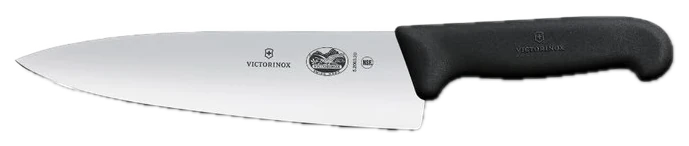
The Victorinox Fibrox is the worst-kept secret in professional kitchens: a grippy, perfectly balanced, scary-sharp eight-inch blade at a price that lets you learn on it guilt-free: which is why culinary schools hand it to every incoming class.
The blade runs 8.3 inches of X50CrMoV15 stainless steel, tempered to roughly 56 on the Rockwell C scale and ground to a 15-degree edge on each side, an angle geared toward easy home resharpening rather than showroom hair-splitting. The handle material, Fibrox thermoplastic elastomer, carries its own NSF certification for commercial kitchen sanitation, and the whole knife is dishwasher-safe, unusual for a blade this capable. Victorinox hand-finishes each one in Switzerland, and the stamped construction, cut from sheet steel rather than hammered from a billet, is exactly what keeps it light through a long prep shift.
Knife skills matter more than knife spend, and this is the blade to build them on: light enough for hours of prep, tough enough for home sharpening mistakes, and many cooks never leave it. Test kitchens have recommended it for decades without blinking.
Get it if you want the knife that builds skills, not shelf appeal.
Skip it if knife collecting is the hobby, enjoy the rabbit hole.
The Victorinox Fibrox is the worst-kept secret in professional kitchens: a grippy, perfectly balanced, scary-sharp eight-inch blade at a price that lets you learn on it guilt-free: which is why culinary schools hand it to every incoming class.
Read the full case
The blade runs 8.3 inches of X50CrMoV15 stainless steel, tempered to roughly 56 on the Rockwell C scale and ground to a 15-degree edge on each side, an angle geared toward easy home resharpening rather than showroom hair-splitting. The handle material, Fibrox thermoplastic elastomer, carries its own NSF certification for commercial kitchen sanitation, and the whole knife is dishwasher-safe, unusual for a blade this capable. Victorinox hand-finishes each one in Switzerland, and the stamped construction, cut from sheet steel rather than hammered from a billet, is exactly what keeps it light through a long prep shift.
Knife skills matter more than knife spend, and this is the blade to build them on: light enough for hours of prep, tough enough for home sharpening mistakes, and many cooks never leave it. Test kitchens have recommended it for decades without blinking.
Match the metal to the job: stainless for searing and pan sauces, cast iron for heat retention, nonstick only for eggs and delicate fish.
Heft over spec sheets: a pan that feels balanced in your hand is the one you’ll reach for, no matter what the thickness numbers say.
Treat nonstick as a wear item: even good coatings fade in a couple of years, so don’t sink premium money into one.
Skip the set: those six-piece boxes pad the count with lids and pans you’ll never use, and per-piece quality drops to hit the price.
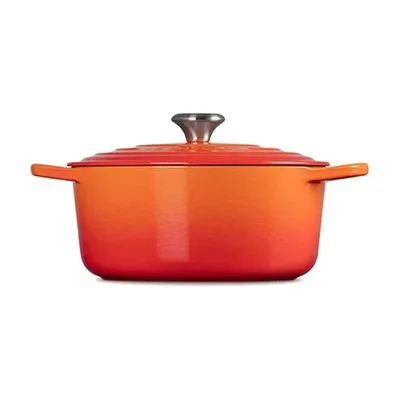
Le Creuset Signature Dutch Oven — it’s a lifetime pot, but the Lodge enameled one does the same job for a fraction, so you’re mostly paying for the color and the badge.
Made In Stainless Clad Frying Pan — a genuine All-Clad rival that even beats it in some tests, but it’s direct-to-consumer, so it’s not as easy to grab or return as All-Clad off the shelf.
De Buyer Mineral B Carbon Steel Pan — brilliant once it’s seasoned, but the weeks-long break-in frustrates anyone coming from nonstick, so it’s not a first pan.
Caraway Ceramic Nonstick — pretty and marketed as PTFE-free, but the ceramic coating fades in about 18 to 24 months of regular use, so it’s a replace-it pan, not a keep-it-forever one.
Cookware FAQs
6 common questions, answered.
Are expensive cookware sets worth it?
Almost never, sets bundle filler pieces to justify the price. The five specialists above cover essentially all home cooking for around $300 total, each being the best tool for its job rather than a compromise in a matching box.
Is nonstick cookware safe?
The FDA authorizes PTFE for food-contact use and considers it safe at normal cooking temperatures. The rules are: don’t preheat it empty, keep it below broiler-level heat, and replace it when scratched. Buying cheap and replacing every few years is both the safe play and the economical one.
How do I maintain cast iron?
Easier than the folklore: wash it (soap is fine), dry it on the burner, wipe a drop of oil in. That’s it. The seasoning builds with use, the pan literally improves the more you cook.
What should I buy first if I’m starting from nothing?
In order: the Victorinox knife (skills live here), the Lodge skillet (searing and oven work), then the Tramontina nonstick (breakfast). That’s a complete starter kitchen under $120. The stainless All-Clad joins when pan sauces call, and the Dutch oven arrives with your first braise or bread ambition. Buying in this order means every dollar lands on something used weekly.
What cookware works on induction stoves?
Cast iron and enameled cast iron are induction royalty, the Lodge pieces excel, and All-Clad’s D3 is fully induction-ready. Check the Tramontina variant you buy (most current ones are compatible; the magnet test settles it in one second). The practical note induction newcomers learn fast: cast iron heats quicker on induction than gas ever managed, so preheat gentler than habit suggests.
How do I keep stainless steel from sticking?
Heat management, not coatings: preheat the dry pan on medium until a water drop dances (the Leidenfrost point), add oil, then food: and let proteins release on their own schedule; they unstick themselves when properly seared. Most sticking complaints are impatience wearing an apron. Deglaze the brown fond with liquid afterward and you’ve discovered why stainless outcooks nonstick: that fond is flavor, not failure.
Sources
Who the write-ups above lean on, and where each one is cited.
America’s Test KitchenCited for Lodge Cast Iron Skillet and Tramontina Professional Nonstick, and in the buying advice.
Serious EatsCited in the buying advice.
NSFCited for Victorinox Fibrox Chef’s Knife, and in the buying advice.
20Aug 2026Correction, 20 August 2026In an audit pass, the Victorinox steel grade was given as X55CrMo14; it is X50CrMoV15. Logged on the corrections page.Every correction we’ve made ›
Prices on this page are re-checked weekly — see the full Home & Kitchen price index for every product we cover.
Keep reading
Where to go next.
The close calls side by side, then related guides.
New guides, re-ranked picks and the month's notable changes. No weekly filler, ever.
Unsubscribe any time. Your address goes to our newsletter provider and nowhere else — see our privacy policy.
Manage Consent
To provide the best experiences, we use technologies like cookies to store and/or access device information. Consenting to these technologies will allow us to process data such as browsing behavior or unique IDs on this site. Not consenting or withdrawing consent, may adversely affect certain features and functions.
Functional
Always active
The technical storage or access is strictly necessary for the legitimate purpose of enabling the use of a specific service explicitly requested by the subscriber or user, or for the sole purpose of carrying out the transmission of a communication over an electronic communications network.
Preferences
The technical storage or access is necessary for the legitimate purpose of storing preferences that are not requested by the subscriber or user.
Statistics
The technical storage or access that is used exclusively for statistical purposes.The technical storage or access that is used exclusively for anonymous statistical purposes. Without a subpoena, voluntary compliance on the part of your Internet Service Provider, or additional records from a third party, information stored or retrieved for this purpose alone cannot usually be used to identify you.
Marketing
The technical storage or access is required to create user profiles to send advertising, or to track the user on a website or across several websites for similar marketing purposes.