The Best Coffee Gear of 2026:Espresso, Pour-over, and Where to Spend
Good home coffee is mostly three purchases: a real grinder, water you can control, and the brewer that suits how you drink. We compared barista testing and years of owner reviews to pick five pieces worth owning.
By the BYB Editorial Team
Published July 28, 2026 · Prices checked OctoberOct 12, 2026
Baratza Encore$150–170The Baratza Encore, about $150–170 first — it will improve your coffee more than the $500 Breville Bambino Plus, and buying those two in the wrong order is the most common mistake in this hobby.Check price
Smaller budget
AeroPress Original$35–45AeroPress Original, $35–45 — makes a better cup than most drip machines and rinses clean in seconds. Add the Bambino Plus once the grinder is sorted.Check price
Good home coffee is mostly three purchases: a real grinder, water you can control, and the brewer that suits how you drink. We compared barista testing and years of owner reviews to pick five pieces worth owning.
Not sure which fits you? Answer two questions
Right for you?
Which pick is right for you?
Two quick questions. The answer is the guide’s own reason for one of its picks.
How we choseWhat we compared, and how we rank
We read testing from Serious Eats, Wirecutter and specialty-coffee reviewers, alongside long-term reliability reports. Prices move constantly, so every button pulls the live listing.
How we rank
Published specifications, verified owner reviews, and independent safety or standards data where it applies — weighted the same for every pick, never sponsored placement.
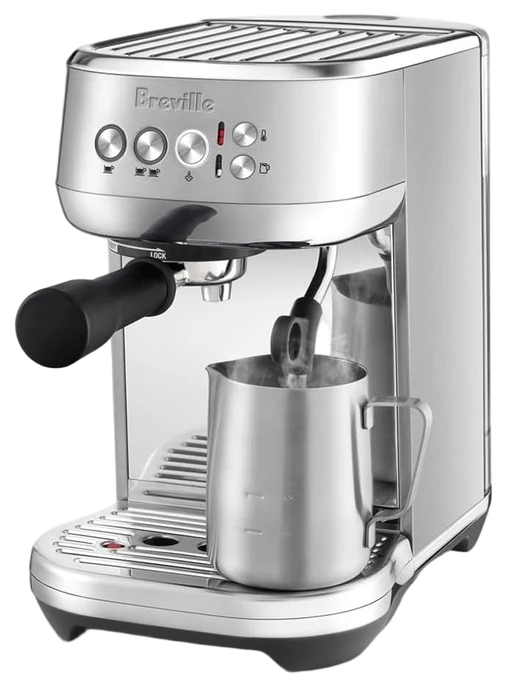
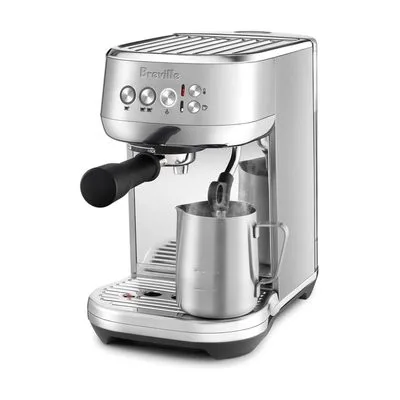
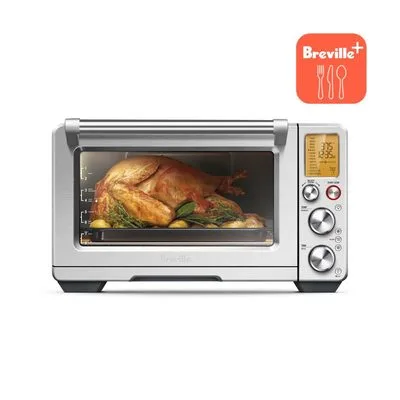
The Breville Bambino Plus is the espresso pick because it removes the two beginner-killers: heat-up and milk. Breville’s ThermoJet reaches extraction temperature in three seconds. The steam wand textures milk automatically at three temperatures and three levels, or manually if you want to learn. The auto mode is the reason to buy this over the cheaper Bambino.
Coffeeness’s reviewer shortened the factory nine-second pre-infusion to about five, then recorded 28 to 30 second extractions with luxurious crema. The reviewer also poured latte art from microfoam the machine made on its own at around 144°F. Current price runs $400 to $500 on Amazon against a $499.95 list.
The complaints are concrete. The 54 mm portafilter ships with a plastic insert Coffeeness recommends replacing with a standard or bottomless Breville one. Owners report the machine is light enough to shift as you lock in the portafilter, especially with a low water tank. The small drip tray also fills fast.
Breville lists dimensions of 11.9 by 7.4 by 14.3 inches, and Coffeeness’s spec table gives a 64.2 fl oz reservoir with a two-year warranty. There’s no grinder, which is why the Baratza Encore below is the natural pairing. If you want the grinder built in plus a manual wand, the Barista Express at $699.95 is Breville’s own step up.
Strengths
3-second heat-up, no warmup wait
Automatic milk texturing that works
Café-quality shots from a small footprint
One of the few machines TechGearLab tested to hit an 18% extraction yield
Tradeoffs
Needs a real grinder to shine
Small drip tray fills fast
Auto milk caps latte-art ambitions
Pick 2 of 5: No. 2Buy this first
2
Baratza Encore
Buy this first
The upgrade that changes everything
Get it if you want to fix the thing that matters most.
Skip it if you only pull espresso. Look at espresso-range grinders instead.
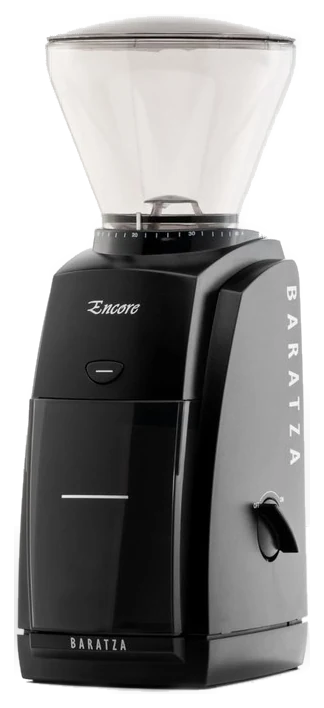
The Baratza Encore is the guide’s grinder because of what surrounds the burrs. Prima Coffee’s spec sheet gives 40 mm hardened steel conical burrs and a 450 RPM DC motor with a gear reducer that cuts heat and static. It lists 40 grind settings spanning 250 to 1200 microns. Homegrounds maps that range from moka pot at the fine end through French press at the coarse one.
Homegrounds clocked it right around 80 dB, a few notches below average grinder volume, and found grind uniformity well ahead of the other budget grinders it tested. It sells for $150 to $170 on Amazon, right at its $149.95 list, with a one-year warranty.
The repair story is the durability story. Baratza publishes exploded-view parts diagrams and sells the individual parts, and Homegrounds notes plenty of online testimonials about decade-old Encores alongside Baratza’s stated ten-year design target. The limits: a single pour-over dose grinds in about fifteen seconds, but 120 grams for a full carafe takes over two minutes. The casing, hopper and grounds bin are plastic, and consistency is best from medium-fine to medium-coarse. It cannot grind for unpressurized espresso, and Baratza’s Encore ESP at $199.95 exists for exactly that job once your machine outgrows pressurized baskets.
Strengths
The proven first-grinder for 15 years
Every part replaceable, repair-guided
40 settings cover every method
Uniform grind = better everything
Tradeoffs
Slow-ish grinding pace
Espresso range is its stretch
Plain plastic looks
Pick 3 of 5: No. 3Best under $50~$35–45
3
AeroPress Original
Budget pickBest under $50
The $40 cup that embarrasses machines
Get it if you want good coffee without any ceremony.
Skip it if you brew for a household. The OXO pot handles crowds.
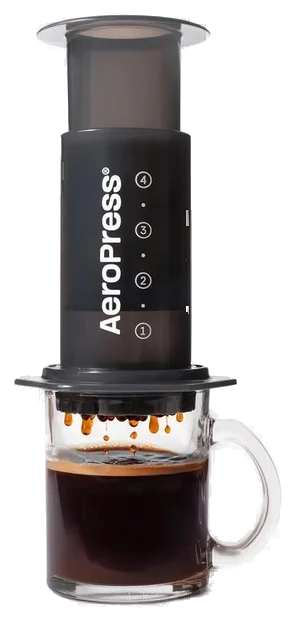
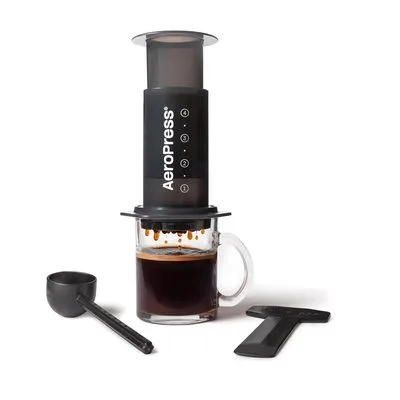
AeroPress lists the Original at $39.95, typically $35 to $45 on Amazon, with a 10 oz capacity covering one to two cups, and a two minute brew and clean cycle. The company describes the method as 3 in 1: fast immersion under air pressure, pushed through a paper micro filter that keeps grit out of the cup.
Speeding up extraction that way is what AeroPress credits for the lower bitterness. AeroPress lists the chamber as BPA-free polypropylene. Complete with plunger, filter cap, scoop and stirrer the kit weighs 7.75 ounces, dropping to 6.5 ounces in travel configuration, and it carries a one year warranty.
CoffeeChronicler rates the build highly, notes he has never heard of anyone breaking a part, and points out that the brewer essentially rinses itself as you press. He is more measured on flavor: the paper filter traps oils and pushes the result toward pour over clarity, and getting an outstanding cup takes practice rather than luck.
Capacity and range are the limits here. It serves one or two people, not a household. It can pull a strong concentrated shot, but CoffeeChronicler is clear it can’t make genuine espresso. Home Grounds puts the plunger’s real working pressure at roughly 0.35 to 0.75 bar against espresso’s nine, and AeroPress concedes the point itself. AeroPress sells the Original XL at $79.95 for double the volume, 20 oz across two to four cups, with a shatterproof Tritan carafe included.
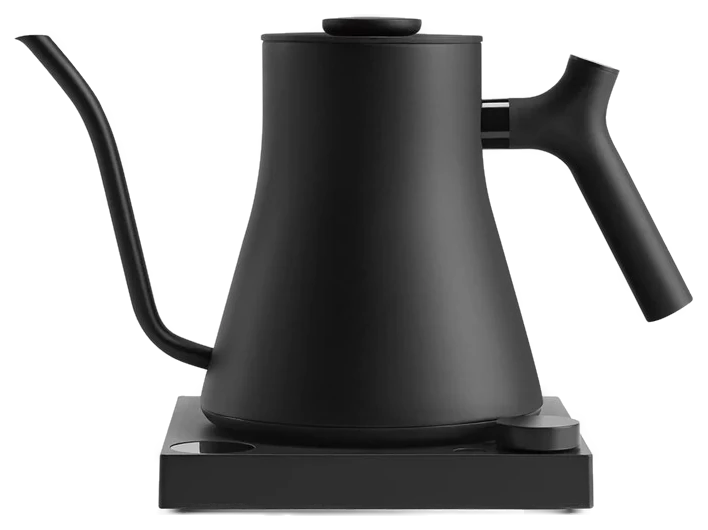
The Fellow Stagg EKG Pro is the kettle for people who care about the pour. Fellow lists to-the-degree control from 104 to 212°F, PID holding the setpoint and 0.9 liters of capacity. It also lists a Guide Mode with suggested brew temperatures and a hold mode keeping the setpoint for up to 60 minutes.
TechGearLab measured the standard EKG holding a 200°F setpoint within half a degree. Reviewed, testing the Pro, found it heats faster than the original rather than merely matching it. That matters because the original was among the slowest kettles Reviewed had run. It sells for about $200 on Amazon, matching Fellow’s $199.95 list, and the deliberately slow spout is the point rather than a flaw.
Tea and speed are the limits here. TechGearLab found the intentionally slow pour could feel tedious if you mainly fill a large French press quickly. It also logged more than five degrees of overshoot at green-tea temperatures and called the stock lid thermometer wildly off. Fellow no longer lists the standard EKG new on its own store, where the range is now the Pro and the Pro Studio Edition. The old model is available only as the $132 refurbished Rebrew when stock appears. The Pro is the Stagg you can buy.
The Fellow Stagg EKG Pro is the kettle for people who care about the pour. Fellow lists to-the-degree control from 104 to 212°F, PID holding the setpoint and 0.9 liters of capacity. It also lists a Guide Mode with suggested brew temperatures and a hold mode keeping the setpoint for up to 60 minutes.
Read the full case
TechGearLab measured the standard EKG holding a 200°F setpoint within half a degree. Reviewed, testing the Pro, found it heats faster than the original rather than merely matching it. That matters because the original was among the slowest kettles Reviewed had run. It sells for about $200 on Amazon, matching Fellow’s $199.95 list, and the deliberately slow spout is the point rather than a flaw.
Tea and speed are the limits here. TechGearLab found the intentionally slow pour could feel tedious if you mainly fill a large French press quickly. It also logged more than five degrees of overshoot at green-tea temperatures and called the stock lid thermometer wildly off. Fellow no longer lists the standard EKG new on its own store, where the range is now the Pro and the Pro Studio Edition. The old model is available only as the $132 refurbished Rebrew when stock appears. The Pro is the Stagg you can buy.
Strengths
±1°F temperature control
Precision gooseneck pour
Beautiful on a counter
Hour-long temperature hold
Tradeoffs
Luxury pricing for a kettle
Smaller 0.9L capacity
Slow-ish to boil full
Pick 5 of 5: No. 5Best drip machine
5
OXO Brew 8-Cup
Best drip machine
The drip machine that brews it right
Get it if the household drinks pots and deserves better ones.
Skip it if you brew single cups. The AeroPress does it better for less.
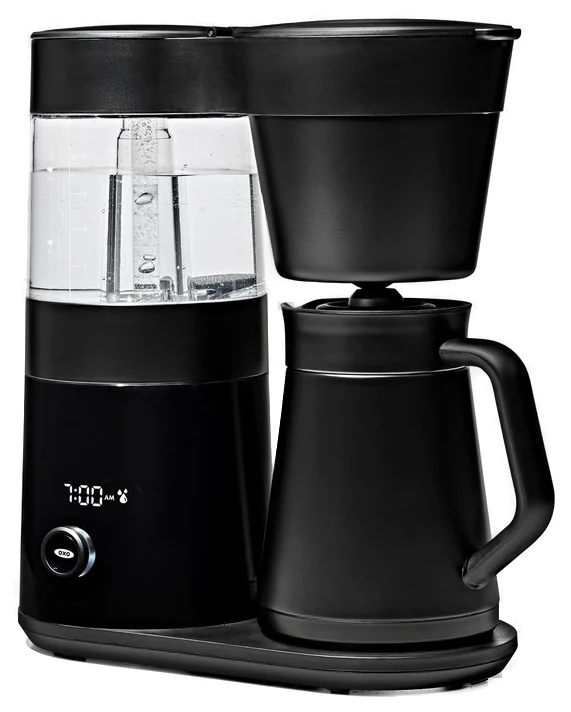
The OXO Brew 8-Cup, about $220 on Amazon, is an SCA Certified Home Brewer, judged against the SCA Golden Cup standard. OXO specs the brew water at 197.6 to 204.8°F. TechGearLab measured an average of 193.6°F across its testing, under the SCA’s own 195 to 204°F window. That’s worth knowing before treating the badge as the whole story.
HomeBaristas lists a 1400 watt element feeding the rainmaker showerhead, which spreads water across the whole bed instead of boring one channel through it. It also lists a double-walled stainless thermal carafe, so there’s no hot plate cooking the pot after brewing. A single dial and button run everything.
Trusted Reviews scored it five stars and faulted only the fixed water tank, which does not come out for cleaning. Forbes named it best overall after testing several drip machines. Forbes measured 190 to 200°F during brewing and timed a full carafe at eight minutes, including the bloom. A pot it made at 8am was still reading 166°F at noon.
Forbes also flagged real annoyances: nothing is dishwasher safe, and the timer misbehaves if the carafe is not seated properly. It is tall enough to foul low cabinets. Technivorm’s Moccamaster KBGV Select, $369 direct, brews 43 oz in five to six minutes at 198 to 205°F and carries a five year warranty.
Get it if the household drinks pots and deserves better ones.
Skip it if you brew single cups. The AeroPress does it better for less.
The OXO Brew 8-Cup, about $220 on Amazon, is an SCA Certified Home Brewer, judged against the SCA Golden Cup standard. OXO specs the brew water at 197.6 to 204.8°F. TechGearLab measured an average of 193.6°F across its testing, under the SCA’s own 195 to 204°F window. That’s worth knowing before treating the badge as the whole story.
Read the full case
HomeBaristas lists a 1400 watt element feeding the rainmaker showerhead, which spreads water across the whole bed instead of boring one channel through it. It also lists a double-walled stainless thermal carafe, so there’s no hot plate cooking the pot after brewing. A single dial and button run everything.
Trusted Reviews scored it five stars and faulted only the fixed water tank, which does not come out for cleaning. Forbes named it best overall after testing several drip machines. Forbes measured 190 to 200°F during brewing and timed a full carafe at eight minutes, including the bloom. A pot it made at 8am was still reading 166°F at noon.
Forbes also flagged real annoyances: nothing is dishwasher safe, and the timer misbehaves if the carafe is not seated properly. It is tall enough to foul low cabinets. Technivorm’s Moccamaster KBGV Select, $369 direct, brews 43 oz in five to six minutes at 198 to 205°F and carries a five year warranty.
Strengths
SCA-certified proper temperature
Even rainmaker saturation
Thermal carafe, no burnt pot
One-dial simplicity
Tradeoffs
Premium price for drip
Unhurried brew cycle
Tall for low cabinets
Good coffee comes down to a solid grinder and a brewer that matches your patience, not the priciest machine on the shelf.
Spend on the grinder first: a burr grinder does more for your cup than a fancier brewer ever will, and a cheap blade grinder undoes good beans.
Be honest about effort: pour-over rewards technique, while a press or drip machine just works on a groggy weekday morning.
Espresso is a real commitment: it needs a good grinder, fresh beans, and daily cleaning to be worth it, so don’t buy the machine expecting café shots on day one.
Match the batch size: pick gear that makes what your household drinks so you’re not brewing single cups all morning or dumping half a carafe.
Hario V60 — it makes a gorgeous cup, but it punishes an uneven grind or a rushed pour, so beginners get inconsistent results where the AeroPress forgives you.
Bodum Chambord French Press — a cheap, handsome classic, but its single mesh screen leaves fine grit in the last inch of every cup.
Bialetti Moka Express — a stovetop icon that makes strong, concentrated coffee, but it’s only 1 to 2 bars of pressure, not the 9 a real espresso needs, so it won’t replace an espresso machine.
Nespresso VertuoPlus — fast and consistent, but the barcode system locks you into pricey proprietary pods at roughly a dollar to over two dollars each, and no cheaper third-party ones fit.
Coffee gear FAQs
6 common questions, answered.
What single purchase most improves home coffee?
A burr grinder, by consensus and by blind taste test. Even particle size extracts evenly and pre-ground or blade-chopped coffee cannot. The Baratza Encore with any brewer beats an expensive machine fed bad grounds.
Is the Bambino Plus good enough for latte drinkers?
Yes. It makes cafe-quality microfoam automatically and real 9-bar espresso. Against machines over $1,000 you give up simultaneous brewing and steaming, plus some manual control. A $6 latte habit pays it off in under six months.
Do I really need a gooseneck kettle?
Only for pour-over and tea, where flow control and exact temperature change the cup. For French press, AeroPress or drip, any kettle works. Put the money into the grinder instead.
What grind size should I use for each brew method?
Coarse like sea salt for French press, medium like table salt for drip, and fine like powdered sugar for espresso, stopping just short of clumping. The AeroPress forgives nearly anything in between. The skill is adjusting one notch at a time: bitter means grind coarser, sour or weak means finer. The Encore has forty settings for exactly that, so log the numbers that work for each bean.
How should I store coffee beans?
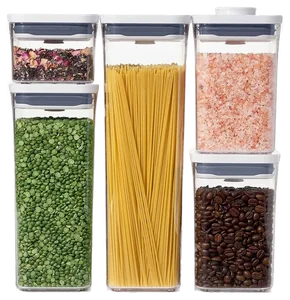
Airtight, opaque, room temperature and away from the oven. Buy in two or three week quantities, because coffee is produce rather than pantry stock. Skip the freezer for daily beans, since condensation is the problem, and skip the fridge entirely. A $10 sealed canister and smaller, fresher purchases will improve your cup more than another $50 of gear.
Is espresso at home cheaper than the coffee shop?
Yes, once the equipment pays for itself — break-even lands around month four. The full Bambino and Encore setup costs roughly a quarter of that once, with beans and milk somewhere near $40 a month after. Break-even lands around month four. Two caveats: your first fortnight of shots will be humbling, and the habit of buying nicer beans is real. Most home-espresso owners still visit cafes, just as a treat rather than a tax.
Sources
Who the write-ups above lean on, and where each one is cited.
TechGearLabCited for Breville Bambino Plus, Fellow Stagg EKG Pro and OXO Brew 8-Cup, and in the buying advice.
Trusted ReviewsCited for OXO Brew 8-Cup, and in the buying advice.
WirecutterCited in the buying advice.
Serious EatsCited in the buying advice.
Prices on this page are re-checked weekly — see the full Home & Kitchen price index for every product we cover.
Keep reading
Where to go next.
The close calls side by side, then related guides.
New guides, re-ranked picks and the month's notable changes. No weekly filler, ever.
Unsubscribe any time. Your address goes to our newsletter provider and nowhere else — see our privacy policy.
Manage Consent
To provide the best experiences, we use technologies like cookies to store and/or access device information. Consenting to these technologies will allow us to process data such as browsing behavior or unique IDs on this site. Not consenting or withdrawing consent, may adversely affect certain features and functions.
Functional
Always active
The technical storage or access is strictly necessary for the legitimate purpose of enabling the use of a specific service explicitly requested by the subscriber or user, or for the sole purpose of carrying out the transmission of a communication over an electronic communications network.
Preferences
The technical storage or access is necessary for the legitimate purpose of storing preferences that are not requested by the subscriber or user.
Statistics
The technical storage or access that is used exclusively for statistical purposes.The technical storage or access that is used exclusively for anonymous statistical purposes. Without a subpoena, voluntary compliance on the part of your Internet Service Provider, or additional records from a third party, information stored or retrieved for this purpose alone cannot usually be used to identify you.
Marketing
The technical storage or access is required to create user profiles to send advertising, or to track the user on a website or across several websites for similar marketing purposes.