The Best Gaming Headsets for 2026:Where Comfort and Mic Quality Diverge
Gaming headsets live or die on three things spec sheets hide: comfort after hour three, how your voice actually sounds, and whether the battery outlasts the session. We compared measured testing to find five that deliver.
By the BYB Editorial Team
Published July 28, 2026 · Updated · Prices checked OctoberOct 5, 2026
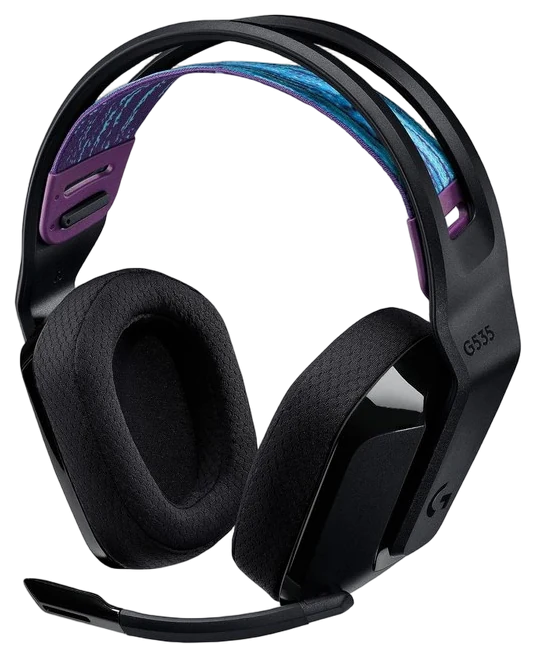
Logitech G535$100–120The Logitech G535, about $100–120 — it weighs less than almost anything else in the category, which is what you notice in hour three.Check price
Never want to charge one
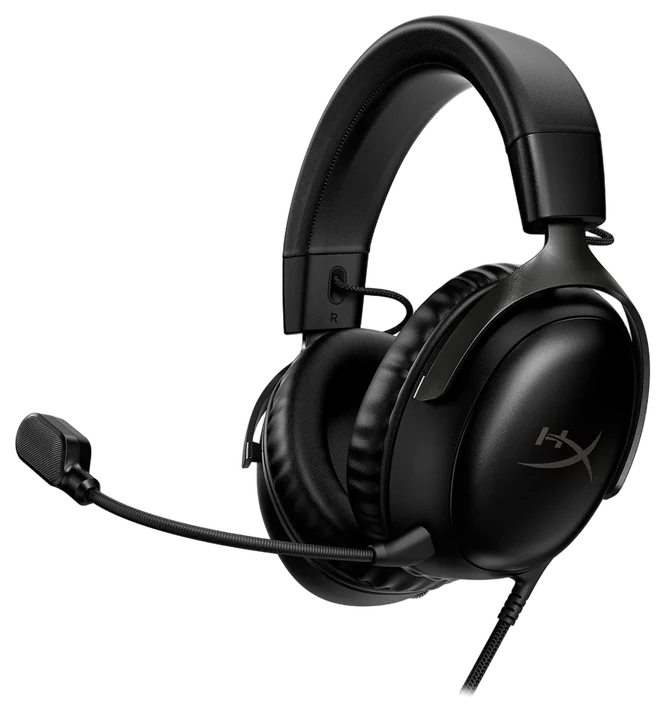
HyperX Cloud III$60–100HyperX Cloud III, $60–100 — the wired pick.Check price
Skip
7.1 surround sound badges — the game engine handles positional audio now, not the headset.
Gaming headsets live or die on three things spec sheets hide: comfort after hour three, how your voice actually sounds, and whether the battery outlasts the session. We compared measured testing to find five that deliver.
How we choseWhat we compared, and how we rank
We compiled measured audio and mic testing (RTINGS, SoundGuys), comfort evaluations, and long-term durability reports. Prices are always moving, so every button and link pulls the live listing.
How we rank
Published specifications, verified owner reviews, and independent safety or standards data where it applies — weighted the same for every pick, never sponsored placement.
What changed1 dated note · latest 25 September 2026
CorrectedThis guide’s short answer recommended the Logitech G535, but its ranking put the HyperX Cloud III first. The Logitech G535 now leads the ranking, so the two agree. No product or price changed.
Dated notes already published on this page, newest first. Every correction we make is logged on the corrections page.
At 236 grams the Logitech G535 is the headset for people who hate headsets. SoundGuys, who confirmed that weight on their own scales, reported never feeling discomfort in it after hours of wear. The suspension band and light clamp make it the wireless pick for glasses wearers and long-session players on a budget.
Logitech kept the price down by skipping RGB and gimmicks rather than the essentials: Lightspeed wireless with the reliability the name implies, a battery Logitech rates at 33 hours and SoundGuys measured at just over 39, and a flip-to-mute boom mic that does the job cleanly. The tuning is balanced and easy rather than boosted.
The compromises are honest: no Bluetooth (PC and PlayStation via dongle only, Xbox players look at the Stealth 600), and the mic is good rather than great. At $100–120 at Amazon, it’s the comfort-per-dollar champion of wireless.
Strengths
236g, lightest here by far
~33-hour battery
Clean flip-to-mute mic
No-gimmick price discipline
Tradeoffs
No Bluetooth or Xbox support
Mic a step below the Nova 7
Little passive isolation. SoundGuys heard traffic straight through it
Plain looks, no extras
Pick 2 of 5: No. 2Best wired
2
HyperX Cloud III
Best wired
The comfort king continues
Get it if you play long sessions and want comfort with zero fuss.
Skip it if cables on your desk drive you crazy. Go wireless below.
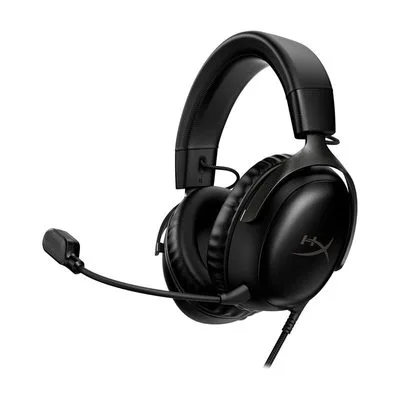
The original HyperX Cloud got famous for one reason, you forget you’re wearing it, and the Cloud III preserves exactly that: SoundGuys rank it among the most comfortable headsets it has tested. Dense memory foam, a light clamp that stays comfortable through four-hour sessions, and a build that owners report surviving years of being tossed on desks.
This generation upgraded the parts that matter: angled 53mm drivers with a cleaner, more spacious tune, and a clearer boom mic, which PC Gamer called crisp if a touch quiet and SoundGuys measured capturing the voice on a fairly flat response. Wired means zero battery anxiety and universal compatibility: PC, both consoles, controllers, anything with a jack.
There’s no wireless option at this price tier from HyperX and no software tricks. This is deliberately a plug-and-forget headset. At $60–100 at Amazon, and regularly under $80 on sale, it remains the default recommendation for marathon players. Cable-averse players should step up to the Arctis Nova 7.
Strengths
Comfort you forget about
Clear boom mic for game and work calls
Works on everything with a jack
Years-long durability record
Tradeoffs
Wired only
No companion software or EQ
Modest passive isolation
Pick 3 of 5: No. 3Best wireless~$180–200
3
SteelSeries Arctis Nova 7 Gen 2
Upgrade pickBest wireless
The wireless all-platform pick
Get it if you want one wireless headset for PC, console, and phone.
Skip it if budget is the constraint. The G535 gets close for less. Shopping for someone else? Our gamer gift guide covers every budget.
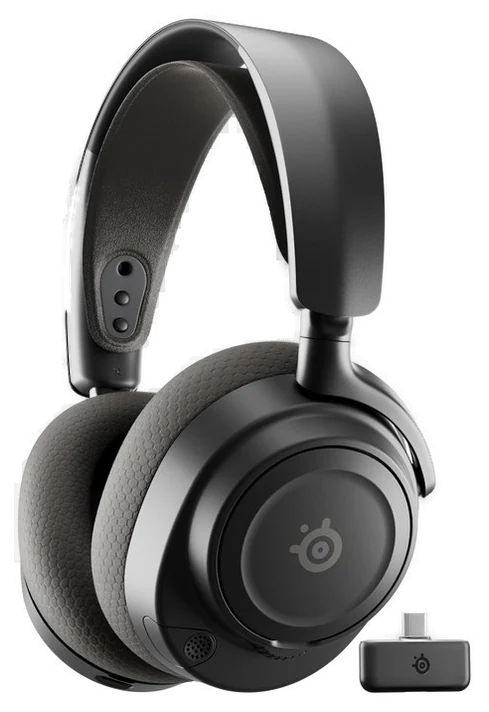
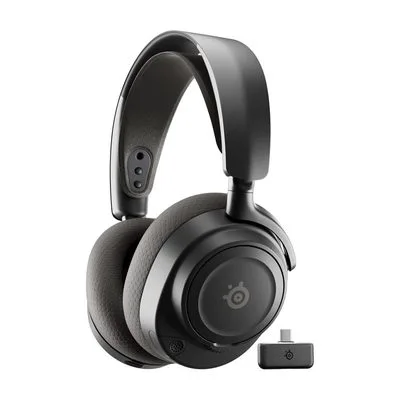
The Arctis Nova 7’s party trick reshapes how you use a headset: game audio runs over its 2.4GHz dongle while Bluetooth simultaneously carries your phone: Discord, music, or a call mixed live over the game. Once you’ve used it, going back feels broken.
The rest holds up the flagship billing: SteelSeries’ elastic ski-band design distributes weight so well that reviewers routinely rank Arctis comfort top of category, and the Gen 2’s battery figure depends entirely on how you run it: SteelSeries rates 54 hours on the 2.4GHz dongle, 42 on Bluetooth, and 38 with both live at once, which is the mode people buy this headset for. PCWorld went a week of evenings without reaching for the cable. The other Gen 2 addition worth having is real-time app control from a console or phone rather than only from a desktop.
Reviewers split on whether the update earns its price: PCWorld gave it an Editors’ Choice and called the dual-wireless function a unique selling point at this money, while SoundGuys judged the generational gain marginal at best. There is no active noise cancelling, the Bluetooth side is SBC-only so video lags behind the 2.4GHz game audio, and the USB-C dongle is wide enough to crowd a neighboring port. At $180–200 at Amazon, with occasional sales near $180, it covers PC, console, and phone in one device, which quietly retires two other gadgets.
Strengths
Simultaneous 2.4GHz + Bluetooth mixing
38 hours with both radios live, 54 on the dongle alone
Top-tier ski-band comfort
One of the clearest wireless mics
Tradeoffs
Premium price
Xbox needs the specific variant
Software adds complexity
Also on the shortlist
Two more, in brief
Pick 4 of 5: No. 4Best under $60~$40–60
4
Razer BlackShark V2 X
Budget pickBest under $60
The esports budget staple
Get it if you want competitive audio on a strict budget.
Skip it if you want features or wireless. Save up one tier.
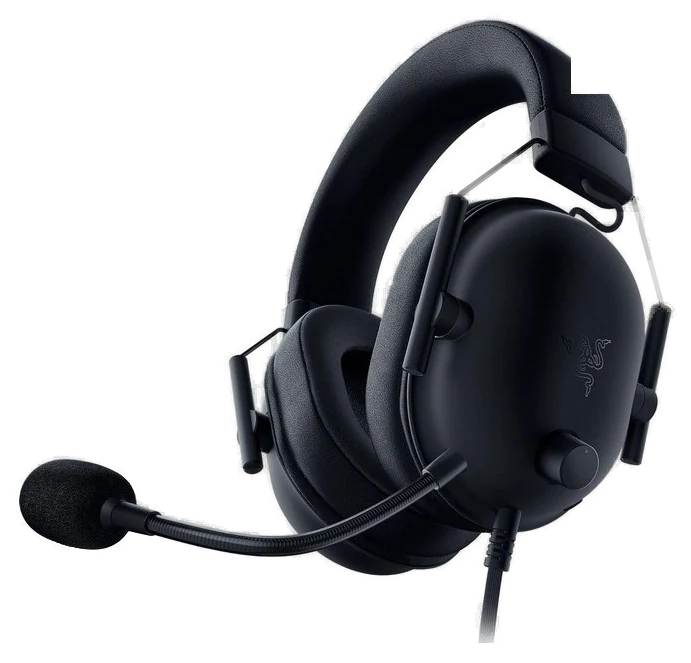
The BlackShark V2 X strips the esports formula to its essentials: 240 grams, closed earcups that take the edge off a noisy room, and Razer’s TriForce drivers tuned so footsteps and callouts sit forward of cinematic boom.
That competitive tuning is the point, and the mic, while unremarkable, communicates clearly. One correction is worth making here, because the claim gets repeated everywhere: the standout passive isolation belongs to the pricier wired BlackShark V2, which SoundGuys rated good against any gaming headset it has tested. RTINGS rates the V2 X itself a weak isolator, so buy this one for the tuning and the weight rather than for silence. Wired 3.5mm means it works on every platform and controller ever made.
The build is functional plastic and the cable isn’t detachable, at this price something gives. But as the answer to “best cheap headset that doesn’t feel cheap,” the V2 X sells at $40–60 on Amazon and shows up under $40 at every major sale. Any build budget fits it.
Get it if you want competitive audio on a strict budget.
Skip it if you want features or wireless. Save up one tier.
The BlackShark V2 X strips the esports formula to its essentials: 240 grams, closed earcups that take the edge off a noisy room, and Razer’s TriForce drivers tuned so footsteps and callouts sit forward of cinematic boom.
Read the full case
That competitive tuning is the point, and the mic, while unremarkable, communicates clearly. One correction is worth making here, because the claim gets repeated everywhere: the standout passive isolation belongs to the pricier wired BlackShark V2, which SoundGuys rated good against any gaming headset it has tested. RTINGS rates the V2 X itself a weak isolator, so buy this one for the tuning and the weight rather than for silence. Wired 3.5mm means it works on every platform and controller ever made.
The build is functional plastic and the cable isn’t detachable, at this price something gives. But as the answer to “best cheap headset that doesn’t feel cheap,” the V2 X sells at $40–60 on Amazon and shows up under $40 at every major sale. Any build budget fits it.
Strengths
TriForce drivers at a budget ceiling
Esports tuning favors footsteps
Light 240g build
Works on every platform, wired
Tradeoffs
Non-detachable cable
Basic plastic build
Mic is merely adequate
Pick 5 of 5: No. 5Best for console couches
5
Turtle Beach Stealth 600 Gen 3
Best for console couches
The console-first workhorse
Get it if your gaming happens on a couch with a console.
Skip it if you’re desk-and-PC first. The others fit better.
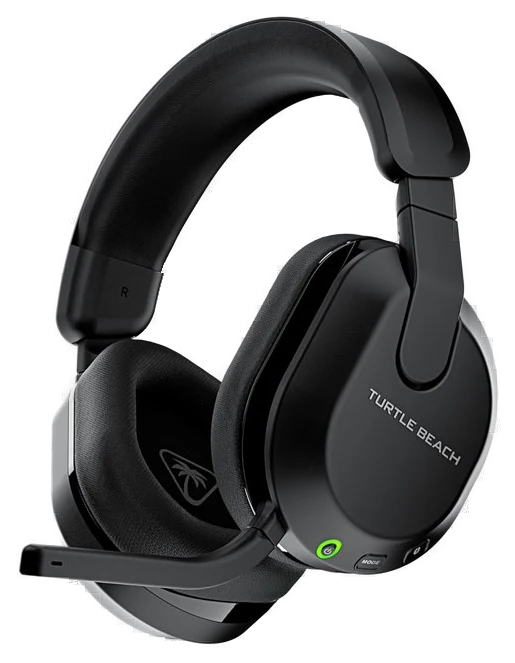
Turtle Beach built its empire in console living rooms, and the current Stealth 600 shows why the dynasty endures: painless Xbox or PlayStation pairing, a glasses-friendly fit with its ProSpecs cutouts, and controls placed for the couch rather than the desk.
The headline is the battery. Turtle Beach rates it at eighty hours and SoundGuys measured 83 hours 42 minutes at their standard listening level, which turns charging from a routine into a monthly event and effectively ends the dead-headset-at-9pm experience. The mic flips to mute and tucks away clean, and the app EQ covers the basics.
It’s a console-first design: PC works, but desk-focused players get more from the G535 or Nova 7. Buy the variant matching your console. At $90–110 at Amazon, it’s the living-room default for a reason.
Get it if your gaming happens on a couch with a console.
Skip it if you’re desk-and-PC first. The others fit better.
Turtle Beach built its empire in console living rooms, and the current Stealth 600 shows why the dynasty endures: painless Xbox or PlayStation pairing, a glasses-friendly fit with its ProSpecs cutouts, and controls placed for the couch rather than the desk.
Read the full case
The headline is the battery. Turtle Beach rates it at eighty hours and SoundGuys measured 83 hours 42 minutes at their standard listening level, which turns charging from a routine into a monthly event and effectively ends the dead-headset-at-9pm experience. The mic flips to mute and tucks away clean, and the app EQ covers the basics.
It’s a console-first design: PC works, but desk-focused players get more from the G535 or Nova 7. Buy the variant matching your console. At $90–110 at Amazon, it’s the living-room default for a reason.
Strengths
80+ hour battery, charge monthly
Painless console pairing
Glasses-friendly ProSpecs fit
Couch-placed controls
Tradeoffs
Console variants don’t cross over
PC support is secondary
Bulkier than the desk picks
Comfort and mic quality matter more than driver-size marketing. Decide wired versus wireless first, then get the fit right.
Wired vs wireless: Wired is cheaper, lighter, and never needs charging; wireless frees you from the cable but costs more and needs topping up. Neither is “better” — it depends on your setup.
Comfort for long sessions: Clamp force, earcup size, and weight decide whether your ears ache after two hours. This matters more than any sound spec on the page.
Mic quality: If you talk to teammates, a clear detachable or flip-down mic beats a tinny built-in one. Listen to a mic sample, not just the headphone reviews.
The common mistake: Paying for surround-sound modes and noise cancelling you won’t use. A comfortable stereo headset with a solid mic beats a feature-stuffed one that hurts to wear.
SteelSeries Arctis Nova Pro Wireless — about as good as wireless gets, with noise cancelling and a hot-swap battery, but at around $300 it’s more headset than most players need.
Astro A50 X — the base station that switches between PC and both consoles is slick, but it’s bulky and priced like a luxury item.
Corsair HS55 Stereo — a comfy, honest budget wired set, but the mic and sound are merely fine, not a real step up from our picks.
Gaming headset FAQs
6 common questions, answered.
Is “7.1 surround sound” in headsets real?
It’s software processing on two drivers. Every headset has exactly two speakers. Modern games render positional audio natively (Windows Sonic, Tempest 3D), so a headset with accurate stereo imaging beats one with a surround checkbox. Buy on comfort and mic instead.
Wired or wireless gaming headset?
Wireless latency is solved on 2.4GHz dongles, so it’s about budget and habits: wired costs less for equal sound and never dies mid-raid; wireless frees you from the cable for roughly a $50 premium. Avoid Bluetooth-only for gaming. That latency is real.
Why does my headset mic sound bad on Discord?
Usually compression and gain settings, not hardware: disable noise suppression double-ups (app + Windows), set input volume so you don’t clip, and position the boom a thumb-width from your mouth corner. The mics on everything above are Discord-clear once configured.
How long do gaming headsets last?
The failure points are predictable: earpad foam flattens in one to two years (buy replaceable pads, every pick here has them), cables fray on wired models, and batteries fade after a few hundred cycles on wireless. Owners report the HyperX and SteelSeries picks running four-plus years with a pad refresh. Treat $20 replacement pads as scheduled maintenance and these outlive two GPUs.
Can I use a gaming headset for music and calls?
Yes, with expectations set. Gaming tunings favor footstep frequencies and boosted bass over studio accuracy, fine for casual listening, short of dedicated headphones at the same price. For calls they’re excellent: boom mics beat every earbud and laptop mic by a wide margin, which is why half of remote workers quietly wear gaming headsets to meetings.
Do console headsets work on PC (and vice versa)?
Mostly, yes — but check the wireless protocol, not the marketing, before you buy. 2.4GHz dongle headsets like the Arctis Nova 7 and Stealth 600 pair with whatever the dongle plugs into. Most cover PC plus one console family. Wired 3.5mm headsets like the Cloud III work on literally everything with a jack, including controllers. The one hard wall: Xbox wireless is proprietary, so PlayStation-family dongles won’t cross over.
Sources
Who the write-ups above lean on, and where each one is cited.
SoundGuysCited for all 5 picks, and in the buying advice.
RTINGSCited for Razer BlackShark V2 X, and in the buying advice.
PC GamerCited for HyperX Cloud III.
25Sep 2026Correction, 25 September 2026This guide’s short answer recommended the Logitech G535, but its ranking put the HyperX Cloud III first. The Logitech G535 now leads the ranking, so the two agree. No product or price changed.Every correction we’ve made ›
Prices on this page are re-checked weekly — see the full Gaming price index for every product we cover.
Keep reading
Where to go next.
The close calls side by side, then related guides.
New guides, re-ranked picks and the month's notable changes. No weekly filler, ever.
Unsubscribe any time. Your address goes to our newsletter provider and nowhere else — see our privacy policy.
Manage Consent
To provide the best experiences, we use technologies like cookies to store and/or access device information. Consenting to these technologies will allow us to process data such as browsing behavior or unique IDs on this site. Not consenting or withdrawing consent, may adversely affect certain features and functions.
Functional
Always active
The technical storage or access is strictly necessary for the legitimate purpose of enabling the use of a specific service explicitly requested by the subscriber or user, or for the sole purpose of carrying out the transmission of a communication over an electronic communications network.
Preferences
The technical storage or access is necessary for the legitimate purpose of storing preferences that are not requested by the subscriber or user.
Statistics
The technical storage or access that is used exclusively for statistical purposes.The technical storage or access that is used exclusively for anonymous statistical purposes. Without a subpoena, voluntary compliance on the part of your Internet Service Provider, or additional records from a third party, information stored or retrieved for this purpose alone cannot usually be used to identify you.
Marketing
The technical storage or access is required to create user profiles to send advertising, or to track the user on a website or across several websites for similar marketing purposes.