AirPods Pro 3 vs. Sony WF-1000XM5 for Noise Cancelling
These are two of the best noise-cancelling earbuds you can buy, and your phone decides more than your ears do. We compared published specifications, independent measurements and long-term owner reports to work out who each one is really for.
By the BYB Editorial Team
Published July 29, 2026 · Updated · Prices checked October 5, 2026
Get the AirPods Pro 3 if your phone has an Apple logo on it; get the Sony WF-1000XM5 instead on Android, where none of the Apple-only features transfer.
Best for iPhone
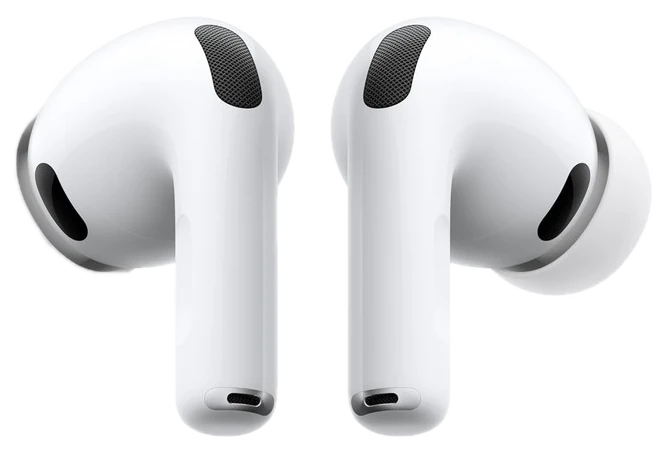
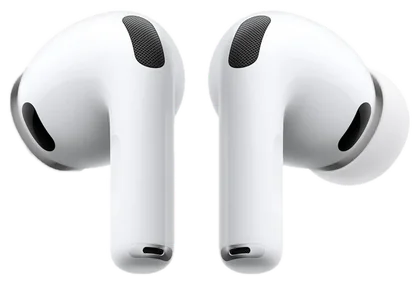
AirPods Pro 3
~$190–250 Lowest price
Get it if your phone is an iPhone. These are the cheaper of the two here at their typical price, and the only pair that hands itself between your devices without a menu.
Each bar is an estimated price range, on one scale from ~$190 to ~$280.
Either way: Buying across platforms means paying full price for features that will never switch on.
What changed2 dated notes · latest 4 October 2026
CorrectedThe verdict row for the Sony WF-1000XM5 said about $250; the pick’s price range on this page is about $250–280, and the row now matches. The introduction no longer calls these “the two best” noise-cancelling earbuds. No pick or ranking changed.
NoteOur wireless earbuds guide now picks the Sony WF-1000XM6, the XM5's successor. This comparison stays up for anyone weighing the WF-1000XM5.
Dated notes already published on this page, newest first. Every correction we make is logged on the corrections page.
How we choseWe haven’t worn either pair ourselves.
We compared published specifications, independent audio measurements and noise-cancellation testing, codec and platform support, and long-term owner reports on battery aging and fit. We haven’t worn either pair ourselves; the noise-cancellation and battery-aging claims come from independent audio measurements and long-term owner reports we drew on. Prices are estimated ranges, re-checked weekly.
How we rank
Published specifications, verified owner reviews, and independent safety or standards data where it applies — weighted the same for every pick, never sponsored placement.
Get it if your phone is an iPhone. These are the cheaper of the two here at their typical price, and the only pair that hands itself between your devices without a menu.
Skip it if you use Android, where you lose LDAC and most of the integration you are paying for, or you want something repairable.
The case for the AirPods Pro 3 is not that they out-measure the Sony (they don’t, quite); it is that on an iPhone they remove every small friction that makes wireless earbuds annoying. They pair by being opened, hand themselves between iPhone, iPad and Mac without menus, and pause when you speak. None of that appears on a spec sheet and all of it is what you live with.
Two things are class-leading. Transparency mode is the most natural-sounding of any earbud, conversation through it does not feel mediated, and the hearing-health features are a real capability rather than a wellness gimmick: the FDA authorized Apple’s Hearing Aid Feature through its De Novo pathway, the first over-the-counter hearing-aid software it had ever cleared, on the back of a 118-person clinical study.
The independent HearAdvisor lab is more measured, placing the tuned earbuds mid-pack against dedicated over-the-counter hearing aids, so treat it as a genuine entry point rather than a replacement for fitted devices. Noise cancellation is excellent and roughly a match for the Sony on steady low-frequency noise like a plane cabin.
The compromises are real if you are not in Apple’s world. There is no aptX or LDAC, so on Android you are limited to AAC and lose the headline audio quality; multipoint across non-Apple devices is clumsy; and the fixed, non-replaceable battery means these are a three-to-four-year product, not a repairable one. At $190–250, they are the obvious buy for an iPhone and a compromised one for anything else.
Strengths
Effortless switching across Apple devices
The most natural transparency mode available
Genuine hearing-health features, not a gimmick
Excellent call quality and reliable connection
Tradeoffs
No aptX or LDAC. Android loses the best audio
Battery is not replaceable
Fit does not suit every ear canal
Best for Android~$250–280
2
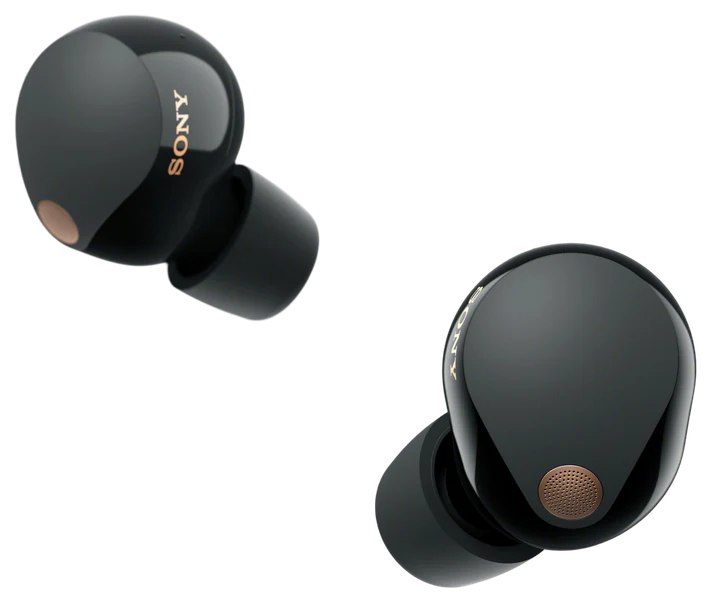
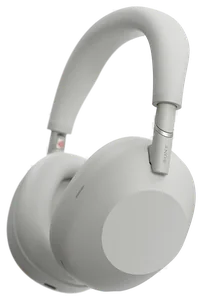
Sony WF-1000XM5
Best for Android
The better earbud on paper, and on Android
Get it if you use Android and want the better-sounding pair, and the higher of the two prices here is worth it to you for LDAC and a real equalizer.
Skip it if you are on an iPhone. You pay the premium and lose LDAC, which was the whole reason to pay it.
Judged purely as earbuds rather than as accessories, the Sony WF-1000XM5 are the stronger product. They support LDAC, which carries substantially more data than AAC and is audible on well-mastered material, and Sony’s app gives you a real parametric equalizer rather than three presets; unlike almost every rival, you can fix a tuning you dislike.
SoundGuys found that worth doing, measuring a default tuning that leans heavy through the bass and settles with a couple of notches off the Clear Bass slider. Sony’s WF-1000XM6, at about $280 to $330, is the current flagship, so the XM5 is the outgoing model, which is precisely why it is worth comparing on price.
Noise cancellation is superb and arguably better than the Apple on unpredictable mid-range noise: office chatter, café clatter, a train announcement. The buds are also physically smaller and lighter than the outgoing model, which resolved the main long-term complaint owners had about comfort, and multipoint works properly across two devices of any brand.
The frustrations are software and durability. Sony’s app is capable but cluttered, transparency mode sounds noticeably more processed than Apple’s, and owners consistently report the touch controls misfiring in cold or wet conditions. Battery is again sealed. At $250–280 they are the more expensive pick, and on an iPhone you pay that premium while losing LDAC, which is precisely the reason to buy them.
Strengths
LDAC delivers higher-quality audio
Real parametric EQ, not three presets
Outstanding cancellation of unpredictable mid-range noise
Proper multipoint across any two devices
Tradeoffs
Transparency sounds processed next to Apple’s
Touch controls misfire when cold or wet
App is powerful but cluttered
AirPods Pro 3 vs Sony WF-1000XM5 FAQs
6 common questions, answered.
Does the codec difference matter?
On an iPhone, no. iOS does not support LDAC or aptX, so both earbuds fall back to AAC and the playing field is level. On Android it matters more than most comparisons admit: LDAC carries several times the data of AAC, and on well-mastered music through a quiet environment the difference in detail is audible to most listeners in a direct comparison. It is not night and day, and it costs battery life. If you stream compressed audio on a noisy commute, you will never notice it.
Which one cancels more noise?
They are close enough that the answer is ‘it depends on the noise’. Both are excellent at steady low-frequency drone (aircraft cabins, train rumble, air conditioning) where the difference is marginal. The Sony has a small but consistent edge on unpredictable mid-range sound like nearby conversation, which is what most office and café users are trying to escape. Apple’s advantage is transparency mode rather than cancellation: it is the more natural of the two by a clear margin.
Can I use AirPods Pro with an Android phone?
Yes, as ordinary Bluetooth earbuds. They will pair and play. What you lose is most of the reason to buy them: automatic device switching, hands-free Siri, spatial audio head tracking, firmware updates without an Apple device, and the Find My integration. You also stay on AAC. If you have an Android phone and are choosing today, this is the clearest signal in the whole comparison to buy the Sony instead.
Are either of these repairable?
Not meaningfully. Both use sealed housings with small non-replaceable lithium cells, and both will lose noticeable battery capacity in roughly three years of daily charging. Apple and Sony both offer paid battery replacement in some regions, but the cost is high enough relative to the price that most owners replace the earbuds instead. Treat both as consumable electronics with a three-to-four-year life, and factor that into whether the premium over cheaper earbuds is worth it to you.
Is either worth it over a $100 pair?
If you fly often, commute daily, or work in an open-plan office, yes: the gap in noise cancellation between these and a $100 pair is large and you will feel it every day. If you mostly listen at home or on short walks, no. Cheaper earbuds have closed most of the gap on sound quality; what they have not closed is cancellation, transparency and call reliability. Buy the flagship for the environment, not for the music.
When do these go on sale?
Both discount predictably. Sony’s flagship earbuds drop hardest during the late-November sales and again in the spring, frequently by $50 or more, and older-generation Sony models remain excellent buys once superseded. Apple discounts less and later, but third-party retailers cut AirPods more aggressively than Apple does, particularly in the same November window. Neither is worth paying full price for in October if you can wait six weeks.
4Oct 2026Correction, 4 October 2026The verdict row for the Sony WF-1000XM5 said about $250; the pick’s price range on this page is about $250–280, and the row now matches. The introduction no longer calls these “the two best” noise-cancelling earbuds. No pick or ranking changed.Every correction we’ve made ›
Prices on this page are re-checked weekly — see the full Electronics price index for every product we cover.
New guides, re-ranked picks and the month's notable changes. No weekly filler, ever.
Unsubscribe any time. Your address goes to our newsletter provider and nowhere else — see our privacy policy.
Manage Consent
To provide the best experiences, we use technologies like cookies to store and/or access device information. Consenting to these technologies will allow us to process data such as browsing behavior or unique IDs on this site. Not consenting or withdrawing consent, may adversely affect certain features and functions.
Functional
Always active
The technical storage or access is strictly necessary for the legitimate purpose of enabling the use of a specific service explicitly requested by the subscriber or user, or for the sole purpose of carrying out the transmission of a communication over an electronic communications network.
Preferences
The technical storage or access is necessary for the legitimate purpose of storing preferences that are not requested by the subscriber or user.
Statistics
The technical storage or access that is used exclusively for statistical purposes.The technical storage or access that is used exclusively for anonymous statistical purposes. Without a subpoena, voluntary compliance on the part of your Internet Service Provider, or additional records from a third party, information stored or retrieved for this purpose alone cannot usually be used to identify you.
Marketing
The technical storage or access is required to create user profiles to send advertising, or to track the user on a website or across several websites for similar marketing purposes.