Sony WF-1000XM6 vs. Bose QC Ultra Earbuds:Sound or Silence?
Both flagship earbuds sit within about $30 of each other, so this is a tradeoff, not a splurge decision. We compared sound, noise cancelling, comfort and battery life to find out whether Sony's detail and longer battery beat Bose's comfort and real-world noise handling.
By the BYB Editorial Team
Published August 9, 2026 · Prices checked October 5, 2026
Get the Sony WF-1000XM6 if you listen critically and want the longest runway between charges; get the Bose QC Ultra Earbuds if fit and cancelling in layered noise matter more.
Best overall
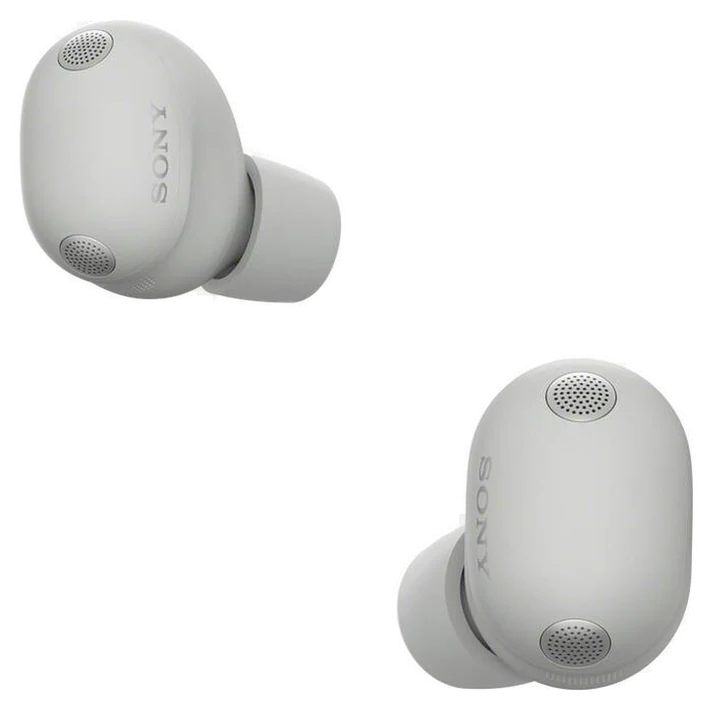
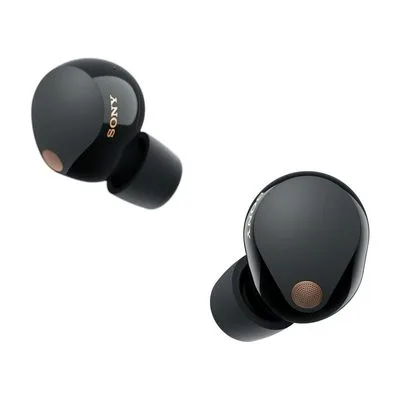
Sony WF-1000XM6
~$280–330
Get it if you listen critically, want the longest battery runway of the two, and accept paying the higher of the two prices for it.
Get it if comfort during long wear and cancelling noisy, layered spaces matter most, and you would rather buy the pair that goes on sale more predictably.
Each bar is an estimated price range, on one scale from ~$250 to ~$330.
Either way: Both sit near the top of the category, so neither is a mistake.
How we choseWe haven’t listened through either pair ourselves.
We compared measured noise-cancelling and sound-quality testing from What Hi-Fi, SoundGuys and Sound Advice against the price ranges we publish for both earbuds. We haven’t listened through either pair ourselves; the noise-cancelling and sound-quality findings come from What Hi-Fi’s, SoundGuys’ and Sound Advice’s measured testing, all linked where we cite them. Prices are always moving, so every button and link pulls the live listing.
How we rank
Published specifications, verified owner reviews, and independent safety or standards data where it applies — weighted the same for every pick, never sponsored placement.
Reviewers keep landing in the same place on sound: the Sony WF-1000XM6 is the more neutral, more detailed listen of the two. Sound Advice’s side-by-side found the Sony “more even-handed and natural-sounding,” with fuller mids and cleaner separation, while RecordingNow scored it ahead on sound quality outright, 8.6 to 7.9 out of 10.
SoundGuys’ measurements agree: the XM6 tracks close to their reference curve, where the Bose deviates further at both the bass and treble ends. A new driver and a genuine 10-band EQ, against Bose’s basic three bands, mean there’s real room to shape the tuning rather than accept it as given, and Sony’s LDAC codec adds a hi-res option that Android listeners on the Bose don’t get.
Noise cancelling is close enough at the top that What Hi-Fi and Sound Advice both call the overall gap small, but the two pull ahead in different situations. The XM6 adds an extra microphone per bud, eight total, and a new processor, and testing found it particularly strong against low, droning noise like a plane cabin or a train carriage. That mic array pulls double duty on calls too: AI beamforming isolates your voice from wind and background noise noticeably better than the outgoing XM5 managed.
Battery is the cleanest edge Sony holds: eight hours per charge with ANC on, against six for the Bose, for the same roughly 24-hour total once the case is counted. The tradeoff for all of this is comfort. The XM6’s hybrid tips and elongated shape create what Sound Advice describes as “subtle-but-constant pressure” during long sessions, a real step down from the Bose’s more forgiving fit. At ~$280–330, they launched above the outgoing XM5’s usual price and carry the higher of the two ranges compared here.
Strengths
Most detailed, natural sound with a real 10-band EQ
ANC edges ahead against low rumble and transport noise
8-hour battery beats the Bose by two hours per charge
AI beamforming mics cut wind and background noise on calls
Tradeoffs
Firmer, less forgiving fit over long sessions
Bose edges it narrowly on outgoing call clarity
No aptX, so Android phones without LDAC miss the hi-res codec
Most comfortable~$250–300
2
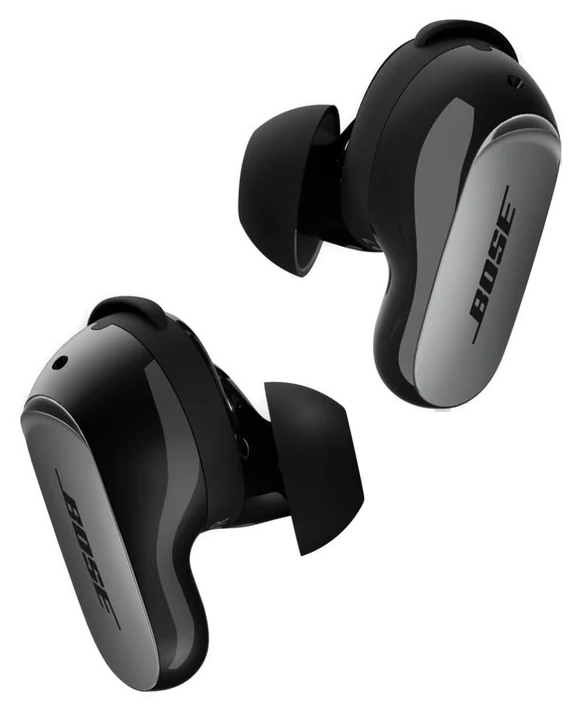
Bose QC Ultra Earbuds (2nd Gen)
Most comfortable
Softer, more secure, and the stronger pick in real-world chaos
Get it if comfort during long wear and cancelling noisy, layered spaces matter most, and you would rather buy the pair that goes on sale more predictably.
Skip it if you want the longest battery life or the most editable sound signature. The Sony holds both.
Comfort is where the Bose QC Ultra Earbuds (2nd Gen) put real distance between themselves and the Sony. Softer silicone tips, a shape Sound Advice calls more ergonomic, and included wingtips for extra security add up to earbuds several outlets describe as easy to forget you’re wearing after a few hours, a genuine advantage on long flights or full workdays. CustomTune, Bose’s auto-calibration routine, plays a short tone at every wear and adjusts both the noise cancelling and the sound to the shape of your ear canal, which is part of why the fit feels tailored rather than generic.
On noise cancelling, the Bose’s advantage shows up in specific, real-world settings rather than lab tone tests: SoundGuys and RecordingNow both found it holds up better than the Sony in busy, layered environments, cafes, streets, the clink and chatter a steady lab tone doesn’t reproduce.
SoundGuys measures the second-generation Bose at roughly 85 percent of outside noise removed, among the best figures it has recorded from any earbud. Sound-wise the Bose leans warmer and more consumer-friendly, with Immersive Audio spatial processing that widens the soundstage on supported content, though its three-band EQ leaves far less room to retune the signature than Sony’s ten bands allow.
The second generation fixed the previous model’s most annoying gap: the case now charges wirelessly, and Bose’s SpeechClarity processing makes outgoing calls clearer, an area where reviewers rate the Bose slightly ahead of the Sony. Battery remains the honest weak point at roughly six hours with ANC on, two behind the Sony, though the case makes up the difference for a matching 24-hour total. At ~$250–300, often toward the low end on sale, per Sound Advice’s pricing checks, the Bose is also the more frequently discounted of the two.
Strengths
Softer tips and wingtips make for the more comfortable long-wear fit
Noise cancelling holds up better in busy, layered real-world noise
CustomTune auto-calibrates ANC and sound to your ear
Wireless charging case, finally, plus clearer outgoing calls
Tradeoffs
~6-hour ANC battery trails the Sony by two hours per charge
Thinner three-band EQ limits how much you can retune the sound
Warmer, less neutral tuning than the Sony’s
Verdict
Are the Bose QC Ultra Earbuds worth it on their own?
Yes, for long-wear comfort and noise cancelling in busy, layered places. SoundGuys measured the second generation removing roughly 85 percent of outside noise, among the best figures it has recorded from any earbud, and the edge shows up in cafes, offices and streets rather than against a steady cabin drone. They list at $299 and routinely sell at $249–269, so ~$250–300 is the working price. They are not the pick for battery (about six hours with ANC on, two behind the Sony) or for an editable sound (a three-band EQ against Sony’s ten).
Swipe the table sideways for the rest of the columns →
Are the Bose QC Ultra Earbuds worth it on their own? at a glance
Situation
Our call
Buy them if
you wear earbuds for hours at a stretch and firmer designs ache by hour two, or you take calls in noise; reviewers rate Bose’s SpeechClarity processing slightly ahead.
Skip them if
battery runway or a neutral, adjustable sound matters most. The Sony WF-1000XM6 wins both at ~$280–330.
Wait if
you are not in a hurry. The Bose discounts more predictably than the Sony; $249–269 is the price to plan around.
Sony WF-1000XM6 vs Bose QC Ultra Earbuds FAQs
7 common questions, answered.
Which has better noise cancelling, the Sony WF-1000XM6 or the Bose QC Ultra Earbuds?
It depends on the noise. Independent testing has the Sony slightly ahead against low, constant rumble like plane cabins and trains, while the Bose holds up better in busier, layered environments such as cafes and city streets. Neither is a clear overall winner; the difference shows up in which specific noise you’re trying to cancel.
Which pair is more comfortable for long wear?
The Bose, by most accounts. Its softer silicone tips, included wingtips and more ergonomic shape make it easier to forget you’re wearing them over a full flight or workday. The Sony’s stiffer hybrid tips and elongated shape create a subtle but real pressure that some listeners notice after a few hours.
Do both earbuds work equally well on iPhone and Android?
Mostly, yes, both pair over standard Bluetooth and cover the basics on either platform. The gap is codec support: Sony’s LDAC hi-res codec only helps on Android phones that support it, and Bose’s aptX Adaptive has the same limitation. iPhone owners get neither codec’s hi-res benefit on either pair, since Apple doesn’t support LDAC or aptX.
Which has the longer battery life?
The Sony, by two hours per charge: eight hours with ANC on against six for the Bose. Both land at roughly 24 hours total once their charging cases are factored in, so the practical gap is mostly about how often you need to drop them back in the case during the day.
Are the Bose QC Ultra Earbuds waterproof enough for the gym?
They carry an IPX4 rating, the same as the Sony, which covers splashes and sweat but not submersion. That’s fine for a gym session or a light rain shower, but neither pair is built for swimming or a proper dunk.
When do these go on sale?
The Bose discounts more often and more predictably, dropping to roughly $250 to $300 outside major sale events. The Sony WF-1000XM6 launched more recently and hasn’t settled into the same discount pattern yet, so patience pays off faster with the Bose if price is the deciding factor.
Are the Bose QC Ultra Earbuds worth it at full price?
Rarely. List is $299, but they sell at $249–269 outside the major sale events, so full price is the wrong moment. At $250–270 they are the comfort-and-cancelling pick; at $299 the Sony’s longer battery and ten-band EQ, at ~$280–330, make it a much closer call.
Prices on this page are re-checked weekly — see the full Electronics price index for every product we cover.
New guides, re-ranked picks and the month's notable changes. No weekly filler, ever.
Unsubscribe any time. Your address goes to our newsletter provider and nowhere else — see our privacy policy.
Manage Consent
To provide the best experiences, we use technologies like cookies to store and/or access device information. Consenting to these technologies will allow us to process data such as browsing behavior or unique IDs on this site. Not consenting or withdrawing consent, may adversely affect certain features and functions.
Functional
Always active
The technical storage or access is strictly necessary for the legitimate purpose of enabling the use of a specific service explicitly requested by the subscriber or user, or for the sole purpose of carrying out the transmission of a communication over an electronic communications network.
Preferences
The technical storage or access is necessary for the legitimate purpose of storing preferences that are not requested by the subscriber or user.
Statistics
The technical storage or access that is used exclusively for statistical purposes.The technical storage or access that is used exclusively for anonymous statistical purposes. Without a subpoena, voluntary compliance on the part of your Internet Service Provider, or additional records from a third party, information stored or retrieved for this purpose alone cannot usually be used to identify you.
Marketing
The technical storage or access is required to create user profiles to send advertising, or to track the user on a website or across several websites for similar marketing purposes.