The Best Smartwatches of 2026:Matched to the Phone in Your Pocket
Smartwatch buying has one iron rule: the watch must match the phone. Within that constraint, we compared health-sensor accuracy, battery reality, and daily livability to pick the right watch for each ecosystem and budget.
By the BYB Editorial Team
Published July 28, 2026 · Updated · Prices checked OctoberOct 5, 2026
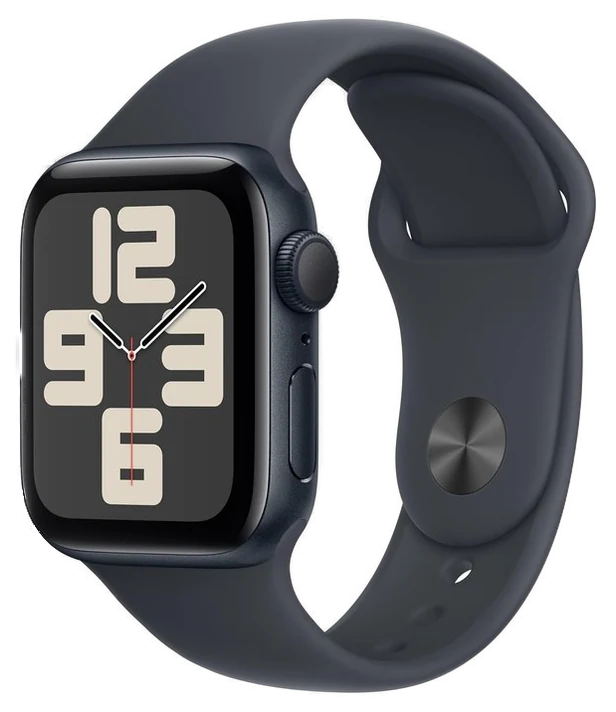
Apple Watch SE 3$249–329The Apple Watch SE 3 at $249–329 — the sensible purchase if you carry an iPhone: it keeps the parts most people use and drops the always-on display.Check price
Want the fuller iPhone version
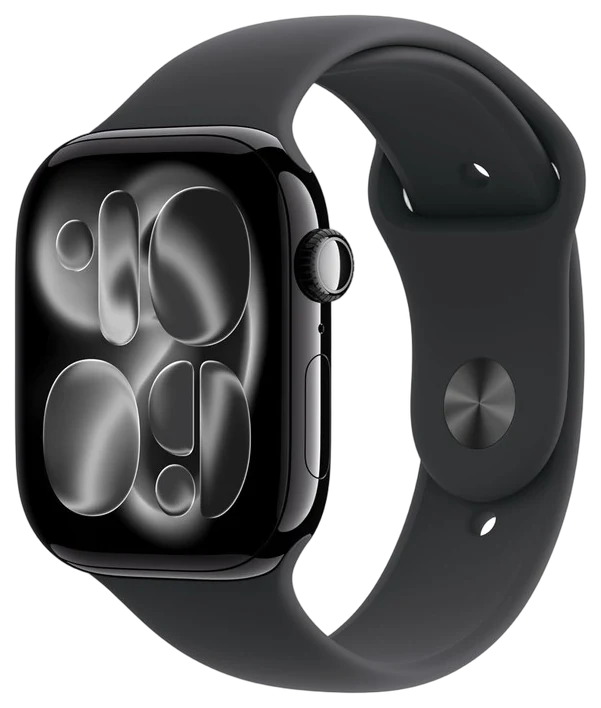
Apple Watch Series 11$300–430Apple Watch Series 11 at $300–430.Check price
On Android
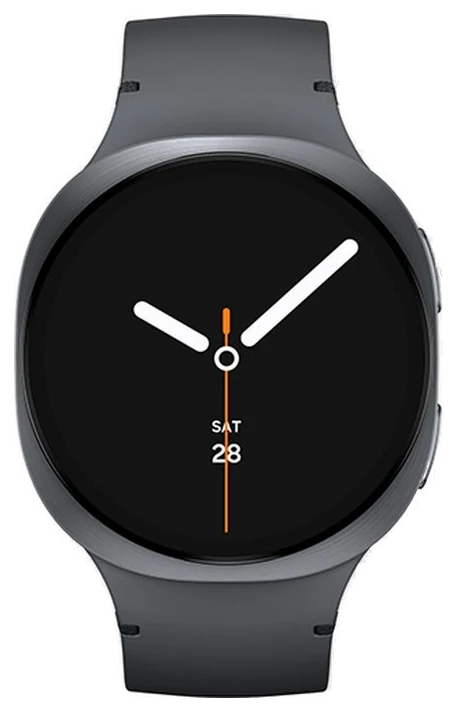
Samsung Galaxy Watch 8$300–330Samsung Galaxy Watch 8 at $300–330 — or the Garmin Vivoactive 6 at $250–300 for days of battery rather than hours.Check price
Skip
Pairing a Wear OS watch to an iPhone — nobody should.
Smartwatch buying has one iron rule: the watch must match the phone. Within that constraint, we compared health-sensor accuracy, battery reality, and daily livability to pick the right watch for each ecosystem and budget.
How we choseWhat we compared, and how we rank
We compiled sensor-accuracy studies, real-world battery testing, and long-term wear reviews across ecosystems. Prices are always moving, so every button and link pulls the live listing.
How we rank
Published specifications, verified owner reviews, and independent safety or standards data where it applies — weighted the same for every pick, never sponsored placement.
What changed2 dated notes · latest 12 September 2026
CorrectedThe photograph shown for the Samsung Galaxy Watch 8 was a previous-generation Galaxy Watch with a round case. The Galaxy Watch 8 uses the cushion-shaped case introduced on the Watch Ultra. The image has been replaced. The ranking and the price range were not affected.
NoteThis guide described the Apple Watch Series 11 as the most medically capable wearable you can buy and as everything a wrist can currently do. Apple announced the Series 12 on 9 September 2026, in stores from the 18th, with a new Health Sensing System, so those sentences no longer hold. The Series 11 remains our pick, now stated as the outgoing flagship and the better value while it is stocked, with the Series 12 named so readers can judge for themselves.
Dated notes already published on this page, newest first. Every correction we make is logged on the corrections page.
The Apple Watch Series 11 is the outgoing flagship, and for most buyers that is the point. Apple announced the Series 12 on 9 September 2026, with a new Health Sensing System it says delivers the most accurate heart rate sensing in a wearable, and it reaches stores on 18 September.
We are keeping the Series 11 as the pick while it is still stocked: ECG, sleep-apnea detection and hypertension notifications sit on top of the best app ecosystem in wearables, and the outgoing generation is where the value sits once a new one lands. Buy the Series 12 instead if the new heart-rate sensing is the reason you are upgrading — but there are no independent measurements of it yet, so that is a decision to make on Apple’s description rather than on published results.
The daily experience is what a decade of iteration buys: the brightest always-on display in the lineup, useful Siri on the wrist, automatic unlocking of Macs, and fitness rings that behavioral researchers keep crediting for changing habits. TechRadar’s review called the larger battery and health-feature additions enough to make this “the most balanced Apple Watch to date.” Crash and fall detection quietly make it a safety device for every age.
The tax is charging: this is a nightly-charger, and there’s no way around it, the Garmin below is the escape hatch if battery rules your decision. Current price runs $300–430 at Amazon depending on size and band, with modest but real third-party discounts most of the year.
Strengths
Most advanced health sensors in a wearable
Best app ecosystem and iPhone integration
Class-leading display
Mature safety features
Tradeoffs
Daily charging, no exceptions
iPhone-only
Premium price before bands
Pick 2 of 5: No. 2Best value for iPhone
2
Apple Watch SE 3
Best value for iPhone
The rational Apple pick
Get it if it’s your first smartwatch and you own an iPhone.
Skip it if you already know you want the health sensor suite.
The Apple Watch SE delivers the parts of the Apple Watch that change behavior (activity rings, notifications, Apple Pay, crash detection) at roughly half flagship money. For a first smartwatch, this is the overwhelmingly rational entry point.
What you give up versus the Series 11 is the advanced sensor suite: no ECG and no blood-oxygen reading, plus a slightly smaller screen. Owners consistently report the same thing: they miss the advanced sensors almost never. The core loop of ring-closing, message triage, and tap-to-pay is identical.
The buying logic writes itself: start here, and upgrade only when a specific health feature calls your name. At $249–329 at Amazon. The SE is the best value in the Apple ecosystem, full stop.
Strengths
Core Apple Watch experience at half price
Same safety features as the flagship
Fast, fluid watchOS performance
Frequent sub-$200 sales
Tradeoffs
Smaller display than Series 11
No ECG or advanced sensors
Still iPhone-only
Pick 3 of 5: No. 3Best for Android
3
Samsung Galaxy Watch 8
Best for Android
The Android all-rounder, freshly discounted
Get it if you carry a Samsung (or any Android) phone and want the full package.
Skip it if you’re on iPhone, or need multi-day battery.
For Android owners the Galaxy Watch 8 is the closest thing to the Apple Watch experience on the other side of the fence: the new cushion-shaped case, the full Wear OS catalog with Google Maps and Wallet, and, uniquely at this price, body-composition measurement from the wrist. Samsung’s health stack carries over deep: ECG, sleep coaching, and BioActive body-fat trends. Wareable’s review called Gemini’s on-wrist assistant support overdue and welcome, while flagging that some newer health and fitness features are still in beta on Android.
The timing is the story: with the Galaxy Watch 9 shipping August 7 at $379.99, Samsung now sells the 40mm Watch 8 at $299.99 on Amazon and the 44mm at $329.99, with years of software support left. Read the fine print, though: ECG and blood pressure still work only with a Samsung phone, and battery remains a day-and-a-bit. The Watch 9 adds a Snapdragon chip and a modestly bigger battery for $80 more; unless those matter, the discounted 8 is Android’s default answer.
Strengths
Fullest Wear OS experience on Android
Unique body-composition sensing
$299.99 after the Watch 9 price cut
Deep sleep coaching program
Tradeoffs
ECG needs a Samsung phone
A day-and-a-bit of battery
No iPhone support
Also on the shortlist
Two more, in brief
Pick 4 of 5: No. 4Best clearance value~$170–250
4
Google Pixel Watch 3
Budget pickBest clearance value
The Fitbit brain, at half price
Get it if sleep and recovery data are your priority on Android.
Skip it if you want the newest model’s battery, buy the Pixel Watch 4.
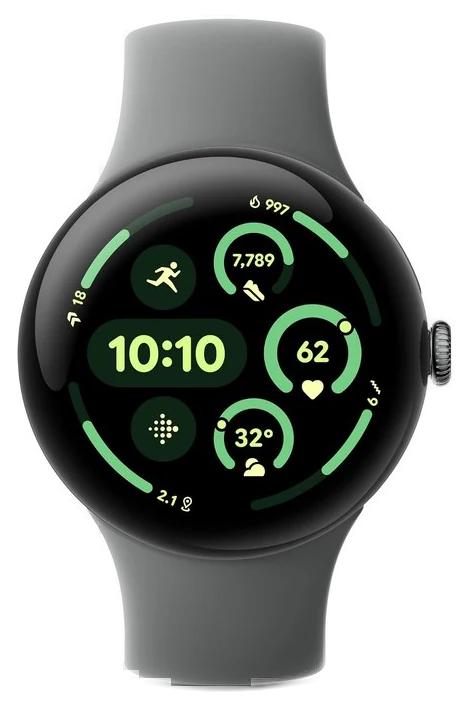
The Pixel Watch 3 just became the value play of this list: with the Pixel Watch 4 on shelves, Google cut every Watch 3 model by $80, and the 41mm Wi-Fi version has floated as low as $169.99 at clearance, under half its $349.99 launch price. What that buys is unchanged: the prettiest domed design here, the best sleep tracking and readiness scores in Wear OS, and loss-of-pulse detection that can call emergency services automatically.
Fitbit’s engine remains the differentiator, from daily readiness to run-form analysis. The catches carry over: some advanced insights sit behind a Fitbit Premium subscription, battery is a firm one day with the always-on display, and repairability stays a sore point. Clearance stock also moves, so colors and sizes come and go. The Pixel Watch 4 fixes battery life and charging speed for roughly $120 more; if those two complaints do not move you, the clearance Watch 3 on Amazon is the most watch per dollar on this page.
Get it if sleep and recovery data are your priority on Android.
Skip it if you want the newest model’s battery, buy the Pixel Watch 4.
The Pixel Watch 3 just became the value play of this list: with the Pixel Watch 4 on shelves, Google cut every Watch 3 model by $80, and the 41mm Wi-Fi version has floated as low as $169.99 at clearance, under half its $349.99 launch price. What that buys is unchanged: the prettiest domed design here, the best sleep tracking and readiness scores in Wear OS, and loss-of-pulse detection that can call emergency services automatically.
Read the full case
Fitbit’s engine remains the differentiator, from daily readiness to run-form analysis. The catches carry over: some advanced insights sit behind a Fitbit Premium subscription, battery is a firm one day with the always-on display, and repairability stays a sore point. Clearance stock also moves, so colors and sizes come and go. The Pixel Watch 4 fixes battery life and charging speed for roughly $120 more; if those two complaints do not move you, the clearance Watch 3 on Amazon is the most watch per dollar on this page.
Strengths
Best sleep tracking in Wear OS
Loss-of-pulse emergency calling
$80 clearance cut on all models
Fitbit readiness engine
Tradeoffs
Some insights need Fitbit Premium
One-day battery
Clearance stock comes and goes
Pick 5 of 5: No. 5Best battery
5
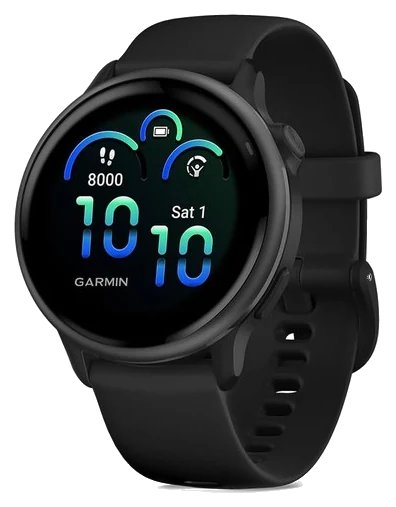
Garmin Vivoactive 6
Best battery
The battery-and-sport outlier
Get it if fitness depth and week-long battery beat apps on your list.
Skip it if you want wrist apps, payments, and assistants everywhere.
Garmin plays a different game with the Vívoactive: less wrist computer, more training tool, with battery measured in weeks, around 11 days of normal use, and sport tracking that goes deeper than any mainstream watch here.
The multi-sport catalog covers everything from pool swims to golf with metrics the phone-brand watches approximate at best, and Garmin’s Body Battery energy score has a cult following for good reason. It turns recovery into one actionable number. DC Rainmaker’s coverage noted Garmin held pricing steady versus the previous Vivoactive generation while adding offline support for Spotify, Amazon Music, and YouTube Music. It’s also the rare watch that works fully with either an iPhone or an Android phone.
What you trade away is the app ecosystem: no rich third-party app store, simpler notifications, no wallet ubiquity. For people whose watch priority is fitness rather than apps, that trade is the point. At $250–300 at Amazon, it’s the escape hatch from nightly charging.
Get it if fitness depth and week-long battery beat apps on your list.
Skip it if you want wrist apps, payments, and assistants everywhere.
Garmin plays a different game with the Vívoactive: less wrist computer, more training tool, with battery measured in weeks, around 11 days of normal use, and sport tracking that goes deeper than any mainstream watch here.
Read the full case
The multi-sport catalog covers everything from pool swims to golf with metrics the phone-brand watches approximate at best, and Garmin’s Body Battery energy score has a cult following for good reason. It turns recovery into one actionable number. DC Rainmaker’s coverage noted Garmin held pricing steady versus the previous Vivoactive generation while adding offline support for Spotify, Amazon Music, and YouTube Music. It’s also the rare watch that works fully with either an iPhone or an Android phone.
What you trade away is the app ecosystem: no rich third-party app store, simpler notifications, no wallet ubiquity. For people whose watch priority is fitness rather than apps, that trade is the point. At $250–300 at Amazon, it’s the escape hatch from nightly charging.
Strengths
~11-day battery embarrasses the field
Deepest sport tracking here
Works fully with iPhone AND Android
Body Battery recovery score
Tradeoffs
Thin app ecosystem
Basic notification handling
Less polished display than rivals
The watch has to match your phone first; everything else is secondary.
Match your phone: an Apple Watch needs an iPhone, and Samsung’s and Google’s watches lean toward their own phones, so start there before you compare features.
Battery style: decide whether you can live with a daily charge for a bright screen, or want a multi-day watch you rarely think about.
Health features you’ll use: pay for the sensors you’ll check, like heart rate and sleep, not a long list you’ll ignore after week one.
The common mistake: buying a rugged flagship you don’t need; most people are better served by a mid-range watch and the money saved.
Apple Watch Ultra 3 — brilliant and tough, but it’s around $800 of titanium that most people never push hard enough to justify.
Garmin Venu 3 — great battery and tracking, but it costs more than the Vivoactive 6 we picked for gains most won’t miss.
Samsung Galaxy Watch Ultra — rugged and capable, but it costs far more than the Galaxy Watch 8 for extras few people need.
Amazfit Balance — strong value with long battery, but its app and notifications aren’t as polished as our picks.
Smartwatch FAQs
6 common questions, answered.
Can I use an Apple Watch with Android?
No. It requires an iPhone, full stop. Android owners choose among Wear OS (Samsung, Pixel) and cross-platform fitness brands like Garmin and Amazfit. This single constraint should start every smartwatch decision.
Do smartwatch health features matter?
The evidence is strongest for the boring ones: activity nudges, heart-rhythm alerts that catch atrial fibrillation, and fall/crash detection. Treat wellness scores as trends, not diagnoses, and any alarming reading as a prompt to see a doctor, not a diagnosis.
Why is smartwatch battery life still one day?
Bright always-on screens and full app platforms cost power. The exceptions (Garmin, Amazfit) get days-to-weeks by running lighter software. Decide which side of that trade you’re on before buying; it’s the biggest daily-life difference between these watches.
Do I need cellular on my smartwatch?
Most people don’t. Cellular adds a monthly carrier fee and mainly matters if you want to leave the phone behind on runs while staying reachable. Runners, parents of kids with watches, and safety-focused buyers get real value; everyone else finds their phone is nearly always within Bluetooth range anyway. Buy GPS-only and put the savings toward a better band.
How accurate are smartwatch health sensors?
Good enough to spot trends, not to diagnose. Heart rate during steady exercise is solid across all five picks; sleep staging is an estimate; and features like ECG and sleep-apnea detection are screening tools that say “talk to a doctor,” not verdicts. The pattern that matters is change over time, a resting heart rate that quietly climbs is worth acting on regardless of brand.
Should I wait for the next generation before buying?
Watch generations are incremental, a new sensor or a brightness bump, rarely a reason to wait. The smarter play is buying the current model on sale or last year’s at a discount; Samsung and Google models drop 20–30% within months of launch. The exception: if a specific announced health feature matters to you, buy the generation that has it.
Sources
Who the write-ups above lean on, and where each one is cited.
DC RainmakerCited for Garmin Vivoactive 6, and in the buying advice.
TechRadarCited for Apple Watch Series 11.
12Sep 2026Correction, 12 September 2026The photograph shown for the Samsung Galaxy Watch 8 was a previous-generation Galaxy Watch with a round case. The Galaxy Watch 8 uses the cushion-shaped case introduced on the Watch Ultra. The image has been replaced. The ranking and the price range were not affected.Every correction we’ve made ›
12Sep 2026Correction, 12 September 2026This guide described the Apple Watch Series 11 as the most medically capable wearable you can buy and as everything a wrist can currently do. Apple announced the Series 12 on 9 September 2026, in stores from the 18th, with a new Health Sensing System, so those sentences no longer hold. The Series 11 remains our pick, now stated as the outgoing flagship and the better value while it is stocked, with the Series 12 named so readers can judge for themselves.Every correction we’ve made ›
Prices on this page are re-checked weekly — see the full Electronics price index for every product we cover.
Keep reading
Where to go next.
Related guides, then every guide in the department.
New guides, re-ranked picks and the month's notable changes. No weekly filler, ever.
Unsubscribe any time. Your address goes to our newsletter provider and nowhere else — see our privacy policy.
Manage Consent
To provide the best experiences, we use technologies like cookies to store and/or access device information. Consenting to these technologies will allow us to process data such as browsing behavior or unique IDs on this site. Not consenting or withdrawing consent, may adversely affect certain features and functions.
Functional
Always active
The technical storage or access is strictly necessary for the legitimate purpose of enabling the use of a specific service explicitly requested by the subscriber or user, or for the sole purpose of carrying out the transmission of a communication over an electronic communications network.
Preferences
The technical storage or access is necessary for the legitimate purpose of storing preferences that are not requested by the subscriber or user.
Statistics
The technical storage or access that is used exclusively for statistical purposes.The technical storage or access that is used exclusively for anonymous statistical purposes. Without a subpoena, voluntary compliance on the part of your Internet Service Provider, or additional records from a third party, information stored or retrieved for this purpose alone cannot usually be used to identify you.
Marketing
The technical storage or access is required to create user profiles to send advertising, or to track the user on a website or across several websites for similar marketing purposes.