Buy this first
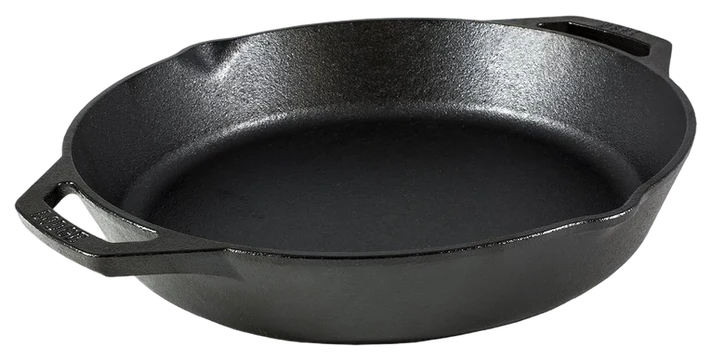
Lodge Cast Iron
~$25–45 Lowest price
Get it if you want a hard sear and one pan that can last for generations.
- Best for
- Searing and heat retention
- Maintenance
- Season and keep dry
Buy the Lodge cast iron skillet first; the All-Clad D3 is the second purchase, not the alternative.
Our verdict
Buy the Lodge cast iron skillet first; the All-Clad D3 is the second purchase, not the alternative.
Buy this first
~$25–45 Lowest price
Get it if you want a hard sear and one pan that can last for generations.
Best all-rounder
~$110–160
Get it if you make sauces, cook acidic dishes, or want precise control.
The price gap~$85–115 more for the All-Clad D3
Each bar is an estimated price range, on one scale from ~$25 to ~$160.
Dated notes already published on this page, newest first. Every correction we make is logged on the corrections page.
We compared the thermal properties of each construction, published bonding and material specifications, oven and induction compatibility, maintenance requirements, and decades of owner reports on longevity. We haven’t cooked in either pan ourselves; the searing and maintenance claims come from published material specs and decades of owner reports we drew on. Prices are always moving, so every button and link pulls the live listing.
How we rank
Published specifications, verified owner reviews, and independent safety or standards data where it applies — weighted the same for every pick, never sponsored placement.
Buy this first~$25–45
Thirty dollars, one hundred years
Get it if you want a hard sear and one pan that can last for generations.
Skip it if weight is a real problem, or you cook mostly acidic dishes.
The Lodge cast iron skillet is the one to buy first. Cast iron stores a lot of heat for its size, which is what searing requires: when a cold steak hits the pan, the surface temperature drops less than it does on a thin stainless or nonstick pan, so you get a crust rather than grey stewing meat.
It is also effectively permanent. There is no coating to fail, no bonded layer to separate, and a neglected rusted pan can be stripped and re-seasoned back to new. A hundred-year-old cast iron pan can still cook as well as a new one. It goes from hob to oven without thought, works on induction, and handles heat levels that would ruin nonstick.
What it punishes is inattention and acidity. It must be dried properly or it rusts, long-simmered tomato sauce will strip the seasoning and pick up a metallic taste, and it is heavy enough that some people struggle with a loaded 12-inch pan. It also heats unevenly across the base until fully preheated, so give it several minutes and use a pan handle cover because the handle gets ferociously hot. At $25–45, it’s a low-cost way to find out whether you like cooking on cast iron.
Strengths
Tradeoffs
Best all-rounder~$110–160
The pan for everything cast iron handles badly
Get it if you make sauces, cook acidic dishes, or want precise control.
Skip it if you only need one pan and searing is the priority.
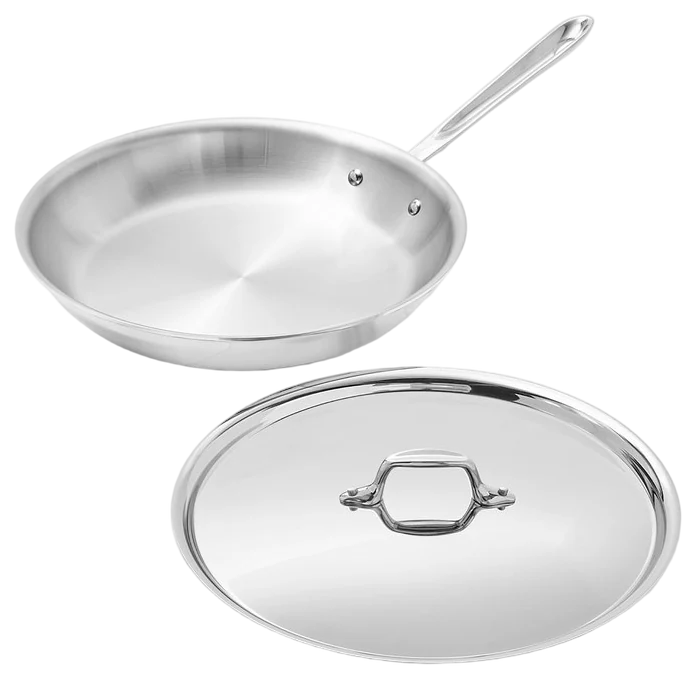
The All-Clad D3 solves the problems cast iron creates. Its tri-ply construction bonds an aluminum core between stainless layers across the entire pan, not just the base, so heat spreads evenly and, crucially, responds quickly when you change the burner. Cast iron takes minutes to react; this takes seconds, which is what sauces and delicate proteins need.
Because the cooking surface is inert stainless, acidity is a non-issue: tomato, wine, lemon and vinegar are all fine, and the fond left behind is the entire basis of a pan sauce. That single capability is why professional kitchens run on stainless. It is dishwasher safe, needs no seasoning, cannot be ruined by soap, and All-Clad’s lifetime warranty is honored in practice rather than in theory.
The price is the objection, and it is a fair one. This is four times the cast iron. Food also sticks if you use it wrongly, which is the number one complaint and almost always down to not preheating properly or adding food while the pan is cold. Handles get hot and the shape is not to everyone’s taste. Cheaper tri-ply pans deliver most of the performance. At $110–160, it is the buy-once version.
Strengths
Tradeoffs
6 common questions, answered.
Modern pans arrive pre-seasoned and are usable immediately, so no elaborate ritual is required to start. Maintenance is simple: cook with fat regularly, and after washing, dry the pan on the hob and wipe a thin film of neutral oil over the surface. That’s it. The elaborate multi-hour oven-seasoning routines online are for restoring rusted or stripped pans, not for weekly upkeep, and a pan used often seasons itself through cooking.
Yes. This is the most persistent kitchen myth going. Modern washing-up liquid is not lye-based and will not strip a polymerized seasoning layer. What strips seasoning is prolonged soaking, harsh scouring, and long simmering of acidic food. Wash it with soap and a brush, rinse, dry it thoroughly on the hob, and oil it lightly. Leaving it wet is the thing that ruins cast iron.
Almost always temperature. Preheat the empty pan on medium for two to three minutes, then add fat, then add food: and let the food release on its own rather than forcing it. Properly seared protein will unstick itself when a crust forms; if it is gripping, it is not ready. The classic test is a droplet of water that beads and skates across the surface rather than sizzling away, which indicates the pan is at temperature.
Cast iron works superbly on induction. It is ferrous, so it couples efficiently, though its weight can scratch a glass hob if dragged. Tri-ply stainless with a magnetic outer layer, including All-Clad D3, also works well. What does not work is pure aluminum or copper cookware without a bonded magnetic base. If you have induction, check for a magnetic base before buying anything; a fridge magnet on the pan bottom is a reliable field test.
It is a third category, not a competitor to either. Nonstick exists for eggs, pancakes, delicate fish and low-fat cooking, and nothing else does those jobs as easily. The catch is that it is the only cookware here with a definite lifespan, coatings degrade in three to five years regardless of care, and cannot be repaired. Buy nonstick cheap, replace it on schedule, keep it off high heat, and never use metal utensils on it.
Premium stainless discounts hard during the late-November sales and around the mid-year sales events, often by 30% or more, and All-Clad runs periodic factory seconds sales where cosmetically imperfect pans sell at large discounts with the warranty intact. That is the single best way to buy it. Cast iron is inexpensive year-round and rarely worth waiting on. Avoid buying full boxed cookware sets: they pad the count with pans you will not use.
Correction, 11 October 2026The cast iron pick said no stainless or nonstick pan “at any price” matches it for searing, that nothing else in a home kitchen sears like it, and that it was the best value in any kitchen category. None of those claims had a source, so they’re removed. The pick and the verdict haven’t changed.Every correction we’ve made
 vs
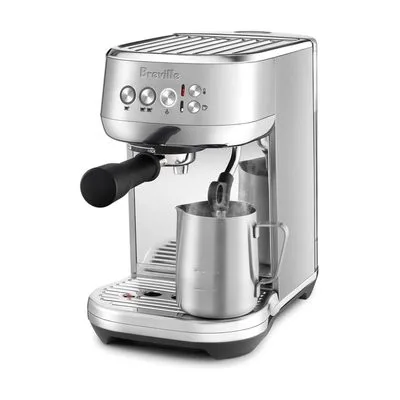
vs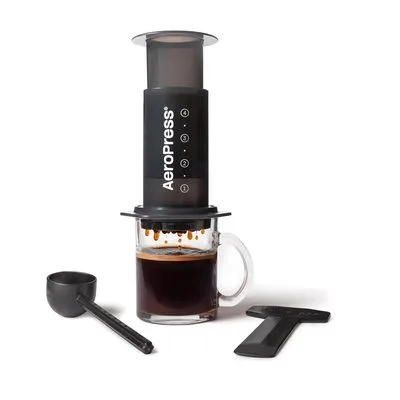 Head-to-headBreville Bambino Plus vs. AeroPress: Espresso Machine or Manual Brewer?
 vs
vs Head-to-headRoborock vs. Roomba: Q-Series or Combo J5+, Which Is Worth the Money?
 vs
vs Head-to-headNinja Foodi Dual Zone vs. Cosori Dual Blaze: Two Baskets or One?
 GuideThe Best Cookware of 2026: Five Pieces That Replace a Full Set
 GuideThe Best Kitchen Upgrades for 2026: Buy-it-for-life, Not Buy-it-again
 GuideThe Best Air Fryers of 2026: Single-serve to Feeding a Family of Five
 GuideThe Best Coffee Gear of 2026: Espresso, Pour-over, and Where to Spend
 GuideThe Best Home Organization Systems: Still Tidy in Month Six
 GuideThe Best Home Furniture of 2026: Five Pieces That Outperform Their Price