Best overall value
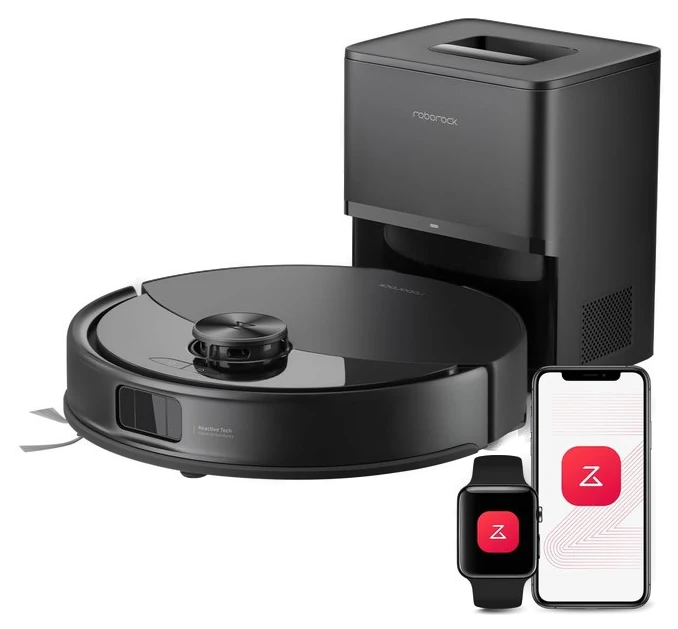
Roborock Q-Series
~$280–300 Lowest price
Get it if you have hard floors, no pets, and want the most capable machine per dollar at $280–300.
- Best for
- Hard floors and value
- Navigation
- LiDAR mapping
- Standout
- LiDAR maps, real mopping
Get the Roborock Q10 S5+ if your floors stay clear; get the Roomba Combo j5+ if pets, cables or toys share the room.
Our verdict
Get the Roborock Q10 S5+ if your floors stay clear; get the Roomba Combo j5+ instead if pets, cables or toys share the room while it runs.
Best overall value
~$280–300 Lowest price
Get it if you have hard floors, no pets, and want the most capable machine per dollar at $280–300.
Best with pets
~$470–520
Get it if you have pets, children, or floors that are never fully clear, and $470–520 buys peace of mind.
The price gap~$190–220 more for the iRobot Roomba Combo j5+
Each bar is an estimated price range, on one scale from ~$280 to ~$520.
Dated notes already published on this page, newest first. Every correction we make is logged on the corrections page.
We compared published navigation and mapping systems, suction ratings, dock and consumable pricing, app capability, and long-term owner reports on obstacle avoidance and dock reliability. We haven’t run either robot ourselves; the mapping, suction and obstacle-avoidance claims come from published specs and long-term owner reports we drew on. Prices are always moving, so every button and link pulls the live listing.
How we rank
Published specifications, verified owner reviews, and independent safety or standards data where it applies — weighted the same for every pick, never sponsored placement.
Best overall value~$280–300
Better maps, better mopping, less money
Get it if you have hard floors, no pets, and want the most capable machine per dollar at $280–300.
Skip it if you have a dog or cat, or floors that are rarely clear.
The Roborock Q-Series wins on the two things you notice daily: how intelligently it covers a floor, and how much it costs. Its spinning LiDAR turret builds an accurate map, which means methodical row-by-row cleaning rather than the semi-random bouncing cheaper robots do, plus reliable no-go zones and room-by-room commands that work. VacuumWars’ testing called the Q10 S5+ surprisingly powerful for the price, with mopping performance that beat the category average in its lab tests.
Suction is high enough to lift embedded grit from low-pile carpet, and unlike Roomba’s token damp pad, Roborock’s mopping is a real feature: the pad mounts properly, the water flow is controllable, and on tile or laminate it removes marks rather than smearing them. The app is the best in the category: multi-floor maps, per-room suction settings, and scheduling that does not need re-teaching every month.
The weakness is obstacle avoidance. LiDAR sees walls and furniture beautifully but is far less reliable at identifying small objects on the floor. Cables, socks, and most consequentially pet waste. There is no self-emptying base at this price either, so you empty a small onboard bin every few runs, or budget for a self-emptying dock model. At $280–300, it is the better machine for a tidy, pet-free home.
Strengths
Tradeoffs
Best with pets~$470–520
The one that sees the mess and drives around it
Get it if you have pets, children, or floors that are never fully clear, and $470–520 buys peace of mind.
Skip it if your floors are tidy and you want mopping that works.
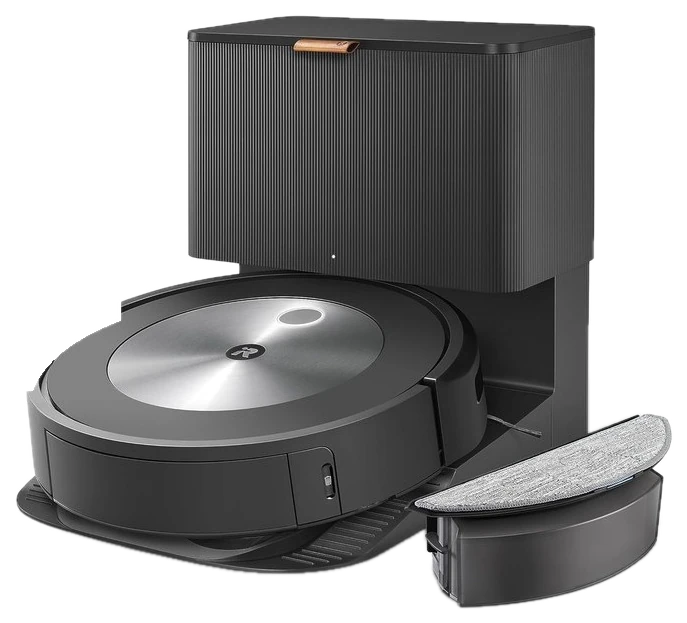
The Roomba Combo j5+ exists to prevent one specific catastrophe, and if you own a dog you already know what it is. Its forward-facing camera identifies objects in its path (cables, socks, shoes and pet waste) and drives around them, a feature Tom’s Guide singled out in its review, naming pet-waste detection and obstacle avoidance among the j5+’s core strengths. iRobot backs this with a guarantee covering the machine if it fails to avoid solid pet waste, which is not marketing bravado so much as an admission of how badly the alternative goes.
The self-emptying base is the other reason people pay the premium. The robot returns, evacuates itself into a sealed bag, and you deal with it every couple of months instead of every few runs: which for allergy sufferers also means far less contact with the dust. Navigation is competent and the app is mature, with reliable scheduling and room targeting.
You pay for that in three ways. It costs meaningfully more; its mopping is a retractable damp pad that is fine for light marks and no substitute for real mopping; and the bags are a permanent consumable at roughly a few dollars each. Its mapping is also less precise than LiDAR in the dark. At $470–520, it is the right machine for a home with animals in it.
Strengths
Tradeoffs
6 common questions, answered.
It depends on your floors and your patience. A robot’s onboard bin is small, in a shedding household you are emptying it every run or two, and that chore is the main reason robot vacuums get abandoned in cupboards. A dock turns that into a two-monthly job. The costs are a larger, noisier base unit, and bags at a few dollars each forever. If you have pets or carpet, it is usually worth it; on tidy hard floors it is a luxury.
No, and treating them as a replacement is how people end up disappointed. A robot maintains a floor. It keeps daily dust, crumbs and hair from accumulating, and it does that far better than a human who vacuums fortnightly. What it cannot do is deep-clean carpet, reach stairs, do upholstery, or get properly into corners. The right mental model is a robot for maintenance plus a decent stick or upright for a real clean every week or two.
There are two categories and the gap is large. Roborock-style systems with a mounted pad and controlled water flow clean hard floors and will lift light marks. Roomba’s retractable pad is designed mainly to avoid getting carpet wet, and functions as a damp wipe rather than a mop. Neither will shift dried-on spills, and neither should be used on unsealed wood. If mopping is a real requirement rather than a nice-to-have, that alone decides this comparison.
More than people expect, and it is worth budgeting. Filters need replacing every few months, brushes and side brushes annually, mop pads regularly, and self-emptying models consume bags at a few dollars each. Across a year that is commonly $50 to $100 in consumables. Batteries are the bigger number: expect meaningful capacity loss after about three years, and check the replacement battery price before you buy, on some models it is a large fraction of the machine.
Both climb standard thresholds and low-pile rugs without trouble. High-pile and shag rugs defeat almost every robot, including these, and long tassels are a reliable way to jam a brush roll. Roomba’s combo model lifts its mop pad when it detects carpet; Roborock’s approach varies by model, so on mixed flooring you may need to set no-mop zones in the app. Dark or patterned rugs can also confuse cliff sensors on both.
Aggressively, and on a predictable cycle. Both brands discount hard during the late-November sales and again during the mid-year sales event, frequently by 30% or more, and last-generation models drop further as soon as a successor is announced. Because the year-on-year improvements in this category are now incremental, buying the previous generation on discount is usually better value than the current model at full price.
Correction, 23 September 2026The Roomba Combo j5+ sells new for about $470–520, not the $200–230 this comparison showed. Its price and the cost comparisons are updated.Every correction we’ve made
 vs
vs Head-to-headCast Iron vs. Stainless Steel: Which Pan Should You Buy First?
 vs
vs Head-to-headBreville Bambino Plus vs. AeroPress: Espresso Machine or Manual Brewer?
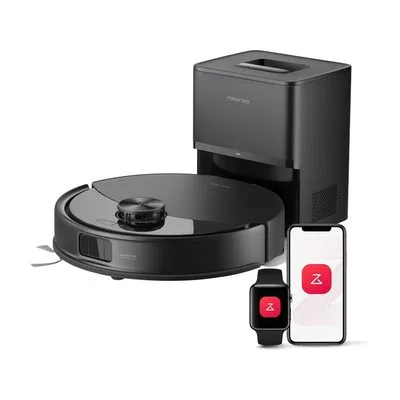 vs
vs Head-to-headRoborock Q-Series vs. eufy 11S MAX: Is the Extra $130 Worth It?
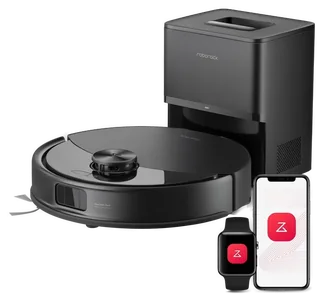 GuideThe Best Robot Vacuums of 2026: $150 Workhorses to Self-emptying Flagships
 GuideThe Best Home Organization Systems: Still Tidy in Month Six
 GuideThe Best Kitchen Upgrades for 2026: Buy-it-for-life, Not Buy-it-again