Best for newborns
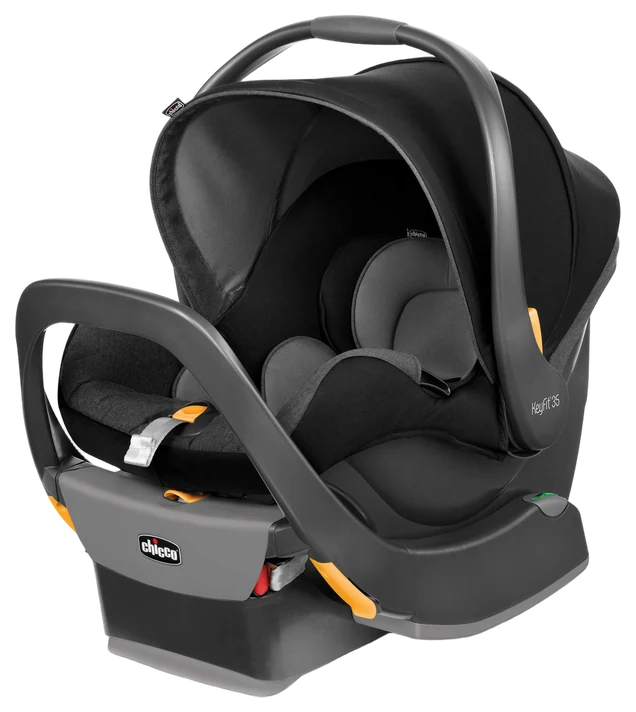
Chicco KeyFit 35 Infant Car Seat
~$220–280
Get it if you want the newborn months to be as easy as possible.
- Best for
- Newborn to about age one
- Fit range
- 4–35 lb rear-facing
This is the first real decision most new parents face, and the marketing is no help. Both seats meet the same federal crash standard, so the choice is about how you will actually use it. We compared fit ranges, installation, and years of owner reports.
Our verdict
Get the Chicco KeyFit 35 if you’ll be moving a sleeping baby; get the Graco Extend2Fit instead if you’d rather not buy twice.
Best for newborns
~$220–280
Get it if you want the newborn months to be as easy as possible.
Best long-term value
~$180–250 Lowest price
Get it if you want one seat, maximum rear-facing time, and lower total cost.
The price gapThe two ranges overlap
Each bar is an estimated price range, on one scale from ~$180 to ~$280.
Dated notes already published on this page, newest first. Every correction we make is logged on the corrections page.
We compared published height and weight ranges, federal safety standard compliance, installation and ease-of-use reporting, carrier weights, and long-term owner feedback across the full life of each seat. We haven’t installed either seat ourselves; the ease-of-installation and longevity claims come from independent installation reporting and long-term owner feedback we drew on. Prices are always moving, so every button and link pulls the live listing.
How we rank
Published specifications, verified owner reviews, and independent safety or standards data where it applies — weighted the same for every pick, never sponsored placement.
Best for newborns~$220–280
The one that clicks out and comes with you
Get it if you want the newborn months to be as easy as possible.
Skip it if you would rather buy one seat and be done.
The argument for an infant seat is portability, and it is a stronger argument than it sounds. The Chicco KeyFit 35 carrier detaches from its base, so a sleeping newborn moves from car to house without being woken, and it clicks straight onto a stroller frame. In the first six months, when babies sleep constantly and unpredictably, that is a daily quality-of-life difference. Chicco sells the KeyFit 35 direct from its own site now; it isn’t stocked on Amazon.
It is also the seat that is hardest to install incorrectly, which matters enormously given how common installation errors are. A single pull tightens the belt or lower anchors to the correct tension, and two bubble levels tell you unambiguously when the recline is right for a newborn. It fits from four pounds, so premature and low-birthweight babies are covered without improvised inserts. If you want the install verified rather than assumed, NHTSA runs a child car seat inspection station locator that lists certified technicians by ZIP code, and the check is normally free.
The limitation is that it is a stage, not a solution. Most babies outgrow it by height somewhere around their first birthday, at which point you buy a convertible anyway, so this is an additional purchase, not an alternative one. The loaded carrier also gets heavy fast, and many parents stop carrying it long before the baby outgrows it, switching to a stroller frame. At $220–280, buy it for the newborn months, knowing it has an end date.
Strengths
Tradeoffs
Best long-term value~$180–250
One seat from the hospital to the booster years
Get it if you want one seat, maximum rear-facing time, and lower total cost.
Skip it if you want to move a sleeping newborn without waking them.
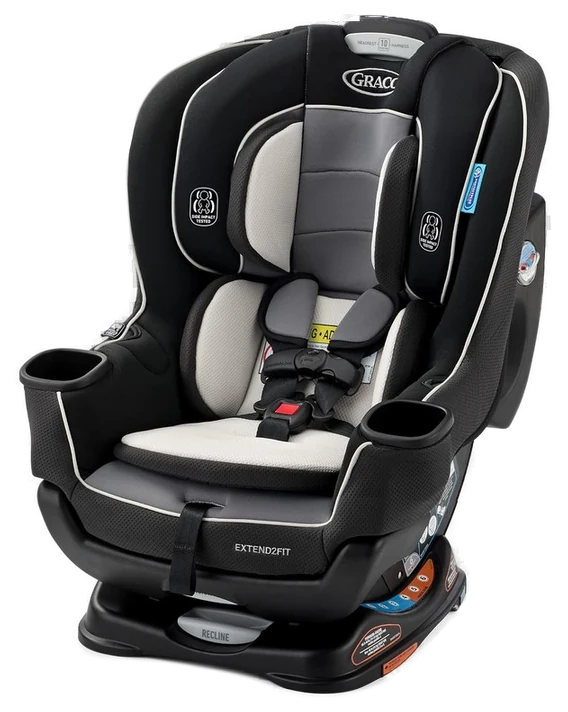
The Graco Extend2Fit is the buy-once answer. It fits from four pounds with the newborn insert and rear-faces all the way to 50 pounds, which for most children is several years. Long past the point where an infant seat would have been retired and replaced.
That high rear-facing limit is the real safety argument, and it is worth understanding why. The American Academy of Pediatrics is consistent that children should stay rear-facing as long as their seat allows, and the thing that usually ends it early is not weight but parents assuming bent legs mean the seat is outgrown. The four-position extension panel adds several inches of legroom specifically to remove that excuse. Owners routinely report five or more years from one purchase.
What you give up is portability. It stays bolted in the car. There is no carrier, so a sleeping newborn gets unbuckled and woken every single time. It is also physically large, which makes three-across difficult and eats front-passenger legroom when rear-facing, so measure your back seat first. At $180–250, it is both the cheaper option and the one that lasts longer.
Strengths
Tradeoffs
6 common questions, answered.
No, and this is the most important thing to understand before you spend. Both must pass the same federal crash standard, FMVSS 213, to be sold in the United States. Price differences buy easier installation, longer fit ranges, nicer fabrics and lighter carriers: not a higher safety ceiling. Easier installation does translate into real-world safety, because misuse rates are high and a correctly fitted budget seat protects better than a misused expensive one. But no seat on sale is ‘unsafe’.
Yes, and plenty of families do. A convertible that fits from four pounds is approved for a newborn, and it saves you a purchase. What you lose is the carrier. Every trip means unbuckling the baby, and every arrival home means waking them. Whether that matters depends on your life: if you drive rarely and mostly to places you stay a while, skip the infant seat. If you do short errands with a sleeping baby, the infant seat earns its money in the first six months alone.
As long as the seat’s limits allow. A rear-facing seat spreads crash forces across the whole back and supports the head and neck, which matters enormously while a child’s neck is still developing. Bent legs are not a reason to turn a child around, children sit cross-legged happily, and leg injuries in rear-facing crashes are rare. Seats with high rear-facing weight limits exist precisely so this is easy to do.
Yes. The date is stamped into the plastic shell or on a label, typically six to ten years from manufacture. The reasons are real: plastics become brittle through years of temperature cycling in a car, harness webbing degrades, and labels become unreadable. Never use a seat past its expiry date, and never use one that has been in a moderate or severe crash even if it looks undamaged, manufacturers publish their own crash-replacement guidance.
Only if you know its complete history, which in practice means from someone you trust. You need to know it has never been in a crash, has no unapplied recalls, is within its expiry date, has all original parts and labels, and has not been stored somewhere extreme. A stranger cannot credibly confirm any of that, so a marketplace or thrift-store seat is a genuine risk. This is one of the few pieces of baby gear where buying new is the clear recommendation.
Free inspection by a certified child passenger safety technician is widely available and badly underused. A large share of seats are installed with at least one error. Fire stations, hospitals, police departments and public-health agencies commonly host checking stations, and national databases list appointments by postcode. Book one before the birth if you can, and again when you switch to forward-facing. Twenty minutes, no cost, and it is the highest-value thing on this page.
Correction, 23 September 2026The Chicco KeyFit 35 isn’t stocked on Amazon, so its buttons now go straight to Chicco’s own store.Every correction we’ve made
 GuideThe Best Strollers and Car Seats: Built for Everyday Use
 GuideThe Best Baby Products: Still in Daily Use at Month Twelve
 GuideThe Best Baby Monitors: Wi-Fi, non-Wi-Fi and Wearables
 GuideThe Best Baby Feeding Essentials: Bottles, Pumps and SterilisersGuideThe Best Nursery Essentials: Real Staying Power, Not First-year Cute