The Best Baby Products:Still in Daily Use at Month Twelve
Baby gear has the fastest abandonment rate in retail. We looked for the opposite: products that parents report using daily for the first year, backed by safety credentials and tens of thousands of reviews.
By the BYB Editorial Team
Published July 28, 2026 · Updated · Prices checked OctoberOct 5, 2026
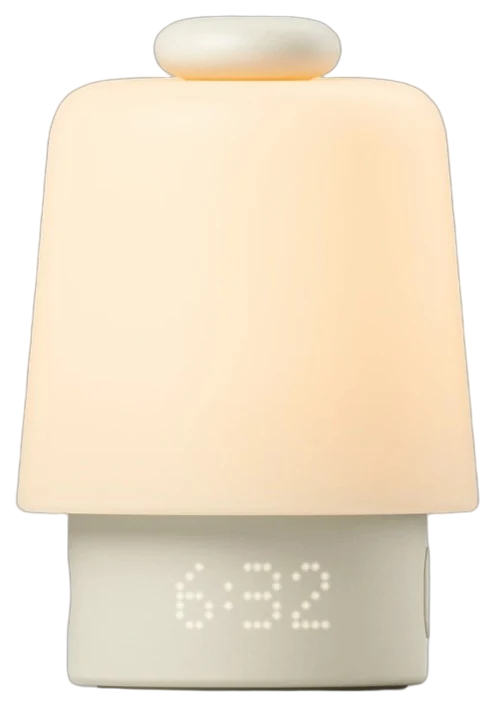
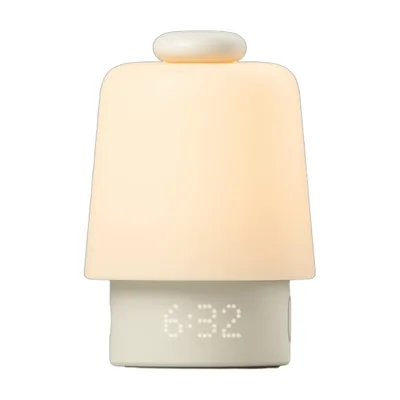
Hatch Baby$80–90The Hatch Baby, $80–90 — does sound, light and toddler-clock duty for years past the nursery.Check price
Only for night-time worry
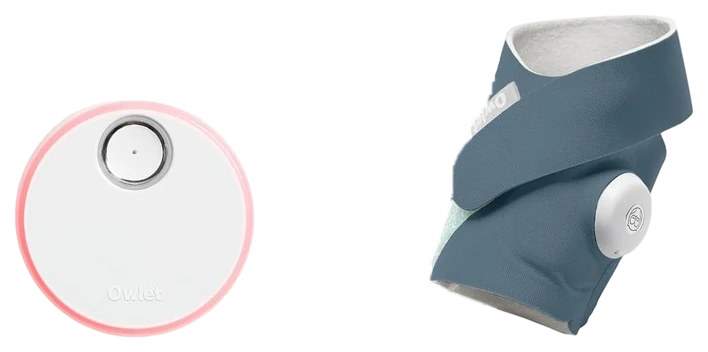
Owlet Dream Sock$300The Owlet Dream Sock, about $300 — the most conditional pick here: it treats a specific night-time anxiety, and it’s money wasted if you were never going to lie awake anyway.Check price
Feeding default
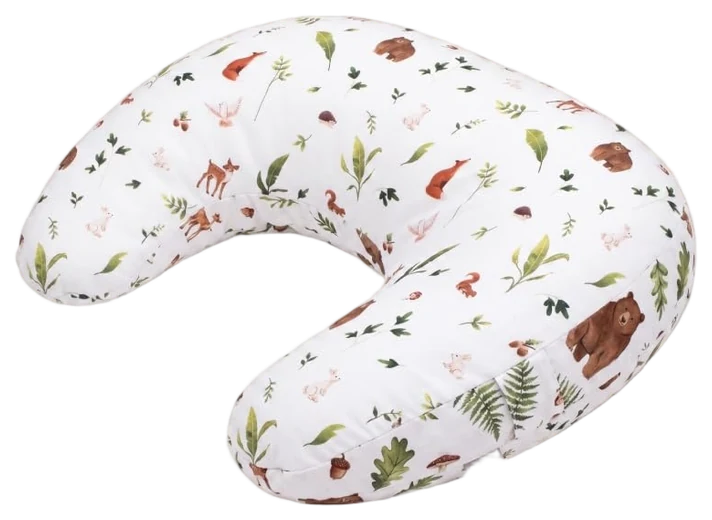
Boppy Nursing Pillow$40–50The Boppy, $40–50 — still the feeding default.Check price
Baby gear has the fastest abandonment rate in retail. We looked for the opposite: products that parents report using daily for the first year, backed by safety credentials and tens of thousands of reviews.
How we choseWhat we compared, and how we rank
We compiled pediatric safety guidance, FDA clearance where applicable, and long-term parent reviews, prioritizing daily-use staples over registry filler. Nothing here replaces pediatrician advice. Prices are always moving, so every button and link pulls the live listing.
How we rank
Published specifications, verified owner reviews, and independent safety or standards data where it applies — weighted the same for every pick, never sponsored placement.
What changed2 dated notes · latest 28 September 2026
CorrectedThe Hatch Rest 2nd Gen is no longer sold new on Amazon, where the only Rest listing left is the older 1st Gen. Hatch now sells its successor as the Hatch Baby, so the pick, its photo and its buttons now point to the Hatch Baby, at about $80–90. Lines that quoted the Rest's old $69.99 list price are updated.
CorrectedThe short answer led with the Owlet Dream Sock while the guide ranks the Hatch Rest first. It now leads with the Hatch Rest, with the Owlet Dream Sock kept as the next suggestion. No product or price changed.
Dated notes already published on this page, newest first. Every correction we make is logged on the corrections page.
Backpack format, changing pad, stroller straps, 9+ pockets
~$70–90
Each bar is an estimated price range, on one scale from ~$35 to ~$300.
Pick 1 of 6: No. 1The nursery staple
1
Hatch Baby
Top pickThe nursery staple
The nursery workhorse
Get it if you want one device running sounds, night light and toddler wake cues from newborn through preschool, and you will use the phone app rather than resent it.
Skip it if a $20 white-noise machine is all you want.
The Hatch Baby, the successor to the Hatch Rest, earns its slot by consolidating nursery hardware into a single Wi-Fi unit. Hatch lists it at $79.99 ($89.99 in the Beechwood finish), pairing a library of sleep sounds with a color-adjustable night light and a programmable time-to-rise cue that tells toddlers when morning has arrived. Settings run from the phone app, so volume and color changes happen without opening the nursery door, and a big button on top starts, pauses or stops a favorite by hand. Current price typically lands at $80–90 on Amazon.
Pregnant Chicken’s long-term review named the Rest, the Hatch Baby’s predecessor, the best overall value for a stationary nursery setup. The durability evidence there comes with a caveat: the reviewer’s three years of daily use, after which the unit kept working in a friend’s nursery, were logged on the step-up Rest+ model rather than this one.
The same review flagged the real limitation: app control depends on Wi-Fi and Bluetooth, and occasional connectivity hiccups mean you sometimes end up adjusting it by hand. Extra stories and music sit behind the optional Hatch+ subscription, with three months included in the box.
Strengths
Serves newborn through preschool
Phone control, door stays shut
OK-to-wake buys back mornings
Most-used-gear consensus
Tradeoffs
Subscription upsell (skippable)
Needs a nursery outlet
App required for full control
Pick 2 of 6: No. 2Best monitor~$250–300
2
Nanit Pro
Upgrade pickBest monitor
The baby monitor with actual sleep insight
Get it if you will act on the sleep data, your Wi-Fi is solid, and a plan cost after the three bundled months is acceptable.
Skip it if you want vitals rather than analytics, or audio-only monitoring covers your needs. BabyGearLab scored the bundle 72 of 100 and the subscription is why.
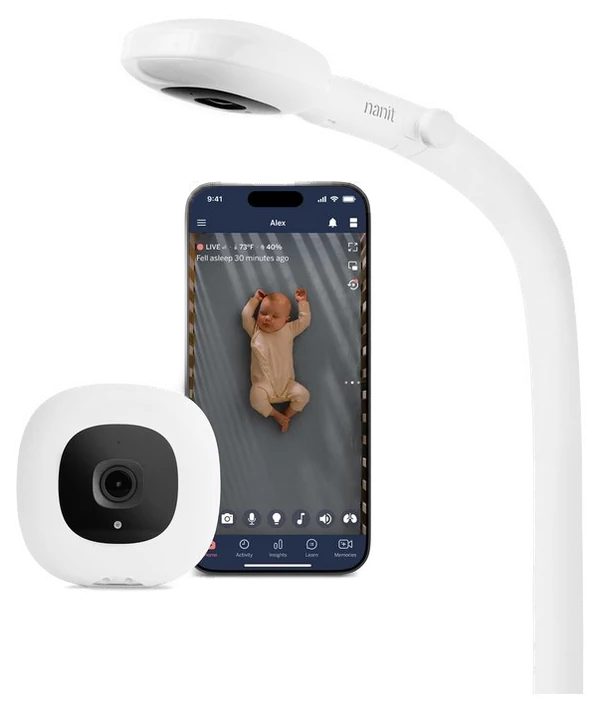
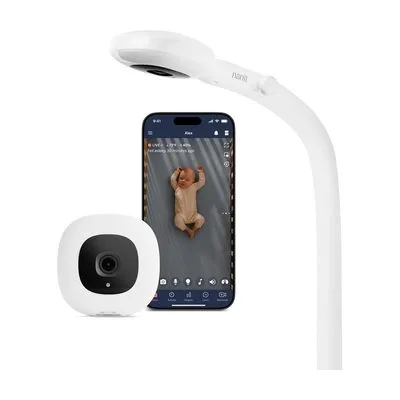
The Nanit Pro is the pick for parents who want sleep data rather than a bare video feed. The system lists at $289.99 with a 1080p camera mounted overhead on an included wall mount or floor stand, plus the sensor-free Breathing Band, a patterned wrap the camera reads to count breaths per minute with nothing electronic touching the baby. Live video and two-way audio work without a paid plan, and current price generally sits at $250–300 on Amazon.
Fathercraft’s review, drawing on eight years with the camera, still recommends it, while BabyGearLab’s take on the pricier Pro Complete bundle is cooler: a 72 of 100 score, praise for the easy wearable and multiple functions, and criticism of the subscription paywall, occasional false alarms, and a flimsy plug connection at the camera.
The monitoring basics stay free, but keeping every advertised analytics feature requires a paid plan once the three bundled months run out; Nanit’s tiers start under $10 a month and climb to $120 or $300 a year. Fathercraft also warns it performs poorly on unreliable Wi-Fi, and it travels badly off its mount unless you buy a stand. If vitals matter more than sleep analytics, the Owlet Dream Sock in this guide reads pulse and oxygen with FDA-cleared hardware for about the same money.
Strengths
Overhead view done right
Sleep analytics you’ll read
Breathing band, nothing on skin
Grows into toddler monitoring
Tradeoffs
Premium price
Analytics subscription after three free months
Wi-Fi dependent
Pick 3 of 6: No. 3Best wearable monitor
3
Owlet Dream Sock
Best wearable monitor
FDA-cleared peace of mind
Get it if nighttime worry is stealing your recovery sleep, and roughly eighteen months of use is worth the outlay to you.
Skip it if you’re sleeping fine, or you are a heavy sleeper who needs a loud alarm. BabyGearLab measured the base station at 55 decibels with no volume control.
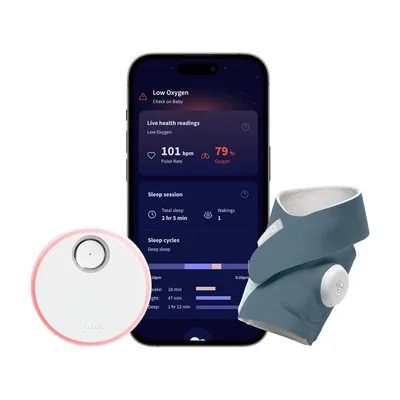
The Dream Sock is a fabric bootie that reads pulse rate and blood oxygen from a sleeping baby’s foot, hospital-style pulse oximetry shrunk to nursery scale. Owlet lists it at $299.99 for infants 1-18 months and 6-30 pounds, and the box includes the sensor and a bedside base station that lights and sounds if readings leave preset ranges, plus four fabric socks across two sizes.
It earned FDA De Novo clearance in 2023, and Owlet reports clinically evaluated oxygen accuracy within plus or minus 3 percent of arterial blood gas measurement. Live readings and historical trends come free in the Owlet app with no subscription, and current price runs about $300 on Amazon.
BabyGearLab, which tested the sock inside the Dream Duo 2 bundle, scored that bundle 82 of 100 and named it best overall movement monitor, noting fewer complaints about vital-reading accuracy than the other movement monitors it tested. The criticisms were concrete: base station alerts measured only 55 decibels with no volume adjustment, quiet enough that deep sleepers could miss them, and false alarms outnumbered missed events, with connectivity and sock fit the usual culprits. The pricier route is the current Dream Duo bundle, listed at $379.99 with the Dream Sight camera, so vitals and 2K video land in one app.
Strengths
FDA-cleared pulse oximetry
Parents report finally sleeping
Especially valued by preemie families
Clinically evaluated accuracy
Tradeoffs
Premium price, ~18-month era
Not a medical device substitute
Base alerts are a quiet 55 dB, volume fixed
Also on the shortlist
Three more, in brief
Pick 4 of 6: No. 4Best under $60~$35–40
4
Frida Baby Electric NoseFrida
Budget pickBest under $60
The gross one that works
Get it if cold season with an infant is in your future, and you would rather press a button than supply the suction yourself.
Skip it if the $15 manual NoseFrida already works for you, or you face the thickest cold-season congestion, where reviewers still hand it back to the manual tube.
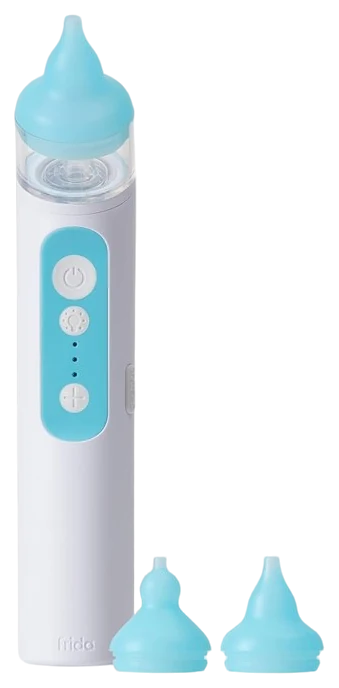
The Frida electric aspirator takes the parent-powered suction tube out of the original NoseFrida and replaces it with a rechargeable motor. Frida lists it at $39.99 with three suction levels, USB recharging, a cleaning brush and a storage case, plus an optional color-changing light meant to calm a restless baby mid-clear. Target’s listing adds that the two included silicone tips come in two sizes, covering newborns through toddlers. The silicone tips are dishwasher safe, though Frida says to hand-wash the mucus reservoir. Current price sits at about $35–40 on Amazon.
Little Loving Life’s roundup names it the best electric aspirator from a name brand, concluding that for everyday congestion it does the job, while its overall best-electric pick goes to a competitor.
The review keeps two caveats honest: it is a newer product whose early reviews are good but not yet at the bulletproof level of the original SnotSucker, and some parents find the electric suction gentler than what their own lungs delivered through the manual tube, so for the thickest cold-season mucus the original still wins. When congestion outruns the standard motor, Frida lists the Electric NoseFrida Pro at $89.99, which steps up to five adjustable levels of hospital-grade suction and adds a firmer nose piece option.
Get it if cold season with an infant is in your future, and you would rather press a button than supply the suction yourself.
Skip it if the $15 manual NoseFrida already works for you, or you face the thickest cold-season congestion, where reviewers still hand it back to the manual tube.
The Frida electric aspirator takes the parent-powered suction tube out of the original NoseFrida and replaces it with a rechargeable motor. Frida lists it at $39.99 with three suction levels, USB recharging, a cleaning brush and a storage case, plus an optional color-changing light meant to calm a restless baby mid-clear. Target’s listing adds that the two included silicone tips come in two sizes, covering newborns through toddlers. The silicone tips are dishwasher safe, though Frida says to hand-wash the mucus reservoir. Current price sits at about $35–40 on Amazon.
Read the full case
Little Loving Life’s roundup names it the best electric aspirator from a name brand, concluding that for everyday congestion it does the job, while its overall best-electric pick goes to a competitor.
The review keeps two caveats honest: it is a newer product whose early reviews are good but not yet at the bulletproof level of the original SnotSucker, and some parents find the electric suction gentler than what their own lungs delivered through the manual tube, so for the thickest cold-season mucus the original still wins. When congestion outruns the standard motor, Frida lists the Electric NoseFrida Pro at $89.99, which steps up to five adjustable levels of hospital-grade suction and adds a firmer nose piece option.
Strengths
Clears everyday congestion, no lung power
Adjustable gentle suction
Sick baby → feeding, sleeping baby
Washable, hygienic parts
Tradeoffs
Babies protest the sensation
Parts to rinse after
USB charging to remember
Pick 5 of 6: No. 5The feeding classic
5
Boppy Nursing Pillow
The feeding classic
The feeding-support standard
Get it if feeding sessions measure in hours daily and you want the redesign built to the 2025 federal standard rather than a hand-me-down that predates it.
Skip it if you’ve been gifted three, or you want a strapped, locked-in latch platform. Babylist points those readers at the My Brest Friend.
The Boppy is the default first nursing pillow for a reason, and the current version is a fresh design: Boppy rebuilt its iconic pillow in early 2025 to meet the first mandatory federal nursing-pillow standard, moving to a U shape with a wider opening and a higher, firmer loft. It still wraps the waist and raises the baby to breast or bottle height, and the removable cover is machine washable while the pillow itself is spot-clean only. Target stocks the redesign at $49.99, and current price runs $40–50 on Amazon.
Babylist’s comparison against the My Brest Friend still calls the Boppy the classic go-to for ease of use, since it positions with one hand, and lists its range as birth to 12 months. The drawback Babylist identifies is that without a strap the pillow can migrate away from your body mid-feed, forcing readjustment.
One safety line is non-negotiable: the CPSC warns that infants should never sleep on nursing pillows, so this is an awake, supervised product only, and Boppy now positions it strictly as a feeding pillow. Parents wanting a locked-in latch platform can step up to the My Brest Friend Deluxe, from $56.95 at Babylist, which adds a wraparound shape with an adjustable buckle strap and a firm, flat front.
Get it if feeding sessions measure in hours daily and you want the redesign built to the 2025 federal standard rather than a hand-me-down that predates it.
Skip it if you’ve been gifted three, or you want a strapped, locked-in latch platform. Babylist points those readers at the My Brest Friend.
The Boppy is the default first nursing pillow for a reason, and the current version is a fresh design: Boppy rebuilt its iconic pillow in early 2025 to meet the first mandatory federal nursing-pillow standard, moving to a U shape with a wider opening and a higher, firmer loft. It still wraps the waist and raises the baby to breast or bottle height, and the removable cover is machine washable while the pillow itself is spot-clean only. Target stocks the redesign at $49.99, and current price runs $40–50 on Amazon.
Read the full case
Babylist’s comparison against the My Brest Friend still calls the Boppy the classic go-to for ease of use, since it positions with one hand, and lists its range as birth to 12 months. The drawback Babylist identifies is that without a strap the pillow can migrate away from your body mid-feed, forcing readjustment.
One safety line is non-negotiable: the CPSC warns that infants should never sleep on nursing pillows, so this is an awake, supervised product only, and Boppy now positions it strictly as a feeding pillow. Parents wanting a locked-in latch platform can step up to the My Brest Friend Deluxe, from $56.95 at Babylist, which adds a wraparound shape with an adjustable buckle strap and a firm, flat front.
Strengths
Saves arms through feeding months
Meets the 2025 federal safety standard
Washable, replaceable covers
One-hand positioning
Tradeoffs
Never a sleep surface, firm rule
Bulky to store
Cover buying becomes a hobby
Pick 6 of 6: No. 6Best diaper bag
6
Skip Hop Diaper Backpack
Best diaper bag
The diaper bag that doesn’t look like one
Get it if you want both hands free plus the packing cubes BabyGearLab credits for the organization, at roughly a third of what fashion-brand diaper bags command.
Skip it if a structured tote is already working for you, or you want a bag that reads as luggage rather than baby gear.
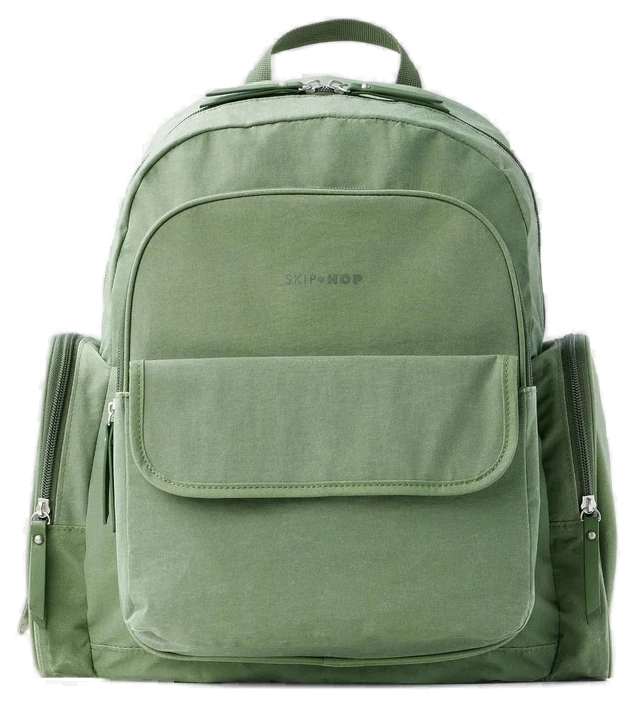
The Skip Hop backpack, sold as the Forma, takes the diaper bag slot on organization at a sane price. Skip Hop lists 29.4 liters of capacity in a shell weighing 1.4 pounds, with insulated side bottle pockets, two packing cubes, one mesh for changing supplies and one insulated for bottles and snacks, a cushioned changing pad in its own sleeve and clasps that hang the bag from stroller handles. Current price sits at $70–90 on Amazon, roughly a third of what fashion-brand diaper bags command.
BabyGearLab gave the Forma its Best Value Award at 73 of 100 and credits the packing cubes with taking organization to another level. Its gripes are mild ones it says it did not much mind in use, cloth handles and plastic stroller-strap buckles, plus a base that lacks metal feet, and it warns against soaking that base, whose cardboard-like backing swells with water.
Mommyhood101’s roundup reported no major downfalls at the price. The limitation is refinement, not function. Parents wanting a plusher build can move to the Dagne Dover Indi Medium, $225 at Nordstrom, a neoprene-look recycled-polyester bag that adds a luggage sleeve, an included changing mat and a bottle holder.
Get it if you want both hands free plus the packing cubes BabyGearLab credits for the organization, at roughly a third of what fashion-brand diaper bags command.
Skip it if a structured tote is already working for you, or you want a bag that reads as luggage rather than baby gear.
The Skip Hop backpack, sold as the Forma, takes the diaper bag slot on organization at a sane price. Skip Hop lists 29.4 liters of capacity in a shell weighing 1.4 pounds, with insulated side bottle pockets, two packing cubes, one mesh for changing supplies and one insulated for bottles and snacks, a cushioned changing pad in its own sleeve and clasps that hang the bag from stroller handles. Current price sits at $70–90 on Amazon, roughly a third of what fashion-brand diaper bags command.
Read the full case
BabyGearLab gave the Forma its Best Value Award at 73 of 100 and credits the packing cubes with taking organization to another level. Its gripes are mild ones it says it did not much mind in use, cloth handles and plastic stroller-strap buckles, plus a base that lacks metal feet, and it warns against soaking that base, whose cardboard-like backing swells with water.
Mommyhood101’s roundup reported no major downfalls at the price. The limitation is refinement, not function. Parents wanting a plusher build can move to the Dagne Dover Indi Medium, $225 at Nordstrom, a neoprene-look recycled-polyester bag that adds a luggage sleeve, an included changing mat and a bottle holder.
Strengths
Two hands free, always
Pockets end the rummage era
Either parent carries it happily
Wipeable outer fabric
Tradeoffs
Function-first styling
Fills fast with overpacking
Base lacks metal feet
The gear that earns its keep is the gear you use daily, not the items that look essential on a registry. Before buying, check whether a product has relevant safety certification — FDA clearance for anything monitoring health (like a pulse-oximetry sock), or compliance with federal safety standards for items like nursing pillows, which only became mandatory in 2025. For everyday items, prioritize ease of cleaning and how long a product stays useful as your baby grows, since a lot of baby gear has a usable window of a few months before it’s outgrown.
Small daily-use items — sound machines, nasal aspirators, bibs — run $40-90 and are worth buying without much hesitation since the failure cost is low. Monitoring devices and wearables ($250-300+) are a bigger commitment and worth researching specifically for the safety claims they make, not just the features.
The most common mistake is buying based on registry trends rather than your actual daily routine. The second, more serious one: using a nursing pillow or other feeding prop as a sleep surface, which safety guidance explicitly warns against regardless of how the product is marketed.
Yogasleep Hushh — It’s a dead-simple portable sound machine, but it does one thing where our Hatch Baby pick also handles the night light, clock and room features you’ll want anyway.
BabyBjörn Bouncer Balance Soft — It’s a lovely no-batteries bouncer, but it’s pricey and the toy bar most babies want costs another $60 on top.
Ubbi Steel Diaper Pail — It traps odor well with regular trash bags, but it’s a single-purpose buy that a lidded step can handles well enough for far less.
Snuggle Me Organic Infant Lounger — It’s comfy for supervised awake time, but it’s strictly not for sleep, so it’s easy to misuse and safer to skip than to gamble on.
Baby gear FAQs
6 common questions, answered.
What baby products are worth buying before birth?
The daily-use core: a sound machine, a feeding pillow, the NoseFrida, and a diaper bag. Hold off on monitors and gadgets until you know your baby and your anxieties, parents differ wildly on what proves essential.
Is the Owlet Dream Sock worth it?
For parents whose anxiety is costing them sleep, and especially for preemies or babies with health scares, owners overwhelmingly say yes. It is FDA-cleared but is not a medical device that prevents anything; it’s information and reassurance, priced accordingly.
Nanit vs. a cheap Wi-Fi camera?
A $40 camera shows you the crib; the Nanit tells you what happened: sleep duration, wake windows, trends. If you’ll use the data (sleep training, schedule debugging), it earns the price. If you just want a picture, buy the cheap camera.
What can safely be bought secondhand versus new?
The safe-secondhand list: clothes, books, the Boppy (with a new cover), toys, and the Skip Hop bag. Buy new: anything with safety electronics (monitors age out of app support), car seats (crash history is unknowable and they expire), crib mattresses, and breast-pump parts. The Hatch and NoseFrida sit in between, fine used from someone you trust. The rule: if failure has consequences, buy new; if it’s fabric, wash it and save the money.
How do these products handle baby number two?
Better than most gear: the Hatch moves rooms (or you buy a second, the common move), the Boppy takes a fresh cover, the diaper bag was built for the double-kid load, and the aspirator serves the whole preschool plague era. Monitors split households: some move the Nanit to the new crib and give the toddler an audio unit; Owlet’s sock sizing restarts with each newborn. The budget note: baby two costs a third of baby one, because now you know this list.
When do babies outgrow this gear?
The lifespans: Owlet retires around 18 months (its job ends when the anxiety does), the Nanit converts to a toddler-monitoring camera for years, the Boppy’s feeding era ends by one but its prop era runs longer, the aspirator serves through preschool colds, the bag through diapers themselves, and the Hatch, the champion, runs from white-noise newborn to OK-to-wake preschooler to a plain kid’s night light. Buy with the long tail in mind.
Sources
Who the write-ups above lean on, and where each one is cited.
BabyGearLabCited for Nanit Pro, Owlet Dream Sock and Skip Hop Diaper Backpack, and in the buying advice.
FDACited for Nanit Pro and Owlet Dream Sock, and in the FAQ and the buying advice.
CPSCCited for Boppy Nursing Pillow, and in the buying advice.
25Sep 2026Correction, 25 September 2026The short answer led with the Owlet Dream Sock while the guide ranks the Hatch Rest first. It now leads with the Hatch Rest, with the Owlet Dream Sock kept as the next suggestion. No product or price changed.Every correction we’ve made ›
28Sep 2026Correction, 28 September 2026The Hatch Rest 2nd Gen is no longer sold new on Amazon, where the only Rest listing left is the older 1st Gen. Hatch now sells its successor as the Hatch Baby, so the pick, its photo and its buttons now point to the Hatch Baby, at about $80–90. Lines that quoted the Rest’s old $69.99 list price are updated.Every correction we’ve made ›
Prices on this page are re-checked weekly — see the full Baby & Kids price index for every product we cover.
Keep reading
Where to go next.
The close calls side by side, then related guides.
New guides, re-ranked picks and the month's notable changes. No weekly filler, ever.
Unsubscribe any time. Your address goes to our newsletter provider and nowhere else — see our privacy policy.
Manage Consent
To provide the best experiences, we use technologies like cookies to store and/or access device information. Consenting to these technologies will allow us to process data such as browsing behavior or unique IDs on this site. Not consenting or withdrawing consent, may adversely affect certain features and functions.
Functional
Always active
The technical storage or access is strictly necessary for the legitimate purpose of enabling the use of a specific service explicitly requested by the subscriber or user, or for the sole purpose of carrying out the transmission of a communication over an electronic communications network.
Preferences
The technical storage or access is necessary for the legitimate purpose of storing preferences that are not requested by the subscriber or user.
Statistics
The technical storage or access that is used exclusively for statistical purposes.The technical storage or access that is used exclusively for anonymous statistical purposes. Without a subpoena, voluntary compliance on the part of your Internet Service Provider, or additional records from a third party, information stored or retrieved for this purpose alone cannot usually be used to identify you.
Marketing
The technical storage or access is required to create user profiles to send advertising, or to track the user on a website or across several websites for similar marketing purposes.