The Best Nursery Essentials:Real Staying Power, Not First-year Cute
Nursery lists are padded with gear you use twice. We compared safety records, longevity of use, and thousands of parent reviews to find the five items that survive the whole first year.
By the BYB Editorial Team
Published July 28, 2026 · Updated · Prices checked OctoberOct 5, 2026
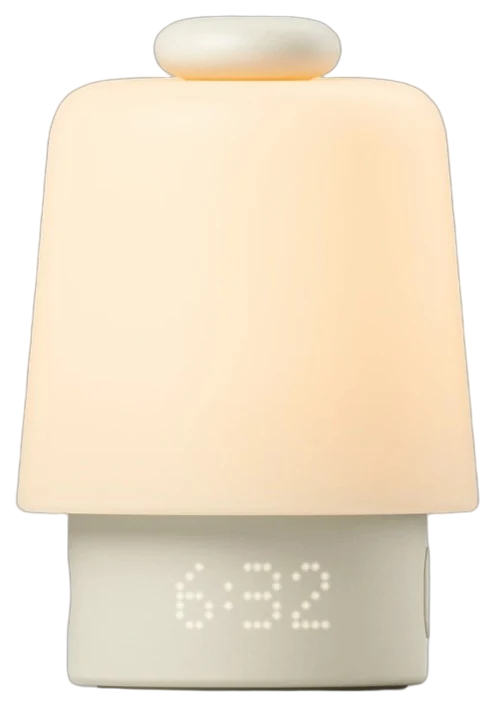
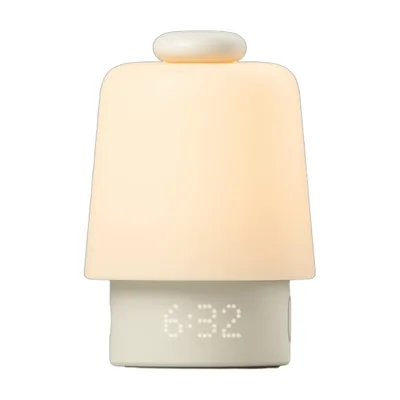
Hatch Baby$80–90The Hatch Baby, $80–90 — the rare nursery buy still in daily use at month twelve, first as white noise, later as the light that tells a toddler when morning has started.Check price
On monitors
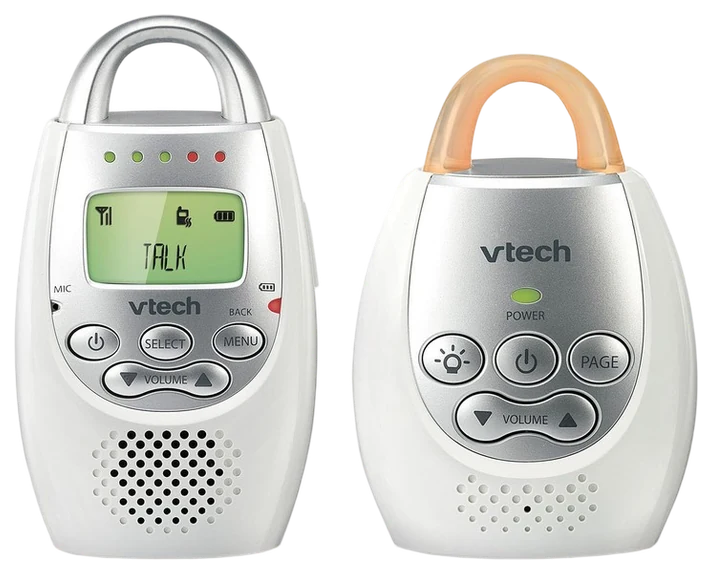
VTech DM221 Audio Monitor$37VTech DM221 at about $37 for one unit or $68 for the two-unit set — can’t be hacked, because it never touches the internet.Check price
Skip
The video monitor entirely, if the nursery shares a wall with your bedroom.
Nursery lists are padded with gear you use twice. We compared safety records, longevity of use, and thousands of parent reviews to find the five items that survive the whole first year.
How we choseWhat we compared, and how we rank
We compiled safety guidance, longevity-of-use data, and verified parent reviews across the category. Prices are always moving, so every button and link pulls the live listing.
How we rank
Published specifications, verified owner reviews, and independent safety or standards data where it applies — weighted the same for every pick, never sponsored placement.
What changed1 dated note · latest 28 September 2026
CorrectedThe Hatch Rest 2nd Gen is no longer sold new on Amazon, where the only Rest listing left is the older 1st Gen. Hatch now sells its successor as the Hatch Baby, so the pick, its photo and its buttons now point to the Hatch Baby, at about $80–90. Lines that quoted the Rest's old $69.99 list price are updated.
Dated notes already published on this page, newest first. Every correction we make is logged on the corrections page.
The Hatch Baby, the successor to the Hatch Rest 2nd Gen, is the nursery’s one-plug consolidation play: a $79.99 Wi-Fi unit that folds the sound machine, the night light and the toddler wake-up clock into a single bedside object. The sound library runs from the app, so volume and color changes happen without cracking the door, and a big button on top starts, pauses or stops a favorite without the phone.
The light is fully color-adjustable, and the time-to-rise cue gives a pre-reader a visual answer to the eternal is-it-morning question, which is the feature that keeps it useful for years after white noise stops mattering. Current price typically lands at $80–90 on Amazon.
One naming note so you buy the right box: Hatch has retired the “Rest” name, and this is now sold as the Hatch Baby, at $79.99 on Amazon and on Hatch’s own site ($89.99 in Beechwood), beside a cheaper Hatch Go at $39.99. Amazon still shows an older Rest 1st Gen at a much higher price; skip it.
Pregnant Chicken’s long-term review named the Rest, the Hatch Baby’s predecessor, its best overall value for a stationary nursery, with two honest asterisks that survive checking: app control leans on Wi-Fi and Bluetooth, so occasional hiccups mean adjusting by hand, and the reviewer’s three-years-of-daily-use testimony was earned on the step-up Rest+, not this model.
Extra stories and music sit behind the optional Hatch+ subscription, with three months included in the box. For a device that stays plugged into the same nursery outlet for years, it’s the value call.
Strengths
Newborn-to-preschool lifespan
Phone control, door stays shut
OK-to-wake trains toddler mornings
Best per-year value in the room
Tradeoffs
Optional subscription upsell
Outlet placement matters
App setup required
Pick 2 of 5: No. 2Best value
2
VTech DM221 Audio Monitor
Best value
The no-nonsense listener
Get it if you want reliable monitoring without cloud anxieties.
Skip it if you’ll check video hourly anyway. Buy the camera.
The VTech DM221 is the guide’s argument that a monitor does not need an app: DECT 6.0 digital audio on its own private link, which means no Wi-Fi, no account, no cloud outage and nothing for a stranger to log into. The parent unit shows sound through a five-LED bar, so you can see crying with the volume down, adds a vibrate mode for silent alerts, and doubles as a two-way intercom for soothing from the couch.
VTech rates the range to 1,000 feet outdoors, the manual puts indoor range at 160 feet, and the rechargeable parent unit is built to cover a full night off its cradle. At $37 on Amazon, or $68 for the two-unit set, it is the cheapest insurance policy in the nursery.
The format sets the limit: audio only means you hear the mood but cannot see the crib, and range testing by reviewers lands well under the on-box number once real walls intervene, with about 90 feet through five walls in BabyGearLab’s testing. Today’s Parent’s review sums the appeal as affordable peace of mind, and the failure mode is graceful: when it dies, it is a $30 replacement, not a $200 system. Buy the double-receiver version for two floors, and add video later only if it ever earns its price.
Strengths
Unhackable by design, no Wi-Fi
Sound lights: see crying muted
Talk-back soothing button
Half of camera-monitor pricing
Tradeoffs
No video, by philosophy
Handset needs charging
Range limits in huge homes
Pick 3 of 5: No. 3Best nursing pillow
3
Boppy Nursing Pillow
Best nursing pillow
The everywhere pillow
Get it if daily feeding marathons are on the calendar.
Skip it if one already arrived at the shower. Buy a spare cover instead.
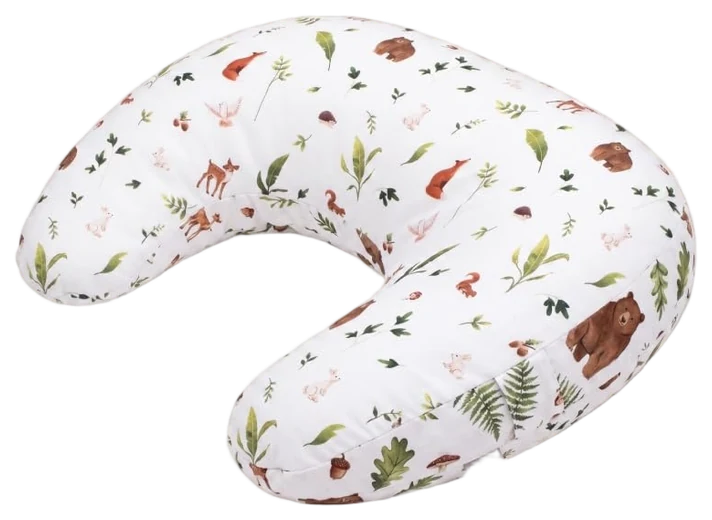
The Boppy holds its slot in the redesigned form Boppy shipped in early 2025 to meet the first mandatory federal nursing-pillow standard: a U shape with a wider opening and a higher, firmer loft than the old crescent. The job is unchanged, wrapping the waist and raising the baby to feeding height so arms and shoulders survive the marathon weeks, for whoever is doing the feeding. The removable cover is machine washable, the pillow itself is spot-clean only, and Target stocks the redesign at $49.99 with current price at $40–50 on Amazon.
Nursing pillows stopped being an unregulated category in April 2025, when the federal standard at 16 CFR Part 1242 took effect and brought required third-party testing and labeling with it. Check the box says so. And the rule that matters more than any spec: feeding only, while awake and supervised. A nursing pillow is not a sleep surface, and Boppy’s own separate Newborn Lounger was recalled in 2021 after eight infant deaths, which is exactly the confusion worth avoiding.
Babylist’s comparison against the My Brest Friend keeps the Boppy as the classic go-to for ease of use, since it positions with one hand, and lists its range as birth to 12 months; the trade it flags is that without a strap the pillow can migrate mid-feed. The safety line stays non-negotiable: the CPSC warns that infants must never sleep on nursing pillows, and Boppy now positions this strictly as an awake, supervised feeding pillow, full stop. A spare cover remains the veteran registry add, because laundry day and the pillow’s schedule rarely align.
Strengths
Meets the 2025 federal safety standard
Saves arms, shoulders, backs
Washable replaceable covers
Multi-generation track record
Tradeoffs
Never for sleep, absolute rule
Storage-bulky between uses
You will be gifted duplicates
Also on the shortlist
Two more, in brief
Pick 4 of 5: No. 4Best under $20~$10–18
4
FridaBaby NoseFrida
Budget pickBest under $20
The sick-week savior
Get it if an infant and cold season will ever coexist. They will.
Skip it if you’ve upgraded to the electric version already.
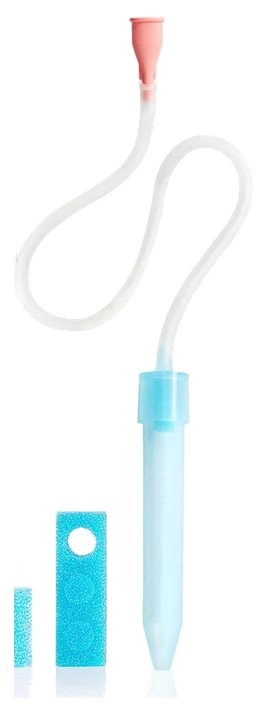
The NoseFrida is the rare $15 product with a fan club, and it stays in this guide for a simple reason: a congested baby cannot nurse or sleep, and a bulb syringe mostly redistributes the problem. The Swedish, doctor-invented design puts parent lungs behind a tube, which sounds revolting and works, with disposable hygiene filters standing between you and the payload and every mucus-facing part rinsing clean. Little Loving Life’s aspirator roundup names the manual original its best overall, the icon of the category, ahead of every electric it tested. Current price runs $10–18 on Amazon.
The notes: the filters are a recurring cost measured in single dollars per cold season, some parents never get past the concept, and peak suction is stronger than most electrics, which is exactly why the original keeps winning roundups. When a family wants motorized convenience, Frida’s Electric NoseFrida runs about $40 in our baby guide; for everyone else, the manual version is the highest-value ten dollars on this list, bought once, with only filters to reorder.
Get it if an infant and cold season will ever coexist. They will.
Skip it if you’ve upgraded to the electric version already.
The NoseFrida is the rare $15 product with a fan club, and it stays in this guide for a simple reason: a congested baby cannot nurse or sleep, and a bulb syringe mostly redistributes the problem. The Swedish, doctor-invented design puts parent lungs behind a tube, which sounds revolting and works, with disposable hygiene filters standing between you and the payload and every mucus-facing part rinsing clean. Little Loving Life’s aspirator roundup names the manual original its best overall, the icon of the category, ahead of every electric it tested. Current price runs $10–18 on Amazon.
Read the full case
The notes: the filters are a recurring cost measured in single dollars per cold season, some parents never get past the concept, and peak suction is stronger than most electrics, which is exactly why the original keeps winning roundups. When a family wants motorized convenience, Frida’s Electric NoseFrida runs about $40 in our baby guide; for everyone else, the manual version is the highest-value ten dollars on this list, bought once, with only filters to reorder.
Strengths
Clears blocked noses
Fully washable, filter-protected
Doctor-invented, pediatrician-endorsed
Highest ROI in the drawer
Tradeoffs
The concept requires courage
Filters to restock
Baby will file protests
Pick 5 of 5: No. 5Best diaper bag
5
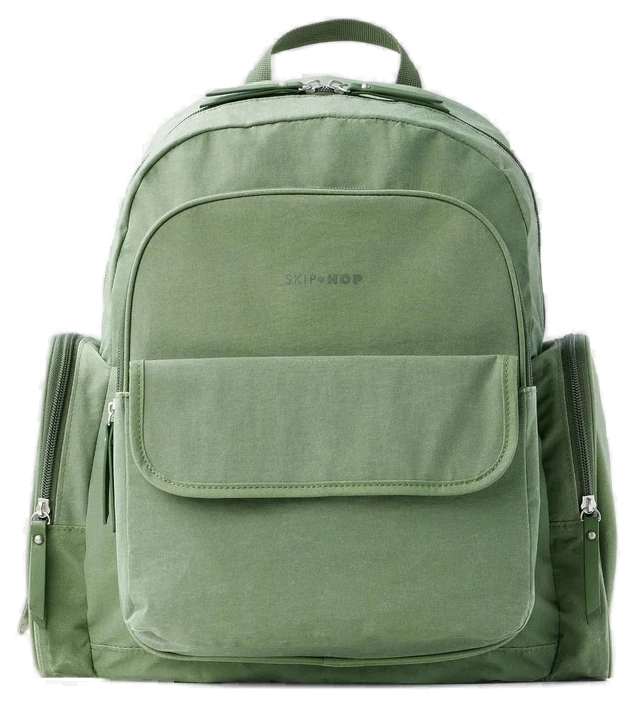
Skip Hop Forma Diaper Bag
Best diaper bag
The organized exit
Get it if leaving the house currently requires an expedition plan.
Skip it if twins or all-day outings are the norm. Size up to a bigger hauler.
The Skip Hop Forma earns the diaper-bag slot on structure per dollar: 29.4 liters in a 1.4-pound shell, insulated bottle pockets on both sides, two packing cubes that split changing supplies from food, a cushioned changing pad in its own sleeve and clasps that hang it from stroller handles. BabyGearLab gave the Forma its Best Value Award at 73 of 100 and credits the cube system with taking organization to another level, and Mommyhood101’s roundup reported no major downfalls at the price. Current price runs $70–90 on Amazon.
The compromises are hardware-grade, not deal-breakers: cloth handles and plastic stroller buckles that BabyGearLab says it did not much mind in use, a base without metal feet, and a cardboard-like bottom layer that swells if the bag soaks, so wipe rather than dunk. The neutral styling gets carried by either parent without negotiation, which matters more than it sounds for the bag one person otherwise owns forever. Families wanting a plusher build can spend $225 on the Dagne Dover Indi at Nordstrom; the Forma’s argument is that organization is a $75 problem, not a $200 one.
Get it if leaving the house currently requires an expedition plan.
Skip it if twins or all-day outings are the norm. Size up to a bigger hauler.
The Skip Hop Forma earns the diaper-bag slot on structure per dollar: 29.4 liters in a 1.4-pound shell, insulated bottle pockets on both sides, two packing cubes that split changing supplies from food, a cushioned changing pad in its own sleeve and clasps that hang it from stroller handles. BabyGearLab gave the Forma its Best Value Award at 73 of 100 and credits the cube system with taking organization to another level, and Mommyhood101’s roundup reported no major downfalls at the price. Current price runs $70–90 on Amazon.
Read the full case
The compromises are hardware-grade, not deal-breakers: cloth handles and plastic stroller buckles that BabyGearLab says it did not much mind in use, a base without metal feet, and a cardboard-like bottom layer that swells if the bag soaks, so wipe rather than dunk. The neutral styling gets carried by either parent without negotiation, which matters more than it sounds for the bag one person otherwise owns forever. Families wanting a plusher build can spend $225 on the Dagne Dover Indi at Nordstrom; the Forma’s argument is that organization is a $75 problem, not a $200 one.
Strengths
Structure ends bag archaeology
Insulated bottle pockets
Hands stay free for the baby
Either-parent neutral design
Tradeoffs
Day-trip capacity
Light fabric, not luxe
Pockets demand a system
Buy for the whole first year, not the first cute month, and skip anything you’ll only reach for a handful of times. The same logic applies to learning toys that hold up past month one.
Ask if you’ll still use it at month twelve: the essentials earn their spot by being in daily rotation, not by looking good on the registry. If it’s a one-season gadget, it’s not essential.
Check that it’s easy to clean: anything near feeding, noses, or diapers gets messy fast. Washable, wipeable, or dishwasher-safe saves you real aggravation.
Mind the size and your space: a pail, a pillow, or a monitor base all take up room. Measure before you buy so it fits the nursery you have.
The common mistake: loading up on single-purpose gadgets. A few things that work hard every day beat a shelf of stuff you used twice.
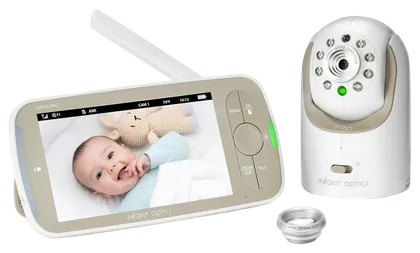
Infant Optics DXR-8 Pro — a video monitor for parents who want to see the crib, not just hear it. It runs on its own signal with no WiFi or app, but it costs a lot more than our audio-only pick.
Ubbi Steel Diaper Pail — a steel pail that seals in odor and takes any standard trash bag, so you’re not locked into buying proprietary refills. We treat it as a nice-to-have rather than a true essential.
Haakaa Silicone Pump — a one-piece silicone pump that catches letdown with suction, no motor or cords. Cheap and handy if you’re nursing, but it only helps that specific crowd, so it stayed off the main list.
Nursery FAQs
6 common questions, answered.
Audio or video monitor?
Audio covers the core job, knowing when baby needs you, with no app, hack risk, or subscription. Video earns its price for sleep training and curiosity; if you go video, our baby monitor guide covers the Wi-Fi and non-Wi-Fi options.
What belongs on a minimal registry?
A safe sleep space, a car seat, feeding gear, and the five items above cover the daily reality. Most regretted purchases are specialized furniture (wipe warmers, bottle sterilizer towers) that solve problems a sink already solves.
Is the Boppy safe for sleep?
No. No pillow is. Loungers and nursing pillows are for awake, supervised use only. Babies sleep alone, on their backs, on a flat firm surface with nothing else in the crib.
How loud should a nursery sound machine be?
The pediatric guidance: around 50 decibels at the crib, quiet-conversation level, with the machine placed across the room, not on the crib rail. Phone decibel apps make the check trivial. Continuous plain white or pink noise beats looping nature tracks whose repeats babies notice. The Hatch’s app volume control makes the setup easy to dial once and forget; louder is not more soothing, just louder.
What does a nursery genuinely need, and what can wait?
The honest core: a safe crib with a firm mattress and fitted sheet (nothing else in it), a changing surface, blackout curtains, the sound machine, and a comfortable feeding chair. That’s the list. Wait on: wipe warmers, bottle sterilizers (dishwashers exist), formal dressers (bins work), and most decor. The theme-and-mobile budget does more in the diaper fund; babies famously cannot see the mural.
When should baby move from bassinet to the nursery crib?
The typical arc: bassinet in the parents’ room for roughly the first six months (the room-sharing window safety guidance favors), then the crib transition, which is exactly when the monitor earns its keep and the sound machine smooths the move by keeping the sound environment identical. Start with naps in the crib before nights. The gear implication: the nursery list above matters most at month four, not week one.
Sources
Who the write-ups above lean on, and where each one is cited.
BabyGearLabCited for VTech DM221 Audio Monitor and Skip Hop Forma Diaper Bag, and in the buying advice.
28Sep 2026Correction, 28 September 2026The Hatch Rest 2nd Gen is no longer sold new on Amazon, where the only Rest listing left is the older 1st Gen. Hatch now sells its successor as the Hatch Baby, so the pick, its photo and its buttons now point to the Hatch Baby, at about $80–90. Lines that quoted the Rest’s old $69.99 list price are updated.Every correction we’ve made ›
Prices on this page are re-checked weekly — see the full Baby & Kids price index for every product we cover.
Keep reading
Where to go next.
Related guides, then every guide in the department.
New guides, re-ranked picks and the month's notable changes. No weekly filler, ever.
Unsubscribe any time. Your address goes to our newsletter provider and nowhere else — see our privacy policy.
Manage Consent
To provide the best experiences, we use technologies like cookies to store and/or access device information. Consenting to these technologies will allow us to process data such as browsing behavior or unique IDs on this site. Not consenting or withdrawing consent, may adversely affect certain features and functions.
Functional
Always active
The technical storage or access is strictly necessary for the legitimate purpose of enabling the use of a specific service explicitly requested by the subscriber or user, or for the sole purpose of carrying out the transmission of a communication over an electronic communications network.
Preferences
The technical storage or access is necessary for the legitimate purpose of storing preferences that are not requested by the subscriber or user.
Statistics
The technical storage or access that is used exclusively for statistical purposes.The technical storage or access that is used exclusively for anonymous statistical purposes. Without a subpoena, voluntary compliance on the part of your Internet Service Provider, or additional records from a third party, information stored or retrieved for this purpose alone cannot usually be used to identify you.
Marketing
The technical storage or access is required to create user profiles to send advertising, or to track the user on a website or across several websites for similar marketing purposes.