Skip to content
Before You Buy Guide
Baby & Kids

Nanit Pro vs. Owlet Dream Sock: Watch the Crib or Read the Vitals?

They cost within ten dollars of each other and do completely different jobs. The Nanit Pro watches the crib and grades the sleep; the Owlet Dream Sock reads pulse and oxygen with FDA De Novo clearance behind it. What each actually measures, what the subscriptions really cost, and which one fits the worry you have.

Published August 10, 2026Prices checked August 25, 2026

We may earn a commission from links on this page. Affiliate disclosure

420+ prices trackedcorrections logged publiclyhow we verify

The short version

Buy the Nanit Pro Camera at $250–300 if you want eyes on the room. It answers the question most parents actually have: what is happening in the crib right now.

The Owlet Dream Sock at about $300 answers a different one, reading pulse rate and oxygen saturation. Its FDA clearance covers displaying vitals and notifying you, not preventing anything, and the American Academy of Pediatrics still does not recommend home monitors to reduce SIDS risk. Buy it only if the numbers themselves are what you need.

The two contenders

Best for seeing Nanit Pro Camera baby monitor

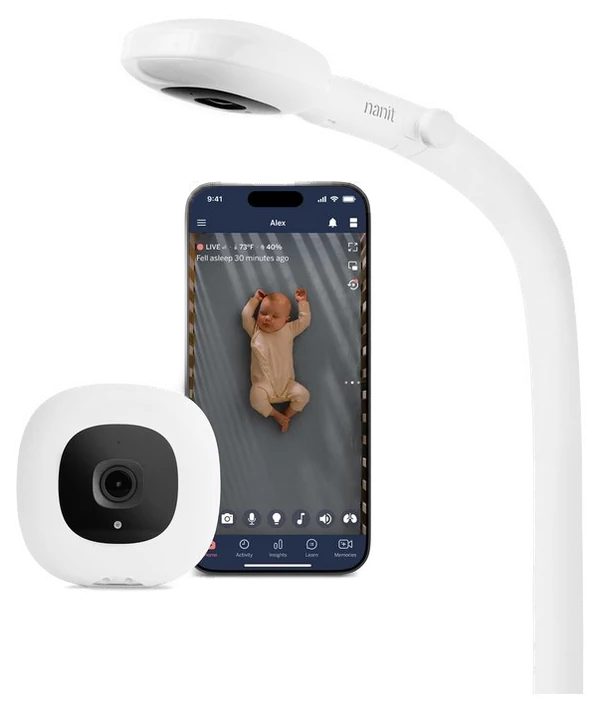
Nanit Pro Camera

An overhead camera that turns the crib into sleep data. Nanit lists it at $289.99.

Get it if you want to see what is happening in the crib and will actually act on sleep data.

  • MonitorsVideo, sound, breathing motion
  • Price rangearound $250–300
Best for vitals Owlet Dream Sock infant monitor

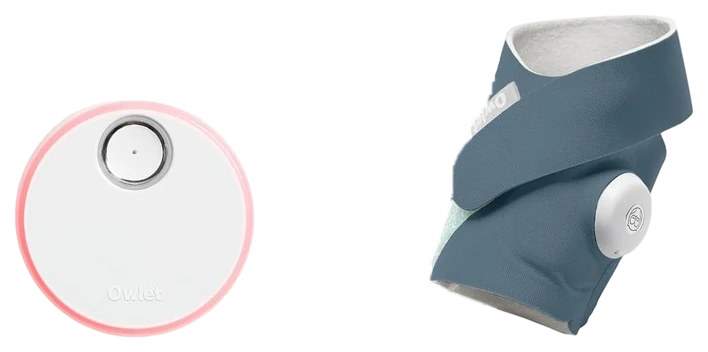
Owlet Dream Sock

The only over-the-counter infant pulse oximeter with FDA De Novo clearance. Owlet lists it at $299.99.

Get it if the anxiety is about breathing and oxygen, and a number on a screen is what settles it.

  • MonitorsPulse rate, oxygen, sleep
  • Price rangearound $300

How we chose: We read BabyGearLab’s lab-tested monitor rankings for both products, the American Academy of Sleep Medicine’s report on the FDA’s De Novo clearance of the Dream Sock, and the American Academy of Pediatrics’ standing position on home cardiorespiratory monitors, then checked all of it against Nanit’s and Owlet’s own current listed pricing and subscription terms. Prices verified 11 August 2026. Prices are always moving, so every button and link pulls the live listing.

How we rankPublished specifications, verified owner reviews, and independent safety or standards data where it applies — weighted the same for every pick, never sponsored placement.

Nanit Pro vs Owlet Dream Sock at a glance

Swipe the table sideways for the rest of the columns →

ProductBest forWhat it monitorsSubscriptionPrice range
Nanit Pro CameraJump to Nanit Pro Camera in this guideCheck priceSeeing the crib, sleep analytics, years of useVideo, sound, room temp and humidity, breathing motionOptional; Sleep free 3 months, then Memories $120/yr or Milestones $300/yr~$250–300
Owlet Dream SockJump to Owlet Dream Sock in this guideCheck priceVitals reassurance in the first 18 monthsPulse rate, oxygen saturation, sleep trendsNone; all features included~$300
1

Nanit Pro Camera

Best for seeing

The camera that grades the night for you

The Nanit Pro Camera mounts above the crib rather than beside it, which is the whole design argument: you see the entire mattress and where on it your baby has ended up, instead of a corner view of a sleep sack. Nanit lists the system at $289.99 with the overhead floor or wall stand. What arrives in the box works without paying Nanit another cent: live 1080p streaming, sound and motion notifications, background audio, two-way talk, room temperature and humidity, and Breathing Motion Monitoring.

Two costs are easy to miss. The first is the subscription. Nanit Insights is optional, but the sleep analytics people buy this camera for get thin without it: the free Sleep plan covers three months and then runs under $10 a month, Memories is $120 a year for two days of continuous video history and 30 days of sleep analysis, and Milestones is $300 a year for seven days of video and unlimited analysis. The second is Breathing Wear. Breathing motion is read optically from a printed pattern on a Nanit band, swaddle or sleeping bag, so nothing electronic touches your baby, but the garment is required for the feature and runs about $30 in sizes your baby will outgrow.

BabyGearLab’s lab testing scored the Nanit Pro 76 overall with 8.0 for video quality, and singled out sound as its weak point at 5.0, the lowest among the higher-end monitors they tested. They also flagged it as expensive with limited indoor range, and did not give it an award this round. That matches the honest read: it is a very good camera with a mediocre microphone, and it depends entirely on your router.

Against the Dream Sock, the Nanit’s real advantage is longevity. A camera keeps working through crib-climbing and the toddler bed. The sock is done at eighteen months.

Strengths

  • Overhead view shows the whole crib, not a corner of it
  • 8.0 video score in BabyGearLab’s testing
  • Core monitoring works with no subscription
  • Breathing motion read optically, nothing on baby’s skin
  • Stays useful well into the toddler years

Tradeoffs

  • Weakest sound score of the premium monitors BabyGearLab tested
  • Meaningful sleep history sits behind $120–300 a year
  • Breathing Wear is required and gets outgrown at about $30 a size
  • No parent unit; your phone and your Wi-Fi are the monitor

Verdict

Get it if: you want to see what is happening in the crib and will actually act on sleep data.Skip it if: the thing keeping you awake is her breathing, not her schedule.

Price position in this guide~$250–300Mid-range
$250 · least expensive$300 · most expensive
2

Owlet Dream Sock

Best for vitals

The only cleared infant pulse oximeter you can just buy

The Owlet Dream Sock is a fabric sock with a pulse oximeter in the cuff. It reads pulse rate and oxygen saturation, streams both to the Owlet Dream app, and triggers lights and an audible alarm on the base station if a reading falls outside a preset range. Owlet lists it at $299.99, and unlike the Nanit there is no tier above that: live readings, sleep history and health notifications are all included. It is also HSA and FSA eligible, which quietly takes a bite out of the price for a lot of families.

The FDA angle is the reason this product is different from every other consumer sock, and it is worth stating precisely. In November 2023 the FDA granted the Dream Sock De Novo clearance, and as the American Academy of Sleep Medicine reported, that made it the first over-the-counter medical pulse oximetry solution cleared for infants. The clearance covers monitoring and displaying pulse rate and oxygen saturation and notifying caregivers when readings fall outside preset ranges, in healthy infants aged one to eighteen months weighing six to thirty pounds. Owlet was clear about the boundary too: the prescription BabySat, not this, is the product for infants who need medical monitoring under a physician.

What the clearance is not is a SIDS claim. The American Academy of Pediatrics does not recommend home cardiorespiratory monitors as a strategy to reduce SIDS risk, and nothing about the De Novo pathway changes that. Buy the Dream Sock because seeing a number helps you sleep, not because you have been told it prevents something.

BabyGearLab’s top video-monitor pick is the Owlet Dream Duo 2, the $400 bundle that adds a camera to this sock, scored 86 and praised for excellent noise cancellation, with a stationary camera and the price as the knocks. Which is the honest ceiling here: on its own, the sock cannot show you the crib.
Strengths

  • FDA De Novo clearance, the only OTC infant pulse oximeter with it
  • No subscription; the $299.99 is the whole price
  • Audible base-station alarm, not just a phone notification
  • HSA and FSA eligible

Tradeoffs

  • No video at all; you cannot see the crib
  • Useful for roughly 18 months, then outgrown
  • Nightly charging and a sock to put on every bedtime
  • Not cleared, or proven, to prevent SIDS

Verdict

Get it if: the anxiety is about breathing and oxygen, and a number on a screen is what settles it.Skip it if: you want one device that lasts past toddlerhood, or you want to see the room.

Price position in this guide~$300Premium
$250 · least expensive$300 · most expensive

Nanit Pro vs Owlet Dream Sock FAQs

Does the Owlet Dream Sock’s FDA clearance mean it prevents SIDS?

No. In November 2023 the FDA granted the Dream Sock De Novo clearance as the first over-the-counter medical pulse oximeter for infants, covering the display of pulse rate and oxygen saturation and notifications when readings fall outside preset ranges, in healthy babies aged one to eighteen months and six to thirty pounds. That is a clearance to measure and notify, not to prevent. The American Academy of Pediatrics still does not recommend home cardiorespiratory monitors as a strategy to reduce SIDS risk, and safe-sleep practice remains the actual intervention.

Is the Nanit’s breathing monitoring the same thing as the Owlet’s?

No, and the difference matters. The Nanit reads breathing motion optically, by watching a printed pattern on a Nanit Breathing Wear band or sleepwear through the camera. The Owlet measures pulse rate and blood oxygen saturation with a pulse oximeter against your baby’s foot. One is a visual estimate of movement, the other is a cleared medical measurement of vitals. The Nanit’s version also requires buying the patterned garment, at roughly $30 a size as your baby grows.

Which one costs more once you add subscriptions?

The Nanit, if you want the sleep data. The Owlet is $299.99 and that is the end of it, with every feature included. Nanit lists the camera at $289.99 and keeps core monitoring free forever, but the analytics most buyers want run on Insights: a free Sleep plan for three months, then under $10 a month, or $120 a year for Memories, or $300 a year for Milestones. Over two years the Nanit can easily cost double the Owlet.

Do people buy both, and is that overkill?

Plenty of people do, and Owlet sells the pairing itself as the Dream Duo, a sock-plus-camera bundle that is BabyGearLab’s top overall video monitor pick at 86, though at around $400 they call it very spendy. Buying the Nanit and the Dream Sock separately is close to $600 for the first eighteen months. If you want both jobs covered, price the Dream Duo first rather than assuming two flagships is the answer.

Back to the top picks ↑