The Best Water Sports Gear of 2026:Made for Lake Days
Water gear fails in the least convenient place possible. We compared Coast Guard approvals, long-term owner reports, and durability testing to find five pieces that hold up season after season.
By the BYB Editorial Team
Published July 29, 2026 · Prices checked OctoberOct 5, 2026
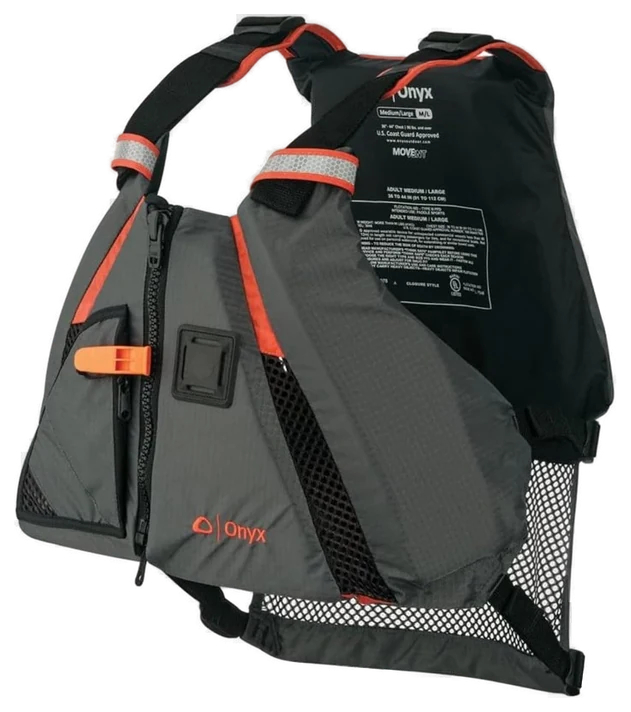
Onyx MoveVent Life Jacket$60–80The Onyx MoveVent life jacket first, at $60–80 — it’s the only item here whose failure mode is worse than inconvenient.Check price
The big-ticket buy
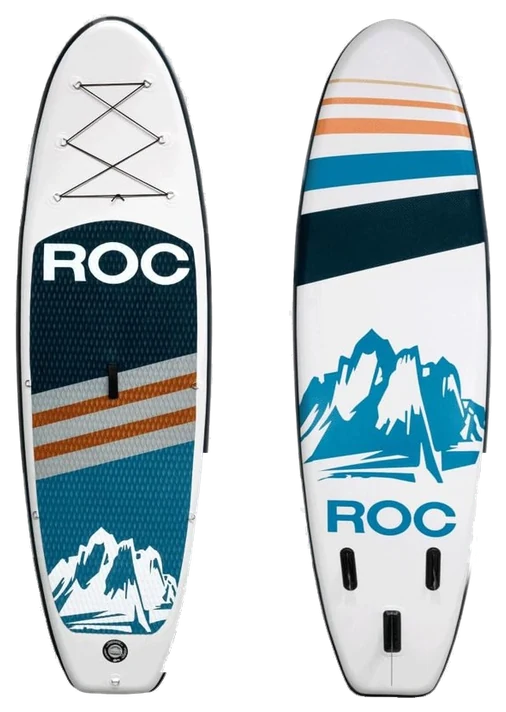
Roc Inflatable Stand-Up Paddle Board$180–400Roc inflatable paddle board, $180–400 — packs into a bag one person can carry to the water.Check price
What to look for
Sun, salt and sand resistance — nothing here needs to be the newest model.
Water gear fails in the least convenient place possible. We compared Coast Guard approvals, long-term owner reports, and durability testing to find five pieces that hold up season after season.
How we choseWhat we compared, and how we rank
We compiled US Coast Guard approval status for flotation, waterproof ratings, and multi-season owner durability reports. Weighting gear that survives sun, salt, and sand over gear that looks good in a catalog. Prices are always moving, so every button and link pulls the live listing.
How we rank
Published specifications, verified owner reviews, and independent safety or standards data where it applies — weighted the same for every pick, never sponsored placement.
The mesh panels and shaped foam are the whole design argument: they cut the sweaty-vest feeling that makes people take flotation off in July, and the armholes let you paddle without chafing. Neon color options are a genuine safety feature, not styling. Visibility in water matters. Paddling.com’s review roundup of Onyx’s MoveVent line puts ventilation and shoulder mobility at the top of what owners praise, the same combination this design is built around.
Sizing is by chest measurement and matters more than with clothing; a loose vest rides up over your face in the water, which defeats the purpose. Children need child-specific approved vests, never adult sizes. At $60–80 on Amazon, it’s the cheapest life insurance sold.
Strengths
USCG approved flotation
Ventilated enough to keep on
Articulated for real paddling
High-visibility color options
Tradeoffs
Sizing must be measured, not guessed
Not for children. Buy child-rated
Foam degrades with years of UV
Pick 2 of 5: No. 2Best big-ticket buy~$180–400
2
Roc Inflatable Stand-Up Paddle Board
Upgrade pickBest big-ticket buy
A whole watercraft that fits in a closet and a car boot
Get it if you live near flat water and want a whole watercraft for $180–400.
Skip it if you’re chasing speed or surf. Buy a hard board.
Inflatable SUPs quietly solved the two problems that kept paddleboarding niche: hard boards need a roof rack and a garage, and neither fits most people’s lives. The Roc inflatable board ships as a complete kit (board, adjustable paddle, hand pump, fin, leash, and backpack) so nothing else is required to get on the water.
Inflated to pressure, a drop-stitch board is far more rigid than skeptics expect, and stable enough that first-timers stand up within minutes. It’s also more forgiving than a hard board: bumping a dock or a rock is a non-event rather than a repair. Owners consistently report using it more than friends with nicer hard boards, purely because it’s easier to take. Inflatableboarder.com’s review of Roc’s inflatable line found the boards held pressure well through repeated sessions and called the paddle-pump-bag kit unusually complete for the price.
Hand-pumping to full pressure is a genuine ten-minute workout, an electric pump is the upgrade everyone eventually buys, and it won’t satisfy racers or serious surf riders. At $180–400 on Amazon, it’s the cheapest route to owning an actual watercraft.
Strengths
Complete kit, nothing else to buy
Packs into a closet and any car
Stable enough for first-timers
Shrugs off dock and rock bumps
Tradeoffs
Hand pumping is real work
Not for racing or surf
Needs drying before storage
Pick 3 of 5: No. 3Best under $40
3
Earth Pak Waterproof Dry Bag
Best under $40
Because phones and car keys do not swim
Get it if you bring a phone, keys, or wallet near water — $19–40 is nothing against replacing any of them.
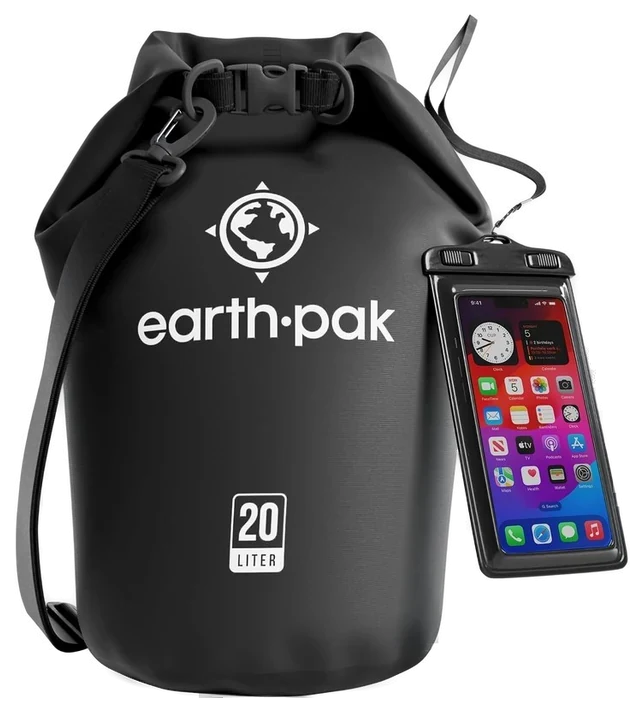
Every group on the water has one person whose phone died in a splash, and it’s a cheap problem to never have. The Earth Pak dry bag uses welded seams and a roll-top closure, fold the top three times and clip, which is the design that has kept sailors’ gear dry for decades because there’s no zip to fail.
The included clear phone case is the detail that makes it a daily-use item rather than a boat accessory: you can still use the touchscreen and take photos through it. Sizes run from 10 to 55 liters, and the shoulder straps on larger versions mean it doubles as a beach and festival bag.
It is water-resistant to submersion, not a submarine. Sustained deep immersion will eventually find a way in, so treat it as splash-and-dunk protection. Roll it properly every time; a lazy two-fold is how people get surprised. At $19–40 by size on Amazon, it protects far more value than it costs.
Strengths
Welded seams, no zip to fail
Clear phone case included
Sizes from 10L to 55L
Doubles as a beach or festival bag
Tradeoffs
Splash-proof, not submarine-proof
Must be rolled properly each time
Bulky when only half full
Also on the shortlist
Two more, in brief
Pick 4 of 5: No. 4Best goggles~$18–30
4
Speedo Vanquisher 2.0 Goggles
Budget pickBest goggles
The goggles competitive swimmers have trusted for decades
Get it if you swim laps or in open water regularly, and $18–30 beats replacing a leaking pair every season.
Skip it if you want a big comfy view. Buy a wide mask.
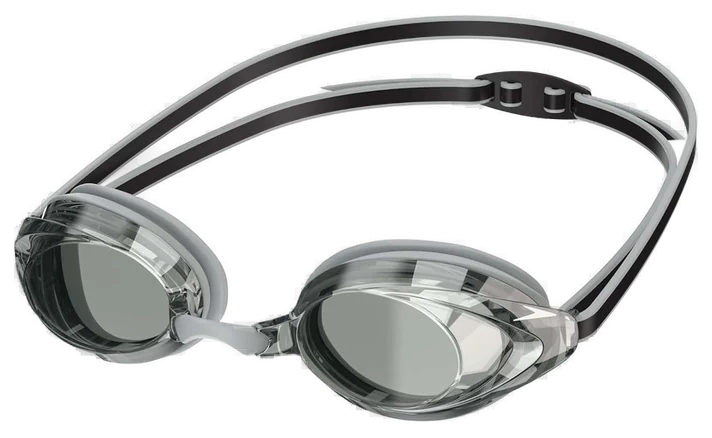
Leaking goggles ruin swims, and the cause is almost always a nose-bridge mismatch rather than a bad seal. The Speedo Vanquisher 2.0 ships with four interchangeable bridges, which is why it fits a wide range of faces and why it has stayed the lap-swimmer default for decades. YourSwimLog’s review calls it one of the most popular goggles on any pool deck, crediting the wide lens for peripheral vision that helps swimmers track lane lines and competitors mid-stroke.
The low-profile design sits close to the face so it doesn’t drag at speed, the anti-fog coating lasts a respectable number of sessions, and the wide peripheral view helps in lane traffic. Mirrored versions cut glare for outdoor pools and open water, where squinting into sun off the surface is tiring.
Anti-fog coatings are consumable on every goggle ever made. Never rub the inside of the lens, which strips it instantly. Wide-vision masks suit casual swimmers better. At $18–30 on Amazon, they’re the cheapest pick here and the one lap swimmers replace like-for-like.
Strengths
Four nose bridges fit most faces
Low-profile, minimal drag
Decades as the lap-swimming default
Mirrored options for outdoor glare
Tradeoffs
Anti-fog wears out eventually
Small lenses vs. comfort masks
Racing fit is snug by design
Pick 4 of 5: No. 4Best goggles~$18–30
Speedo Vanquisher 2.0 Goggles
The goggles competitive swimmers have trusted for decades
Get it if you swim laps or in open water regularly, and $18–30 beats replacing a leaking pair every season.
Skip it if you want a big comfy view. Buy a wide mask.
Leaking goggles ruin swims, and the cause is almost always a nose-bridge mismatch rather than a bad seal. The Speedo Vanquisher 2.0 ships with four interchangeable bridges, which is why it fits a wide range of faces and why it has stayed the lap-swimmer default for decades. YourSwimLog’s review calls it one of the most popular goggles on any pool deck, crediting the wide lens for peripheral vision that helps swimmers track lane lines and competitors mid-stroke.
Read the full case
The low-profile design sits close to the face so it doesn’t drag at speed, the anti-fog coating lasts a respectable number of sessions, and the wide peripheral view helps in lane traffic. Mirrored versions cut glare for outdoor pools and open water, where squinting into sun off the surface is tiring.
Anti-fog coatings are consumable on every goggle ever made. Never rub the inside of the lens, which strips it instantly. Wide-vision masks suit casual swimmers better. At $18–30 on Amazon, they’re the cheapest pick here and the one lap swimmers replace like-for-like.
Strengths
Four nose bridges fit most faces
Low-profile, minimal drag
Decades as the lap-swimming default
Mirrored options for outdoor glare
Tradeoffs
Anti-fog wears out eventually
Small lenses vs. comfort masks
Racing fit is snug by design
Pick 5 of 5: No. 5Best snorkel set
5
Cressi Snorkeling Set
Best snorkel set
Rental gear is a gamble; your own kit fits and stays clean
Get it if you snorkel more than once every couple of years — $70–110 pays for itself against rental fees.
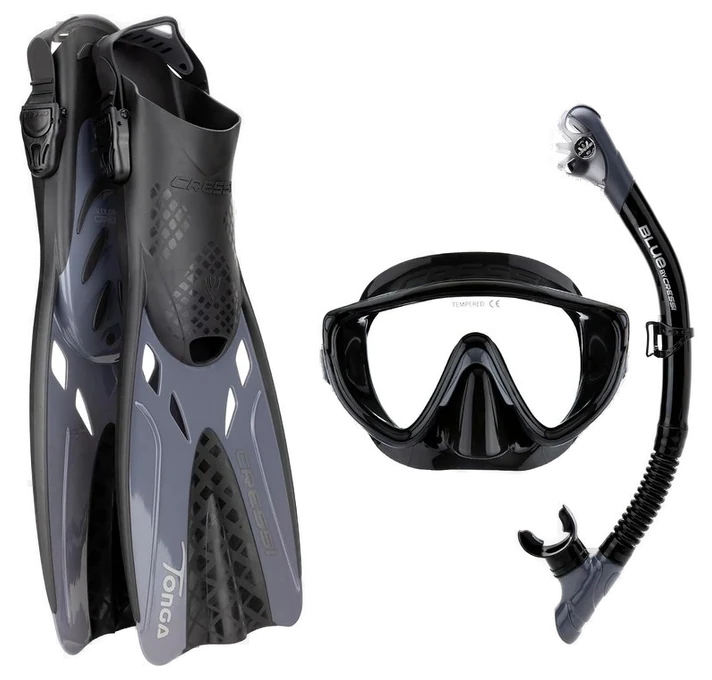
Anyone who has snorkelled with resort rental gear knows the two failure modes: a mask that floods constantly and a mouthpiece of uncertain history. The Cressi snorkeling set solves both. Cressi has made Italian dive equipment since the 1940s, and the tempered-glass lens and silicone skirt in this set are genuine dive-grade rather than toy-grade.
The dry-top snorkel is the feature that changes the experience: a valve seals the tube when a wave washes over it, so you don’t inhale a mouthful mid-breath. The adjustable short fins fit in luggage and work over neoprene socks, which is what makes this a travel set rather than a pool set.
Fit is everything with masks, press it to your face without the strap and inhale gently; if it holds, it will seal in water. Beards break seals regardless of price. At $70–110 on Amazon, it pays for itself against roughly two days of rentals.
Strengths
Tempered glass and dive-grade silicone
Dry-top valve blocks wave splash
Travel-friendly short fins
Pays back in about two rental days
Tradeoffs
Fit must be tested, beards leak
Short fins are slower than long
Needs rinsing after salt water
Pick 5 of 5: No. 5Best snorkel set
Cressi Snorkeling Set
Rental gear is a gamble; your own kit fits and stays clean
Get it if you snorkel more than once every couple of years — $70–110 pays for itself against rental fees.
Skip it if it’s a one-off holiday, rent it.
Anyone who has snorkelled with resort rental gear knows the two failure modes: a mask that floods constantly and a mouthpiece of uncertain history. The Cressi snorkeling set solves both. Cressi has made Italian dive equipment since the 1940s, and the tempered-glass lens and silicone skirt in this set are genuine dive-grade rather than toy-grade.
Read the full case
The dry-top snorkel is the feature that changes the experience: a valve seals the tube when a wave washes over it, so you don’t inhale a mouthful mid-breath. The adjustable short fins fit in luggage and work over neoprene socks, which is what makes this a travel set rather than a pool set.
Fit is everything with masks, press it to your face without the strap and inhale gently; if it holds, it will seal in water. Beards break seals regardless of price. At $70–110 on Amazon, it pays for itself against roughly two days of rentals.
Strengths
Tempered glass and dive-grade silicone
Dry-top valve blocks wave splash
Travel-friendly short fins
Pays back in about two rental days
Tradeoffs
Fit must be tested, beards leak
Short fins are slower than long
Needs rinsing after salt water
Water gear has one job first, keeping you safe, then keeping your stuff dry and your skin protected, so start there and build out.
Safety first: A properly fitted life vest is non-negotiable on open water, so get one that fits and that you’ll wear.
Keep gear dry: Phones, keys, and wallets don’t survive a dunk, so a dry bag or pouch pays for itself the first splash.
Sun and skin: Water doubles the sun and cold saps you fast, so a rash guard and the right footwear keep a good day from turning bad.
Common mistake: Beginners spend on the board and forget protection; sunburn, a lost phone, or cut feet ruin the day faster than a cheap paddle.
JOTO Waterproof Phone Pouch — a few bucks of insurance that lets you shoot photos underwater and keeps your phone alive if you tip.
SIMARI Water Shoes — quick-dry shoes that drain fast and guard your feet from rocks, hot sand, and sharp shells.
Water sports FAQs
6 common questions, answered.
Do I legally need a life jacket on a paddle board?
In US federal waters a stand-up paddle board is generally treated as a vessel outside surf and swim areas, meaning a USCG-approved flotation device must be carried on board, and children typically must wear one. State rules vary and are stricter in places, and many require a whistle and light too. Practically: wear it rather than strap it to the deck. The statistics on who drowns are overwhelmingly about people who had a vest nearby but not on.
How do I keep a snorkel mask from fogging?
Fogging is oil on the lens, not condensation. New masks need their factory film removed once. A drop of toothpaste rubbed on the inside glass and rinsed is the standard trick, and thereafter a dab of baby shampoo or commercial anti-fog before each swim. Never rub the inside of a coated goggle lens; on masks it’s fine, on anti-fog goggles it destroys the coating. Spitting works in a pinch, which is why divers do it.
What size dry bag should I get?
10L holds a phone, keys, wallet, and a towel. Enough for a paddle or a beach afternoon. 20L covers a day trip with clothes and lunch, and 30–55L is overnight or group gear. The practical advice is buying two sizes rather than one big one: a small bag lives with you on the board, the larger one stays in the boat or car. Bags seal best around two-thirds full, since the roll needs slack.
How do I care for inflatable paddle boards?
Three rules keep them lasting a decade: dry completely before rolling (trapped moisture grows mold), store out of direct sun and extreme heat since UV degrades PVC and heat over-pressurizes a rolled board, and release some air for long storage rather than leaving it at full pressure. Rinse salt water off every time. Damage is usually repairable with the included patch kit, which is more than a cracked hard board can say.
Is an inflatable board as good as a hard board?
For flat-water recreation, close enough that most owners never notice, at proper pressure, drop-stitch construction is rigid and stable, and it’s more forgiving of impacts. Hard boards still win clearly on glide efficiency, speed, and surf performance, which matters if you’re racing or riding waves. The honest trade: hard boards paddle better, inflatable boards get used more because they fit your storage and your car.
When is water sports gear cheapest?
End of summer through early autumn is the deep-discount window. Retailers clear seasonal stock and paddle boards in particular drop substantially in September. Life jackets and goggles hold price better because they sell year-round for pools. If you’re buying a board, buying it in autumn for next season is the single biggest saving available in this category.
New guides, re-ranked picks and the month's notable changes. No weekly filler, ever.
Unsubscribe any time. Your address goes to our newsletter provider and nowhere else — see our privacy policy.
Manage Consent
To provide the best experiences, we use technologies like cookies to store and/or access device information. Consenting to these technologies will allow us to process data such as browsing behavior or unique IDs on this site. Not consenting or withdrawing consent, may adversely affect certain features and functions.
Functional
Always active
The technical storage or access is strictly necessary for the legitimate purpose of enabling the use of a specific service explicitly requested by the subscriber or user, or for the sole purpose of carrying out the transmission of a communication over an electronic communications network.
Preferences
The technical storage or access is necessary for the legitimate purpose of storing preferences that are not requested by the subscriber or user.
Statistics
The technical storage or access that is used exclusively for statistical purposes.The technical storage or access that is used exclusively for anonymous statistical purposes. Without a subpoena, voluntary compliance on the part of your Internet Service Provider, or additional records from a third party, information stored or retrieved for this purpose alone cannot usually be used to identify you.
Marketing
The technical storage or access is required to create user profiles to send advertising, or to track the user on a website or across several websites for similar marketing purposes.