The Best Cycling Gear of 2026:Five Essentials Every Rider Needs
Bike shops will happily sell you $400 of accessories before you leave. We compared owner reliability reports, safety certifications, and long-term reviews to find the five pieces that genuinely earn a spot on the bike.
By the BYB Editorial Team
Published July 29, 2026 · Prices checked OctoberOct 5, 2026
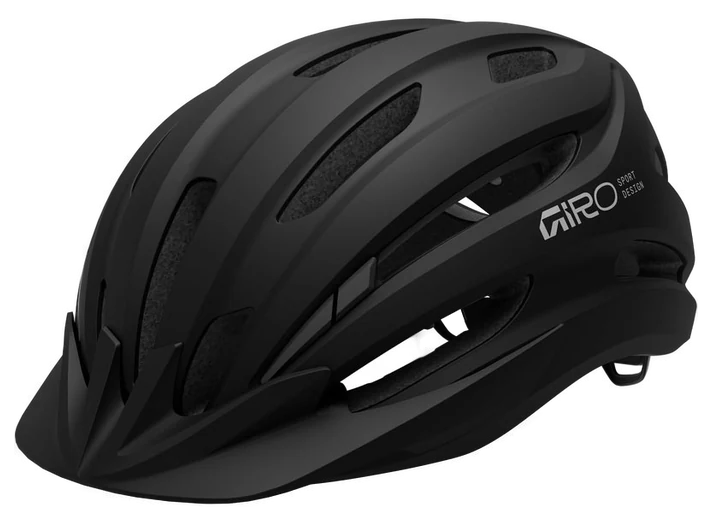
Giro Register MIPS II$85The Giro Register MIPS II, about $85 — rotational-impact protection has stopped being a premium feature, so there’s little reason to spend more on a commuting lid.Check price
Then the lock
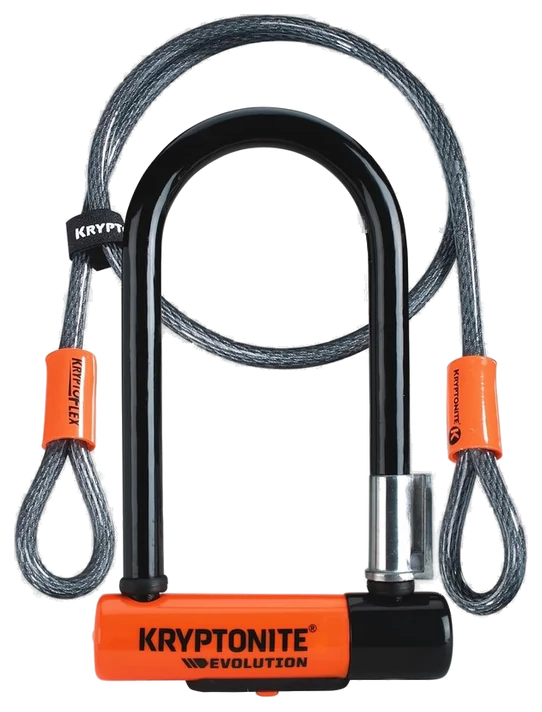
Kryptonite Evolution Mini-7 U-Lock$90–107A Kryptonite Evolution Mini-7 at $90–107 — the smallest U-lock a thief can’t get leverage on, and the small size is the point.Check price
Skip
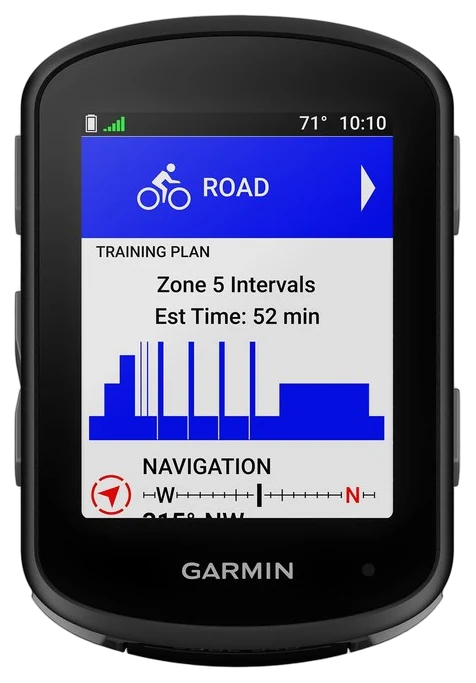
The Garmin Edge 540 at $350–450 — only worth it if you train to numbers.
We compiled safety certifications including CPSC and MIPS, long-term owner reliability reports, and cycling-press reviews, favoring gear that survives seasons of weather and abuse over gear that tests well in a showroom.How we chose·How we verify·Corrections logged publicly
Bike shops will happily sell you $400 of accessories before you leave. We compared owner reliability reports, safety certifications, and long-term reviews to find the five pieces that genuinely earn a spot on the bike.
How we choseWhat we compared, and how we rank
We compiled safety certifications including CPSC and MIPS, long-term owner reliability reports, and cycling-press reviews, favoring gear that survives seasons of weather and abuse over gear that tests well in a showroom. Prices are always moving, so every button and link pulls the live listing.
How we rank
Published specifications, verified owner reviews, and independent safety or standards data where it applies — weighted the same for every pick, never sponsored placement.
A helmet is the one piece of cycling gear with a job that is not negotiable, and the Giro Register MIPS II answers the only real question: how do I get genuine rotational-impact protection without spending $200? MIPS adds a low-friction layer that lets the shell rotate slightly against the liner, the mechanism designed to reduce the twisting forces that cause brain injury in angled crashes.
Beyond the safety layer it does the boring things well. A dial-adjust fit system that holds through a ride, generous vents that matter on July climbs, and a universal shape that suits more heads than the aggressive race lids. Consumer Reports tested it and rated impact absorption excellent, and owner reviews across years land on the same note: comfortable enough to forget, which is the difference between a helmet you wear and one you leave hanging in the garage.
It is not light, and racers chasing grams will look elsewhere. There is also a hard rule nobody enjoys, which is to replace any helmet after a single real impact, because the foam crushes once by design. At $85 on Amazon, replacing it after a crash is annoying rather than financially painful, which is exactly the right property for safety equipment.
Strengths
MIPS rotational protection at a budget price
Dial fit that holds through a ride
Well-vented for hot climbs
Universal shape suits most heads
Tradeoffs
Heavier than premium race lids
Basic styling
Must be replaced after any impact
Pick 2 of 5: No. 2Best lock
2
Kryptonite Evolution Mini-7 U-Lock
Best lock
The lock thieves skip and city riders trust
Get it if your bike is ever out of sight in public and $90–107 buys real deterrence.
Skip it if the bike only ever lives in a locked garage.
Bike theft is a tool problem. Cheap cable locks fall to hand cutters in seconds, and thieves pick the easiest bike on the rack. The Kryptonite Evolution Mini-7 raises the tool requirement to an angle grinder, which is loud, slow and conspicuous, and that is what deters theft in practice.
The short seven-inch shackle is the clever part rather than a limitation, because less open space inside the U means less room to insert a leverage bar, which is how most U-locks fail. It is small enough to carry in a bag or frame mount, and it carries a Sold Secure Gold rating, the UK industry benchmark, backing up the decades of reputation Kryptonite’s shackle steel has in the cities where bikes disappear fastest.
The trade is reach, so locking to a fat post takes planning and you will want the cable extension for the front wheel. Nothing is theft-proof either, and the honest goal is being a harder target than the bike beside you. At $90–107 on Amazon, it costs a fraction of the bike it protects.
Strengths
13mm shackle resists hand tools
Tight shape blocks leverage attacks
Compact enough to carry
Decades of city-tested reputation
Tradeoffs
Short shackle limits what you can lock to
Heavy for its size
Front wheel needs the extra cable
Pick 3 of 5: No. 3Best lights
3
NiteRider Lumina Micro / Sabre Light Combo
Best lights
Being seen is the whole point, and this pair does it
Get it if you ever ride near cars, at dusk, or after dark — $60–90 is cheap insurance.
Skip it if you ride only on closed daylight trails.
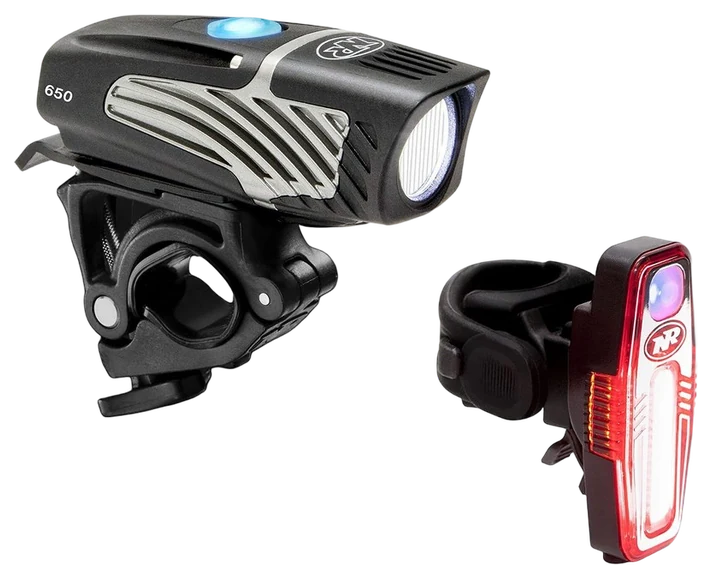
Most cycling injuries involving cars happen because a driver did not see the rider, which makes lights less an accessory than safety equipment, and worth running in daylight too, since daytime running lights measurably improve how early drivers notice you. The NiteRider Lumina combo covers both ends of the bike in one purchase. OutdoorGearLab has given NiteRider’s Lumina series its Editors’ Choice award in head-to-head light testing, and Bicycling credits the brand with a reputation for “some of the most durable, practical, and long-lasting lights” on the market.
650 lumens up front is enough to be unmistakable in traffic and to light an unlit path on the way home, and the rear unit handles the direction that matters most for getting rear-ended. Both charge over USB, which quietly matters, because battery-powered lights get abandoned when the AAAs die while rechargeables get topped up at a desk.
The runtimes shrink fast at maximum output, so the flashing and mid modes are where real rides live, and serious night trail riders will want more lumens than this. At $60–90 on Amazon, it is the cheapest meaningful reduction in your actual risk on the road.
Strengths
Front and rear covered in one buy
Bright enough for unlit paths
USB rechargeable, so it stays charged
Daylight flash modes improve visibility
Tradeoffs
Max-output runtime is short
Not enough for fast night trails
Mounts need occasional retightening
Also on the shortlist
Two more, in brief
Pick 4 of 5: No. 4Best pump~$45–75
4
Topeak JoeBlow Floor Pump
Budget pickBest pump
The unglamorous purchase that fixes most bike complaints
Get it if you own a bike — $45–75 fixes most complaints.
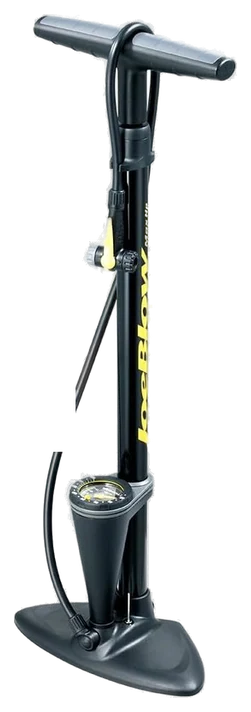
Here is the least exciting truth in cycling. Most bikes that feel slow, sluggish or flat-prone are under-inflated, and tires lose pressure every week whether you ride or not. A Topeak JoeBlow floor pump turns the fix into a fifteen-second habit instead of a trip to the shop.
What separates it from gas-station air and mini pumps is the gauge and the base. You can hit a specific pressure deliberately, and the wide footprint means you are pumping rather than wrestling the pump. The twin head takes both Presta and Schrader valves without adapters, which removes the single most common source of driveway swearing.
Bicycling named it their Best Value floor pump, with a reviewer recalling, “I probably sold more JoeBlow pumps when working in bike shops than any other model.” It is a floor pump, so it lives at home, and you still want a mini pump or CO2 in the saddle bag for roadside flats. At $45–75 on Amazon, it pays for itself against a couple of shop visits and makes every ride on the list above feel faster.
Strengths
Accurate gauge for deliberate pressure
Stable base, easy full strokes
Twin head fits Presta and Schrader
Lasts years with no maintenance
Tradeoffs
Home-only, not portable
Bulky to store
Gauge accuracy drifts slightly over years
Pick 4 of 5: No. 4Best pump~$45–75
Topeak JoeBlow Floor Pump
The unglamorous purchase that fixes most bike complaints
Get it if you own a bike — $45–75 fixes most complaints.
Skip it if you already own a working floor pump.
Here is the least exciting truth in cycling. Most bikes that feel slow, sluggish or flat-prone are under-inflated, and tires lose pressure every week whether you ride or not. A Topeak JoeBlow floor pump turns the fix into a fifteen-second habit instead of a trip to the shop.
Read the full case
What separates it from gas-station air and mini pumps is the gauge and the base. You can hit a specific pressure deliberately, and the wide footprint means you are pumping rather than wrestling the pump. The twin head takes both Presta and Schrader valves without adapters, which removes the single most common source of driveway swearing.
Bicycling named it their Best Value floor pump, with a reviewer recalling, “I probably sold more JoeBlow pumps when working in bike shops than any other model.” It is a floor pump, so it lives at home, and you still want a mini pump or CO2 in the saddle bag for roadside flats. At $45–75 on Amazon, it pays for itself against a couple of shop visits and makes every ride on the list above feel faster.
Strengths
Accurate gauge for deliberate pressure
Stable base, easy full strokes
Twin head fits Presta and Schrader
Lasts years with no maintenance
Tradeoffs
Home-only, not portable
Bulky to store
Gauge accuracy drifts slightly over years
Pick 5 of 5: No. 5Best bike computer~$350–450
5
Garmin Edge 540
Upgrade pickBest bike computer
When riding turns into training, this is the upgrade
Get it if you have started caring about your own numbers and $350–450 reflects that.
Skip it if you ride for fun, where your phone is enough.
A phone tracks a ride. A head unit changes how you ride. The Garmin Edge 540 puts pace, power, heart rate and turn cues where you can read them at speed, with a battery that outlasts any all-day route and a screen that stays legible in direct sun where phones wash out.
The training features are the real purchase: structured workouts, climb profiles that tell you how much of the hill is left, and recovery guidance that stops the classic beginner mistake of riding every ride at the same medium effort. DC Rainmaker’s in-depth review singles out the structured-training tools as the reason riders describe it as the device that turned occasional cycling into measurable progress.
It is the most expensive item here and fully optional, since nobody needs it to enjoy a bike, so buy it when you catch yourself curious about your own numbers. At $350–450 on Amazon, that curiosity is the signal. Before then, the pump and lights do far more for your actual rides.
Strengths
Sunlight-readable, all-day battery
Structured training and recovery guidance
On-device navigation with climb profiles
Pairs with power meters and sensors
Tradeoffs
The priciest pick by far
Optional for casual riding
Setup has a learning curve
Pick 5 of 5: No. 5Best bike computer~$350–450
Garmin Edge 540
When riding turns into training, this is the upgrade
Get it if you have started caring about your own numbers and $350–450 reflects that.
Skip it if you ride for fun, where your phone is enough.
A phone tracks a ride. A head unit changes how you ride. The Garmin Edge 540 puts pace, power, heart rate and turn cues where you can read them at speed, with a battery that outlasts any all-day route and a screen that stays legible in direct sun where phones wash out.
Read the full case
The training features are the real purchase: structured workouts, climb profiles that tell you how much of the hill is left, and recovery guidance that stops the classic beginner mistake of riding every ride at the same medium effort. DC Rainmaker’s in-depth review singles out the structured-training tools as the reason riders describe it as the device that turned occasional cycling into measurable progress.
It is the most expensive item here and fully optional, since nobody needs it to enjoy a bike, so buy it when you catch yourself curious about your own numbers. At $350–450 on Amazon, that curiosity is the signal. Before then, the pump and lights do far more for your actual rides.
Strengths
Sunlight-readable, all-day battery
Structured training and recovery guidance
On-device navigation with climb profiles
Pairs with power meters and sensors
Tradeoffs
The priciest pick by far
Optional for casual riding
Setup has a learning curve
The right cycling gear keeps you safe, seen, and comfortable, so spend where a failure would end your ride or hurt.
Fit first: A loose helmet or shorts that rub will ruin every ride, so get the fit right before you chase features or grams.
Be seen: Drivers can’t avoid what they don’t see, so a bright front light and a blinking rear light aren’t optional if you ride near traffic.
Ride-ending failures: A flat or a loose bolt miles from home is a long walk, so carry a multi-tool, a pump, and tires you trust.
Common mistake: Riders drop a fortune on the bike and nothing on contact points; your shorts, saddle, and gloves decide whether you enjoy the miles.
Crankbrothers M17 — 17 trailside tools in a 168-gram package, so a dropped chain or a loose bolt doesn’t strand you.
Pearl Izumi Quest Bib Shorts — a real chamois makes all the difference past an hour in the saddle, and the guide doesn’t cover what you sit on.
Continental Gatorskin — a tough training tire built to shrug off glass and road debris, so you spend less time fixing flats on the shoulder.
Cycling gear FAQs
6 common questions, answered.
Do I need a MIPS helmet?
Not required, but the cost objection is gone — MIPS now starts around $50 and addresses the rotational forces of the angled impacts most real crashes involve. It is not a magic shield, and a well-fitting non-MIPS helmet still beats no helmet by an enormous margin. But since MIPS now appears on helmets in the $50 range, the old cost objection has largely disappeared. Fit matters as much, because a loose helmet protects poorly regardless of what is inside it.
What tire pressure should I run?
Check the sidewall of your own tire for its range, then start in the middle and adjust by feel, lower for comfort and grip, higher for smooth pavement. Wider tires want notably less pressure than the 100+ psi road-bike tradition, and heavier riders want more than lighter riders on the same tire. Check weekly, because tires lose pressure through the rubber whether or not you ride, which is why the floor pump earns its place.
How do I stop my bike from being stolen?
Layered deterrence rather than a single product: a U-lock through the frame and rear wheel to something immovable, a cable for the front wheel, parking in visible high-traffic spots, and registering the serial number so a recovered bike can be returned to you. Photograph the bike and record the serial today, before anything happens, because it is the step every theft victim wishes they had taken. Thieves choose the easiest bike present, and your job is not being it.
Are daytime running lights worth it?
The evidence supports them. Studies of daytime running lights on bikes and motorcycles consistently find riders are noticed earlier and from farther away, and flashing rear lights are now standard practice among commuters for that reason. Battery cost is the only downside, which USB-rechargeable units make trivial. Run a flashing rear light on every daylight ride near traffic, because it is free safety once you own the light.
What should a new rider buy first?
In order: helmet, lights, lock, pump, roughly $220 in total, and it covers safety, visibility, theft and the mechanical issue behind most complaints. Everything else, meaning computers, shoes, jerseys and bags, can wait until you know what kind of riding you do. The classic mistake is buying apparel before a pump. The classic regret is skipping the lock once.
When is the best time to buy cycling gear?
Late fall through winter is the sale season, since shops clear stock as riding drops off, and last season’s helmet and light models discount heavily while being functionally identical to the new ones. Spring is the worst time to buy at full price, precisely when everyone else decides to start riding. Helmets are the exception to bargain-hunting used gear: never buy a second-hand helmet, because you cannot see whether it has already taken an impact.
Sources
Who the write-ups above lean on, and where each one is cited.
DC RainmakerCited for Garmin Edge 540, and in the buying advice.
New guides, re-ranked picks and the month's notable changes. No weekly filler, ever.
Unsubscribe any time. Your address goes to our newsletter provider and nowhere else — see our privacy policy.
Manage Consent
To provide the best experiences, we use technologies like cookies to store and/or access device information. Consenting to these technologies will allow us to process data such as browsing behavior or unique IDs on this site. Not consenting or withdrawing consent, may adversely affect certain features and functions.
Functional
Always active
The technical storage or access is strictly necessary for the legitimate purpose of enabling the use of a specific service explicitly requested by the subscriber or user, or for the sole purpose of carrying out the transmission of a communication over an electronic communications network.
Preferences
The technical storage or access is necessary for the legitimate purpose of storing preferences that are not requested by the subscriber or user.
Statistics
The technical storage or access that is used exclusively for statistical purposes.The technical storage or access that is used exclusively for anonymous statistical purposes. Without a subpoena, voluntary compliance on the part of your Internet Service Provider, or additional records from a third party, information stored or retrieved for this purpose alone cannot usually be used to identify you.
Marketing
The technical storage or access is required to create user profiles to send advertising, or to track the user on a website or across several websites for similar marketing purposes.