The Best Camping Gear of 2026:Five Items, One Pack
Camping gear lists sprawl to fifty items; actual trips run on about five. We compared field testing and years of trail reviews to build the core kit of shelter, boil, sleep, carry and boots, with proven picks.
By the BYB Editorial Team
Published July 28, 2026 · Prices checked OctoberOct 5, 2026
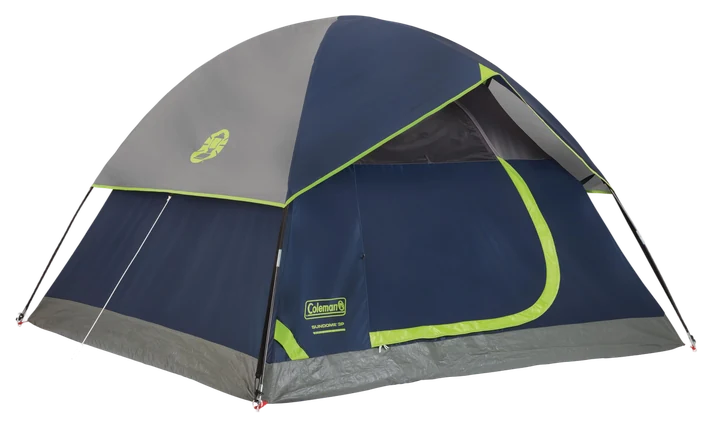
Coleman Sundome$65–155The Coleman Sundome, about $65–155 by size — for state-park weekends, the ultralight premium buys grams you aren’t carrying from a parking space anyway.Check price
The stove
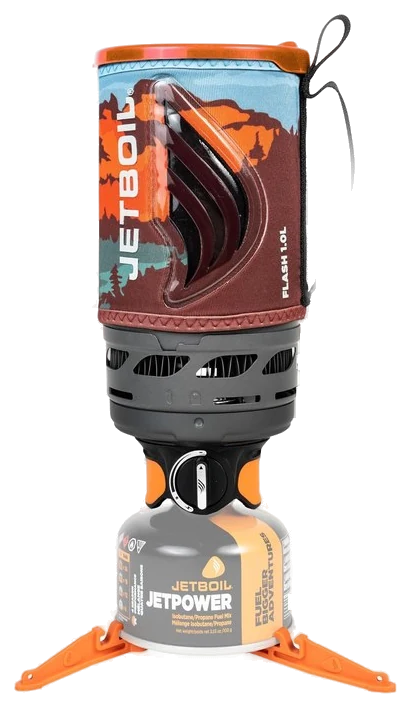
Jetboil Flash$110–145Jetboil Flash, $110–145 — boils water in a couple of minutes and decides whether you bother with coffee at all.Check price
Buying order
Get the sleeping pad before the sleeping bag.
First-timer
Buy the contact points (footwear and a sleeping pad) and borrow the tent and stove — the full kit runs about $500 if the hobby sticks.
Camping gear lists sprawl to fifty items; actual trips run on about five. We compared field testing and years of trail reviews to build the core kit of shelter, boil, sleep, carry and boots, with proven picks.
How we choseWhat we compared, and how we rank
We compiled field-test results (OutdoorGearLab, Switchback), thru-hiker consensus, and multi-season owner reviews. Prices are always moving, so every button and link pulls the live listing.
How we rank
Published specifications, verified owner reviews, and independent safety or standards data where it applies — weighted the same for every pick, never sponsored placement.
The Coleman Sundome has been the first tent of generations of campers because it does the entire job at a fraction of outfitter prices: it pitches in about ten minutes with two poles, it stands up to a season of state-park weekends, and it costs less than a night in the lodge. The six-person is a ten-by-ten-foot floor with a 72-inch peak, which is a real family footprint, and it weighs about 16 and a half pounds.
Car camping mostly does not need more. The dome shape sheds wind, the welded floor holds through dewy mornings, and sizes from two- to six-person cover couples through families. Where it stops is real rain, and it is worth being direct about that. The rainfly reaches only about halfway down the tent body and the seams are not sealed, so wind-driven rain has a route in. Switchback Travel, testing the six-person, woke after one moderately rainy night to find puddles on the tent floor.
OutdoorGearLab scores it 62 out of 100 and calls it a tent for families who camp in fair weather on a budget, which is the honest brief. The build explains the ceiling: 8.5mm fiberglass poles, a 75-denier polyester taffeta fly and a 1000-denier polyethylene tub floor. Coleman’s own copy says the frame is tested to 35 mph winds; Wilderness Times, scoring it 7.6 out of 10 overall but 7.0 on weather resistance, names those poles as the recurring failure instead, since fiberglass splinters rather than bends. A spare pole section earns its place in the bag.
It is heavier and bulkier than a backpacking tent, so it rides in a trunk rather than on a pack, and the stakes it ships with are the first thing experienced campers replace. If your camping calendar includes shoulder-season weather rather than July, spend up to Coleman’s Skydome line or a sealed-seam tent instead. But for fair-weather weekends at roughly $65 to $155 depending on size on Amazon, nothing else buys this much dry floor.
Strengths
Ten-minute honest pitch
Real family floor space for the money
Generations-deep review record
Fraction of outfitter pricing
Tradeoffs
Trunk gear, not pack gear
Half-coverage fly, seams not sealed
Basic ventilation in heat
Pick 2 of 5: No. 2Best stove
2
Jetboil Flash
Best stove
Boiling water, weaponized
Get it if camp meals mean coffee and pouch dinners. Most trips do.
Skip it if you genuinely cook at camp, bring a burner and skillet.
The Jetboil Flash turned camp cooking into pressing a button. Jetboil rates it at 120 seconds to boil half a liter, averaged across the life of a canister, in a one-liter cup that packs the burner and a 100-gram canister inside itself. The whole system weighs about 13 ounces and puts out 5,300 BTU per hour.
For the coffee-and-dehydrated-meals reality of most trips, it is the entire kitchen, and the built-in rotary igniter means no lighter hunts at 6 a.m. The fuel efficiency is the reason backpackers standardized on it: Jetboil reckons about ten liters boiled per 100-gram canister, which is most of a weekend for two people. The heat-indicating sleeve changes color as it warms, a small touch that prevents the classic grab-the-hot-cup mistake. CleverHiker rates it the best fully integrated backpacking stove at 4.6 out of 5.
OutdoorGearLab, who place it seventh of sixteen stoves tested, timed half a liter at 2 minutes 18 seconds rather than the advertised 120 — still quick, but plan on two and a half minutes in the real world — and reported the igniter firing reliably across more than a hundred uses. One thing the spec sheet hides is the fill line: 500 milliliters, half the cup’s stated liter, so brewing for two is two boils.
It boils, it does not simmer, and the reason is structural rather than fixable: there is no fuel regulator, so the flame does not hold a low setting. Anything resembling actual cooking wants a classic burner and a pan. It is also bulky and heavy by ultralight standards. At about $110 to $145 on Amazon against a $144.99 list, it is the fastest morale machine in the outdoors: coffee in two minutes, anywhere.
Strengths
Half a liter boiled in two minutes
Everything packs inside itself
Push-button ignition
Fuel-sipping efficiency
Tradeoffs
Boils, doesn’t simmer
Proprietary-ish pot system
Canister fuel only
Pick 3 of 5: No. 3The reliability pick~$45–60
3
Therm-a-Rest Z Lite Sol
Budget pickThe reliability pick
The sleep insurance
Get it if you want the one sleep component that cannot fail, at a fraction of an inflatable’s price.
Skip it if plush sleep rules and you baby your gear, inflatables exist.
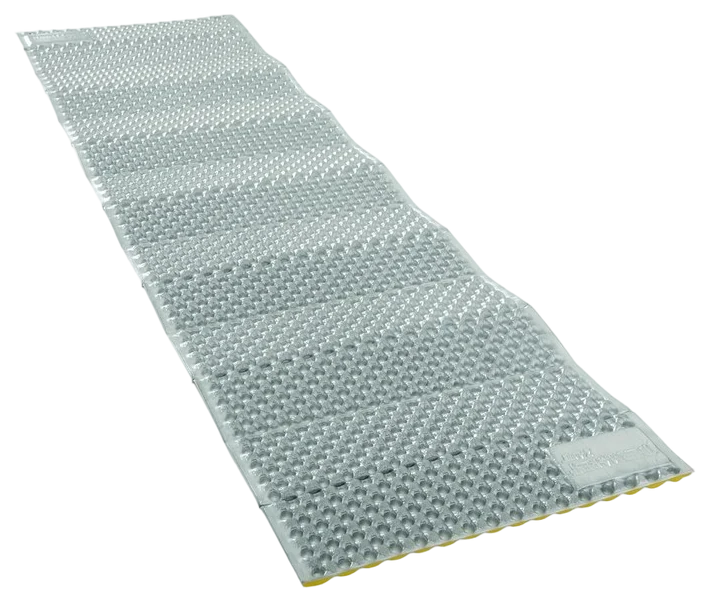
The Z Lite Sol is the accordion foam pad that cannot puncture, a failure mode of exactly zero, deploying in four seconds and doubling as camp seating, a splint, and a pack frame in emergencies. The regular is 72 by 20 inches, three quarters of an inch thick, 14 ounces, and folds to a block about 20 by 5 by 5 inches that straps outside a pack.
Thru-hikers still strap it to packs after twenty years of newer technology because reliability compounds: alone for minimalists, under an inflatable for everyone else, and either way the trip survives any sharp surprise the ground offers. The dimpled aluminized face reflects body heat back at you, and the insulation is modest, enough for three seasons on cool ground and nowhere near enough for snow. Treat published R-values with care here, since Therm-a-Rest and the third-party spec tables do not agree on the exact figure.
Therm-a-Rest’s own listing puts it at an R-value of 2, which is the number to plan against. OutdoorGearLab’s long-term note is the one owners feel: the foam compresses over the seasons, and those same dimples that hold warmth also collect grit and damp. They measured nine liters of packed volume and scored it 3 out of 10 for packed size, which is the honest reason it rides strapped to the outside of a pack rather than inside one.
It is firm, and reviewers do not pretend otherwise. OutdoorGearLab ranked it last of twelve pads on comfort, scoring it 3.5 out of 10 there, while CleverHiker gives the same pad 4.3 out of 5 overall. Both are right: it is a poor mattress and an excellent insurance layer. Comfort-first sleepers should put it under an inflatable rather than under themselves. At $45 to $60, it is the one sleep purchase that can never fail you at 2 a.m.
Strengths
Cannot puncture, period
Four-second deployment
Doubles as seat and frame
Twenty-year thru-hiker endorsement
Tradeoffs
Firm solo sleeping
Bulky strapped outside packs
R-value wants pairing in cold
Also on the shortlist
Two more, in brief
Pick 4 of 5: No. 4Best pack~$165–180
4
Osprey Talon 22
Upgrade pickBest pack
The do-everything daypack
Get it if dayhikes are regular and you would rather buy one pack that gets repaired than three that get replaced.
Skip it if overnights are coming, size up in the same family.
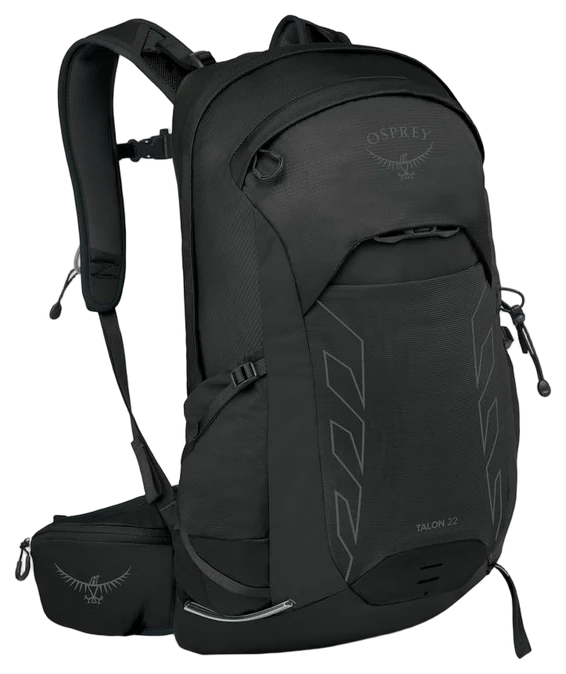
The Osprey Talon 22 carries the dayhike load of water, layers, lunch and first aid at about 2 pounds 6 ounces, with a harness that moves like clothing and pockets where your hands expect them. The back panel adjusts to your torso rather than your shirt size, and Osprey sells standard and extended fits so tall and short hikers both get the belt on their hips.
Osprey’s All Mighty Guarantee is the quiet superpower, since damage from any era gets repaired, which converts a pack purchase into a once-per-decade event. It moonlights as a commuter bag and a carry-on without looking like trail cosplay. Worth knowing before you buy: the reviewers genuinely disagree about this pack. CleverHiker makes it their best daypack overall at 4.7 out of 5 and praises one of the most comfortable close-to-back fits they have worn. OutdoorGearLab ranks the same pack fifteenth of fifteen, calling it comfortable under load but quirky in its features with only average ventilation.
The split is about the back panel: the foam-and-channel design sits closer to your spine than a suspended mesh, which carries better and breathes worse. The current version is also heavier than the pack that built the reputation. Adventure Alan weighed it at 38.1 ounces against 30.6 for the previous generation, a jump of nearly half a pound, and argues that a daypack is exactly where added weight is hardest to justify. What you get for it is a move to fully recycled bluesign-approved ripstop nylon and a non-PFAS water repellent.
Twenty-two liters is dayhike-sized, so overnight ambitions need the 33-liter sibling. The recurring gripes are real and small: a narrow hydration sleeve, hipbelt pockets that are awkward to reach while moving, and side pockets that suit a wide bottle better than a tall one. At about $165 to $180 on Amazon, it is the reference daypack the category measures itself against.
Get it if dayhikes are regular and you would rather buy one pack that gets repaired than three that get replaced.
Skip it if overnights are coming, size up in the same family.
The Osprey Talon 22 carries the dayhike load of water, layers, lunch and first aid at about 2 pounds 6 ounces, with a harness that moves like clothing and pockets where your hands expect them. The back panel adjusts to your torso rather than your shirt size, and Osprey sells standard and extended fits so tall and short hikers both get the belt on their hips.
Read the full case
Osprey’s All Mighty Guarantee is the quiet superpower, since damage from any era gets repaired, which converts a pack purchase into a once-per-decade event. It moonlights as a commuter bag and a carry-on without looking like trail cosplay. Worth knowing before you buy: the reviewers genuinely disagree about this pack. CleverHiker makes it their best daypack overall at 4.7 out of 5 and praises one of the most comfortable close-to-back fits they have worn. OutdoorGearLab ranks the same pack fifteenth of fifteen, calling it comfortable under load but quirky in its features with only average ventilation.
The split is about the back panel: the foam-and-channel design sits closer to your spine than a suspended mesh, which carries better and breathes worse. The current version is also heavier than the pack that built the reputation. Adventure Alan weighed it at 38.1 ounces against 30.6 for the previous generation, a jump of nearly half a pound, and argues that a daypack is exactly where added weight is hardest to justify. What you get for it is a move to fully recycled bluesign-approved ripstop nylon and a non-PFAS water repellent.
Twenty-two liters is dayhike-sized, so overnight ambitions need the 33-liter sibling. The recurring gripes are real and small: a narrow hydration sleeve, hipbelt pockets that are awkward to reach while moving, and side pockets that suit a wide bottle better than a tall one. At about $165 to $180 on Amazon, it is the reference daypack the category measures itself against.
Strengths
Harness that moves with you
Lifetime any-reason repairs
Pockets where hands expect
Doubles as commuter/carry-on
Tradeoffs
Daypack-only capacity
Premium over basic packs
Popular = everyone has one
Pick 5 of 5: No. 5Best first hikers
5
Merrell Moab 3
Best first hikers
The trail shoe of the people
Get it if trails are calling and blisters aren’t welcome.
Skip it if you’re a trail-runner convert, lighter shoes exist.
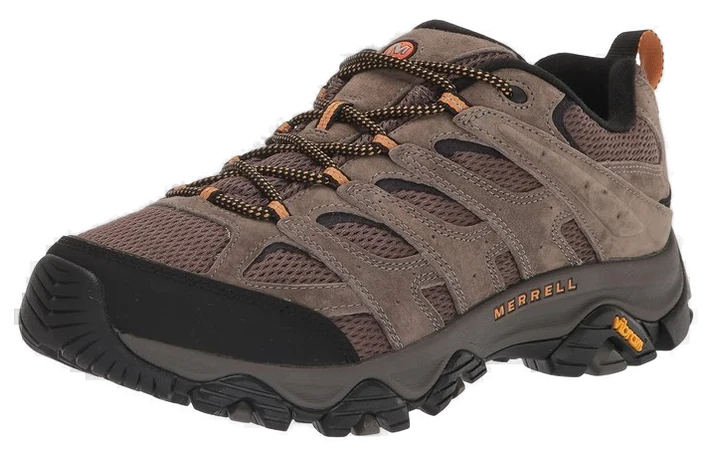
The Merrell Moab 3 — “Mother Of All Boots,” per Merrell, unironically — is the best-selling hiking shoe in history because it skips the traditional boot hazing: comfortable the first mile, supportive on real terrain, durable for seasons.
The Vibram TC5+ outsole grips wet rock credibly, the cushioning suits full-day trails at an 11.5mm drop, and the fit accommodates the wide range of feet that boutique boots punish, with genuine wide sizes rather than a half-size fudge. The pair weighs about two pounds. CleverHiker singles out the break-in, or the absence of one, saying the shoe needs next to none. OutdoorGearLab makes it their best-value hiking shoe outright. It is the default recommendation for every new hiker, and half the veterans never left.
RunRepeat cut a pair in half and scored them 89 out of 100, with lab numbers that explain the feel underfoot: 4.8mm lugs, a midsole reading 54.8 on the durometer and so firmer than the hiking-shoe average, and a flexibility of 12.9 newtons where the average hiking shoe needs 18.7. Their abrasion test found the one soft spot, burning through the toe mesh in twelve seconds for a 3 out of 5, so the mesh panels are what will date these shoes.
Waterproof and ventilated versions both exist, and you should pick by climate rather than habit, because the waterproof version runs hot in summer and costs roughly $45 more in Gore-Tex form. The limits: it is heavier and bulkier than a trail runner, and it will not outlast a full-leather boot. There is no Moab 4, so the 3 is the current model rather than a run-out. At about $110 to $150 on Amazon, it is the trail-shoe answer that requires no further research.
Get it if trails are calling and blisters aren’t welcome.
Skip it if you’re a trail-runner convert, lighter shoes exist.
The Merrell Moab 3 — “Mother Of All Boots,” per Merrell, unironically — is the best-selling hiking shoe in history because it skips the traditional boot hazing: comfortable the first mile, supportive on real terrain, durable for seasons.
Read the full case
The Vibram TC5+ outsole grips wet rock credibly, the cushioning suits full-day trails at an 11.5mm drop, and the fit accommodates the wide range of feet that boutique boots punish, with genuine wide sizes rather than a half-size fudge. The pair weighs about two pounds. CleverHiker singles out the break-in, or the absence of one, saying the shoe needs next to none. OutdoorGearLab makes it their best-value hiking shoe outright. It is the default recommendation for every new hiker, and half the veterans never left.
RunRepeat cut a pair in half and scored them 89 out of 100, with lab numbers that explain the feel underfoot: 4.8mm lugs, a midsole reading 54.8 on the durometer and so firmer than the hiking-shoe average, and a flexibility of 12.9 newtons where the average hiking shoe needs 18.7. Their abrasion test found the one soft spot, burning through the toe mesh in twelve seconds for a 3 out of 5, so the mesh panels are what will date these shoes.
Waterproof and ventilated versions both exist, and you should pick by climate rather than habit, because the waterproof version runs hot in summer and costs roughly $45 more in Gore-Tex form. The limits: it is heavier and bulkier than a trail runner, and it will not outlast a full-leather boot. There is no Moab 4, so the 3 is the current model rather than a run-out. At about $110 to $150 on Amazon, it is the trail-shoe answer that requires no further research.
Strengths
Comfortable from mile one
History’s best-selling hiker
Vibram grip on wet rock
Waterproof or vented options
Tradeoffs
Heavier than trail runners
Waterproof version runs hot
Style is pure function
Good camping gear keeps you dry, warm, and fed without turning your car into a moving van, so buy for the trips you take.
Weight vs comfort: If you’re car camping, a heavy tent is fine; if you’re hiking it in, every pound on your back matters, so match the gear to how far it travels.
Season rating: A 3-season tent or a 20-degree bag covers most of the year, but it won’t save you in a real cold snap, so check the temperatures you’ll face.
Sleep system: Your pad matters as much as your bag; cold ground pulls heat out of you all night, so don’t skimp on the thing between you and the dirt.
Common mistake: Most folks overspend on the tent and forget the boring stuff, then have a miserable first night, so budget for the whole kit.
Helinox Chair Zero — packs down to about the size of a water bottle and weighs roughly a pound, so it earns its spot when you’re carrying gear instead of driving it in.
Kelty Cosmic 20 — a warm, honest 20-degree down bag at a fair price; the guide covers your pad but skips the bag that goes on top of it.
Black Diamond Spot 400 — a bright, waterproof headlamp that runs on cheap AAA batteries; you’ll want both hands free once the sun drops.
Sawyer Squeeze — screws onto a bottle and filters straight from a stream for years, so you carry less water and refill anywhere.
Camping FAQs
6 common questions, answered.
What gear should a first-time camper buy vs. borrow?
Buy the contact points, footwear and a sleeping pad, because fit and sleep quality make or break the experience. Borrow or rent the big-ticket shelter and stove for trip one; if the hobby sticks, the kit above outfits you for roughly $500 total.
Do I need waterproof hiking shoes?
For wet climates and shoulder seasons, yes; for hot, dry summers the non-waterproof versions breathe better and dry faster after creek crossings. The Moab comes both ways. Match it to your local trails, not to worst-case fantasies.
Is an integrated stove better than a classic burner?
For boiling water, which is 90% of camp cooking, yes: faster, more fuel-efficient, wind-resistant, self-packing. If your camp cuisine involves actual pans and simmering, add a classic two-burner for car camping; the Jetboil still comes along for coffee.
What’s the right way to break in and test gear before a trip?
The backyard rule: pitch the tent once at home (missing stakes reveal themselves politely there), boil a test pot on the Jetboil, and walk a real mile in the Moabs before trail day: even comfortable-out-of-box shoes deserve a shakedown. Pack the Talon with actual weight for the fit check. Every experienced camper has a story about skipping this step; the stories all end at 9 p.m. in the rain.
How do I keep warm sleeping outdoors?
Insulation under beats insulation over: the pad’s R-value matters more than the bag’s rating, because compressed bag insulation does nothing, which is why the Z Lite under an inflatable is the classic cold-weather stack. Beyond that: a hat (real heat loss, not folklore), dry base layers reserved for sleeping, and a hot water bottle in the footbox on cold nights. Cotton kills warmth when damp; synthetics and wool forgive.
What food setup works for a weekend trip?
The Jetboil reality: boil-water meals (dehydrated pouches, oatmeal, coffee) cover breakfast and dinner with zero cleanup, and a cooler at the car handles the fresh-food lunches. One 100g fuel canister comfortably runs a weekend for two. The underrated upgrades: a long-handled spoon that reaches pouch bottoms, and pre-ground coffee in a zip bag, because camp mornings run on it and instant is a morale decision.
Sources
Who the write-ups above lean on, and where each one is cited.
OutdoorGearLabCited for all 5 picks, and in the buying advice.
New guides, re-ranked picks and the month's notable changes. No weekly filler, ever.
Unsubscribe any time. Your address goes to our newsletter provider and nowhere else — see our privacy policy.
Manage Consent
To provide the best experiences, we use technologies like cookies to store and/or access device information. Consenting to these technologies will allow us to process data such as browsing behavior or unique IDs on this site. Not consenting or withdrawing consent, may adversely affect certain features and functions.
Functional
Always active
The technical storage or access is strictly necessary for the legitimate purpose of enabling the use of a specific service explicitly requested by the subscriber or user, or for the sole purpose of carrying out the transmission of a communication over an electronic communications network.
Preferences
The technical storage or access is necessary for the legitimate purpose of storing preferences that are not requested by the subscriber or user.
Statistics
The technical storage or access that is used exclusively for statistical purposes.The technical storage or access that is used exclusively for anonymous statistical purposes. Without a subpoena, voluntary compliance on the part of your Internet Service Provider, or additional records from a third party, information stored or retrieved for this purpose alone cannot usually be used to identify you.
Marketing
The technical storage or access is required to create user profiles to send advertising, or to track the user on a website or across several websites for similar marketing purposes.