The Best Baby Feeding Essentials:Bottles, Pumps and Sterilisers
Feeding a baby happens eight to twelve times a day, so anything that saves five minutes saves an hour a week. We compared published specifications, cleaning requirements, material disclosures, and years of parent feedback to find the gear that earns its counter space.
By the BYB Editorial Team
Published July 29, 2026 · Prices checked OctoberOct 5, 2026
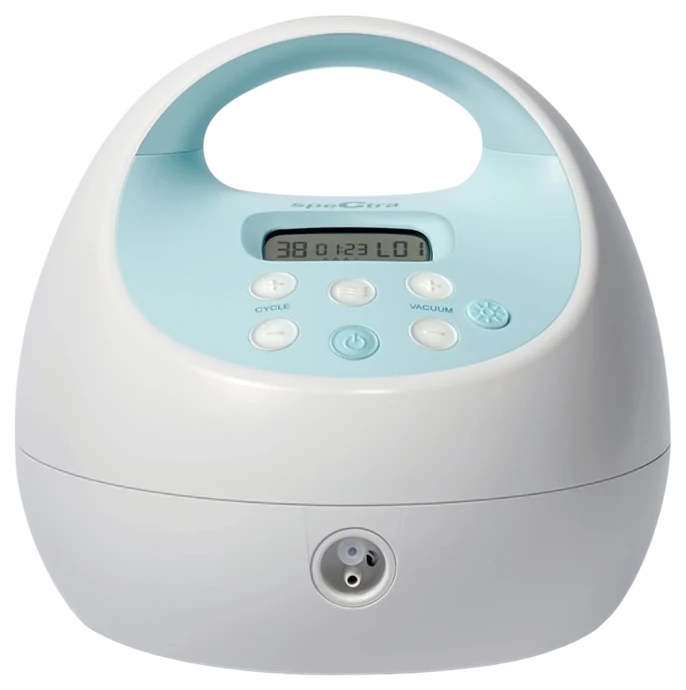
Spectra S1 Plus Breast Pump$200–230The Spectra S1 Plus, about $200–230 — the rechargeable hospital-grade pump, so the 3am session doesn’t have to happen next to a wall socket.Check price
Formula feeding instead
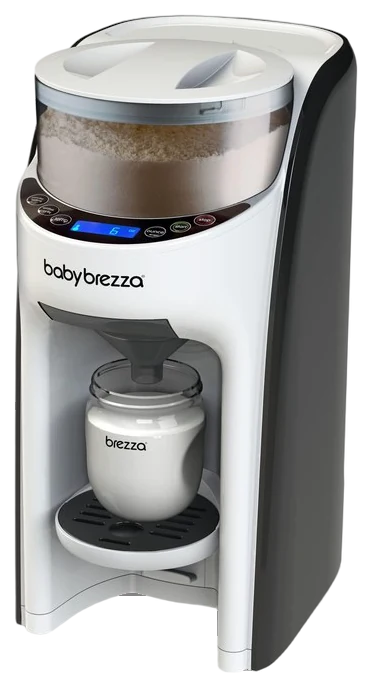
Baby Brezza Formula Pro Advanced$200–230Baby Brezza Formula Pro Advanced, $200–230 — buys back more time per day than anything else here.Check price
The cheap wins
Boon Grass Countertop Drying Rack$16–22A Boon Grass rack ($16–22) and a Bumkins bib ($10–18) — both delete a cleaning step.Check price
We compared published suction and cycle specifications, material and BPA disclosures, dishwasher and sterilizing compatibility, insurance coverage patterns, and long-term parent reports on durability and daily cleaning burden.How we chose·How we verify·Corrections logged publicly
Feeding a baby happens eight to twelve times a day, so anything that saves five minutes saves an hour a week. We compared published specifications, cleaning requirements, material disclosures, and years of parent feedback to find the gear that earns its counter space.
How we choseWhat we compared, and how we rank
We compared published suction and cycle specifications, material and BPA disclosures, dishwasher and sterilizing compatibility, insurance coverage patterns, and long-term parent reports on durability and daily cleaning burden. Prices are always moving, so every button and link pulls the live listing.
How we rank
Published specifications, verified owner reviews, and independent safety or standards data where it applies — weighted the same for every pick, never sponsored placement.
NoteThe Spectra entry said the S1 Plus is frequently covered in full by US insurance. Suppliers who process these claims class the S1 Plus as an upgrade carrying an out-of-pocket difference; the pump usually covered outright is the mains-powered S2 Plus. The entry has been rewritten.
Dated notes already published on this page, newest first. Every correction we make is logged on the corrections page.
The Spectra S1 Plus is the pump most lactation consultants name first, for practical reasons rather than marketing ones. It is a closed system, meaning a barrier prevents milk from entering the tubing and motor, which matters for hygiene and means the pump can safely be resold or reused for a second child. It is also notably quieter than the pumps it competes with: BabyGearLab, which lab-tests pumps, made it their Editors’ Choice and rates its suction at up to 270 mmHg across twelve levels while staying quiet enough to run beside a sleeping baby.
The built-in rechargeable battery is the feature parents talk about most. Being untethered from a wall socket means pumping in a car, on a sofa, or in a room without a convenient outlet, which in practice means more sessions happen.
Suction and cycle speed adjust independently, so you can find a setting that is comfortable rather than picking from three presets, and the night light is exactly the small thoughtfulness a 3am session rewards. It is bulkier than the wearable in-bra pumps that have become popular, and it needs a bag if you are carrying it to an office, though those wearables are more discreet and generally less efficient.
Parts are consumable and need replacing periodically, so keep spare valves and backflow protectors on hand. Be careful with the insurance question, because it is where this pump is most often misdescribed. Under the ACA your plan covers a pump, but the pump it covers outright is usually the mains-powered S2 Plus.
The S1 Plus, the one with the battery, is typically classed by suppliers as an upgrade and carries an out-of-pocket difference that varies by plan. At about $200 to $230 outright, run your plan through a supplier like Aeroflow or Edgepark first and find out what the upgrade costs you.
Strengths
Closed system keeps milk out of the motor
Rechargeable battery removes the outlet problem
Independent suction and cycle controls
Often available as a plan upgrade, not full price
Tradeoffs
Bulkier than wearable in-bra pumps
Parts are consumable and need replacing
Not discreet enough for open-plan offices
Pick 2 of 5: No. 2Best bottles
2
Dr. Brown’s Natural Flow Anti-Colic Options+
Best bottles
The vent system is a nuisance to wash and worth it anyway
Get it if your baby is gassy, or you want the safest first choice.
Skip it if washing time matters more to you than the vent benefit.
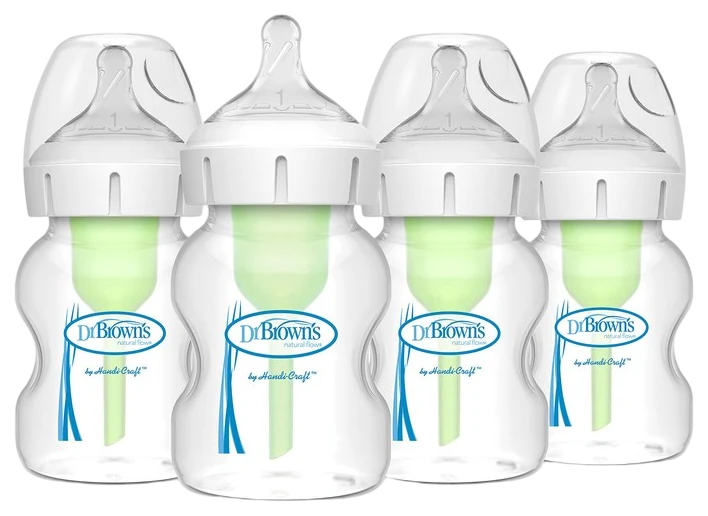
Dr. Brown’s Natural Flow Anti-Colic Options+ bottles, the line’s current name, are the ones pediatric offices and hospitals hand out most often, and they work on a mechanical principle rather than a marketing one. An internal vent tube channels air to the back of the bottle instead of letting it bubble through the milk, so the baby swallows liquid rather than a mix of liquid and air.
For gassy babies, the difference is often obvious within a few feeds: less squirming, fewer interrupted feeds, shorter settling afterwards. The system also keeps the flow steady rather than surging, which helps babies who tend to gulp. Nipples come in staged flow rates so the same bottles carry from newborn through to weaning, and the range is widely stocked, so replacements are easy to find anywhere. The cost is washing.
Each bottle has extra components, the vent insert and reservoir, which means more pieces per feed and a real argument for a bottle brush set with small-part brushes. Once the baby outgrows colic the vent lifts out and the bottle carries on as an ordinary one, which is the whole point of the Options+ revision and the reason to buy that version rather than an older Natural Flow set. At $25–40 for a starter set, they are the safest default for a first baby.
Strengths
Vent system reduces swallowed air
Widely recommended and stocked everywhere
Staged nipple flows last from newborn to weaning
Vent can be removed once colic passes
Tradeoffs
More parts to wash than any rival
Small components are easy to lose
Slightly bulky in a diaper bag
Pick 3 of 5: No. 3Best time saver
3
Baby Brezza Formula Pro Advanced
Best time saver
A warm, correctly mixed bottle in about twenty seconds
Get it if you are formula feeding and night feeds are wearing you down.
Skip it if you are exclusively breastfeeding, or short on counter space.
Making a formula bottle at three in the morning involves boiling, measuring, mixing, cooling and testing, and getting any of it wrong at that hour is easy. The Baby Brezza Formula Pro Advanced compresses all of it into pressing a button and waiting about twenty seconds for a correctly mixed bottle at body temperature.
Beyond speed, the consistency is the real benefit. It dispenses the same powder-to-water ratio every time, mixes without the vigorous shaking that introduces air bubbles, and holds the water at the right temperature continuously. Parents of formula-fed babies describe it as the single purchase that most improved night feeds, and households with twins or with two caregivers on different shifts get the most out of it.
It is expensive, it occupies real counter space, and it has to be cleaned properly, since the funnel and mixing components need regular washing and neglecting that causes most complaints. It also needs the correct settings for your specific formula brand, which the manufacturer publishes. If space is tight, a simple bottle warmer is the cheaper alternative. At about $230, it buys back genuine hours of sleep.
Strengths
Warm, correctly mixed bottle in about twenty seconds
Consistent ratio every single time
Mixes without introducing air bubbles
Transformative for twins and shift-sharing parents
Tradeoffs
Expensive and takes real counter space
Needs regular thorough cleaning
Requires brand-specific settings
Also on the shortlist
Two more, in brief
Pick 4 of 5: No. 4Best drying rack
4
Boon Grass Countertop Drying Rack
Best drying rack
The cheapest thing here and the one used most often
Get it if you are washing bottles or pump parts every single day.
Skip it if you already have a dedicated sterilizing and drying unit.
Bottle feeding generates a startling amount of washing up, and a tea towel on the counter is both slow and unhygienic. The Boon Grass drying rack solves it with flexible silicone spikes that hold bottles, nipples, valves and pump parts upright with air circulating around them, over a base that drains water away rather than pooling it.
Its advantage over a standard dish rack is holding small parts. Pump valves, bottle vents and nipple rings are exactly the items that fall through wire racks and end up on the floor, and the spike design keeps every one of them visible and separate. It looks like a lawn, which is trivial, but it does mean the thing can sit on a counter without looking like medical equipment.
The base needs emptying and wiping regularly or it develops the film any damp plastic tray does, and larger families outgrow the standard size. The bigger one is the Boon Lawn at about $22, roughly four inches wider; the “Grass and Twig” bundle sold alongside it is the same size rack plus a small center peg, not an upgrade. It is worth pairing with a sterilizing system if your pediatrician recommends sterilizing. At $16 to $22, it is the least glamorous and most frequently used item on this page.
Strengths
Holds small pump and bottle parts securely
Air circulates properly around every piece
Drains rather than pooling water
Cheap and looks fine on a counter
Tradeoffs
Base needs regular emptying and wiping
Standard size fills quickly with twins
Not a substitute for sterilizing
Pick 4 of 5: No. 4Best drying rack
Boon Grass Countertop Drying Rack
The cheapest thing here and the one used most often
Get it if you are washing bottles or pump parts every single day.
Skip it if you already have a dedicated sterilizing and drying unit.
Bottle feeding generates a startling amount of washing up, and a tea towel on the counter is both slow and unhygienic. The Boon Grass drying rack solves it with flexible silicone spikes that hold bottles, nipples, valves and pump parts upright with air circulating around them, over a base that drains water away rather than pooling it.
Read the full case
Its advantage over a standard dish rack is holding small parts. Pump valves, bottle vents and nipple rings are exactly the items that fall through wire racks and end up on the floor, and the spike design keeps every one of them visible and separate. It looks like a lawn, which is trivial, but it does mean the thing can sit on a counter without looking like medical equipment.
The base needs emptying and wiping regularly or it develops the film any damp plastic tray does, and larger families outgrow the standard size. The bigger one is the Boon Lawn at about $22, roughly four inches wider; the “Grass and Twig” bundle sold alongside it is the same size rack plus a small center peg, not an upgrade. It is worth pairing with a sterilizing system if your pediatrician recommends sterilizing. At $16 to $22, it is the least glamorous and most frequently used item on this page.
Strengths
Holds small pump and bottle parts securely
Air circulates properly around every piece
Drains rather than pooling water
Cheap and looks fine on a counter
Tradeoffs
Base needs regular emptying and wiping
Standard size fills quickly with twins
Not a substitute for sterilizing
Pick 5 of 5: No. 5Best weaning bib~$10–18
5
Bumkins Silicone Bib
Budget pickBest weaning bib
Wipe it, hang it, forget it
Get it if you are starting solids and want to stop washing bibs.
Skip it if you need something that folds small for travel.
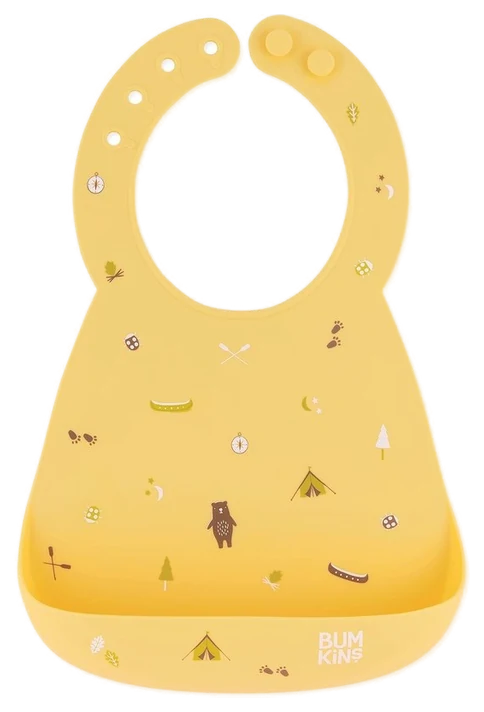
Fabric bibs are a laundry problem disguised as a solution. They soak through, stain permanently and need washing after every meal. The Bumkins silicone bib replaces the whole category with one piece of food-grade silicone that wipes clean at the sink in seconds and hangs dry before the next meal.
The catch pocket is what makes it work with real weaning. Because silicone holds its shape, the pocket stays open and catches dropped food instead of collapsing flat against the child the way fabric pockets do, which during baby-led weaning is the difference between sweeping the floor after every meal and not. The adjustable neck closure grows with the child from first solids through toddlerhood.
Some babies dislike the stiffer feel at first and will pull at it for a few meals. It is also bulky to pack compared with a fabric bib, so a roll-up fabric bib still has a place in a diaper bag, and it is dishwasher safe if you would rather not wash by hand. At $10–18, it eliminates a daily laundry item outright.
Get it if you are starting solids and want to stop washing bibs.
Skip it if you need something that folds small for travel.
Fabric bibs are a laundry problem disguised as a solution. They soak through, stain permanently and need washing after every meal. The Bumkins silicone bib replaces the whole category with one piece of food-grade silicone that wipes clean at the sink in seconds and hangs dry before the next meal.
Read the full case
The catch pocket is what makes it work with real weaning. Because silicone holds its shape, the pocket stays open and catches dropped food instead of collapsing flat against the child the way fabric pockets do, which during baby-led weaning is the difference between sweeping the floor after every meal and not. The adjustable neck closure grows with the child from first solids through toddlerhood.
Some babies dislike the stiffer feel at first and will pull at it for a few meals. It is also bulky to pack compared with a fabric bib, so a roll-up fabric bib still has a place in a diaper bag, and it is dishwasher safe if you would rather not wash by hand. At $10–18, it eliminates a daily laundry item outright.
Strengths
Wipes clean in seconds, no laundry
Pocket stays open and catches dropped food
Adjusts from first solids into toddlerhood
Dishwasher safe food-grade silicone
Tradeoffs
Some babies resist the stiffer feel at first
Bulky to pack in a diaper bag
Only covers the front, not sleeves
What you need depends heavily on feeding method, so it’s worth waiting to buy the bigger-ticket items until that’s clearer. For pumping, look at suction range and levels (a closed system that keeps milk out of the motor matters for hygiene and pump longevity) more than brand recognition. For bottles, a vented anti-colic design and nipple flow rates staged to your baby’s age reduce gas and let you match feeding speed to your baby, not the other way around. For everything else — drying racks, bibs — dishwasher-safe, food-grade silicone is the baseline worth checking for.
Small accessories (drying racks, bibs) run $10-22 and are low-risk buys. Bottles and starter sets run $25-40. Breast pumps and automatic formula dispensers are the biggest investment at $200-230, and pumps are frequently covered in part or in full by insurance, which is worth checking before paying out of pocket.
The most common mistake is buying a full feeding setup before knowing whether you’ll breastfeed, formula-feed, or combination-feed. The second is buying a bottle’s nipple flow rate for your baby’s current age and not replacing it as they grow, which can cause frustration at the bottle or overfeeding.
Medela Pump In Style (MaxFlow) — It’s a solid, well-supported pump, but our Spectra pick runs quieter and gentler for about the same money, so this one’s redundant.
Willow Go — Going fully hands-free and cordless is nice, but it costs a lot more than the Spectra and reviewers find its suction weaker, so it’s a niche pick for pumping on the move.
Comotomo Natural Feel Bottle — Parents love the soft silicone, but it tips over easily on the counter and costs noticeably more than the Dr. Brown’s set for no real feeding advantage.
Philips Avent Anti-Colic Bottle — It’s a perfectly good anti-colic bottle, but it does the same job as the Dr. Brown’s pick with a simpler vent, so there’s no reason to add it.
Baby feeding FAQs
6 common questions, answered.
Can I get a breast pump through insurance?
In the United States, most health plans are required to cover breastfeeding support and equipment, which in practice means a pump at no cost. The specific models covered vary by plan, and many parents do not realize the pump they want may be available for a small upgrade fee rather than at full price. Call your insurer, or use one of the durable medical equipment suppliers that handle the paperwork. Do this during pregnancy, since some plans will only release the pump within a window around the due date.
Do anti-colic bottles work?
For some babies, clearly yes. For others they change nothing, and the difference is what is causing the discomfort. Vented bottles reduce the amount of air a baby swallows during a feed, so they help when swallowed air is the problem. They do not treat reflux, cow’s milk protein intolerance, or genuine colic of unknown cause, all of which need a pediatrician rather than a different bottle. Try one bottle before buying a full set, and see a doctor if a baby is persistently distressed.
Do I need to sterilize bottles every time?
Only before first use for most healthy full-term babies — after that, thorough washing in hot soapy water and proper drying is enough. Sterilize everything before first use, always. After that, current guidance in several countries, including the CDC, is that thorough washing in hot soapy water and proper drying is sufficient for healthy full-term babies, while daily sterilizing is advised for babies under about three months, premature babies, and those with weakened immune systems. Follow your own pediatrician or health service, since recommendations differ.
What baby feeding gear do I not need?
Wipe warmers, bottle-specific dishwashers, most branded storage systems, and any single-purpose gadget that duplicates something your kitchen already does. Buy bottles one or two at a time until you know which teat your baby accepts, because babies reject bottles for reasons nobody can predict and a full set of the wrong brand is the most common wasted purchase in this category. Borrowing or accepting hand-me-downs is fine for almost everything here except pump parts that contact milk.
Is it safe to use a second-hand breast pump?
Only if it is a closed-system pump, and only with brand-new personal accessory parts, meaning flanges, valves, membranes, tubing and bottles. A closed system has a barrier preventing milk from reaching the motor and tubing, and that is what makes reuse safe. The FDA warns that open-system pumps can retain milk residue internally and should not be shared. Multi-user hospital-grade rental pumps are designed for exactly this and are a good option for short-term needs.
When is baby gear cheapest?
Spring and fall, when major retailers run baby-specific sale events with the year’s deepest discounts on feeding gear. Major retailers run baby-specific sale events in spring and fall with the deepest discounts of the year on feeding equipment and gear, and the late-November sales are strong on electronics-adjacent items like formula makers and pumps. Beyond timing, baby registries usually offer a completion discount on everything left unpurchased after the shower, which is often the single best saving available and is widely underused.
Sources
Who the write-ups above lean on, and where each one is cited.
3Aug 2026Correction, 3 August 2026The Spectra entry said the S1 Plus is frequently covered in full by US insurance. Suppliers who process these claims class the S1 Plus as an upgrade carrying an out-of-pocket difference; the pump usually covered outright is the mains-powered S2 Plus. The entry has been rewritten.Every correction we’ve made ›
Prices on this page are re-checked weekly — see the full Baby & Kids price index for every product we cover.
Keep reading
Where to go next.
The close calls side by side, then related guides.
New guides, re-ranked picks and the month's notable changes. No weekly filler, ever.
Unsubscribe any time. Your address goes to our newsletter provider and nowhere else — see our privacy policy.
Manage Consent
To provide the best experiences, we use technologies like cookies to store and/or access device information. Consenting to these technologies will allow us to process data such as browsing behavior or unique IDs on this site. Not consenting or withdrawing consent, may adversely affect certain features and functions.
Functional
Always active
The technical storage or access is strictly necessary for the legitimate purpose of enabling the use of a specific service explicitly requested by the subscriber or user, or for the sole purpose of carrying out the transmission of a communication over an electronic communications network.
Preferences
The technical storage or access is necessary for the legitimate purpose of storing preferences that are not requested by the subscriber or user.
Statistics
The technical storage or access that is used exclusively for statistical purposes.The technical storage or access that is used exclusively for anonymous statistical purposes. Without a subpoena, voluntary compliance on the part of your Internet Service Provider, or additional records from a third party, information stored or retrieved for this purpose alone cannot usually be used to identify you.
Marketing
The technical storage or access is required to create user profiles to send advertising, or to track the user on a website or across several websites for similar marketing purposes.