The Best Cameras of 2026:For When a Phone Stops Being Enough
Phone cameras closed the gap in bright light and nowhere else. We compared sensor sizes, autofocus behaviour, lens ecosystems, and long-term owner reports to find the cameras worth carrying alongside the one already in your pocket.
By the BYB Editorial Team
Published July 29, 2026 · Updated · Prices checked OctoberOct 5, 2026
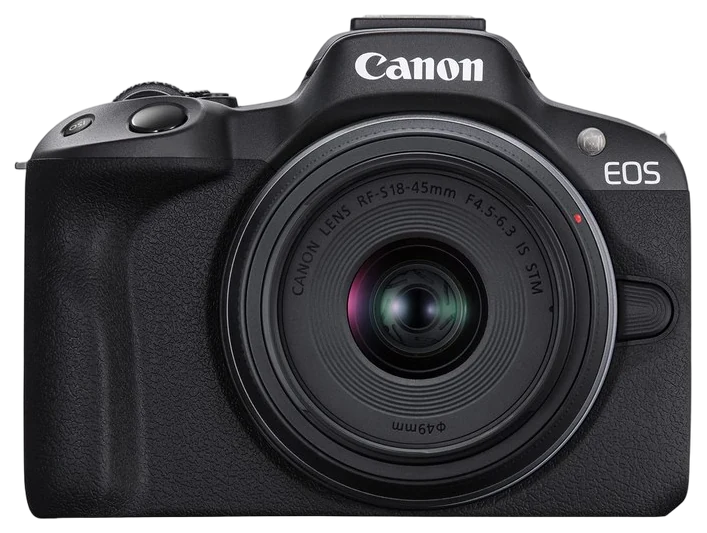
Canon EOS R50$650–800The Canon EOS R50, about $650–800 — the cheapest honest upgrade from a phone, and its autofocus is what makes that difference obvious rather than theoretical.Check price
Mostly shooting video
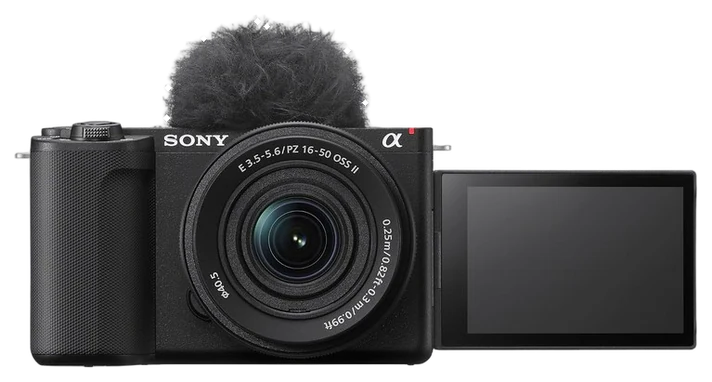
Sony ZV-E10 II$1,000–1,200Sony ZV-E10 II, about $1,000–1,200.Check price
Travelling light
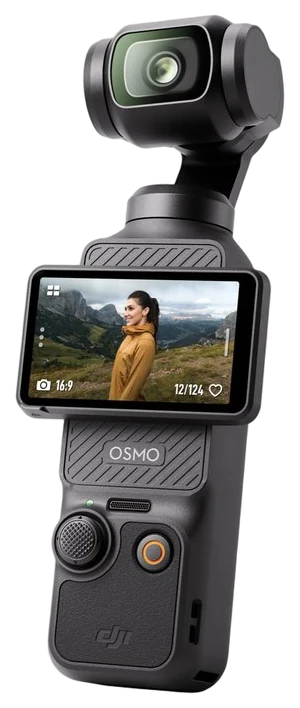
DJI Osmo Pocket 3$500–800DJI Osmo Pocket 3, about $500–800.Check price
Whichever you land on
Budget for a second lens before a better body.
We compared published sensor specifications, independent autofocus and video testing, lens-mount roadmaps, and multi-year owner reliability reports across mirrorless, action and gimbal formats.How we chose·How we verify·Corrections logged publicly
Phone cameras closed the gap in bright light and nowhere else. We compared sensor sizes, autofocus behaviour, lens ecosystems, and long-term owner reports to find the cameras worth carrying alongside the one already in your pocket.
How we choseWhat we compared, and how we rank
We compared published sensor specifications, independent autofocus and video testing, lens-mount roadmaps, and multi-year owner reliability reports across mirrorless, action and gimbal formats. Prices are always moving, so every button and link pulls the live listing.
How we rank
Published specifications, verified owner reviews, and independent safety or standards data where it applies — weighted the same for every pick, never sponsored placement.
Most people who buy a first camera stop using it because the camera fought them. The Canon EOS R50 is the clearest exception on sale. It weighs about as much as a paperback, its guided-mode interface explains aperture and shutter speed in plain language while you turn the dial, and its Dual Pixel autofocus locks onto faces, eyes and animals with a reliability that used to cost three times as much.
The practical result is that beginners come home with keepers rather than a folder of soft frames. Oversampled 4K video is sharp, the flip-out screen makes self-recording workable, and the RF-S lens range now covers the walkaround, portrait and telephoto basics without forcing you into full-frame prices.
Owners who upgrade later almost always stay inside the same mount, so the lenses you buy now keep working. Two things to know before you buy. Canon has discontinued the R50 body on its own store, so what you are buying now is remaining retail stock, and the successor is the R50 V at $649.99, which is aimed squarely at video and is not a like-for-like replacement for a stills beginner.
And the compromises here are honest ones: there is no in-body stabilization, so handheld video needs a steady grip or a stabilized lens, and the small body has a single control dial that advanced users will outgrow. At $650–800 with the kit lens, this is the camera to hand anyone who says they want to get serious without knowing yet what serious means.
Strengths
Autofocus is far better than the price suggests
Guided interface teaches the fundamentals
Light enough that you carry it
Grows into a large RF lens ecosystem
Tradeoffs
No in-body image stabilization
Single control dial limits fast manual work
Battery life is modest for a day of shooting
Pick 2 of 5: No. 2Best for video~$1,000–1,200
2
Sony ZV-E10 II
Upgrade pickBest for video
Built for people who talk to the lens
Get it if most of what you shoot is video, and often of yourself.
Skip it if you mainly take photographs and want a viewfinder.
If the footage is you, speaking, the Sony ZV-E10 II is built around that exact job. It inherits the newer back-illuminated 26-megapixel sensor from Sony’s enthusiast line, records 4K at 60 frames per second, and adds creator controls that other brands still bury in menus: a background-defocus button that opens the aperture instantly, and a product-showcase mode that racks focus to whatever you hold up to the lens.
The upgrade owners talk about most is the battery. Moving to the larger NP-FZ100 cell turned an afternoon of anxious swapping into a full day of shooting, and the vari-angle screen plus a usable directional microphone means many creators never attach external audio at all. Sony’s E-mount also has the deepest third-party lens support of any system, so affordable prime lenses are easy to find.
It is not a stills-first camera, though. There is no viewfinder, no in-body stabilization, and rolling shutter shows if you whip the camera around, so photographers should look at the Canon or the Fujifilm instead. At $1,000–1,200 with the kit zoom, nothing else makes talking-head video this easy to get right.
Strengths
4K60 with strong autofocus tracking
Large battery lasts a real shooting day
Creator controls are physical, not buried in menus
Enormous E-mount lens selection
Tradeoffs
No viewfinder at all
No in-body stabilization
Rolling shutter on fast pans
Pick 3 of 5: No. 3Best grab-and-go
3
DJI Osmo Pocket 3
Best grab-and-go
The camera you bring because it fits in a jacket
Get it if you want smooth video from something you will always have with you.
Skip it if you want interchangeable lenses or serious stills.
The best camera argument usually ends with whichever one you brought, and the DJI Osmo Pocket 3 is engineered to win that argument. It pairs a one-inch sensor, several times the area of a phone sensor, with a real motorized three-axis gimbal, in a body roughly the size of a highlighter pen. Footage comes out smooth in a way software stabilization still cannot fake.
The rotating two-inch screen is the design detail that makes it click. Twist it upright and the camera flips to vertical video for social, twist it flat and it wakes into landscape. Face tracking keeps you centered while you walk and talk, and 4K at 120 frames per second gives slow motion that holds up. For travel, kids and events it replaces both a phone and a gimbal you would otherwise carry separately.
The limits are the obvious ones: a fixed lens, no weather sealing, and stills that are merely fine rather than impressive. Battery life runs to a couple of hours of real use, so a small power bank belongs in the same pocket. At $500–800 depending on the combo, it is the pick for anyone whose main complaint is that their good camera stays home.
Strengths
Mechanical gimbal beats any software stabilization
One-inch sensor is far larger than a phone’s
Rotating screen switches vertical and horizontal instantly
Pocketable
Tradeoffs
Fixed lens, no optical zoom
Not weather-sealed
Stills are unremarkable
Also on the shortlist
Two more, in brief
Pick 4 of 5: No. 4Best for stills
4
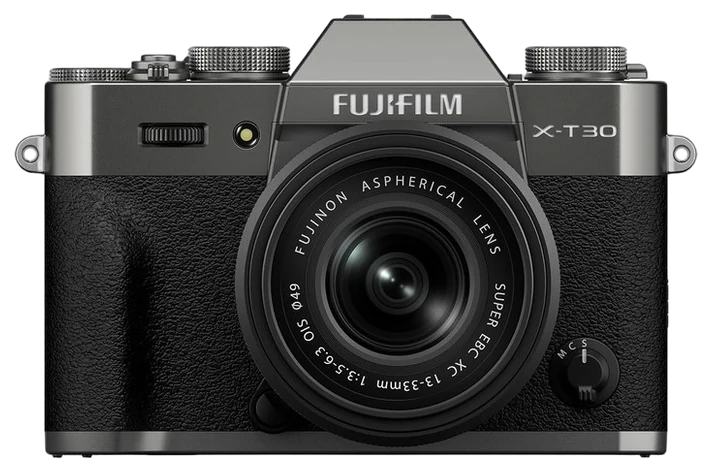
FUJIFILM X-T30 III Mirrorless Camera with XC13-33mm Lens Kit
Best for stills
For people who miss real photography
Get it if you want the act of taking photos to be enjoyable, not just efficient.
Skip it if you shoot fast sports and need the best autofocus tracking available.
The Fujifilm X-T30 III is the camera people buy because they miss enjoying photography. Shutter speed, exposure compensation and aperture still live on physical dials and rings rather than inside menus, and Fujifilm swapped the old drive dial for a dedicated film-simulation dial, so switching looks is now as tactile as changing the aperture. It is a small change that makes the whole activity feel deliberate rather than automated.
Its real signature is still color: 20 built-in film simulations produce JPEGs that many owners publish untouched, which quietly removes the editing step that kills most people’s photography habit. The 26.1MP X-Trans sensor and new X-Processor 5 add real substance underneath, with AI-powered subject detection that tracks animals, birds, cars and more, plus open-gate 6.2K video and 4K up to 60p for anyone who also shoots clips. The compact X-mount prime lenses remain among the nicest small lenses on the market.
Be clear-eyed about the gaps: there’s still no in-body stabilization, and while autofocus has closed real ground on Canon and Sony with the new subject-detection system, it hasn’t fully caught up on erratically moving subjects. It is also the priciest APS-C body here for what it does. At $999–1,149 with the kit lens you are paying for handling and color, and for the right buyer that is exactly the correct thing to pay for.
Strengths
Physical dials make exposure intuitive
Film simulations produce publishable JPEGs
Excellent compact prime lenses available
AI autofocus tracks fast subjects
Tradeoffs
No in-body stabilization
Priced above comparable rivals
Autofocus trails on erratic subjects
Pick 4 of 5: No. 4Best for stills
FUJIFILM X-T30 III Mirrorless Camera with XC13-33mm Lens Kit
Get it if you want the act of taking photos to be enjoyable, not just efficient.
Skip it if you shoot fast sports and need the best autofocus tracking available.
The Fujifilm X-T30 III is the camera people buy because they miss enjoying photography. Shutter speed, exposure compensation and aperture still live on physical dials and rings rather than inside menus, and Fujifilm swapped the old drive dial for a dedicated film-simulation dial, so switching looks is now as tactile as changing the aperture. It is a small change that makes the whole activity feel deliberate rather than automated.
Read the full case
Its real signature is still color: 20 built-in film simulations produce JPEGs that many owners publish untouched, which quietly removes the editing step that kills most people’s photography habit. The 26.1MP X-Trans sensor and new X-Processor 5 add real substance underneath, with AI-powered subject detection that tracks animals, birds, cars and more, plus open-gate 6.2K video and 4K up to 60p for anyone who also shoots clips. The compact X-mount prime lenses remain among the nicest small lenses on the market.
Be clear-eyed about the gaps: there’s still no in-body stabilization, and while autofocus has closed real ground on Canon and Sony with the new subject-detection system, it hasn’t fully caught up on erratically moving subjects. It is also the priciest APS-C body here for what it does. At $999–1,149 with the kit lens you are paying for handling and color, and for the right buyer that is exactly the correct thing to pay for.
Strengths
Physical dials make exposure intuitive
Film simulations produce publishable JPEGs
Excellent compact prime lenses available
AI autofocus tracks fast subjects
Tradeoffs
No in-body stabilization
Priced above comparable rivals
Autofocus trails on erratic subjects
Pick 5 of 5: No. 5Best action camera~$330–430
5
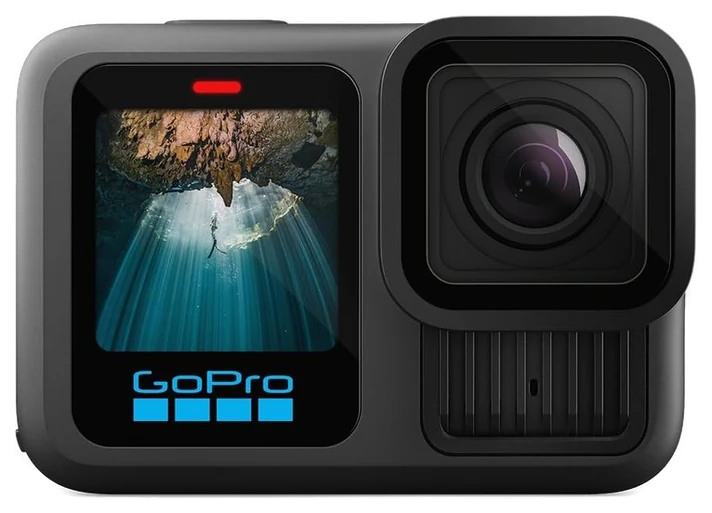
GoPro HERO13 Black
Budget pickBest action camera
The one you mount, submerge, and stop worrying about
Get it if your footage involves water, speed or getting knocked around.
Skip it if you want one camera for everyday photos and video.
Every other camera on this page becomes a liability the moment there is surf, mud or a mountain bike involved. The GoPro HERO13 Black is waterproof to ten meters without a housing, mounts to helmets, chest harnesses, handlebars and dashboards, and records 5.3K video that still looks sharp after you crop into it for a vertical edit.
Stabilization is the reason it stays the default. GoPro’s HyperSmooth processing has reached a point where handheld running footage looks gimbal-mounted, and horizon levelling keeps the frame straight through rolls and corners. The newer magnetic latch mount is a genuine quality-of-life fix, since swapping between chest and helmet takes seconds instead of a fiddly thumbscrew, and the lens accessories let one body cover ultra-wide and macro work.
The small sensor still struggles once the light drops, and heavy 5.3K recording drains batteries fast, so buy at least one spare battery with it. At $330–430, treat it as a specialist tool rather than a general camera. Nothing else survives what it survives, and nothing else is this easy to strap to a moving object.
Strengths
Waterproof without a housing
Stabilization rivals a physical gimbal
Huge mounting ecosystem
Tough enough to stop worrying about
Tradeoffs
Small sensor struggles in low light
Battery drains quickly at high resolutions
Fixed ultra-wide look is not for everything
Pick 5 of 5: No. 5Best action camera~$330–430
GoPro HERO13 Black
The one you mount, submerge, and stop worrying about
Get it if your footage involves water, speed or getting knocked around.
Skip it if you want one camera for everyday photos and video.
Every other camera on this page becomes a liability the moment there is surf, mud or a mountain bike involved. The GoPro HERO13 Black is waterproof to ten meters without a housing, mounts to helmets, chest harnesses, handlebars and dashboards, and records 5.3K video that still looks sharp after you crop into it for a vertical edit.
Read the full case
Stabilization is the reason it stays the default. GoPro’s HyperSmooth processing has reached a point where handheld running footage looks gimbal-mounted, and horizon levelling keeps the frame straight through rolls and corners. The newer magnetic latch mount is a genuine quality-of-life fix, since swapping between chest and helmet takes seconds instead of a fiddly thumbscrew, and the lens accessories let one body cover ultra-wide and macro work.
The small sensor still struggles once the light drops, and heavy 5.3K recording drains batteries fast, so buy at least one spare battery with it. At $330–430, treat it as a specialist tool rather than a general camera. Nothing else survives what it survives, and nothing else is this easy to strap to a moving object.
Strengths
Waterproof without a housing
Stabilization rivals a physical gimbal
Huge mounting ecosystem
Tough enough to stop worrying about
Tradeoffs
Small sensor struggles in low light
Battery drains quickly at high resolutions
Fixed ultra-wide look is not for everything
Sensor size and autofocus matter far more than megapixels once you’ve outgrown your phone.
APS-C mirrorless is the sensible default — full-frame costs more upfront and even more once you factor in lenses.
Autofocus tracking (eye/subject detection) determines how many usable shots you get of kids or pets in motion.
4K video: check it’s oversampled, not cropped, if you shoot as much video as stills.
Price tiers: entry APS-C bodies are the budget tier with a kit lens; stepping up buys stronger autofocus and video; gimbal compacts and action cams are their own category for handheld motion.
Sony a6400 — Sony’s older 2019 body, outclassed by the newer ZV-E10 II picked here.
Nikon Z50 II — capable, but Nikon’s DX lens lineup is thinner than Canon’s and Sony’s.
Panasonic Lumix G100 — contrast-detection autofocus is reported less reliable on moving subjects than Sony’s system.
Insta360 X4 — costs more than the GoPro pick, and its 360° format suits a different workflow.
Spot something out of date? We log every correction publicly — see the log.
Camera buying FAQs
6 common questions, answered.
Is a dedicated camera still worth buying when phones are this good?
In good light, for a photo destined for a small screen, no. The difference appears everywhere else. A larger sensor gathers far more light, so indoor and evening shots keep detail instead of turning into smeared noise. Interchangeable lenses give you real optical reach and genuine background separation rather than a software approximation. And continuous autofocus on a moving child or pet still outperforms any phone. If most of your photos are daylight snapshots for social media, keep your money.
APS-C or full frame: which should I buy first?
Buy APS-C first, almost without exception. Every camera on this list except the specialist models uses an APS-C sensor, and it captures roughly the same image quality full frame did a few years ago at half the size, weight and price. Full frame earns its premium in very low light and in shallow-depth-of-field portrait work, but the bodies are heavier, the lenses cost dramatically more, and beginners rarely hit the limits of APS-C. Upgrade later if you find the ceiling.
How much should I budget for lenses?
Plan for lenses to eventually cost more than the body, and buy them slowly. Start with the bundled kit zoom, which is capable and teaches you which focal lengths you use. After a few months, look at your own photos. If you keep shooting at the wide end, buy a wide prime. If you crop constantly, buy a telephoto. A single fast prime in the $200 to $400 range usually improves photos more than a body upgrade costing twice as much.
Should I buy a used camera to save money?
Used bodies are one of the better deals in electronics, with two cautions. Check the shutter count on mechanical-shutter cameras, where under about 50,000 actuations is comfortable on an enthusiast body, and inspect the sensor for dust or scratches by photographing a plain white surface. Buy from a retailer that offers a return window rather than a private sale, and be aware that older models often lack the autofocus improvements that make modern cameras so much easier to use.
Do I need in-body image stabilization?
For photos it helps in dim light, but good technique and a faster lens cover most of the gap. For handheld video while walking it matters a great deal, and none of the mirrorless bodies here include it. That is deliberate. If walking video is your priority, the gimbal-based pocket camera or the action camera solves it far more effectively, and for less money than a stabilized mirrorless body would. Match the tool to the job rather than paying for a feature you will use twice.
When do cameras go on sale?
Camera pricing follows a predictable calendar. The deepest discounts land between late November and the end of December, with a second wave in spring as manufacturers clear stock before new announcements. Bundles that include a kit lens are almost always cheaper than buying the same body and lens separately, even if you plan to sell the lens on. Avoid the first weeks after a new model is announced, when retailers hold prices firm on outgoing stock.
23Sep 2026Correction, 23 September 2026The Fujifilm X-T30 II is no longer sold new as a kit. Its successor, the Fujifilm X-T30 III, takes its place at about $999–1,149.Every correction we’ve made ›
Prices on this page are re-checked weekly — see the full Electronics price index for every product we cover.
Keep reading
Where to go next.
The close calls side by side, then related guides.
New guides, re-ranked picks and the month's notable changes. No weekly filler, ever.
Unsubscribe any time. Your address goes to our newsletter provider and nowhere else — see our privacy policy.
Manage Consent
To provide the best experiences, we use technologies like cookies to store and/or access device information. Consenting to these technologies will allow us to process data such as browsing behavior or unique IDs on this site. Not consenting or withdrawing consent, may adversely affect certain features and functions.
Functional
Always active
The technical storage or access is strictly necessary for the legitimate purpose of enabling the use of a specific service explicitly requested by the subscriber or user, or for the sole purpose of carrying out the transmission of a communication over an electronic communications network.
Preferences
The technical storage or access is necessary for the legitimate purpose of storing preferences that are not requested by the subscriber or user.
Statistics
The technical storage or access that is used exclusively for statistical purposes.The technical storage or access that is used exclusively for anonymous statistical purposes. Without a subpoena, voluntary compliance on the part of your Internet Service Provider, or additional records from a third party, information stored or retrieved for this purpose alone cannot usually be used to identify you.
Marketing
The technical storage or access is required to create user profiles to send advertising, or to track the user on a website or across several websites for similar marketing purposes.