Ring vs. eufy Video Doorbell: The Subscription Is the Real Price
Year one, these two cost the same to the penny. Year three, the eufy is $100 ahead and pulling away. We priced the Ring Battery Doorbell 2K against the eufy Video Doorbell E340 with the subscription included, then checked what the lab testing says about the cameras themselves.
By the BYB Editorial Team
Published August 10, 2026 · Prices checked August 25, 2026
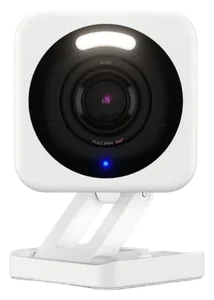
Buy the eufy Video Doorbell E340 at $130–180 if you want to pay once and be done — it stores footage inside the doorbell, so there is no plan, ever.
The Ring Battery Doorbell 2K is cheaper at $60–100 but cannot save a clip without a subscription, so the sticker is only the first payment. Run it three years and the ranking flips. What Ring wins is the app, a fifteen-minute setup, and every Echo in the house turned into a chime.
The two contenders
Best overall
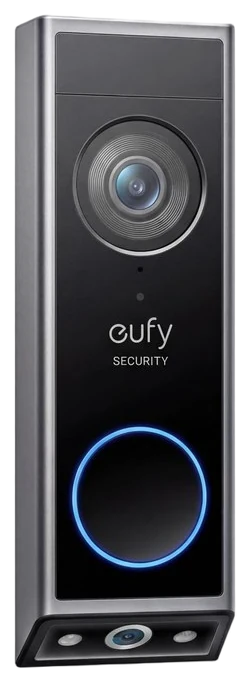
eufy Video Doorbell E340
TechGearLab’s Editors’ Choice, with two cameras and storage that lives inside the doorbell.
Get it if you want to pay once, watch the doormat, and never see a doorbell line item again.
How we chose: We used TechGearLab’s lab testing, which has run both of these doorbells through the same twenty-camera protocol, alongside Trusted Reviews’ measured teardown of the eufy by David Ludlow, then priced the subscriptions against Ring’s own published plan pages and Security.org’s independent tally of the same tiers. Prices are always moving, so every button and link pulls the live listing.
How we rankPublished specifications, verified owner reviews, and independent safety or standards data where it applies — weighted the same for every pick, never sponsored placement.
Ring vs eufy video doorbell at a glance
Swipe the table sideways for the rest of the columns →
The eufy Video Doorbell E340 is the rare product where the hardware and the arithmetic argue the same way. TechGearLab scored it 78 out of 100 and gave it an Editors’ Choice, third of the twenty security cameras they have run through the same protocol, with 7.6 for video quality and 8.2 for monitoring performance. What earns that is the second lens. The top camera shoots 2K and frames a visitor head to toe; a second camera angled down watches the mat, where packages actually land and where a single-camera doorbell sees nothing. Trusted Reviews’ David Ludlow measured the pair at 2048×1536 and 1600×1200 and rated daytime footage sharp enough to pick out real detail.
The storage is the whole case. Eight gigabytes sit inside the doorbell itself, with no account and no plan behind them. eufy says that holds around 90 days of clips; Ludlow put it nearer a month in ordinary use, which is still further back than most people ever scroll. There is no microSD slot, so the only way to grow it is one of eufy’s hubs, the HomeBase S380 or S280. The S380 runs about $180 and takes a drive up to 16TB. That’s optional: the E340 was the first eufy dual-camera doorbell that works standalone, without a hub at all.
The trade-offs are real and worth naming. Ludlow found Delivery Guard only reliably flags packages of about ten inches or more per side, so a padded envelope can slip past it. There is no Apple Home, SmartThings, or IFTTT support, only Alexa and Google Assistant, and the app is functional rather than Ring-slick. Local storage also means a stolen doorbell takes its footage with it unless a HomeBase is holding a copy indoors. Battery life lands around a month, and eufy sells a spare pack that charges in about five hours, so the doorbell need never come off the wall.
Strengths
TechGearLab Editors’ Choice, 78/100
Second camera watches the mat, not just the face
8GB of storage inside the doorbell, $0 a month
Cheapest three-year total by roughly $100
Tradeoffs
Costs $50 more up front than the Ring
No microSD slot; expanding means a $180 HomeBase
Package detection misses small envelopes
No Apple Home, SmartThings, or IFTTT
Verdict
Get it if: you want to pay once, watch the doormat, and never see a doorbell line item again.Skip it if: your house runs on Alexa and app polish is what you touch every day.
Price position in this guide~$130–180Premium
$60 · least expensive$180 · most expensive
2
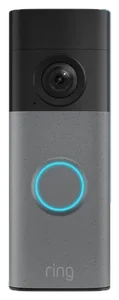
Ring Battery Doorbell 2K
Best ecosystem
The easiest doorbell to buy, and the one that keeps billing you
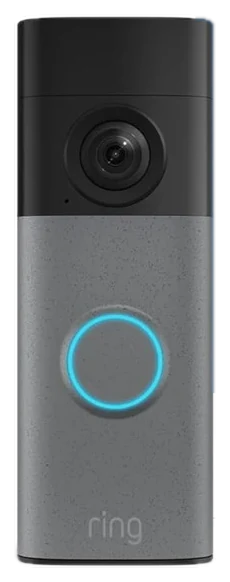
Get the name right before you shop, because Ring’s lineup has multiplied. The mainstream battery model is now the Battery Doorbell 2K, which Ring also sells as the Battery Doorbell (2nd Gen). It lists at $99.99, drops to $69.99 often enough that $60 to $100 is the honest range, and it is not any of the Plus, Pro, or wired variants. It records what Ring calls Retinal 2K at 1920×1920 across a 140-by-140-degree head-to-toe view, mounts on push pins in minutes, and can trickle-charge off doorbell wiring or a solar panel. TechGearLab measured roughly 1% battery drain a day, about three months between charges.
The camera is where the Ring gives ground. Testing the previous 1440p generation, TechGearLab found the very wide lens distorts badly toward the edges and the footage pixelated enough that testers could not read the color accuracy chart at all — one of the group’s lowest video scores — while rating the app 8.2 for ease of use. That split is the product in one line: best-in-class software, mid-pack glass. The 2nd Gen’s 2K sensor should narrow the gap, but nobody has lab-tested it against the eufy yet, so treat the resolution bump as a spec rather than a result.
Then the subscription, which is the actual price. Without a plan the doorbell still rings your phone, shows live view, and does two-way talk; it simply never saves anything, and TechGearLab put it plainly, that it does not let you go back and review anything without subscribing. Ring renamed its plans on January 14, 2026. Ring Solo is $4.99 a month or $49.99 a year and covers one device with up to 180 days of history. Ring Multi is $9.99 or $99.99 and covers every device at one address. Ring Pro is $19.99 or $199.99 and adds Familiar Faces and professional monitoring. Security.org lists the same three tiers at the same prices. So: $149.98 the first year, $249.96 by year three, $399.96 if a second camera pushes you to Multi.
Strengths
Cheapest entry in the category at $60–100
The best app in home security, 8.2 for ease of use
About three months per battery charge
Every Echo in the house becomes a chime
Tradeoffs
Saves no video at all without a plan
Weakest video quality of the two in lab testing
$49.99 a year becomes $99.99 once you add a camera
Three battery models share confusingly similar names
Verdict
Get it if: your home already runs on Alexa and the low $60–100 entry price is what gets this done.Skip it if: you plan to keep the doorbell more than about eighteen months and would rather not rent it.
Price position in this guide~$60–100Budget
$60 · least expensive$180 · most expensive
Ring vs eufy video doorbell FAQs
What does each doorbell really cost over one year and three years?
Year one is a tie and year three is not. The Ring Battery Doorbell 2K lists at $99.99 and the cheapest plan that saves video, Ring Solo, is $49.99 a year, so the first year is $149.98. The eufy Video Doorbell E340 lists at $149.99 and has no plan, so the first year is $149.99. By year three the Ring has cost $249.96 and the eufy is still $149.99, a gap of about $100. Add a second camera and Ring Multi at $99.99 a year takes the three-year Ring total to $399.96. Buying the Ring on a $69.99 sale pushes the break-even point out to roughly month nineteen instead of month twelve.
Does the Ring record anything without a subscription?
No. Live view, two-way talk, and real-time motion and ring alerts all work with no plan, so the doorbell is not a brick. What you never get is recorded history: TechGearLab found it does not let you go back and review anything without subscribing. That is the single most important thing to understand before buying a Ring, because it means the $99.99 sticker is an entry fee rather than the price. eufy is the opposite arrangement, recording to its own memory from the first day.
Where does the eufy keep video, and what if someone steals the doorbell?
Video goes into 8GB of memory inside the doorbell itself. eufy rates that at about 90 days of clips; Trusted Reviews put it closer to a month in normal use. There is no microSD slot, so the only way to expand is a eufy HomeBase, the S380 or S280, with the S380 at about $180 and expandable to 16TB. The honest risk is that a stolen doorbell takes its footage with it, which is exactly what a cloud plan protects against. A HomeBase indoors solves it, and even at $329.98 for doorbell plus hub the eufy stays cheaper than the Ring until close to year five.
Which one has the better camera?
The eufy, by a wide margin in the only lab that has tested both the same way. TechGearLab scored the E340 78 out of 100 with an Editors’ Choice, third of twenty cameras, while their Ring testing found the wide lens distorted at the edges and the image pixelated enough that testers could not determine the colors on their color accuracy chart. The eufy also sees more: a second downward camera covers the doormat that a single-lens doorbell misses. Ring wins on software rather than optics, taking 8.2 for ease of use.
Which Ring model is this, exactly?
The Battery Doorbell 2K, which Ring also lists as the Battery Doorbell (2nd Gen). It is the mainstream battery model at $99.99, not the Battery Doorbell Plus, the Battery Doorbell Pro, or either wired Pro, and Ring now sells enough similarly named doorbells that it is easy to buy the wrong one. Check the listing says 2K or 2nd Gen and shows the $99.99 list price. The rest of the family runs from about $150 to $250 and carries exactly the same subscription requirement.
One email when something is actually worth buying.
No weekly filler. We write when research finishes or a price we verify drops enough to matter.
Manage Consent
To provide the best experiences, we use technologies like cookies to store and/or access device information. Consenting to these technologies will allow us to process data such as browsing behavior or unique IDs on this site. Not consenting or withdrawing consent, may adversely affect certain features and functions.
Functional
Always active
The technical storage or access is strictly necessary for the legitimate purpose of enabling the use of a specific service explicitly requested by the subscriber or user, or for the sole purpose of carrying out the transmission of a communication over an electronic communications network.
Preferences
The technical storage or access is necessary for the legitimate purpose of storing preferences that are not requested by the subscriber or user.
Statistics
The technical storage or access that is used exclusively for statistical purposes.The technical storage or access that is used exclusively for anonymous statistical purposes. Without a subpoena, voluntary compliance on the part of your Internet Service Provider, or additional records from a third party, information stored or retrieved for this purpose alone cannot usually be used to identify you.
Marketing
The technical storage or access is required to create user profiles to send advertising, or to track the user on a website or across several websites for similar marketing purposes.