The Best TENS Units of 2026: FDA-cleared Picks for Home Pain Relief
TENS units run mild electrical pulses through skin-adhered pads to interrupt pain signals; every model here is sold without a prescription, and each card says what we could confirm about its FDA clearance. These six span a dual-channel starter to a wireless wearable, compared on clearance, specs and warranty terms.
No. 1 · Our pickFor most people
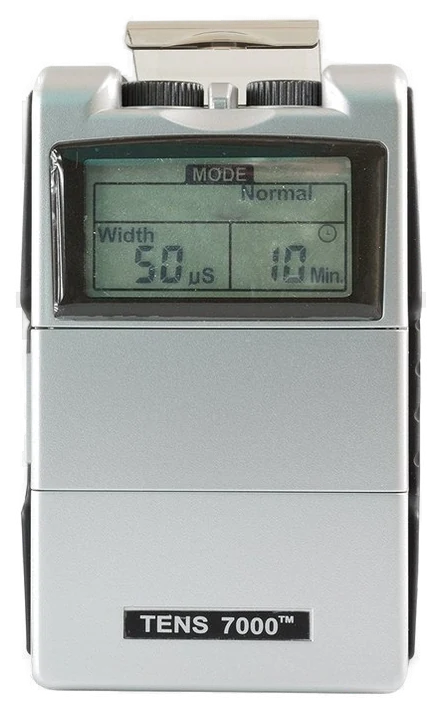
FDA-cleared, runs two independent channels, and has been the category’s reference point for years.
TENS 7000 2nd EditionNo. 1 · ~$30–40
View on AmazonThe rest, ranked
Every differenceNo. 4 · Best trusted brand
Omron Max Power Relief
The trusted pharmacy-shelf name
~$48–80
View on AmazonNo. 6 · Best for hands-free wear
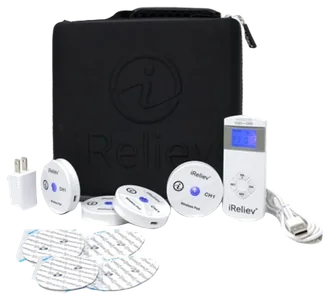
iReliev Wearable Wireless
The wireless, hands-free pick
~$150–200
View on Amazon
We compared each unit’s FDA clearance, channel count, intensity range, warranty terms and FSA/HSA eligibility against published specs, prioritizing clearance status over mode count. How we chose How we verify Corrections logged publicly
What changed2 dated notes · latest 26 October 2026
This guide said every unit here carries FDA over-the-counter clearance, and that the TENS 7000 is cleared as an over-the-counter device. The TENS 7000's FDA clearance we found (510(k) K080661, 2008) is for a powered muscle stimulator rather than under the over-the-counter TENS product code, so the guide now says each unit is sold without a prescription and that the TENS 7000 has an FDA 510(k) clearance. No pick or price changed.
Omron no longer sells the PM3030 unit. Its current model, the Omron Max Power Relief PM500, takes its place at about $48–80.
Dated notes already published on this page, newest first. Every correction we make is logged on the corrections page.
Every difference, all six
| Differences | No. 1TENS 7000 2nd Edition | No. 2AUVON Dual Channel | No. 3iReliev OTC TENS+ | No. 4Omron Max Power Relief | No. 5Beurer EM59 | No. 6iReliev Wearable Wireless |
|---|---|---|---|---|---|---|
| Price rangeon one $30–200 scale | ~$30–40 | ~$30–48 | ~$50–100 | ~$48–80 | ~$95–115 | ~$150–200 |
| Best for | Best overall | Best value | Most programs | Best trusted brand | Best with heat | Best hands-free |
| Channels/modes | Dual channel, 8 modes | Dual channel, 20+ modes | Dual channel, 14 programs | Single channel, 9 modes | Dual channel, TENS + EMS | Wireless, TENS + EMS |
From each pick’s review below. We compared maker specs and listings, not readings we took.
Pick 1 of 6: No. 1 · Best overall
TENS 7000 (2nd Edition)
The most recognized name
~$30–40Estimated price
View on AmazonGet it ifyou want the simplest, most established unit for one or two recurring sore spots.
Skip it ifyou want a rechargeable battery or app-tracked sessions.
The TENS 7000 (2nd Edition) is the unit most people land on first: it has an FDA 510(k) clearance and is sold without a prescription, runs two independent channels so you can treat two areas at once, and has been the category’s reference point for years. The display is a basic backlit LCD with physical dials, not a touchscreen or app, and it runs on a 9-volt battery — a plus if you want it to behave the same way every time.
Setup is the same short routine every time: peel the backing off gel pads, place them around the sore area, plug in the lead wires, and dial in an intensity level on each channel. Eight preset modes span a low-level pulse to a stronger burst pattern. Replacement pads and the battery are the only ongoing cost, and the lead wires wear out first, so keep a spare set on hand. For one or two recurring sore spots, this is the simplest way into the category.
Strengths
- FDA-cleared, most established name
- Two channels for two areas at once
- Cheap, widely available replacement pads and battery
Tradeoffs
- No rechargeable battery, app, or history
- Basic backlit display instead of a touchscreen
- Lead wires wear out first
Pick 2 of 6: No. 2 · Best value
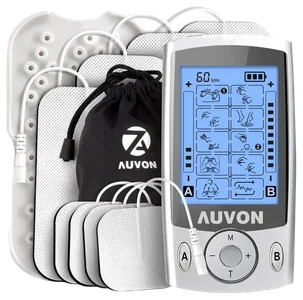
AUVON Dual Channel TENS
The rechargeable value pick
~$30–48Estimated price
View on AmazonGet it ifyou want a rechargeable battery and more presets for a similar price.
Skip it ifyou’d rather not compare bundle contents across listings before buying.
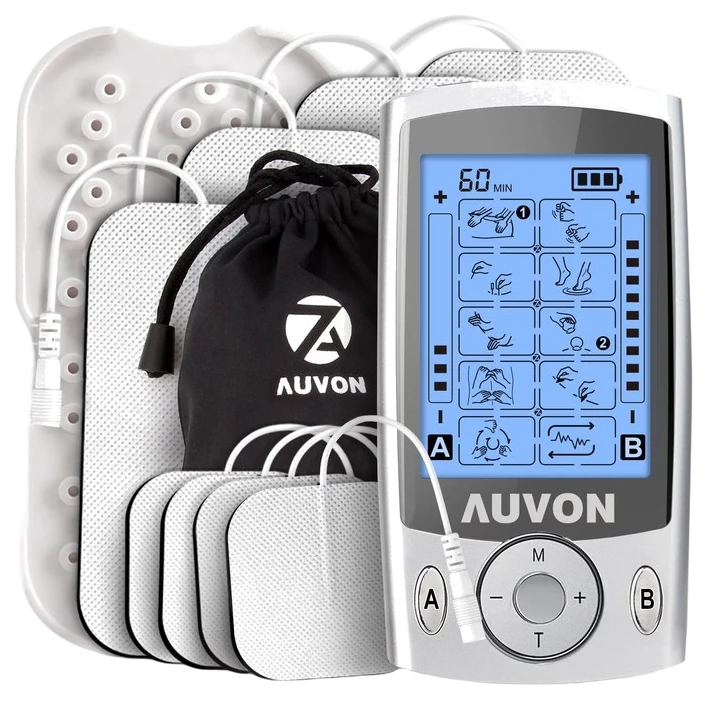
The AUVON Dual Channel TENS costs about the same as the TENS 7000 but swaps the 9-volt battery for a rechargeable one, and adds 20 to 24 preset modes depending on the bundle. It’s FDA-cleared, runs two channels, and uses the same peel-place-plug-in routine as any dual-channel unit. The larger mode count means more granular pulse patterns, not a different effect — every OTC TENS unit runs the same low-level pulse regardless of preset count.
What the rechargeable battery buys is real convenience: a full charge lasts multiple sessions, it charges over a standard USB cable, and there’s no battery compartment to fumble with. The one thing worth checking before buying is which bundle is listed, since pad count, case and mode count vary between AUVON’s own listings, and a cheaper version may ship with fewer extras than a pricier one. Read a listing’s exact contents before ordering to avoid a bare unit arriving without the pads shown in a photo.
Strengths
- Rechargeable battery, no 9-volt to replace
- 20+ preset modes at a similar price
- USB charging, no battery purchase
Tradeoffs
- More modes, not a different effect
- Bundle contents vary by listing
- Still a dial-and-button interface, no app
Pick 3 of 6: No. 3 · Most programs
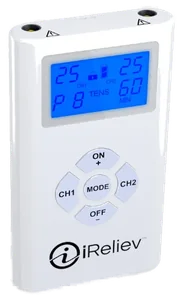
iReliev OTC TENS+
Most programs, widest range
~$50–100Estimated price
View on AmazonGet it ifyou have used a basic TENS unit before and want finer intensity control.
Skip it ifthis is your first TENS unit and you don’t know your settings yet.
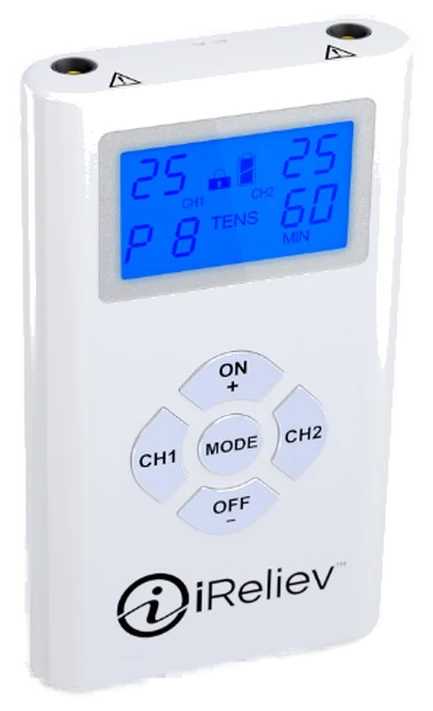
The iReliev OTC TENS+ moves up a price tier and spends it on 14 preset programs organized by target area and a finer 25-level intensity scale, versus the roughly 10-level range typical of cheaper units. It’s FDA-cleared for the same over-the-counter use, dual channel, and works with standard gel pads, so day-to-day operation isn’t fundamentally different from a TENS 7000 — what changes is how finely you can dial in a session, and its larger screen makes the active setting easier to read.
It ships from about $50 to $100 depending on the bundle, and the base unit alone competes on price with the mid-tier picks here rather than clearly justifying the top of its range, so check exactly what a listing includes before buying. This is the pick for someone who has already used a basic TENS unit and found the coarse intensity steps frustrating, not a first purchase — a first-time buyer is generally better served starting cheaper and upgrading later if it turns out to matter.
Strengths
- 25 intensity levels, finer control
- 14 preset programs organized by target area
- Larger screen, easier to read
Tradeoffs
- Wide price range competes with cheaper picks
- More programs, not a stronger pulse
- Bundle contents vary by listing
Pick 4 of 6: No. 4 · Best trusted brand
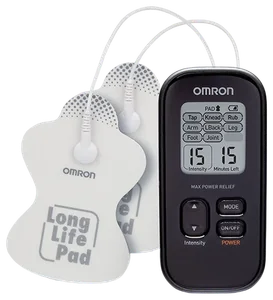
OMRON Max Power Relief TENS Unit (PM500)
The trusted pharmacy-shelf name
~$48–80Estimated price
View on AmazonGet it ifyou already trust the Omron brand and want in-store availability.
Skip it ifyou need two channels, or want the most modes for the price.
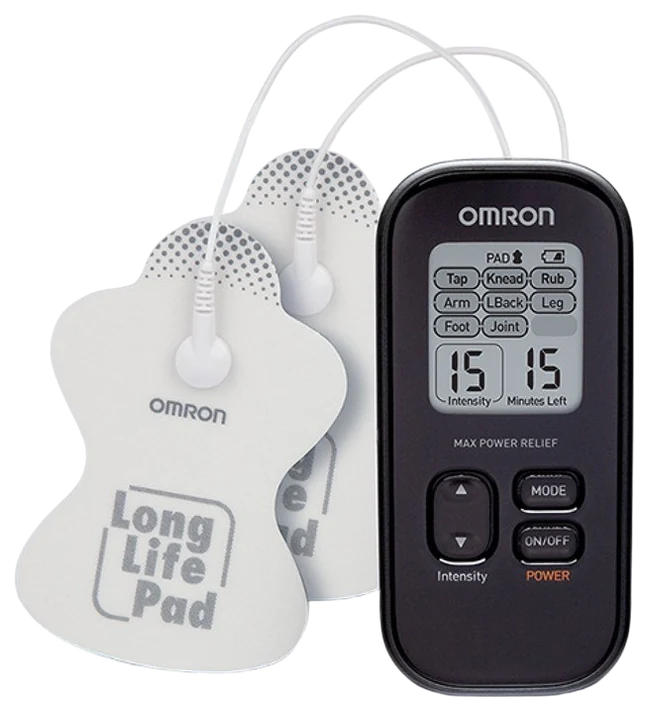
The Omron Max Power Relief TENS Unit (PM500) comes from the same brand behind Omron’s blood pressure monitors and is FDA cleared for over-the-counter use. Omron lists it at $79.99 on its own site, and Amazon typically sells it for less.
It runs a single channel, where most units here run two, so it treats one area at a time, like a shoulder or a wrist. In exchange it adds six body-pain modes plus three massage-style modes (rub, tap, knead), each with 15 intensity levels, and reusable Long Life Pads rated for up to 150 uses. For a first-time user, the massage-style modes at a low level are the gentlest place to start before trying the body modes.
It runs on two AAA batteries, with a one-year warranty on the unit and 30 days on cords and pads. At $48–80, it’s the pick for someone who wants a familiar pharmacy-shelf brand more than a second channel.
Strengths
- Familiar health-device brand, commonly found in pharmacies
- Reusable Long Life Pads, 150 uses
- Massage-style modes: rub, tap, knead
Tradeoffs
- Single channel, not dual like others
- Fewer built-in modes than the iReliev pick
- No real technology difference underneath
Pick 5 of 6: No. 5 · Best with heat
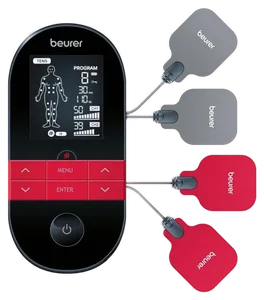
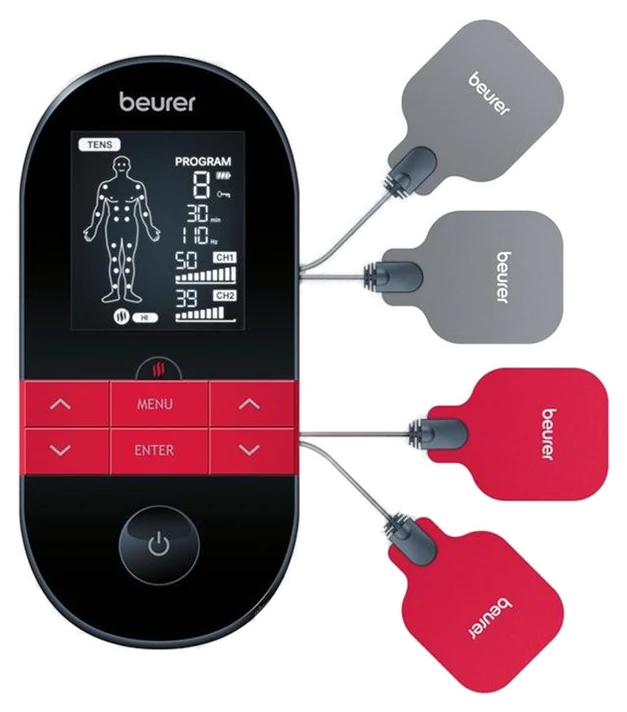
Beurer EM59
TENS and EMS with a heat setting
~$95–115Estimated price
View on AmazonGet it ifyou want heat alongside TENS and would also use light muscle-stimulation programs.
Skip it ifyou want app control; the iReliev wearable below has an app.
The Beurer EM59 adds a heat function to a dual-channel TENS unit: Beurer lists three ways to run it, pulses with heat, pulses alone or heat alone. Program, intensity and remaining time show on its built-in display, set with buttons on the unit; there is no companion app. It’s FDA-cleared for TENS use and also runs EMS, or muscle-stimulation, programs on the same hardware — a different function from pain relief, worth treating as a separate use case rather than an extra pain-relief mode. It’s compact enough to clip to a waistband and keep running under a shirt during light activity.
Heat is the reason to pick it over the cheaper dual-channel units here. Treat EMS as separate from TENS: EMS contracts muscles for conditioning, TENS targets pain signals, and for pain relief alone, the TENS 7000 or AUVON does the same job for less.
Strengths
- Heat setting, with or without pulses
- Runs TENS and EMS on one unit
- Compact enough to wear under clothing
Tradeoffs
- No app or session history
- EMS and TENS are different functions
- Costs more than similar units without heat
Pick 6 of 6: No. 6 · Best for hands-free wear
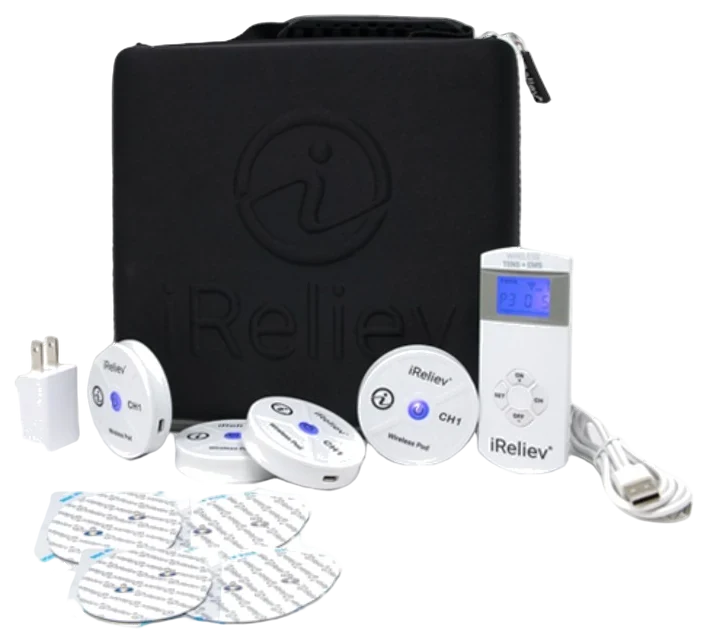
iReliev Wearable Wireless TENS/EMS
The wireless, hands-free pick
~$150–200Estimated price
View on AmazonGet it ifyou want to move freely during a session and will pay for it.
Skip it ifyou mostly use a TENS unit while resting. A wired pick works as well.
The iReliev Wearable Wireless TENS/EMS replaces the control unit and lead wires with a pair of small wireless pods, each with its own adhesive pad, that stick to the skin and run independently — removing the one real annoyance of every wired unit here: tangled leads. It’s FDA-cleared for the same over-the-counter TENS use and also runs EMS programs, controlled from a button on each pod or an app, and the pods can sit on separate areas of the body at once.
It’s the most expensive unit here by a wide margin: each pod carries its own battery, radio and controls, so battery life per pod is shorter than a boxed unit’s larger battery, and the pods need their own charging dock. This suits someone who wants to move freely during a session rather than sit still with a clipped-on unit. Anyone who mostly rests during a session gets no real benefit here, and the TENS 7000 or AUVON does the job for a quarter of the price.
Strengths
- No wire leads to tangle
- Pods wear under clothing while moving
- Runs TENS and EMS from the pods
Tradeoffs
- Highest price in this guide
- Shorter battery life per pod
- No benefit for seated or resting use
Still deciding between two?
Pick any two of the six. Rows that match say so once; the rest sit side by side, as each review states them.
Price range
~$30–40
~$30–48
Best for
Best overall
Best value
Channels/modes
Dual channel, 8 modes
Dual channel, 20+ modes
TENS unit FAQs
6 common questions, answered.
What does a TENS unit do?
A TENS unit sends a mild electrical pulse through adhesive pads placed on the skin, which can help manage minor muscle and joint pain by interrupting the nerve signals that carry a sense of discomfort. It is cleared by the FDA for symptomatic relief, not as a cure, so it works alongside other pain-management steps rather than replacing them.
Is a TENS unit safe to use every day?
Most FDA-cleared OTC units are labeled for regular use within the manufacturer’s session-length guidance, and the main daily-use consideration is skin irritation at the pad site rather than the electrical pulse itself. Rotate pad placement slightly if the skin gets sensitive, and stop and check with a doctor if irritation does not clear between sessions.
Who should not use a TENS unit?
Do not use a TENS device if you have a cardiac pacemaker, implanted defibrillator, or other implanted electronic device; the FDA warns this can cause electric shock, burns, or dangerous interference. Also avoid use during pregnancy, with active cancer, epilepsy, or over broken skin without a doctor’s clearance first.
Is a TENS unit covered by FSA or HSA funds?
Most OTC TENS units are FSA and HSA eligible without a prescription, which is a meaningful discount if you already have a balance to spend. Coverage details vary by plan administrator, so check your specific plan’s eligibility list or keep the itemized receipt in case documentation is requested later.
What is the difference between a TENS unit and an EMS device?
TENS targets pain signals through the nerves and is meant to help manage discomfort, while EMS contracts muscles directly and is marketed for muscle conditioning or recovery rather than pain. Several units in this guide, like the Beurer EM59 and the iReliev wearable, run both functions on the same hardware, but the two work through different mechanisms.
How many channels or pads do I need?
A single channel with two pads is enough for one localized area, like a shoulder or a wrist — the Omron Max Power Relief pick here runs single-channel. Two channels, the default on every other unit in this guide, let you treat two separate areas at once or spread four pads across one larger area, like a lower back.
How we chose
We compared each unit’s FDA clearance, channel count, intensity range, warranty terms and FSA/HSA eligibility against published specs, prioritizing clearance status over mode count. Updated September 2026. Prices are always moving, so every button and link pulls the live listing.
How we rank
Published specifications, verified owner reviews, and independent safety or standards data where it applies — weighted the same for every pick, never sponsored placement.
Corrections on this guide
Correction, 23 September 2026: Omron no longer sells the PM3030 unit. Its current model, the Omron Max Power Relief PM500, takes its place at about $48–80.
Every correction we’ve madeCorrection, 26 October 2026: This guide said every unit here carries FDA over-the-counter clearance, and that the TENS 7000 is cleared as an over-the-counter device. The TENS 7000’s FDA clearance we found (510(k) K080661, 2008) is for a powered muscle stimulator rather than under the over-the-counter TENS product code, so the guide now says each unit is sold without a prescription and that the TENS 7000 has an FDA 510(k) clearance. No pick or price changed.
Every correction we’ve madeCorrection, 26 October 2026: The Beurer EM59 was labelled “Best app-connected” and described as working with a companion phone app. We found no app or Bluetooth control in its specifications; it is a dual-channel TENS and EMS unit with a heat setting, so its label is now “Best with heat” and its write-up describes the heat function instead. No pick, price or ranking changed.
Every correction we’ve made
Where to go next.
The close calls side by side, then related guides.
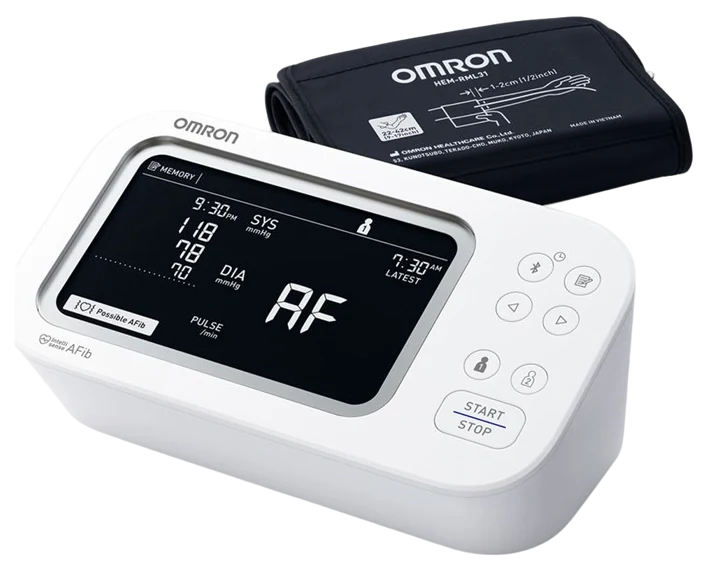
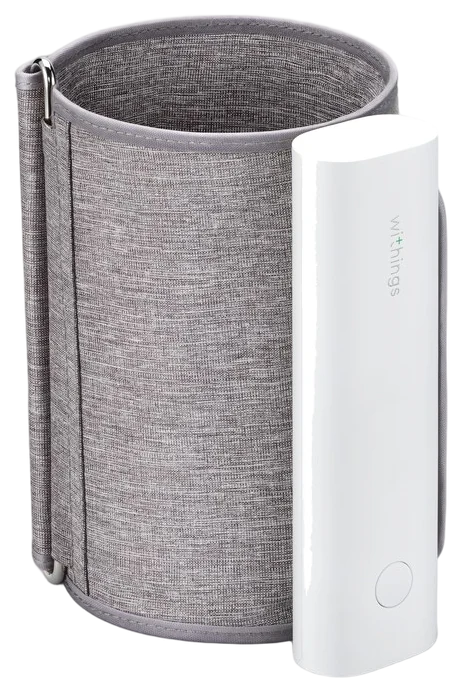
- Head-to-headOmron Platinum BP5465 vs. Withings BPM Connect: Which Blood Pressure Monitor to Buy
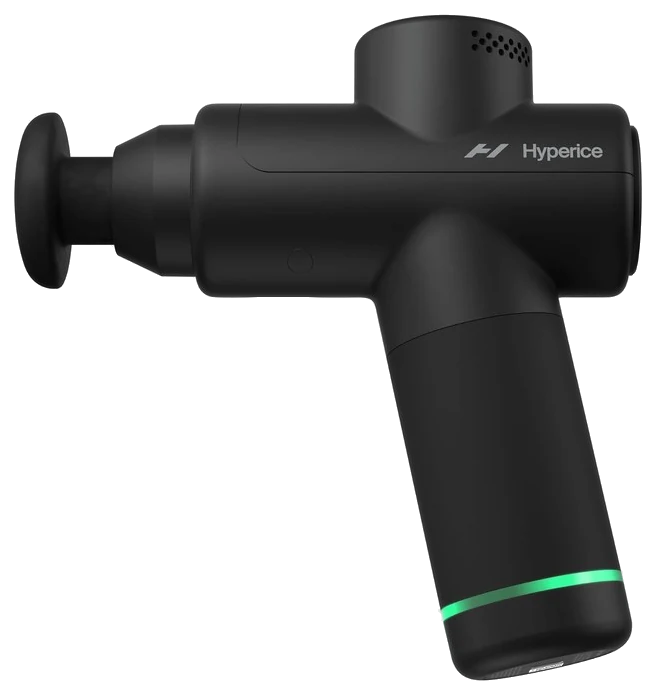
- GuideThe Best Massage Guns and Recovery Tools, Weighed Against the Evidence
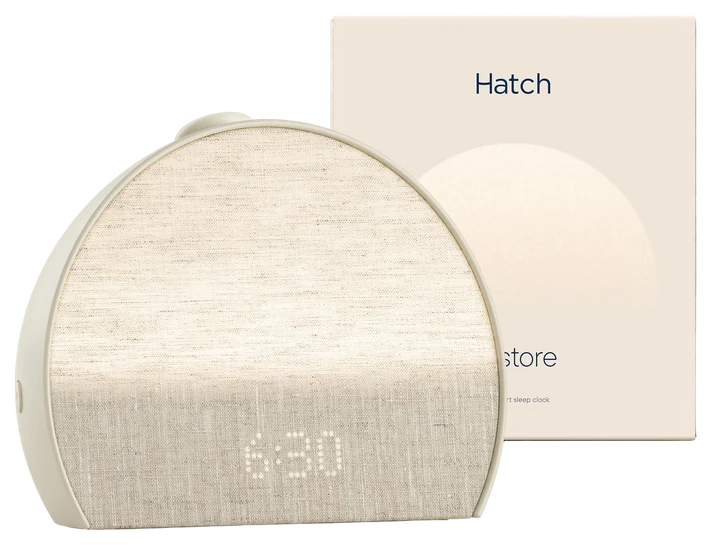
- GuideThe Best Sleep Products of 2026: Five Upgrades With Evidence Behind Them
- GuideThe Best Wellness Gadgets of 2026 for Recovery, Sleep and Tracking
- GuideThe Best First-aid Kits of 2026: Contents Matter More Than the Count
- GuideThe Best Pulse Oximeters of 2026: What the FDA Says About Accuracy
- DepartmentEvery Health & Wellness guide