The Best Smart Thermostats for 2026, With the Energy Savings Compared
Smart thermostats are the rare gadget with a calculable return: Energy Star puts the average at about 8% off heating and cooling, and ecobee claims up to 26%. We compared savings claims, sensor systems and compatibility across five thermostats, including the $80 sleeper.
By the BYB Editorial Team
Published July 28, 2026 · Updated · Prices checked OctoberOct 5, 2026
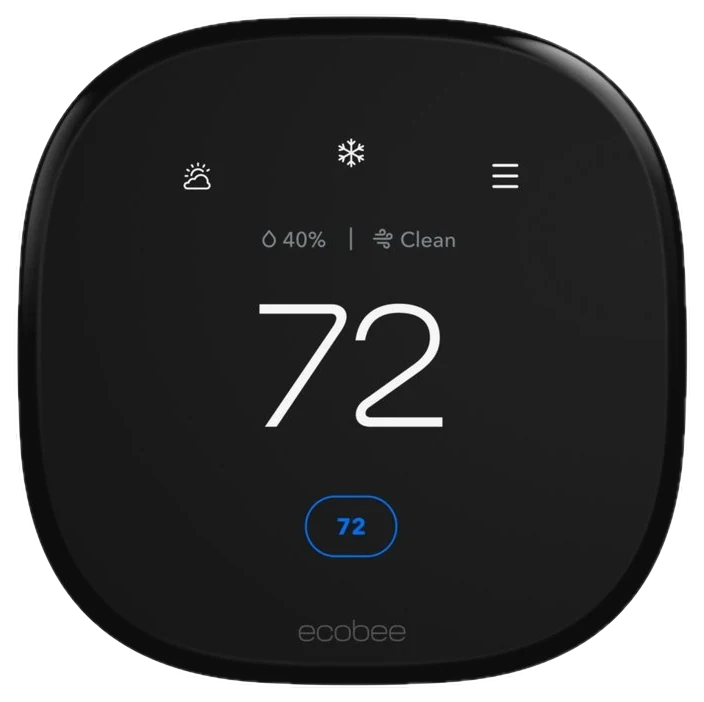
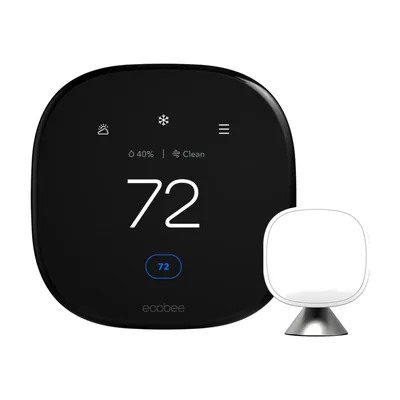
ecobee Smart Thermostat Premium$210–250The ecobee Smart Thermostat Premium, $210–250 — it ships with a remote sensor, the quickest fix for the room that’s always the wrong temperature.Check price
Tighter budget
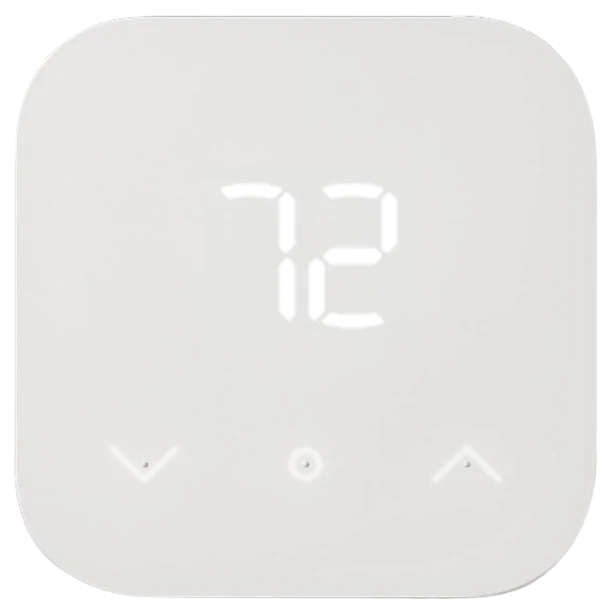
Amazon Smart Thermostat$60–80Amazon Smart Thermostat, $60–80 — scheduling produces most of the savings anyway.Check price
Electric baseboard heat
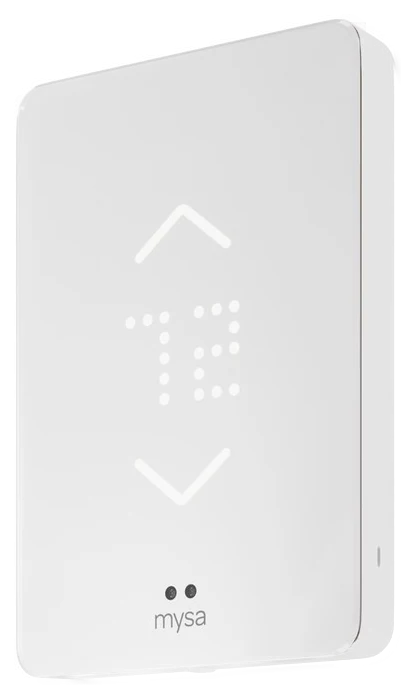
Mysa V2, $135–160. Check HVAC compatibility before you buy any of these.
Smart thermostats are the rare gadget with a calculable return: Energy Star puts the average at about 8% off heating and cooling, and ecobee claims up to 26%. We compared savings claims, sensor systems and compatibility across five thermostats, including the $80 sleeper.
Not sure which fits you? Answer two questions
Right for you?
Which pick is right for you?
Two quick questions. The answer is the guide’s own reason for one of its picks.
How we choseWhat we compared, and how we rank
We compiled energy-savings studies, HVAC-compatibility databases, and multi-year reliability reviews. Prices are always moving, so every button and link pulls the live listing.
How we rank
Published specifications, verified owner reviews, and independent safety or standards data where it applies — weighted the same for every pick, never sponsored placement.
CorrectedThe ecobee Smart Thermostat Premium was listed at about $240–260 here. Its Amazon listing read $209.99 on 7 October (list price about $250), so the range is now about $210–250, the same as in our other guides that list it.
CorrectedThe savings answer said a smart thermostat pays back within one to two years. At the roughly $50 a year Energy Star cites, that holds for the $60–80 Amazon pick and takes about five years for a $250 thermostat, and the answer now says so. The introduction also said four thermostats and an unattributed 8–26%; it now says five, and credits 8% to Energy Star and 26% to ecobee's own claim. The first short-answer row no longer calls the ecobee's sensor the only feature that fixes a hot or cold room, since the Honeywell X7S takes up to 20 sensors.
CorrectedHoneywell no longer lists the T9. Its successor, the Honeywell Home X7S, takes its place at about $180–210.
Dated notes already published on this page, newest first. Every correction we make is logged on the corrections page.
The ecobee Premium anchors this list because it’s the most complete package the category has produced: a remote room sensor in the box to solve the room-that’s-never-right problem, an air-quality monitor riding along, and Siri or Alexa built directly into the unit.
The sensor logic is the payoff, average the bedroom into the evening comfort equation instead of heating to the hallway’s opinion, and reviewers consistently rank ecobee’s scheduling intelligence and app at the top of the field. It’s also the ecosystem diplomat: HomeKit, Alexa, and Google all first-class.
It costs flagship money at $210–250 on Amazon, and renters should confirm the C-wire situation first. But as the do-everything answer with the fewest asterisks, this is the guide’s benchmark, the Amazon pick covers the budget end.
Strengths
Room sensor included in the box
Air-quality monitoring built in
Every ecosystem incl. HomeKit
Best-ranked app and scheduling
Tradeoffs
Flagship pricing
Glossy screen attracts dust
Sensor batteries need rare swaps
Pick 2 of 5: No. 2Best auto-pilot~$250–290
2
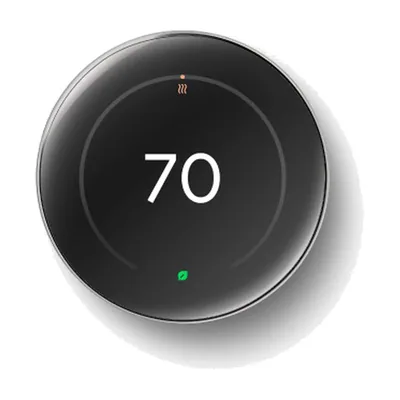
Google Nest Learning Thermostat
Upgrade pickBest auto-pilot
The set-and-forget original
Get it if you want zero-effort automation with showpiece looks.
Skip it if you run HomeKit or want sensors included, ecobee.
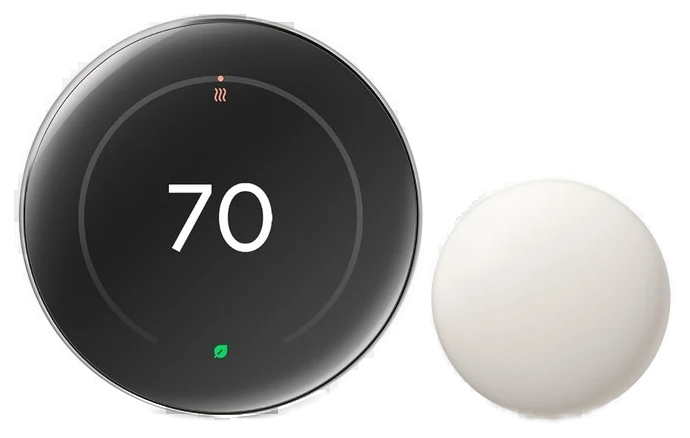
The Nest Learning Thermostat’s pitch hasn’t changed since it invented the category: adjust it normally for a week, and it learns your life’s temperature schedule, then runs it automatically, forever, with no programming screens.
The current generation is also the best-looking object in home hardware. A polished dial that makes guests ask about the thermostat, of all things. Google-household integration is smooth, and the auto-away logic that drives most of the verified savings works quietly in the background.
HomeKit families and sensor-maximalists should look to the ecobee; the Nest bundles just one room sensor and its gravity is unmistakably Google. At $250–290 on Amazon, it’s the auto-pilot pick. Set it, forget it, admire it.
Strengths
Learns your schedule automatically
The best-looking hardware in the home
Easy Google household fit
Proven auto-away savings
Tradeoffs
One sensor included, extras add up
Google-centric by design
Premium price for fewer sensors
Pick 3 of 5: No. 3Best under $100~$60–80
3
Amazon Smart Thermostat
Budget pickBest under $100
The $80 no-brainer
Get it if you want the verified savings at the lowest entry price in the category.
Skip it if one room is always wrong; that needs sensors, and this pick has none.
Amazon commissioned Honeywell to build a simple, reliable smart thermostat and priced it like an accessory: the Amazon Smart Thermostat runs $60–80 at Amazon and frequently less. The lowest entry price the category has ever seen.
Alexa’s “Hunches” handle the away-and-home scheduling that generates most of any smart thermostat’s savings, and the Honeywell hardware underneath has the reliability record you’d hope. Energy Star verification applies here just like the flagships.
What you skip: room sensors, a fancy display, and any non-Alexa ecosystem depth: this assumes an Alexa household. But the core payback arrives at a third of flagship cost, which makes it the easiest ROI in the smart home. Budget solved.
Strengths
Category’s lowest price ever
Honeywell-built reliability
Energy Star verified savings
Alexa Hunches automate schedules
Tradeoffs
No room sensors
Assumes an Alexa household
Basic display and controls
Also on the shortlist
Two more, in brief
Pick 4 of 5: No. 4Best multi-room fix
4
Honeywell Home X7S Smart Thermostat
Best multi-room fix
The multi-room specialist
Get it if your upstairs and downstairs are always different temperatures.
Skip it if you want top-tier app polish and design — ecobee or Nest instead.
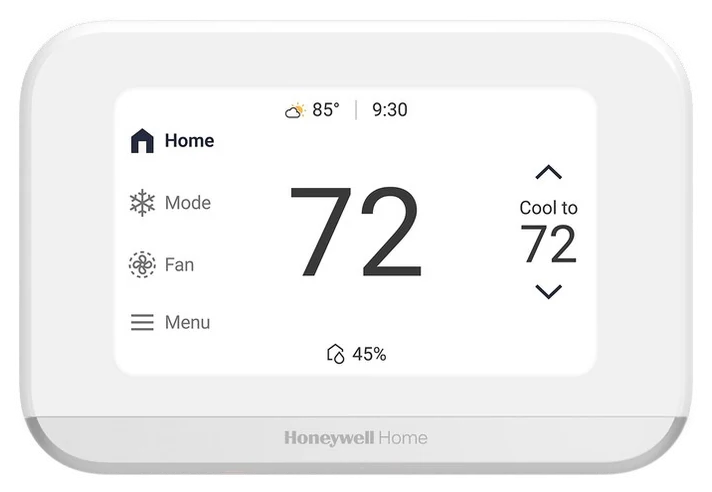
The Honeywell Home X7S specializes in the fight every two-story home knows: up to 20 optional wireless room sensors read temperature, humidity, and occupancy, and the thermostat prioritizes whichever rooms people are in — the direct fix for upstairs-boils-while-downstairs-freezes. A built-in radar sensor adds a second layer, scaling back settings when the whole house is empty and warming or cooling as someone approaches, so the multi-room logic keeps working before a single add-on sensor ships.
Sensor range and logic still run deepest outside ecobee, and Honeywell/Resideo remains the brand HVAC installers already trust, which matters once the compatibility question gets complicated — it covers systems from a 3-heat/2-cool heat pump with backup down to a basic 2-heat/2-cool conventional setup. The 4.3-inch touchscreen is a real upgrade over the old beige-box look, and Matter certification means it now talks natively to Alexa, Google Assistant, and Apple Home instead of just one ecosystem.
ENERGY STAR certification applies here too, so the efficiency case holds up next to the flagships. At $180–210 on Amazon, it’s still the targeted answer when uneven rooms, not gadget features, are the actual problem being solved.
Get it if your upstairs and downstairs are always different temperatures.
Skip it if you want top-tier app polish and design — ecobee or Nest instead.
The Honeywell Home X7S specializes in the fight every two-story home knows: up to 20 optional wireless room sensors read temperature, humidity, and occupancy, and the thermostat prioritizes whichever rooms people are in — the direct fix for upstairs-boils-while-downstairs-freezes. A built-in radar sensor adds a second layer, scaling back settings when the whole house is empty and warming or cooling as someone approaches, so the multi-room logic keeps working before a single add-on sensor ships.
Read the full case
Sensor range and logic still run deepest outside ecobee, and Honeywell/Resideo remains the brand HVAC installers already trust, which matters once the compatibility question gets complicated — it covers systems from a 3-heat/2-cool heat pump with backup down to a basic 2-heat/2-cool conventional setup. The 4.3-inch touchscreen is a real upgrade over the old beige-box look, and Matter certification means it now talks natively to Alexa, Google Assistant, and Apple Home instead of just one ecosystem.
ENERGY STAR certification applies here too, so the efficiency case holds up next to the flagships. At $180–210 on Amazon, it’s still the targeted answer when uneven rooms, not gadget features, are the actual problem being solved.
Strengths
Room sensors plus built-in radar
Direct fix for uneven floors
HVAC-installer-trusted brand
Now Matter-certified for wider hooks
Tradeoffs
Room sensors cost extra per room
Limited to specific HVAC setups
Pricier than the budget options here
Pick 5 of 5: No. 5Best for baseboard heat
5
Mysa Smart Thermostat for Electric Baseboard Heaters (V2)
Best for baseboard heat
For homes that heat with electric baseboard, not a furnace
Get it if your home heats with electric baseboard, fan-forced or radiant ceiling heaters, and you want scheduling and remote control that a mechanical dial cannot give you.
Skip it if you have a furnace, heat pump or central air. Mysa will not connect to a 24V system, and the ecobee Premium or the Amazon Smart Thermostat is the right buy.
The other four picks in this guide all wire into a 24 volt central heating and cooling system. If your home heats with electric baseboard, none of them will work, and this is the answer. Mysa replaces the line voltage wall thermostat that controls a heater directly, then adds scheduling, remote control and voice assistants that a mechanical dial never offered.
Mysa’s support documentation puts the limit at 1900W at 120V, or 3800W at 240V, which covers ordinary baseboard, fan-forced, toe kick, radiant ceiling and electric wall heaters. You need an existing wall thermostat carrying four or more wires, not a dial bolted to the heater itself. Alexa, Google Home and Apple Home all work, and the screen shows whether the heater is currently drawing power.
The catch is arithmetic. One Mysa controls one thermostat circuit, so rooms on separate circuits each need their own, and four of them runs past $600 today. Line voltage wiring also means killing the breaker and handling live conductors, which is an electrician’s job for plenty of people. If your home runs on a furnace or heat pump, buy the ecobee Premium instead.
Strengths
Controls 120V and 240V electric heat that standard smart thermostats cannot touch at all
Rated to 1900W at 120V or 3800W at 240V, covering baseboard, fan-forced, toe kick, radiant ceiling and electric wall heaters
Reports whether the heater is drawing its rated wattage or nothing, and charts usage over time in the app
Alexa, Google Home and Apple Home all supported over built-in Wi-Fi, with no separate bridge
Tradeoffs
One unit controls one thermostat circuit, so whole home coverage usually means buying several
Line voltage wiring is riskier than swapping a 24V thermostat, and many owners will pay an electrician
The display is deliberately minimal, so schedules and history live in the app rather than on the wall
Useless if you have central heating and cooling, since it will not run a 24V system
Needs an existing wall thermostat with four or more wires, not a dial on the heater
Pick 5 of 5: No. 5Best for baseboard heat
Mysa Smart Thermostat for Electric Baseboard Heaters (V2)
For homes that heat with electric baseboard, not a furnace
Get it if your home heats with electric baseboard, fan-forced or radiant ceiling heaters, and you want scheduling and remote control that a mechanical dial cannot give you.
Skip it if you have a furnace, heat pump or central air. Mysa will not connect to a 24V system, and the ecobee Premium or the Amazon Smart Thermostat is the right buy.
The other four picks in this guide all wire into a 24 volt central heating and cooling system. If your home heats with electric baseboard, none of them will work, and this is the answer. Mysa replaces the line voltage wall thermostat that controls a heater directly, then adds scheduling, remote control and voice assistants that a mechanical dial never offered.
Read the full case
Mysa’s support documentation puts the limit at 1900W at 120V, or 3800W at 240V, which covers ordinary baseboard, fan-forced, toe kick, radiant ceiling and electric wall heaters. You need an existing wall thermostat carrying four or more wires, not a dial bolted to the heater itself. Alexa, Google Home and Apple Home all work, and the screen shows whether the heater is currently drawing power.
The catch is arithmetic. One Mysa controls one thermostat circuit, so rooms on separate circuits each need their own, and four of them runs past $600 today. Line voltage wiring also means killing the breaker and handling live conductors, which is an electrician’s job for plenty of people. If your home runs on a furnace or heat pump, buy the ecobee Premium instead.
Strengths
Controls 120V and 240V electric heat that standard smart thermostats cannot touch at all
Rated to 1900W at 120V or 3800W at 240V, covering baseboard, fan-forced, toe kick, radiant ceiling and electric wall heaters
Reports whether the heater is drawing its rated wattage or nothing, and charts usage over time in the app
Alexa, Google Home and Apple Home all supported over built-in Wi-Fi, with no separate bridge
Tradeoffs
One unit controls one thermostat circuit, so whole home coverage usually means buying several
Line voltage wiring is riskier than swapping a 24V thermostat, and many owners will pay an electrician
The display is deliberately minimal, so schedules and history live in the app rather than on the wall
Useless if you have central heating and cooling, since it will not run a 24V system
Needs an existing wall thermostat with four or more wires, not a dial on the heater
A thermostat only saves you money if it fits your heating and cooling system, and that’s where most returns come from. Run these checks before you buy. Or start from our roundup of seven smart home devices that pay for themselves to see the whole category at once.
Check for a C-wire: most smart thermostats want a common (C) wire for steady power. Pull your old thermostat off the wall and look, or plan to use an included adapter, before you order.
Match your system: confirm it handles what you’ve got, whether that’s a heat pump, multi-stage furnace, or electric baseboard heat. Standard thermostats can’t run baseboards, so that niche needs a specific model.
Sensors and ecosystem: remote room sensors help even out temperatures in a multi-floor home, and you’ll want it to play nice with Alexa, Google, or Apple. Decide which of those you’ll use.
The common mistake: paying up for sensors and radar presence detection you’ll never touch. If you just want a schedule and phone control, a cheaper model does the same core job.
Google Nest Thermostat (2020) — the cheaper mirror-finish Nest, but it drops the automatic schedule learning and needs a separate temperature sensor for other rooms.
ecobee Smart Thermostat Enhanced — nearly the same brains as the Premium for less, but you give up the included room sensor, air-quality monitor, and radar presence sensing.
Emerson Sensi Touch 2 — a reliable touchscreen with broad system compatibility, but the app and features are plainer than Nest or ecobee, and it wants a C-wire.
Wyze Thermostat — one of the cheapest ways to go smart, but it works with a smaller circle of integrations and skips the fancier automations.
Thermostat FAQs
6 common questions, answered.
Do smart thermostats save money?
Yes. This is the best-documented savings claim in smart home: Energy Star’s own data puts average savings at roughly 8% of heating/cooling bills (about $50 a year), with ecobee claiming up to 26% versus a constant hold. At about $50 a year, a $60–80 thermostat pays back in one to two years and a $250 one in about five; homes with higher heating and cooling bills save more.
Will a smart thermostat work with my HVAC system?
Most conventional systems yes, but check the compatibility tool before buying (every brand has one). The common catch is the C-wire (constant power): many older homes lack it, and while adapters ship in-box, that’s the step that turns a 20-minute install into an electrician visit.
Are room sensors worth it?
If any room in your home is chronically wrong (upstairs bedrooms, the office over the garage) yes, decisively. Sensors let the thermostat average or prioritize occupied rooms instead of ruling from the hallway. Single-zone apartments can skip them.
Can I install a smart thermostat myself?
Usually, in under an hour: kill the breaker, photograph the old wiring, match the labeled wires, mount, done: every maker’s app walks you through it. The one showstopper is the C-wire (common wire) that powers the display: many older systems lack one. Check before buying; adapters and power-extender kits ship with several models, and an electrician visit for a C-wire is a modest one-time cost.
Do smart thermostats work with heat pumps and multi-stage systems?
Mostly yes, all four picks handle common heat pumps and two-stage systems, but this is exactly where the two-minute compatibility check earns its keep. High-voltage baseboard heat is the hard no across the category (it needs line-voltage thermostats). Multi-zone homes need one thermostat per zone; the sensor-equipped picks then make each zone smarter about the rooms within it.
Which thermostat fits my smart home ecosystem?
The ecobee is the diplomat: HomeKit, Alexa, and Google all first-class, with Siri or Alexa literally built into the unit. Nest is best inside a Google household; the Amazon thermostat assumes Alexa. If you run routines (bedtime lowers the heat, away mode arms cameras), buy inside your assistant’s family and the thermostat becomes the quiet backbone of the whole automation.
23Sep 2026Correction, 23 September 2026Honeywell no longer lists the T9. Its successor, the Honeywell Home X7S, takes its place at about $180–210.Every correction we’ve made ›
4Oct 2026Correction, 4 October 2026The savings answer said a smart thermostat pays back within one to two years. At the roughly $50 a year Energy Star cites, that holds for the $60–80 Amazon pick and takes about five years for a $250 thermostat, and the answer now says so. The introduction also said four thermostats and an unattributed 8–26%; it now says five, and credits 8% to Energy Star and 26% to ecobee’s own claim. The first short-answer row no longer calls the ecobee’s sensor the only feature that fixes a hot or cold room, since the Honeywell X7S takes up to 20 sensors.Every correction we’ve made ›
7Oct 2026Correction, 7 October 2026The ecobee Smart Thermostat Premium was listed at about $240–260 here. Its Amazon listing read $209.99 on 7 October (list price about $250), so the range is now about $210–250, the same as in our other guides that list it.Every correction we’ve made ›
Prices on this page are re-checked weekly — see the full Smart Home price index for every product we cover.
Keep reading
Where to go next.
The close calls side by side, then related guides.
New guides, re-ranked picks and the month's notable changes. No weekly filler, ever.
Unsubscribe any time. Your address goes to our newsletter provider and nowhere else — see our privacy policy.
Manage Consent
To provide the best experiences, we use technologies like cookies to store and/or access device information. Consenting to these technologies will allow us to process data such as browsing behavior or unique IDs on this site. Not consenting or withdrawing consent, may adversely affect certain features and functions.
Functional
Always active
The technical storage or access is strictly necessary for the legitimate purpose of enabling the use of a specific service explicitly requested by the subscriber or user, or for the sole purpose of carrying out the transmission of a communication over an electronic communications network.
Preferences
The technical storage or access is necessary for the legitimate purpose of storing preferences that are not requested by the subscriber or user.
Statistics
The technical storage or access that is used exclusively for statistical purposes.The technical storage or access that is used exclusively for anonymous statistical purposes. Without a subpoena, voluntary compliance on the part of your Internet Service Provider, or additional records from a third party, information stored or retrieved for this purpose alone cannot usually be used to identify you.
Marketing
The technical storage or access is required to create user profiles to send advertising, or to track the user on a website or across several websites for similar marketing purposes.