No. 1: Anker 511 Nano
The Best Chargers and Power Banks of 2026, With GaN Wattage Explained
Five power stations for outage backup, compared on capacity, output, switchover time and expansion, with what each one runs. We compared the makers' spec pages and CPSC records, not outage runs of our own.
No. 1 · Our pick · For most people
The EcoFlow DELTA 3 Max Plus, ~$1,100–1,200, if you want 2 kWh that runs a fridge for about a day, 3,000 W for bigger loads, a 10 ms switchover and room to grow to 10 kWh.
~$1,100–1,200Estimated price
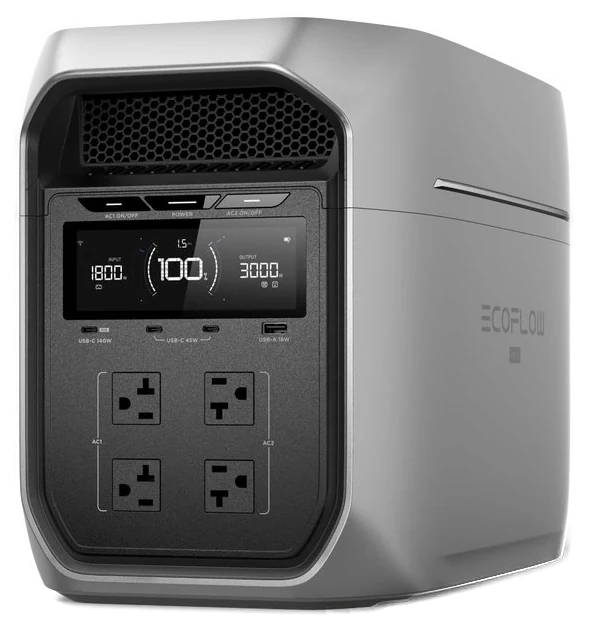 No. 1 · Best overallEcoFlow DELTA 3 Max Plus~$1,100–1,200View on Amazon
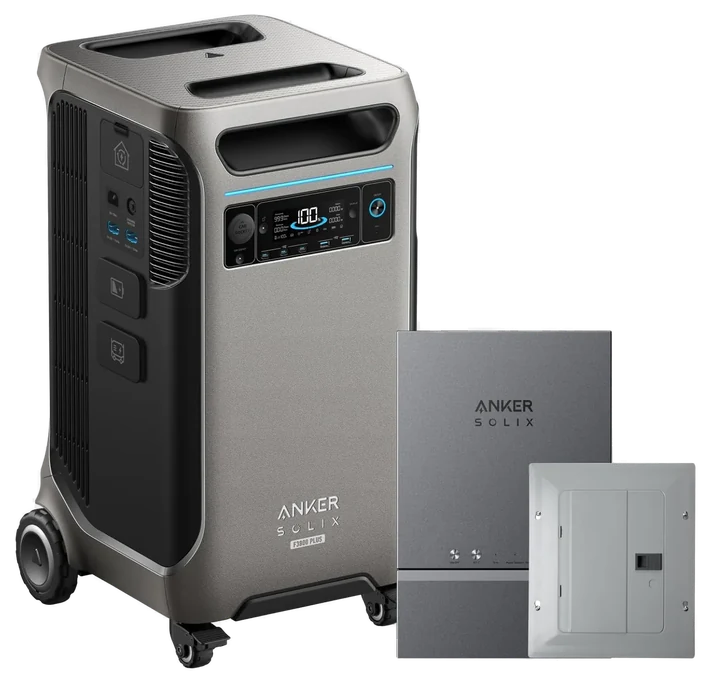 No. 2 · Best whole-homeAnker SOLIX F3800 Plus~$4,000–4,200View on Amazon
 No. 3 · Best for CPAP and short outagesAnker SOLIX C1000 Gen 2~$450–550View on Amazon
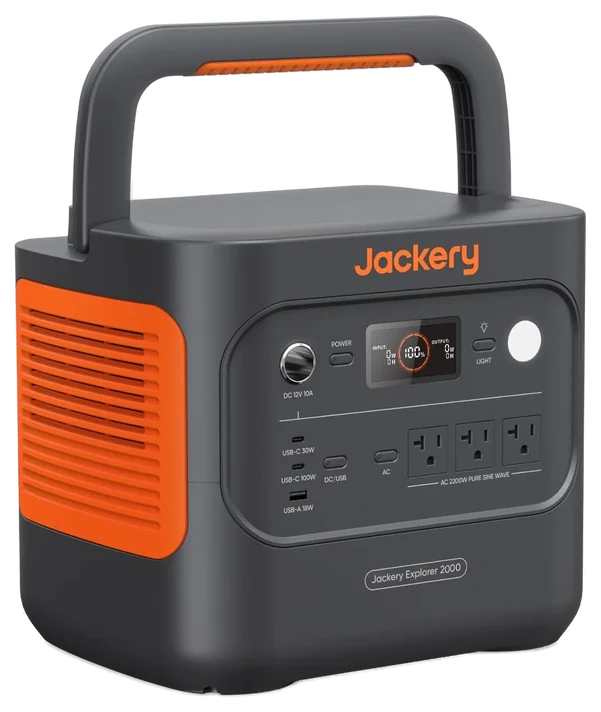 No. 4 · Lightest 2 kWhJackery Explorer 2000 v2~$900–1,000View on Amazon
 No. 5 · Best for solar under $1,000BLUETTI Elite 200 V2~$850–950View on Amazon
| Differences | No. 1EcoFlow DELTA 3 Max Plus | No. 2Anker SOLIX F3800 Plus | No. 3Anker SOLIX C1000 Gen 2 | No. 4Jackery Explorer 2000 v2 | No. 5BLUETTI Elite 200 V2 |
|---|---|---|---|---|---|
| Price rangeon one $450–4,200 scale | ~$1,100–1,200 | ~$4,000–4,200 | ~$450–550 | ~$900–1,000 | ~$850–950 |
| Capacity | 2,048 Wh (to 10 kWh) | 3,840 Wh (six add-on batteries) | 1,024 Wh | 2,042 Wh | 2,080 Wh |
| Output (continuous / surge) | 3,000 W / 6,000 W | 6,000 W, 120/240 V | 2,000 W / 3,000 W | 2,200 W / 4,400 W | 2,600 W |
| Switchover | 10 ms | 20 ms (UPS outlets) | Under 10 ms | Under 20 ms | 15 ms or less |
From each pick’s review below. We compared maker specs and listings, not readings we took.
We compared each maker’s published capacity, continuous and surge output, switchover time, expansion options and warranty, and searched CPSC’s recall records for the brands. We didn’t run any of these stations through an outage ourselves, and we name the source beside every figure. How we chose How we verify Corrections logged publicly
We updated three picks from the makers' spec pages and Amazon. The Anker SOLIX F3800 Plus range is now ~$4,000–4,200, up from ~$3,000–3,200, because the Amazon listing we found is the bundle with Anker's Home Power Panel, at $4,099.99. The EcoFlow DELTA 3 Max Plus now carries EcoFlow's listed weight, about 49.6 lb, where we said we couldn't confirm one. The BLUETTI Elite 200 V2 now carries Bluetti's figures: 2,080 Wh (we had 2,073.6 Wh), 44.5 lb (we had an unconfirmed 53 lb from retailers) and a switchover of 15 ms or less (we had none). No pick or ranking changed. Logged on the corrections page.
Dated notes already published on this page, newest first. Every correction we make is logged on the corrections page.
Pick 1 of 5: No. 1 · Best overall
A fridge unit that expands
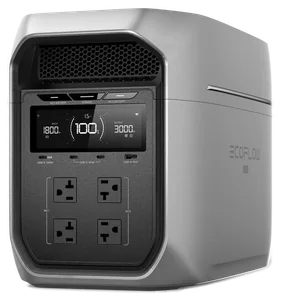
The EcoFlow DELTA 3 Max Plus is the one unit here that covers a refrigerator today and can grow into a bigger system later. EcoFlow lists 2,048 Wh from automotive-grade LFP cells, 3,000 W of continuous output and 6,000 W of surge, with X-Boost reaching 3,800 W. Capacity expands from 2 to 10 kWh with DELTA 3 Max Plus Smart Extra Batteries, each 2,048 Wh.
The backup features are why it ranks first. The auto-switch takes 10 ms, Smart Output Priority lets you choose in the app which circuits stay powered, and Storm Guard is EcoFlow’s weather-triggered backup mode. EcoFlow lists 0–80% in 43 minutes with generator charging and five ways to recharge. The warranty is three years plus two more when you register in the app.
The costs are weight and expansion. EcoFlow’s spec table lists 22.1 kg plus 0.4 kg, about 49.6 lb in all, which makes it the heaviest 2 kWh unit here and 10 lb heavier than the Jackery. An extra battery costs about as much as the base unit, so growing the system later isn’t cheap. If a fridge for a day is the whole job, the cheaper DELTA 3 Max in our Jackery vs EcoFlow comparison does most of it.
Next: No. 2, Anker SOLIX F3800 PlusTorn? Compare it with No. 2
Pick 2 of 5: No. 2 · Best whole-home
The step up for 240 V
The Anker SOLIX F3800 Plus is the only pick here with 240 V output, which is what a well pump or another 240 V load needs. Anker lists 3,840 Wh of LFP, 6,000 W of AC output at 120 V and 240 V, a built-in L14-30 outlet, and expansion with up to six 3.84 kWh batteries. Solar input reaches 3,200 W, and Anker gives it a five-year warranty.
For whole-home backup, Anker lists three ways to connect the station to your house: its Home Power Panel, which switches selected circuits, a transfer switch or an inlet box. Wiring any of them in is work for a licensed electrician. The price range here covers the listing that pairs the station with that panel, so check what a listing includes before you compare it with the others, since the station is sold in other configurations.
This is a system for a house, not a box you carry: it weighs 136.7 lb on wheels and costs more than double anything else in this guide. If a refrigerator, lights and Wi-Fi are the whole list, the DELTA 3 Max Plus above covers them for far less.
Next: No. 3, Anker SOLIX C1000 Gen 2Torn? Compare it with No. 3
Pick 3 of 5: No. 3 · Best for CPAP and short outages
Small, fast, built for nights
The Anker SOLIX C1000 Gen 2 is sized for the loads that matter most in a short outage. Anker lists 1,024 Wh of LFP, 2,000 W of continuous output with a 3,000 W peak, and a UPS switchover under 10 ms, which Anker pitches at CPAP machines and laptops. At 24.9 lb it’s the lightest unit in this guide.
Recharging is its other strength. Anker says a full charge takes 49 minutes at 1,600 W in the app’s UltraFast mode, solar input reaches 600 W, and the battery is rated to keep at least 80% capacity after 4,000 cycles. It has half the capacity of the 2 kWh picks, so a refrigerator runs roughly half a day, and its 3,000 W peak may not start a large sump pump. Anker designed it without expansion.
For a CPAP, ResMed’s support guidance is to turn the humidifier off when running on a battery. Read the watts on your machine’s power supply and divide 1,024 Wh by that number for a rough runtime before inverter losses.
Next: No. 4, Jackery Explorer 2000 v2Torn? Compare it with No. 4
Pick 4 of 5: No. 4 · Lightest 2 kWh
Light and holds its charge
The Jackery Explorer 2000 v2 is the pick if the station shares duties between the house and the car or campsite. Jackery lists 2,042 Wh of LiFePO4, 2,200 W continuous and 4,400 W of surge in a body of about 39.5 lb and under 30 dB, and it says the battery keeps about 95% of its charge after 12 months in storage.
It switches over in under 20 ms. Lights and refrigerators won’t notice that gap, but some computers do, so a desktop or NAS is better served by the 10 ms units above. It doesn’t expand, so if you may grow the system later, the DELTA 3 Max Plus is the better base.
Jackery markets a five-year warranty (three years standard plus a two-year extension; read its registration terms), and our Jackery vs EcoFlow page sets it against EcoFlow’s DELTA 3 Max in detail. If your priority is a station you can carry to the car as easily as to the hallway, this is the lightest 2 kWh option in the guide, and the difference shows when you lift it. For trips rather than outages, our best portable power stations for camping compares lighter units.
Next: No. 5, BLUETTI Elite 200 V2Torn? Compare it with No. 5
Pick 5 of 5: No. 5 · Best for solar under $1,000
Built around solar recharging
The BLUETTI Elite 200 V2 is the solar pick under $1,000. Bluetti lists 2,080 Wh of LFP, 2,600 W of output and a solar input rated up to 1,000 W (12–60 V, 20 A), so panels can refill it quickly during a multi-day outage. Only the far pricier F3800 Plus takes more. AC input tops out at 1,800 W, and Bluetti’s page lists a five-year warranty.
Switchover and weight are the trade-offs. Bluetti lists a UPS switching time of 15 ms or less, slower than the 10 ms units above, so it isn’t our choice for a computer that mustn’t reboot. It weighs 44.5 lb, per Bluetti, 5 lb more than the Jackery.
Bluetti’s page doesn’t list an expansion battery for it. At about the Jackery’s price, it earns its place only if you plan to recharge from panels during a long outage.
Correction, 18 November 2026We updated three picks from the makers’ spec pages and Amazon. The Anker SOLIX F3800 Plus range is now ~$4,000–4,200, up from ~$3,000–3,200, because the Amazon listing we found is the bundle with Anker’s Home Power Panel, at $4,099.99. The EcoFlow DELTA 3 Max Plus now carries EcoFlow’s listed weight, about 49.6 lb, where we said we couldn’t confirm one. The BLUETTI Elite 200 V2 now carries Bluetti’s figures: 2,080 Wh (we had 2,073.6 Wh), 44.5 lb (we had an unconfirmed 53 lb from retailers) and a switchover of 15 ms or less (we had none). No pick or ranking changed. Logged on the corrections page.Every correction we’ve made
Pick any two of the five. Rows that match say so once; the rest sit side by side, as each review states them.
Price range
~$1,100–1,200
~$4,000–4,200
Capacity
2,048 Wh (to 10 kWh)
3,840 Wh (six add-on batteries)
Output (continuous / surge)
3,000 W / 6,000 W
6,000 W, 120/240 V
Switchover
10 ms
20 ms (UPS outlets)
6 common questions, answered.
Add up the watts of everything you want running at once to get the output you need, then multiply the average watts by the hours you want for watt-hours. A refrigerator is the usual anchor: its yearly kWh from the EnergyGuide label (an FTC requirement) divided by 8,760 gives average watts. A 600 kWh-a-year fridge averages about 68 W, so roughly 2,000 Wh covers about a day. Plan on less than the label, since the inverter uses some of the energy.
Yes. Even the smallest unit here is rated 2,000 W continuous, far above a refrigerator’s average draw. The 2 kWh picks run a typical fridge for roughly a day and the C1000 Gen 2 for about half that, though your runtime depends on your fridge. The compressor’s start-up surge is why continuous and surge ratings both matter.
Divide the station’s watt-hours by your machine’s watts, then take off 10–20% for inverter losses. Read the watts on your machine’s power supply rather than trusting a generic figure, and switch the humidifier off first: ResMed’s support guidance is to turn it off when running on a battery.
It depends on the surge rating. A sump pump’s motor draws several times its running watts for an instant at start-up; the pump’s label lists running and starting amps, and multiplying by 120 V gives watts. The C1000 Gen 2 lists a 3,000 W peak, the Jackery 4,400 W, and the DELTA 3 Max Plus 6,000 W. Runtime depends on how often your pump cycles.
For carbon monoxide, yes: a battery station burns no fuel, so it makes none. CPSC says an average of nearly 100 people die each year in the US from CO poisoning from portable generators, and it says to run generators outside, at least 20 feet from the house, never in a home, garage, basement, crawlspace or shed (CPSC release, 19 Feb 2026). Batteries carry their own fire risk: CPSC has recalled the EcoFlow DELTA Max 2000, the Goal Zero YETI 3000X and the HALO 1000, so buy current models, register the product and follow the maker’s ventilation and temperature limits.
Some are designed to. Anker’s Home Power Panel pairs with the F3800 Plus for switching selected circuits, and EcoFlow lists Smart Output Priority on the DELTA 3 Max Plus for choosing which circuits stay powered. Wiring a station into your electrical panel is work for a licensed electrician.
We compared each maker’s published capacity, continuous and surge output, switchover time, expansion options and warranty, and searched CPSC’s recall records for the brands. We didn’t run any of these stations through an outage ourselves, and we name the source beside every figure. Updated November 2026. Prices are always moving, so every button and link pulls the live listing.
How we rank
Published specifications, verified owner reviews, and independent safety or standards data where it applies — weighted the same for every pick, never sponsored placement.