No. 1: EcoFlow DELTA 3 Max Plus
The Best Power Stations for Home Backup
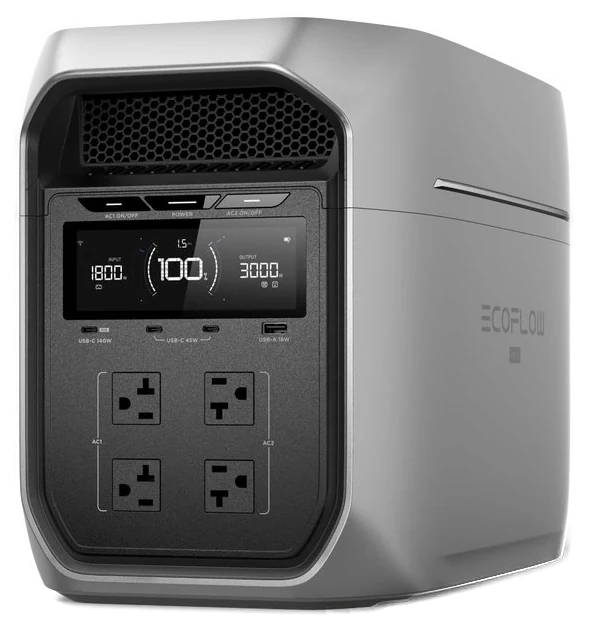
For camping, weight and how you'll recharge decide the pick more than raw capacity. Five stations from 6 lb to about 25 lb, compared on weight, solar input and what each runs. We compared the makers' spec pages and CPSC records, not nights in a tent.
No. 1 · Our pick · For most people
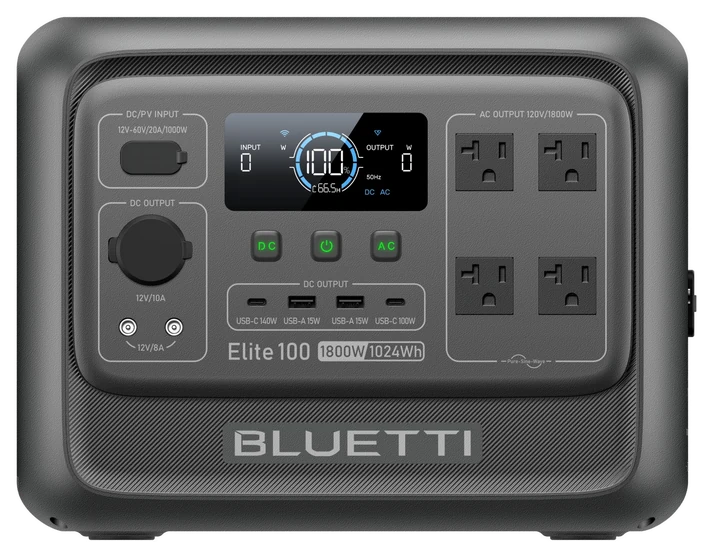
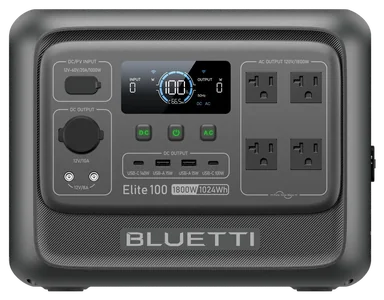
The BLUETTI Elite 100 V2, ~$480–530, for 1 kWh, 1,800 W and up to 1,000 W of solar input at about 25 lb.
~$480–530Estimated price
 No. 1 · Best overallBLUETTI Elite 100 V2~$480–530View on Amazon
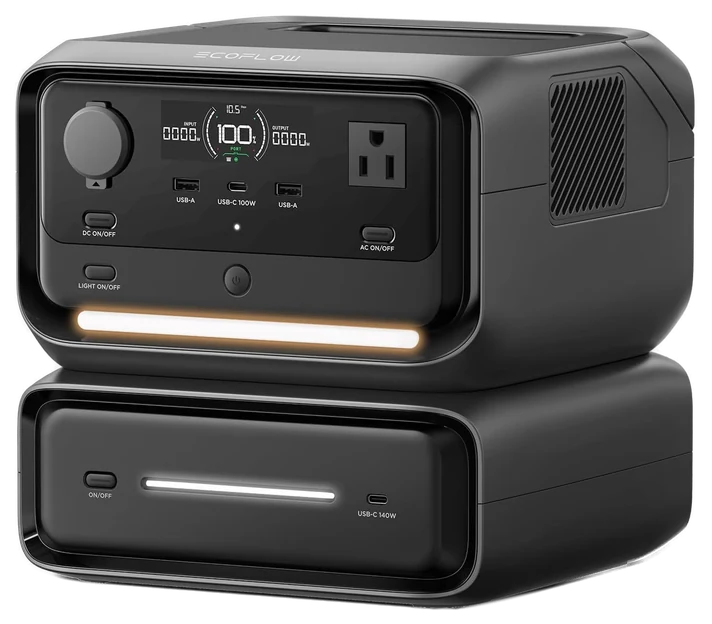 No. 2 · Lightest with AC outletsEcoFlow RIVER 3 Max~$380–420View on Amazon
 No. 3 · Best for the tentEcoFlow TRAIL 300 DC~$140–170View on Amazon
 No. 4 · Lightest 1 kWhJackery Explorer 1000 v2~$530–600View on Amazon
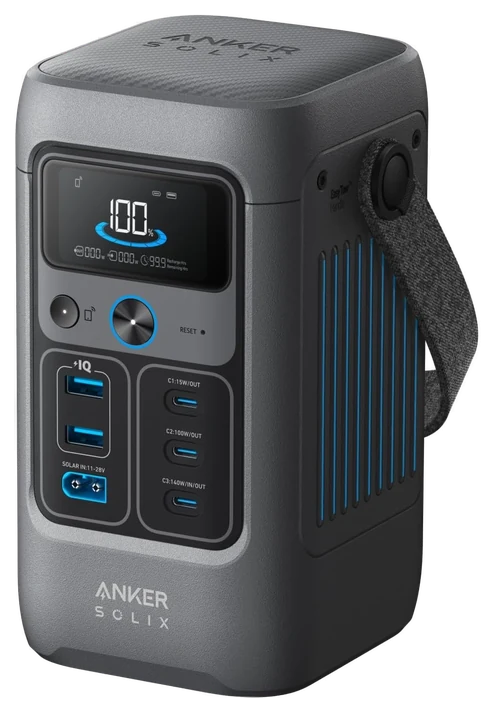 No. 5 · Best with a built-in lightAnker SOLIX C300 DC~$150–170View on Amazon
| Differences | No. 1BLUETTI Elite 100 V2 | No. 2EcoFlow RIVER 3 Max | No. 3EcoFlow TRAIL 300 DC | No. 4Jackery Explorer 1000 v2 | No. 5Anker SOLIX C300 DC |
|---|---|---|---|---|---|
| Price rangeon one $140–600 scale | ~$480–530 | ~$380–420 | ~$140–170 | ~$530–600 | ~$150–170 |
| Capacity | 1,024 Wh | 572 Wh | 288 Wh | 1,070 Wh (Jackery's US spec table) | 288 Wh |
| Weight | About 25 lb | About 18.5 lb (EcoFlow's Amazon listing) | 5.7 lb | 23.8 lb | About 6.2 lb |
| AC outlets | Yes | Yes | No (DC only) | Yes | No (DC only) |
| Solar input (max) | 1,000 W | Not on EcoFlow's US pages | 110 W | Up to 400 W DC input | 100 W |
From each pick’s review below. We compared maker specs and listings, not readings we took.
We compared each maker’s published capacity, weight, output, solar and car-charging figures, and searched CPSC’s recall records for the brands. We didn’t run any of these stations at a campsite ourselves, and we name the source beside every figure. How we chose How we verify Corrections logged publicly
Pick 1 of 5: No. 1 · Best overall
A kilowatt-hour with room for big panels
The BLUETTI Elite 100 V2 is the pick for car camping with a CPAP, a 12 V fridge or a kettle. Bluetti’s product page lists 1,024 Wh of LiFePO4, 1,800 W of AC output, a UPS switchover of 10 ms or less and over 4,000 cycles to 80% capacity. Bluetti rates it at about 25 lb, and it’s the heaviest pick here.
Its edge is recharging. Bluetti lists solar input up to 1,000 W (12–60 V, 20 A) and a 70-minute full charge on solar, and says it reaches 80% in 45 minutes on AC with its TurboBoost mode. Bluetti also advertises car charging as six times faster than a standard car charger but doesn’t say what a 12 V socket alone delivers, so plan to arrive charged.
On 17 Nov 2026 Amazon listed it at $498.99, and Bluetti’s own page showed it out of stock. Check the button for today’s state.
Pick 2 of 5: No. 2 · Lightest with AC outlets
AC outlets without the heft
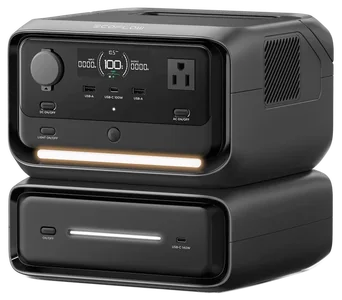
The EcoFlow RIVER 3 Max is the pick if you want a wall outlet for a fan, lights, a drone charger or a CPAP on a short trip, and you carry the station from the car. EcoFlow’s US RIVER 3 Series page lists 572 Wh of LiFePO4, 600 W of output with a 1,200 W X-Boost mode and a UPS switchover under 10 ms, and describes the Max as a RIVER 3 Plus with a 286 Wh extra battery clipped on. That battery unclips and works on its own as a 140 W USB-C pack, per EcoFlow, which is handy in the tent. The same page lists AC, solar, car and generator charging, without a car charging time for the Max.
EcoFlow gives the weight in two parts: 10.4 lb for the RIVER 3 Plus and 7.7 lb for the EB300 extra battery, about 18.1 lb together. The Amazon listing sold by EcoFlow’s own store gives 8.4 kg, about 18.5 lb, for the pair. Amazon’s title says 990 W; we use the 600 W on EcoFlow’s US page. Amazon listed it at $399.00 on 17 Nov 2026, and EcoFlow’s US store wasn’t selling the Max that day.
At 572 Wh it holds about half what the kilowatt-hour units do. EcoFlow’s runtime table gives a 60 W car fridge about 7.2 hours on the Max, so plan on a night, not a weekend. Divide 572 by your device’s watts, then expect less.
Next: No. 3, EcoFlow TRAIL 300 DCTorn? Compare it with No. 3
Pick 3 of 5: No. 3 · Best for the tent
A DC pack for the tent
The EcoFlow TRAIL 300 DC is the pack for a walk-in site where every pound counts. EcoFlow’s US page lists 288 Wh, 300 W of total DC output (140 W at most from any one port; the 12 V car outlet tops out at 120 W) and two USB-C ports rated 140 W in and out. It weighs 5.69 lb. That covers phones, headlamps, a fan and a USB-C laptop.
It has no AC outlet, so anything with a wall plug won’t run on it. EcoFlow lists recharging by USB-C, car or solar, with solar and car input up to 110 W, so a refill from a car socket or a single panel is slow. Make sure it’s the TRAIL 300 DC, not the TRAIL Plus 300 DC, which is a different model.
Amazon listed it at $149.00 on 17 Nov 2026, close to EcoFlow’s $159 price. It’s the cheapest pick here by a wide margin.
Next: No. 4, Jackery Explorer 1000 v2Torn? Compare it with No. 4
Pick 4 of 5: No. 4 · Lightest 1 kWh
Light for a kilowatt-hour
The Jackery Explorer 1000 v2 is the lightest of the kilowatt-hour units here. Jackery’s US spec table lists 1,070 Wh (30.4 Ah at 35.2 V) of LiFePO4, though its headline and Amazon’s title say 1,024 Wh, so call it about 1 kWh. It lists 1,500 W of AC output with a 3,000 W surge peak, a 12 V car port, three AC outlets and a weight of around 23.8 lb.
Charging times from Jackery’s table: about 1.6 hours on AC, 7.5 hours with Jackery’s 200 W SolarSaga panel and 12 hours from a 12 V car adapter. DC input is up to 400 W, a lower ceiling than the Elite 100 V2’s 1,000 W. Jackery lists a 3+2 year warranty and 4,000 cycles to 70% capacity.
Amazon listed it at $559.00 on 17 Nov 2026, while Jackery’s own page showed it sold out. It costs about $60 more than the Elite 100 V2 for less output and less solar input, so its case is the 1.2 lb it saves.
Pick 5 of 5: No. 5 · Best with a built-in light
A power bank that doubles as a lantern
The Anker SOLIX C300 DC is a DC pack with a lantern built in. Anker’s page lists 288 Wh, 300 W of output, two 140 W two-way USB-C ports and a 12 W USB-A port, and Anker’s user guide describes a retractable light. Anker’s support page gives about 6.2 lb. Like the TRAIL 300 DC it has no AC outlet.
Anker lists recharging by USB-C, solar or car. Solar input tops out at 100 W (11–28 V, XT60), and Anker says the dual USB-C ports take it to about 80% in an hour. Anker’s own page showed it sold out on 17 Nov 2026.
Check which listing you’re buying. Amazon showed two listings with the same Anker part number (A1726), $159.99 and $269.99, on 17 Nov 2026, and we price the pick on the lower one. At the higher price it costs about $120 more than the TRAIL 300 DC for the light.
Correction, 18 November 2026We said EcoFlow gave no US weight for the RIVER 3 Max. EcoFlow gives it in two parts, 10.4 lb for the RIVER 3 Plus and 7.7 lb for the EB300 extra battery, and the pick now says so. We still couldn’t confirm a solar input figure for the Max from EcoFlow. No pick, price or ranking changed. Logged on the corrections page.Every correction we’ve made
Pick any two of the five. Rows that match say so once; the rest sit side by side, as each review states them.
Price range
~$480–530
~$380–420
Capacity
1,024 Wh
572 Wh
Weight
About 25 lb
About 18.5 lb (EcoFlow's Amazon listing)
AC outlets
YesSame on both
Solar input (max)
1,000 W
Not on EcoFlow's US pages
6 common questions, answered.
Add the watts of what you’ll run, multiply by hours, and leave headroom. Phones, lights and a fan fit a 288 Wh DC pack; a CPAP or a 12 V fridge for a weekend points to about 1 kWh. Plan on less than the label, since the inverter uses some of the energy.
Yes, but slowly. Jackery lists about 12 hours from a 12 V socket for the Explorer 1000 v2, and EcoFlow caps the TRAIL 300 DC’s solar and car input at 110 W. Bluetti, Anker and EcoFlow (for the RIVER 3 series) list car charging without a 12 V time for these picks. Plan to arrive charged.
A 1 kWh unit should. Divide the watt-hours by your machine’s watts, and switch the humidifier off, as ResMed’s support guidance advises on battery. Read the watts on the machine’s power supply. The DC-only picks have no AC outlet, so they need the CPAP maker’s DC cable.
Bluetti lists up to 1,000 W for the Elite 100 V2, Jackery up to 400 W of DC input for the Explorer 1000 v2, EcoFlow 110 W for the TRAIL 300 DC and Anker 100 W for the C300 DC. We couldn’t confirm the RIVER 3 Max’s figure on a US page. Match the panel’s voltage to the station’s window.
A battery station burns no fuel, so it makes no carbon monoxide, which is the risk CPSC warns about with portable gas generators (run them outside, 20 feet from the house). Batteries carry their own fire risk: CPSC has recalled the EcoFlow DELTA Max 2000 and the Goal Zero YETI 3000X. None of our picks is named in a CPSC recall in the records we searched on 17 Nov 2026. Follow each maker’s temperature limits and register the product.
No, not these. FAA PackSafe limits spare lithium-ion batteries to 100 Wh each, or up to two of 101–160 Wh with airline approval, and spares go in carry-on. Every pick here is 288 Wh or more, above both limits.
We compared each maker’s published capacity, weight, output, solar and car-charging figures, and searched CPSC’s recall records for the brands. We didn’t run any of these stations at a campsite ourselves, and we name the source beside every figure. Where a maker page wouldn’t load or disagreed with a retailer listing, we say so instead of guessing. Prices are estimated ranges read on 17 Nov 2026. Updated November 2026. Prices are always moving, so every button and link pulls the live listing.
How we rank
Published specifications, verified owner reviews, and independent safety or standards data where it applies — weighted the same for every pick, never sponsored placement.