No. 1: EcoFlow DELTA 3 Max Plus
The Best Power Stations for Home Backup
Our verdict
Buy the EcoFlow DELTA 3 Max. For home backup it delivers more: 2,400 W against 2,200 W, a 10 ms switchover against Jackery’s under 20 ms, and a lower price range.
Best for home backup
~$850–950Estimated price
View on AmazonLightest 2 kWh
~$900–1,000Estimated price
View on AmazonOutput (continuous / surge)
2,400 W / 4,800 W
2,200 W / 4,400 W
Switchover
10 ms
Under 20 ms
Weight
44.7 lb
39.5 lb
The price gap: The two ranges overlap.
Best for home backup
Lightest 2 kWh
Product 1 of 2: Best for home backup
Faster switchover, more output
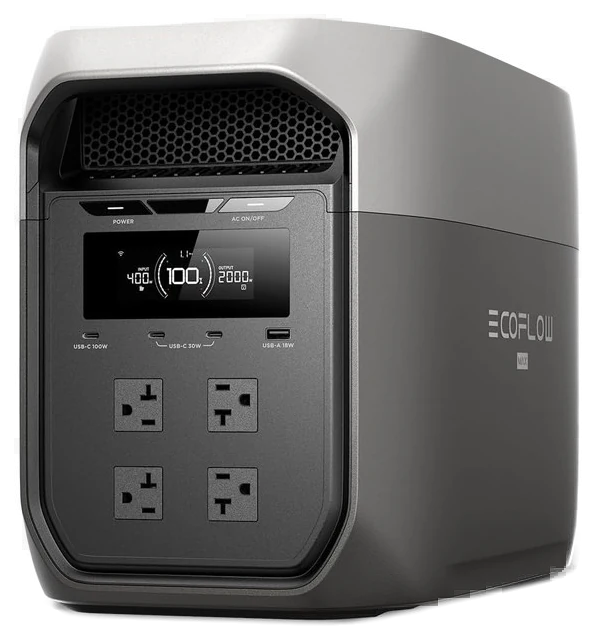
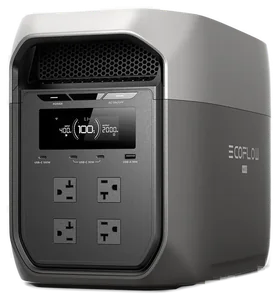
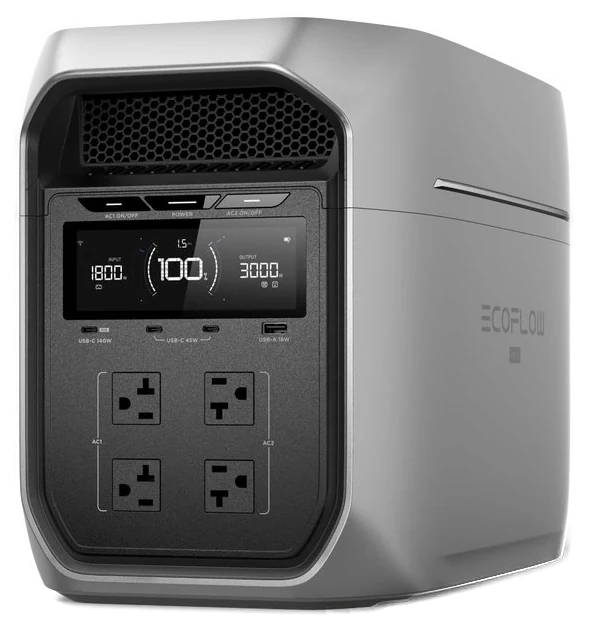
The EcoFlow DELTA 3 Max is the better pick when the station lives at home and exists for outages. EcoFlow lists 2,048 Wh from automotive-grade LFP cells, 2,400 W of continuous output and 4,800 W of surge, with X-Boost running heavier loads up to 3,400 W. Its auto-switch takes 10 ms, the figure that matters for a desktop, a NAS or a router that shouldn’t reboot when the grid drops.
Charging is quick: EcoFlow says 0–80% in 68 minutes from a wall outlet or a generator, and the app adds Storm Guard, which EcoFlow says activates backup power ahead of extreme weather. The trade-offs are weight and paperwork. At 44.7 lb it’s about 5 lb heavier than the Jackery, and the full five-year warranty is three years standard plus two more when you register in the EcoFlow app. It doesn’t expand; that’s the DELTA 3 Max Plus’s job, covered in our home-backup roundup.
EcoFlow recalled about 25,030 older DELTA Max 2000 stations (model EFD310) on 9 Oct 2025 for overheating and fire risk, with a free firmware update as the remedy, according to CPSC. The DELTA 3 Max is a different, later model and isn’t part of that recall.
Product 2 of 2: Lightest 2 kWh
Light, and shelf-ready
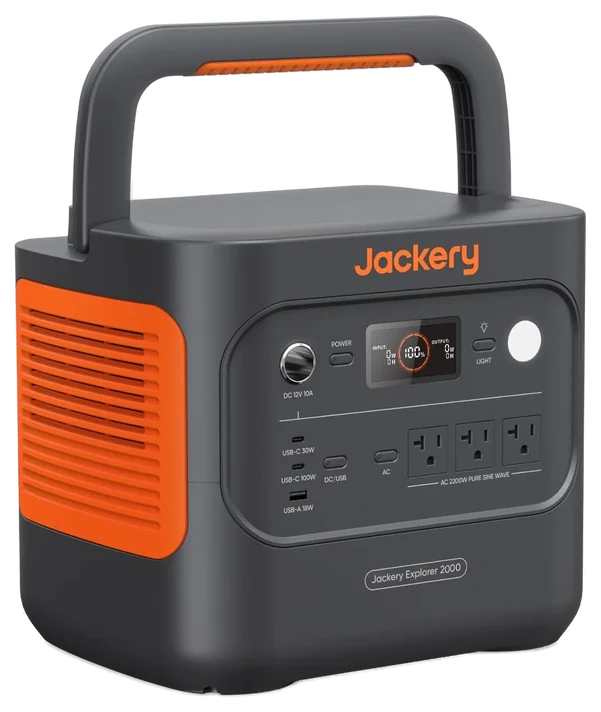
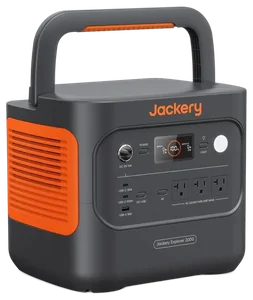
The Jackery Explorer 2000 v2 is the one to buy if the station will move. Jackery lists 2,042 Wh of LiFePO4 at about 39.5 lb (17.9 kg), around 5 lb lighter than EcoFlow’s DELTA 3 Max, and under 30 dB. It puts out 2,200 W continuous with a 4,400 W surge, and Jackery lists a refrigerator among the loads it runs.
Two Jackery claims suit a station that sits in a closet. It says the battery keeps about 95% of its charge after 12 months in storage, and its AC recharge, which it calls Emergency Super Charge, takes about 1.7 hours for a full charge. Switchover is under 20 ms, slower than EcoFlow’s 10 ms. Lights and refrigerators won’t notice the gap, but some desktop power supplies ride through it and some don’t, so a PC or NAS that mustn’t reboot is the case for the other model.
Jackery markets a five-year warranty, three years standard plus a two-year extension, so read its registration and where-you-bought-it terms as you would EcoFlow’s. It calls the unit safe for indoor use, which is its claim, not a certification. A search of CPSC’s recall records for 2023 through 2026 found no Jackery recall.
6 common questions, answered.
EcoFlow’s DELTA 3 Max for home backup, on output, switchover and price; Jackery’s Explorer 2000 v2 for portability and shelf storage. Both sets of figures come from the makers’ own product pages. Neither adds batteries later, so if you might expand, see the DELTA 3 Max Plus in our best power stations for home backup.
Both makers list refrigerators among the loads they support, and a 2 kWh station runs one for roughly a day. The method: take the yearly kWh from the yellow EnergyGuide label (an FTC requirement), divide by 8,760 for average watts, then divide the station’s watt-hours by that. A fridge rated 600 kWh a year averages about 68 W, so around 2,000 Wh lasts roughly a day after inverter losses. Your result depends on your fridge.
For carbon monoxide, yes: neither unit burns fuel, so neither makes any. CPSC says nearly 100 people die each year in the US from CO poisoning from portable generators, and it says never to run a generator inside a home or garage (CPSC release, 19 Feb 2026). Jackery calls the Explorer 2000 v2 safe for indoor use, which is the maker’s claim, so follow both makers’ ventilation and temperature limits.
EcoFlow has, for a different model. On 9 Oct 2025 it recalled about 25,030 DELTA Max 2000 stations (model EFD310) for overheating and fire risk, with six fires and over $850,000 in property damage reported; the remedy is a free firmware update (CPSC). The DELTA 3 Max isn’t part of it. CPSC’s records for 2023 through 2026 show no Jackery recall.
It’s the time from losing grid power to the battery taking over: 10 ms for EcoFlow and under 20 ms for Jackery, per the makers. Lights and refrigerators don’t notice either gap. Some computers reboot on longer gaps, so a desktop or NAS is the case for the faster unit.
Not to these two. EcoFlow’s DELTA 3 Max Plus expands from 2 to 10 kWh, and Jackery’s expandable HomePower 2000 Plus v2 was listed as sold out, with pre-orders, on jackery.com when we checked in November. Our home-backup guide covers the Max Plus.
We didn’t run either station through an outage ourselves.
We didn’t run either station through an outage ourselves. We compared Jackery’s and EcoFlow’s own spec sheets, their warranty terms and CPSC’s recall records, and we name the source beside every figure. Prices are estimated ranges, not live listings. Updated November 2026. Prices are always moving, so every button and link pulls the live listing.
How we rank
Published specifications, verified owner reviews, and independent safety or standards data where it applies — weighted the same for every pick, never sponsored placement.