Best overall
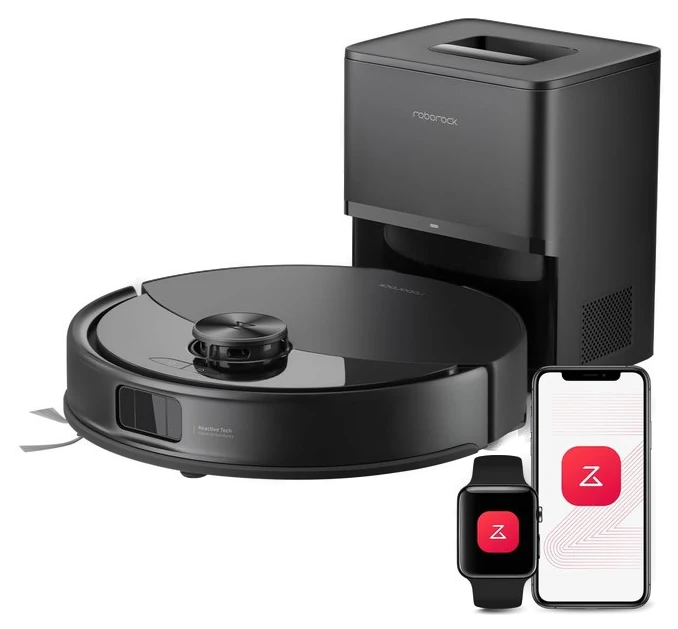
Roborock Q-Series (Q10 S5+)
~$280–300
Get it if you want mapped cleaning, real pet-hair suction and a bin you rarely touch.
- Best for
- Mapped cleaning, pet hair, hands-off emptying
- Navigation
- LiDAR mapping, no-go zones
- Suction
- 10,000Pa
The Roborock costs $130 to $150 more than the eufy, and that gap buys LiDAR mapping, roughly five times the suction and a self-emptying dock. We compared both to find out whether a mapped, mid-range robot vacuum is worth it over an honest budget bump-and-clean model.
Our verdict
Get the Roborock Q10 S5+ if pet hair and floor coverage are the problem; get the eufy 11S MAX if you want the simplest machine to own.
Best overall
~$280–300
Get it if you want mapped cleaning, real pet-hair suction and a bin you rarely touch.
Simplest to own
~$150–160 Lowest price
Get it if a smaller home or a second floor needs honest cleaning without complexity.
The price gap~$130–140 more for the Roborock Q-Series (Q10 S5+)
Each bar is an estimated price range, on one scale from ~$150 to ~$300.
We compared Vacuum Wars’ lab-tested suction, obstacle-avoidance and pet-hair figures for the Roborock against Modern Castle’s and HouseholdMe’s long-term eufy 11S MAX testing, then checked both against the price ranges we publish. We haven’t run either vacuum ourselves; the suction and obstacle-avoidance figures come from Vacuum Wars’ lab testing and Modern Castle’s long-term eufy runs, both linked where we cite them. Prices are always moving, so every button and link pulls the live listing.
How we rank
Published specifications, verified owner reviews, and independent safety or standards data where it applies — weighted the same for every pick, never sponsored placement.
Best overall~$280–300
The mapped, self-emptying step up, and it earns the extra cost
Get it if you want mapped cleaning, real pet-hair suction and a bin you rarely touch.
Skip it if the floor is small and the budget is tight. Go eufy.
Vacuum Wars put the Roborock Q-Series (Q10 S5+) through its full suction rig and clocked it among the four strongest of more than 150 robots tested, with 10,000Pa translating to a 96% pet-hair pickup rate against a 75.4% category average and 96% recovery of embedded sand from carpet. PreciSense LiDAR maps the home in clean parallel rows rather than eufy’s bump-and-wander pattern, and no-go zones hold around a food bowl or a cable nest once you draw them in the app.
The self-empty dock is the other half of the value case: a 2.7-liter bag that Vacuum Wars found holds up to seven weeks of debris, close to the marketed claim, which shrinks your own involvement to a monthly bag swap. The 5200mAh battery runs up to 250 minutes per charge, enough for roughly 1,240 square feet before it needs to return and recharge.
The one honest miss is obstacle handling: Vacuum Wars scored its structured-light avoidance at 6 out of 24, well under the 16.6 average, because it lacks a true 3D depth camera and can still snag a phone charger or a stray sock. At $280–300 on Amazon against a $549.99 list, it’s the cheapest LiDAR robot with a self-empty dock that Vacuum Wars has tested, and the point where the value math on a real robot vacuum peaks.
Strengths
Tradeoffs
Simplest to own~$150–160
No map, no app, no subscription anxiety, a slim robot that cleans
Get it if a smaller home or a second floor needs honest cleaning without complexity.
Skip it if pet hair and mapped rooms matter more than price. Go Roborock.
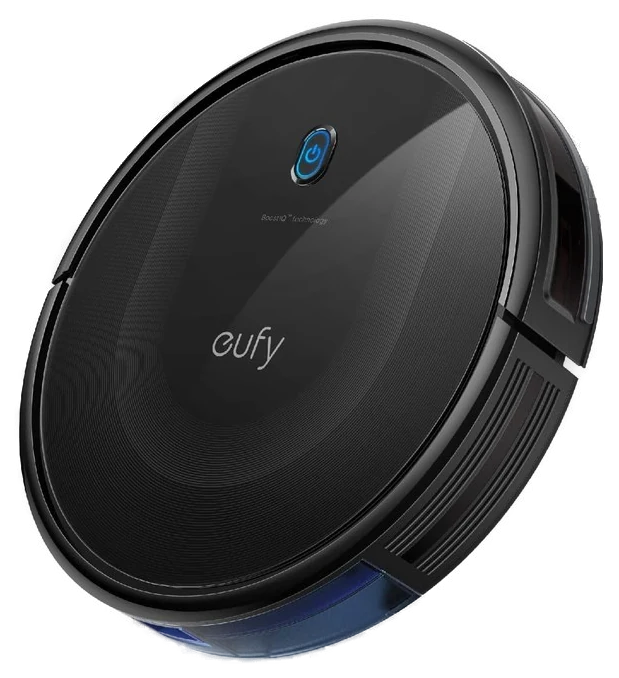
The eufy 11S MAX skips the entire premium feature set on purpose. Modern Castle’s review calls out its 2,000Pa BoostIQ suction, which automatically ramps up when it senses carpet, and its 2.85-inch slim body, which slides under furniture that taller LiDAR robots bounce off. There’s no map, no required app account and no subscription to manage: press the button or use the included remote, and it cleans.
HouseholdMe’s long-term testing flags the 11S MAX as remarkably free of the early-failure stories that dog cheap robots, and it’s quiet at 55dB, close to normal conversation, which matters if it’s running while you’re on a call. The tradeoff for the low price is a 5-to-6-hour recharge and a runtime of about 100 minutes that drops closer to 60 in BoostIQ mode on thicker carpet.
Navigation is random: no rows, no saved map, no no-go zones, and it will occasionally need rescuing from a phone charger. At $150–160 on Amazon against a $279.99 list, it’s the budget answer, and a popular second unit for an upstairs floor a LiDAR robot never gets scheduled to visit. For an apartment, a dorm, or a first robot vacuum before committing to a mapped system, it does the actual job without asking much in return.
Strengths
Tradeoffs
6 common questions, answered.
The Roborock, by a wide margin. Its 10,000Pa suction is roughly five times the eufy’s 2,000Pa, and Vacuum Wars measured it pulling 96% of embedded pet hair against a 75.4% category average. The eufy’s BoostIQ mode compensates somewhat on carpet, but it isn’t in the same class.
No, and that’s the point. It runs from the on-unit button or the included remote with no app account, no map and no login required. The Roborock needs its app for scheduling, no-go zones and dock management, so it’s the more connected of the two by design.
For most buyers, yes. Vacuum Wars found the 2.7-liter bag holds close to seven weeks of debris, which turns weekly bin emptying into a monthly chore. The eufy has no self-empty option at all, so that convenience is one of the clearest reasons to pay the extra $130 to $150.
The Roborock. Its 96% pickup rate in Vacuum Wars’ testing comfortably beats the category average, and the self-empty dock matters more with pets, since hair-filled bins fill fast and daily manual emptying is exactly the chore a robot is supposed to remove.
Neither is a strong avoider. The Roborock’s structured-light system scored just 6 out of 24 in Vacuum Wars’ testing, well under the 16.6 average, and the eufy has no obstacle intelligence at all beyond bump sensors. Cords, socks and pet messes are a real risk with either robot; clear the floor before a run.
Both discount heavily and often. The Roborock has hit its $280 low against a $549.99 list multiple times in 2026, and the eufy has dropped as low as $139.99 against its $279.99 list. Neither has settled into a predictable calendar, so watch a price tracker rather than waiting for a specific sale event.
 vs
vs Head-to-headRoborock vs. Roomba: Q-Series or Combo J5+, Which Is Worth the Money?
 vs
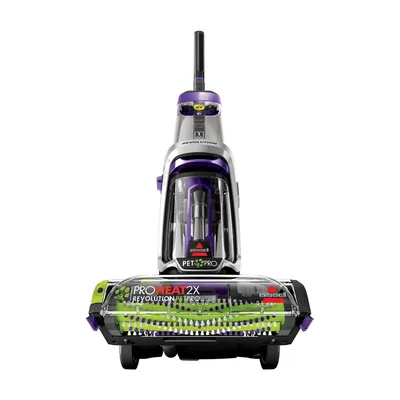
vs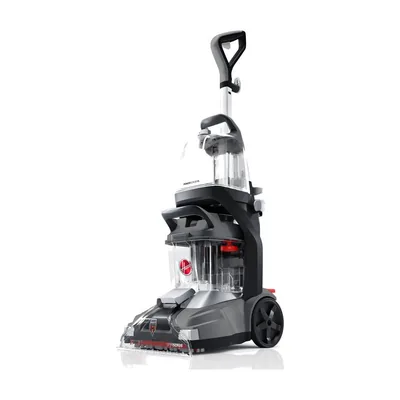 Head-to-headBissell ProHeat 2X vs. Hoover PowerScrub XL Pet: Which Carpet Cleaner Lifts Pet Stains?
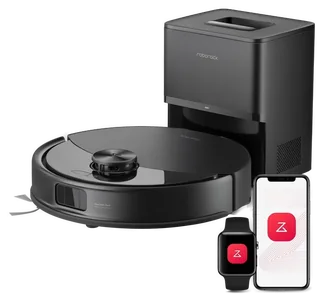 GuideThe Best Robot Vacuums of 2026: $150 Workhorses to Self-emptying Flagships
 GuideThe Best Home Organization Systems: Still Tidy in Month Six