The Best Golf Gear of 2026:Five Buys That Lower Scores (Before You Blame the Clubs)
New irons are the most expensive way to improve at golf and rarely the fastest. We compared launch-monitor data, USGA-conforming device rules, and long-term owner reports to find the gear that actually moves your handicap.
By the BYB Editorial Team
Published July 29, 2026 · Prices checked OctoberOct 5, 2026
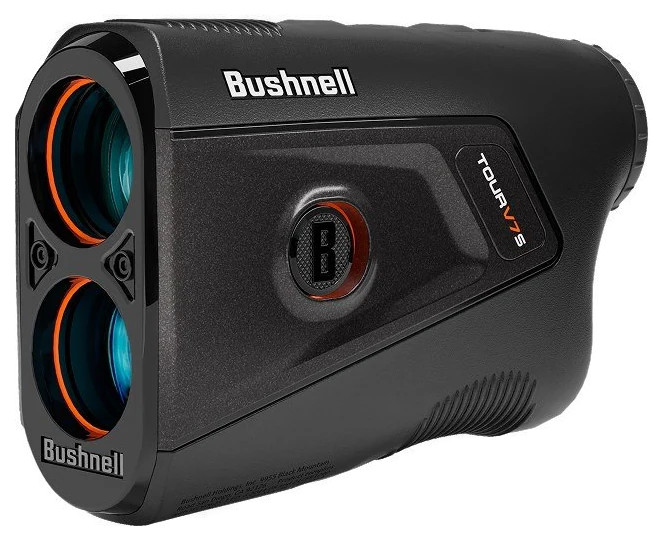
Bushnell Tour V7 Shift$400The Bushnell Tour V7 Shift, about $400, with the outgoing V5 still floating around at $270–320 if you’d rather have last year’s laser than none.Check price
Spending less
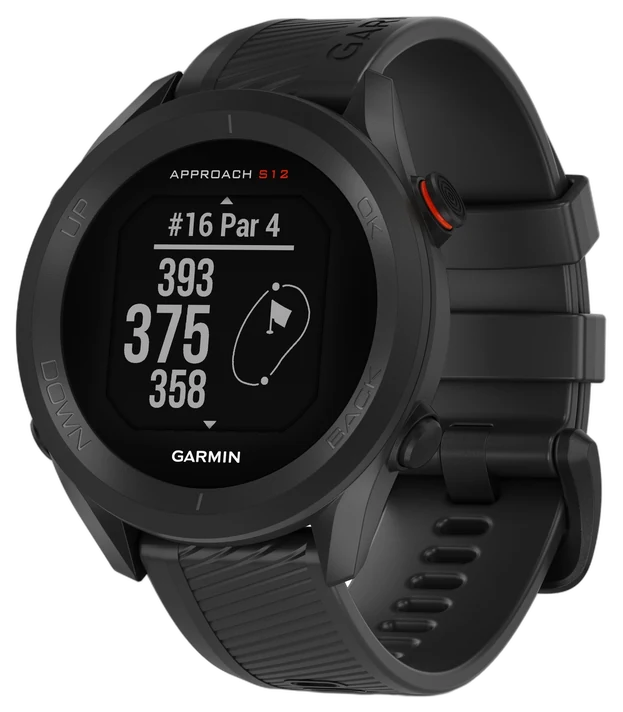
Garmin Approach S12$150–200The Garmin Approach S12 at $150–200 does the same distance job on a wrist.Check price
Skip
The $600 driver — knowing your number and holing out shows up on the card; a few uncontrolled yards don’t.
We compiled independent launch-monitor and rangefinder accuracy testing, USGA conformity rules for distance-measuring devices, and long-term owner reliability reports across full seasons of play.How we chose·How we verify·Corrections logged publicly
New irons are the most expensive way to improve at golf and rarely the fastest. We compared launch-monitor data, USGA-conforming device rules, and long-term owner reports to find the gear that actually moves your handicap.
How we choseWhat we compared, and how we rank
We compiled independent launch-monitor and rangefinder accuracy testing, USGA conformity rules for distance-measuring devices, and long-term owner reliability reports across full seasons of play. Prices are always moving, so every button and link pulls the live listing.
How we rank
Published specifications, verified owner reviews, and independent safety or standards data where it applies — weighted the same for every pick, never sponsored placement.
Amateur golfers miss greens far more often from choosing the wrong club than from swinging it badly, and the fix is information. The Bushnell Tour V7 Shift is the current top of Bushnell’s laser line, and its JOLT vibration confirms you’ve locked the flag rather than the tree behind it, the single feature that separates a trustworthy reading from a guess. Bushnell rates it to a yard, out to 1,300, with 500-plus yards of flag lock.
The Shift in the name is a physical switch on the side of the body, and it is the reason to buy this one over a cheaper laser. Slope on gives you elevation-compensated numbers for practice rounds; slope off makes it a USGA-conforming device that is legal for tournament play. Golf Monthly’s tester noted the switch sits where a playing partner can see its position, which is exactly what you want when someone asks. Check your competition’s rules, but one unit now covers both jobs.
The other change is the display: a dual-color OLED that puts the actual yardage and the slope-adjusted yardage in different colors, so you are not squinting at two numbers in the same grey. Plugged In Golf called it Bushnell’s fastest rangefinder yet, with the reading appearing the instant you release the power button, and accuracy outstanding. The BITE magnet still clamps it to a cart bar, and it runs on a single CR-2.
If you want the older unit, the Tour V5 is still out there at $270–320. It is off Bushnell’s lineup page and stock is fading, so treat it as a run-out bargain rather than a current product.
Strengths
Slope switches off for tournament-legal play
Locks the flag with vibration and a visual ring
About one-yard accuracy out to 1,300 yards
Dual-color display separates the two numbers
Tradeoffs
Most expensive pick here, and no real discount
Slope must be off in competition — check before you tee
Lasers need a steady hand
Pick 2 of 5: No. 2Best balls~$45–55/dz
2
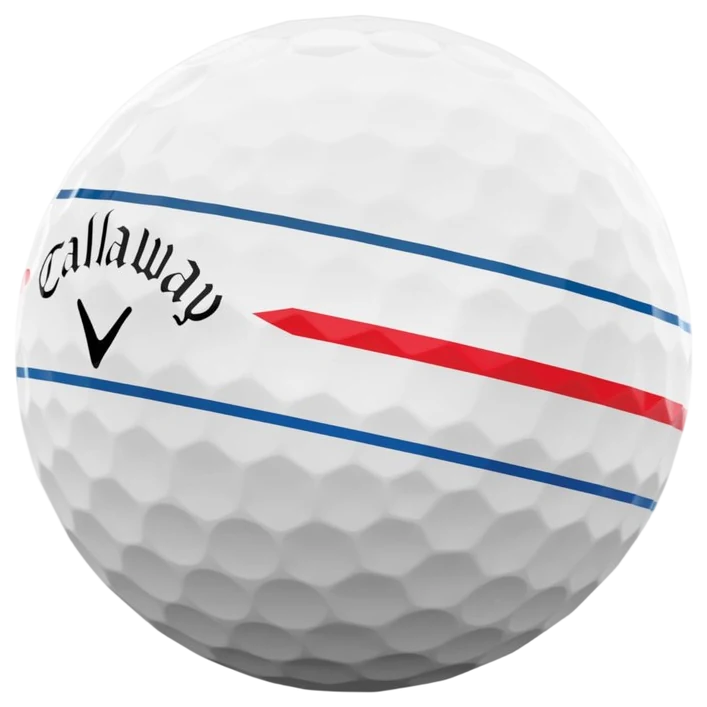
Callaway Chrome Soft Golf Balls
Budget pickBest balls
The one piece of equipment you use on every single shot
Get it if you keep most balls in play and want short-game control worth $45–55 a dozen.
Skip it if you’re losing several a round, play cheaper ones first.
The ball is the only equipment involved in every stroke you take, which makes it the highest-leverage thing in the bag, and Callaway Chrome Soft is the tour-caliber option that doesn’t price like the category leader. The urethane cover is what generates real greenside spin; two-piece distance balls physically cannot do it. MyGolfSpy’s independent robot testing consistently ranks Chrome Soft among the higher-spinning tour balls on iron shots, the mechanism behind the greenside control described here.
Chrome Soft has a notably soft feel off the putter and wedges, which matters most on putts and short pitches where feedback drives touch. Mid-handicappers tend to notice the difference around the green long before they notice anything off the tee.
Honest caveat: if you lose more than a couple of balls per round, tour-priced balls are a tax on your slice rather than an investment, play the cheaper surlyn models until the ball stays in play. At $45–55 a dozen on Amazon, it’s the cheapest genuine performance upgrade in golf, once you can keep them.
Strengths
Urethane cover generates real greenside spin
Among the softest tour-ball feels
Cheaper than the category leader
Improves every shot you hit
Tradeoffs
Wasted money if you lose many balls
Premium over distance balls
Cover scuffs faster than surlyn
Pick 3 of 5: No. 3Best value tech
3
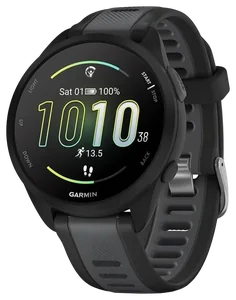
Garmin Approach S12
Best value tech
Every distance on every hole, without lifting a laser
Get it if you want distances without pausing to aim a laser, and $150–200 beats a laser’s price too.
Skip it if you need exact pin numbers. Get the rangefinder.
A rangefinder tells you one distance at a time; the Garmin Approach S12 shows front, middle, and back of the green plus hazard distances the moment you reach your ball, from 42,000-plus preloaded courses with no subscription attached.
The deliberate simplicity is its strength: a crisp monochrome screen, weeks of battery rather than a nightly charge, and a scorecard that keeps stats without you doing anything. For most golfers this replaces the laser entirely at half the price, and the shot-tracking history quietly reveals which club is letting you down.
It won’t give you the precise flag distance a laser does. Greens data is to the middle, not the pin. Purists carry both. At $150–200 on Amazon, it’s the best value in golf technology, and the easier of the two to use at pace.
Strengths
Front/middle/back distances instantly
42,000+ courses, no subscription
Weeks of battery life
Automatic stat tracking
Tradeoffs
No exact pin distance like a laser
Monochrome screen is plain
Course data needs occasional updates
Also on the shortlist
Two more, in brief
Pick 4 of 5: No. 4Best bag
4
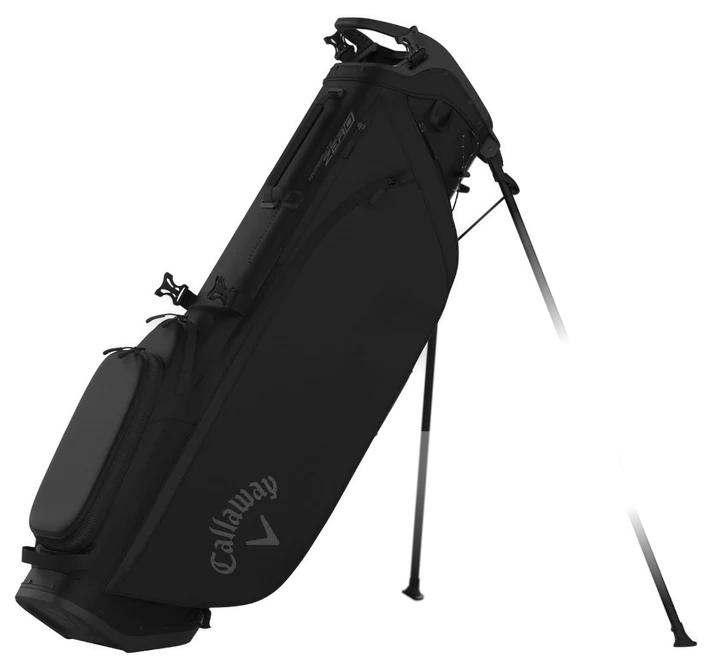
Callaway Hyperlite Zero Stand Bag
Best bag
Carrying should not be the hardest part of your round
Get it if you walk the course, or want to start, and $200–260 buys years of comfort.
Skip it if you always take a cart. Save the money.
Walking eighteen holes with a badly designed bag is a fitness event nobody signed up for, and fatigue costs strokes on the closing holes. The Callaway Hyperlite Zero attacks the problem with weight, it’s among the lightest full stand bags made, and a dual strap that spreads load across both shoulders instead of hanging off one.
The details reward walkers: legs that deploy reliably on slopes, pockets placed where your hand goes without looking, and a full-length divider system that stops the graphite-shaft clatter that wears finishes. Owners who switched from a cart bag routinely describe it as the reason they started walking again.
Light means fewer and smaller pockets: if you carry rain gear, extra layers, and a dozen balls, you’ll feel the limit. Riders don’t need any of this. At $200–260 on Amazon, it’s the pick for anyone who walks by choice.
Strengths
Among the lightest stand bags
Dual strap spreads the load
Legs deploy reliably on slopes
Full-length dividers protect shafts
Tradeoffs
Limited pocket volume
Premium price for a bag
Overkill if you always ride
Pick 4 of 5: No. 4Best bag
Callaway Hyperlite Zero Stand Bag
Carrying should not be the hardest part of your round
Get it if you walk the course, or want to start, and $200–260 buys years of comfort.
Skip it if you always take a cart. Save the money.
Walking eighteen holes with a badly designed bag is a fitness event nobody signed up for, and fatigue costs strokes on the closing holes. The Callaway Hyperlite Zero attacks the problem with weight, it’s among the lightest full stand bags made, and a dual strap that spreads load across both shoulders instead of hanging off one.
Read the full case
The details reward walkers: legs that deploy reliably on slopes, pockets placed where your hand goes without looking, and a full-length divider system that stops the graphite-shaft clatter that wears finishes. Owners who switched from a cart bag routinely describe it as the reason they started walking again.
Light means fewer and smaller pockets: if you carry rain gear, extra layers, and a dozen balls, you’ll feel the limit. Riders don’t need any of this. At $200–260 on Amazon, it’s the pick for anyone who walks by choice.
Strengths
Among the lightest stand bags
Dual strap spreads the load
Legs deploy reliably on slopes
Full-length dividers protect shafts
Tradeoffs
Limited pocket volume
Premium price for a bag
Overkill if you always ride
Pick 5 of 5: No. 5Best practice buy
5
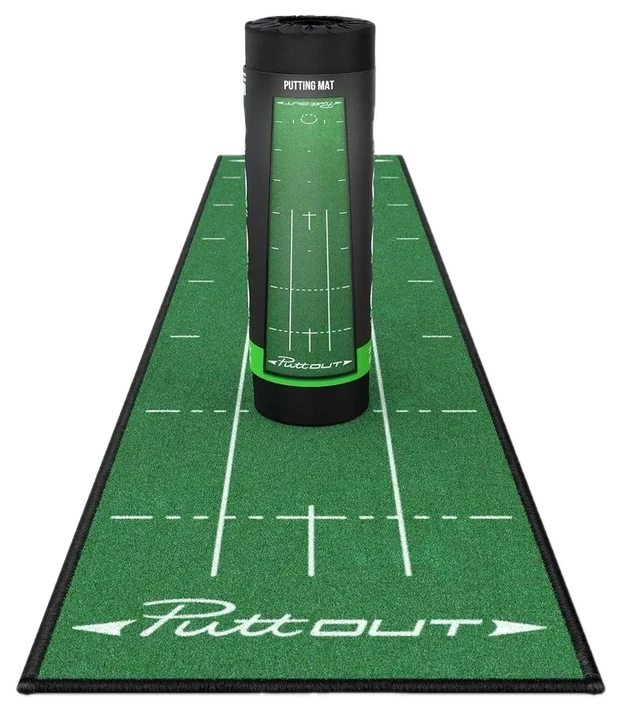
PuttOUT Putting Mat
Best practice buy
Where the cheapest strokes on the whole card are hiding
Get it if you three-putt more than you’d like to admit — $60–100 is cheap against a season of them.
Skip it if you already practice putting on real greens weekly.
Putting typically accounts for a large share of strokes in a round, commonly cited around 40%, and the only part of golf you can meaningfully practice in a hallway. The PuttOUT mat is built around feedback rather than novelty: the tapered surface makes any push or pull immediately visible, so you’re training a repeatable start line instead of just rolling balls.
The practical advantage is frequency. Ten minutes several evenings a week beats one range session a month, and a mat by the sofa is the difference between intending to practice and doing it. Owners report the improvement shows up first on three-to-six footers, which is exactly where amateurs bleed strokes.
It’s a flat surface, so it won’t teach you to read break, and the roll is faster than most club greens. Pair it with the trainer target for pressure practice if you want stakes. At $60–100 on Amazon, it’s the highest stroke-savings-per-dollar item on this page.
Strengths
Immediate feedback on start line
Practice frequency beats range trips
Rolls up and stores anywhere
Cheapest real scoring improvement
Tradeoffs
Can’t teach reading break
Faster than typical club greens
Needs a flat floor to be honest
Pick 5 of 5: No. 5Best practice buy
PuttOUT Putting Mat
Where the cheapest strokes on the whole card are hiding
Get it if you three-putt more than you’d like to admit — $60–100 is cheap against a season of them.
Skip it if you already practice putting on real greens weekly.
Putting typically accounts for a large share of strokes in a round, commonly cited around 40%, and the only part of golf you can meaningfully practice in a hallway. The PuttOUT mat is built around feedback rather than novelty: the tapered surface makes any push or pull immediately visible, so you’re training a repeatable start line instead of just rolling balls.
Read the full case
The practical advantage is frequency. Ten minutes several evenings a week beats one range session a month, and a mat by the sofa is the difference between intending to practice and doing it. Owners report the improvement shows up first on three-to-six footers, which is exactly where amateurs bleed strokes.
It’s a flat surface, so it won’t teach you to read break, and the roll is faster than most club greens. Pair it with the trainer target for pressure practice if you want stakes. At $60–100 on Amazon, it’s the highest stroke-savings-per-dollar item on this page.
Strengths
Immediate feedback on start line
Practice frequency beats range trips
Rolls up and stores anywhere
Cheapest real scoring improvement
Tradeoffs
Can’t teach reading break
Faster than typical club greens
Needs a flat floor to be honest
Good golf gear is the stuff you touch on every hole, so buy for feel and consistency, not for what a tour pro plays.
Fit and feel: A glove that’s too big or a grip that’s worn kills your feel, so get the sizing right on the things your hands hold.
Match your game: A pro-level low-spin ball punishes an average swing, so pick a ball and clubs that fit your speed, not the leaderboard.
Practice counts: Course time is expensive; the cheap trainers like a mat or alignment sticks fix more strokes per dollar than another gadget.
Common mistake: Golfers chase distance with pricey drivers while ignoring the short game and setup, where most strokes are lost.
FootJoy WeatherSof — the best-selling glove in the game for a reason; a fresh one restores the grip a worn glove can’t.
SKLZ Alignment Sticks — dead-simple rods that fix your aim and swing plane on the range, and they cost less than a sleeve of balls.
Bushnell Wingman — a GPS speaker that calls out distances and plays music from the cart, handy if you’d rather listen than laser every shot.
Golf gear FAQs
6 common questions, answered.
Are expensive golf balls worth it for a high handicapper?
Not until you keep them in play. Urethane tour balls like Chrome Soft deliver real greenside spin, but that benefit is worth nothing if the ball is in the woods, and at $50 a dozen, losing five a round is an expensive habit. The honest progression: play cheap two-piece balls while you’re losing several per round, then switch to urethane once you’re mostly finding them. Your short game will notice immediately at that point.
Rangefinder or GPS watch, which should I buy?
A watch if you want speed and simplicity, a laser if you want precision. The Approach S12 gives you front/middle/back the moment you arrive at your ball, which covers most amateur decisions and keeps pace of play; the Tour V7 Shift gives you the exact number to the pin, which matters on approach shots inside 150 yards. Low handicappers usually carry both. If you’re buying one, start with the watch. It’s half the price and gets used on every shot.
Are distance-measuring devices legal in tournaments?
Standard laser and GPS distance devices are generally permitted under the Rules of Golf, but features that measure slope or give club recommendations are not allowed in competition unless disabled, which is why slope-enabled models include a visible switch-off. Local rules always govern, so check with the committee before a qualifier. For casual rounds, use whatever you like.
How often should I replace golf balls and grips?
Balls: retire them when the cover shows real scuffing or a cut, not on a schedule, a clean ball plays like new for many rounds. Grips: about once a season or every 40 rounds, and this is the most underrated cheap fix in golf. Slick grips make you squeeze harder, which tightens your forearms and wrecks clubhead speed. Regripping a set costs less than one round at a nice course.
What lowers scores fastest for an average golfer?
In order of return: putting practice (40% of strokes, practisable indoors), knowing exact distances (stops the wrong-club misses), wedge play inside 100 yards, and only then anything to do with the driver. New irons are near the bottom of that list despite being the top of most shopping lists. This guide is deliberately ordered the same way.
When is golf gear cheapest?
Late autumn into winter in most of the US: courses empty, retailers clear inventory, and last season’s rangefinders and bags discount hard while being functionally identical to the new models. Balls follow a different pattern: buy them in bulk during spring promotions when manufacturers run buy-three-get-one deals. Avoid buying anything at full price in April.
New guides, re-ranked picks and the month's notable changes. No weekly filler, ever.
Unsubscribe any time. Your address goes to our newsletter provider and nowhere else — see our privacy policy.
Manage Consent
To provide the best experiences, we use technologies like cookies to store and/or access device information. Consenting to these technologies will allow us to process data such as browsing behavior or unique IDs on this site. Not consenting or withdrawing consent, may adversely affect certain features and functions.
Functional
Always active
The technical storage or access is strictly necessary for the legitimate purpose of enabling the use of a specific service explicitly requested by the subscriber or user, or for the sole purpose of carrying out the transmission of a communication over an electronic communications network.
Preferences
The technical storage or access is necessary for the legitimate purpose of storing preferences that are not requested by the subscriber or user.
Statistics
The technical storage or access that is used exclusively for statistical purposes.The technical storage or access that is used exclusively for anonymous statistical purposes. Without a subpoena, voluntary compliance on the part of your Internet Service Provider, or additional records from a third party, information stored or retrieved for this purpose alone cannot usually be used to identify you.
Marketing
The technical storage or access is required to create user profiles to send advertising, or to track the user on a website or across several websites for similar marketing purposes.