The Best Gifts for Parents:Six That Fix a Daily Annoyance
Parents are hard to buy for because they already bought the things they wanted. What they have not bought is the fix for something that mildly irritates them every single day.
By the BYB Editorial Team
Published July 30, 2026 · Updated · Prices checked OctoberOct 5, 2026
Parents are hard to buy for because they already bought the things they wanted. What they have not bought is the fix for something that mildly irritates them every single day.
How we choseWhat we compared, and how we rank
Every product here already earned a recommendation in one of our guides. For this list we applied a second filter: does it remove a small daily irritation rather than add a new hobby, and will it still be in use a year later. Nothing that needs learning, and nothing that needs an app account to work. Prices are always moving, so every button and link pulls the live listing.
How we rank
Published specifications, verified owner reviews, and independent safety or standards data where it applies — weighted the same for every pick, never sponsored placement.
CorrectedThe Brita Large 10-Cup Elite pitcher was listed at about $35–41 here. Its range is now about $32–41, the same as in our water-filters guide.
CorrectedBrita doesn't sell the Tahoe pitcher with an Elite filter; the Tahoe ships with its Standard filter. The pick is now the Brita Large 10-Cup Elite pitcher at about $35–41.
Dated notes already published on this page, newest first. Every correction we make is logged on the corrections page.
Each bar is an estimated price range, on one scale from ~$32 to ~$200.
Pick 1 of 6: No. 1Best overall
1
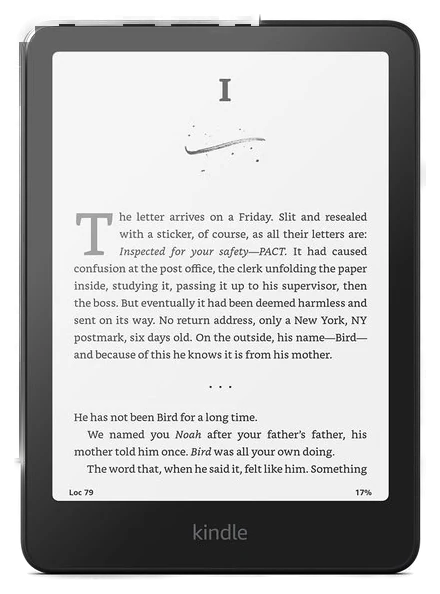
Kindle Paperwhite
Top pickBest overall
Readable in full sun, gentle at midnight, weeks of battery
Get it if they read, or used to and stopped. It is the biggest spend on this page and the only one that changes a daily habit rather than removing a daily annoyance.
Skip it if they prefer physical books, or borrow most of their reading from a library.
If the job is reading, e-ink wins on every axis that matters, and the Kindle Paperwhite is the best version of that idea per dollar: readable in full sun, gentle at midnight thanks to the warm front light, waterproof enough for the bath, and a battery measured in weeks rather than hours. For anyone whose eyes have started finding paperback print small, adjustable type size is the feature that quietly matters most.
The secret feature is what it does not do. No notifications, no feed, no apps, which is why owners consistently report reading more books because the device removes every excuse. The 7-inch screen hits the one-handed ideal and page turns on the current generation are the fastest yet.
Its walls are Amazon’s, and that is the caveat: the store is excellent, library borrowing is clunkier than on a Kobo, and the base model shows lock-screen ads unless you pay to remove them, which is worth doing as part of the gift rather than leaving them to discover it. The Paperwhite also routinely drops 20 to 30% below list during major sales, so it may be the single most reliably discounted device we cover.
Strengths
Readable in sun and in the dark
Adjustable type size for tired eyes
Weeks of battery, no notifications
Tradeoffs
Locked to Amazon’s store
Library borrowing is clunkier than on a Kobo
Base model carries lock-screen ads
Pick 2 of 6: No. 2Most felt daily
2
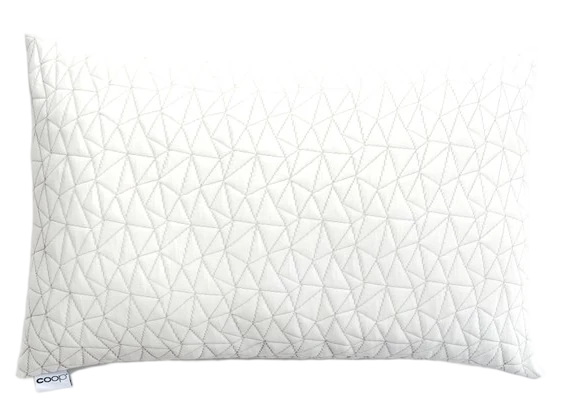
Coop Sleep Goods The Original Pillow
Most felt daily
The pillow you tune to your own neck
Get it if they have complained about their pillow even once
Skip it if they are devoted to a specific pillow already
Pillow height is a fit problem, and a fixed pillow forces one loft on every neck, which is why so many people cycle through pillows without ever solving anything. The Coop Original unzips so you can add or remove shredded fill until it is right, which is why one pillow answers for side, back and stomach sleepers alike when each of those wants a different loft.
Tom’s Guide, which tested it across all three sleeping positions, came out the same way. One naming note to pass on: the brand now trades as Coop Sleep Goods rather than Coop Home Goods, so the listing may not match the box.
It has held a spot in nearly every major pillow roundup for years, which is remarkable for a $75 pillow competing against $200 rivals, and everything is machine washable, so it stays fresh through years the disposable-pillow cycle never reaches. As a gift it needs no size and no taste judgment, and it fixes something the recipient notices every single morning.
Two notes to pass on with it. Tuning takes two or three nights of iteration rather than being right out of the bag, so tell them not to judge it on night one, and the foam carries a day of new-foam smell that airs out. At $70 to $90 it is the last stop of most pillow searches.
Strengths
Adjust the loft to their actual neck
Everything machine washable
No size or taste judgment needed
Tradeoffs
Needs two or three nights of tuning
New-foam smell for a day
Heavier than a standard pillow
Pick 3 of 6: No. 3Best wind-down
3
RENPHO Eyeris 3 Eye Massager
Best wind-down
Fifteen minutes at the end of a screen-heavy day
Get it if they finish the day rubbing their eyes
Skip it if they have an eye condition or recent surgery
The RENPHO Eyeris is the most-reviewed product in its odd little category: warm compression and gentle rhythmic massage around the eyes for about fifteen minutes at the end of a screen-heavy day. It is the kind of thing almost nobody buys themselves and a surprising number of people love once they have one, which is close to the definition of a good gift.
Tens of thousands of reviews converge on the same three uses: tension headaches, tired dry-feeling eyes, and falling asleep more easily afterwards. It is a modest device with outsized satisfaction scores, which is exactly the wellness-gadget profile worth buying, as opposed to the ones that promise a lot and get drawer-bound by February. The fifteen-minute session is short enough to become a habit.
Be careful about the claim level, though, and pass this on when you give it: it stays firmly in comfort territory rather than clinical, and anyone with an eye condition or a recent procedure should ask a doctor before using one. At $80 to $95 it earns the wind-down slot it asks for. Buy by generation rather than by name: the line runs from the Eyeris 1 up to the 2026 Eyeris Zen at $129.99, and the Eyeris 3 is the one worth the money.
Get it if they complain about how the tap water tastes. It is the cheapest thing on this page and the only one with a certification standing behind the claim.
Skip it if they already have an under-sink filter, or the household drinks more than a pitcher a day.
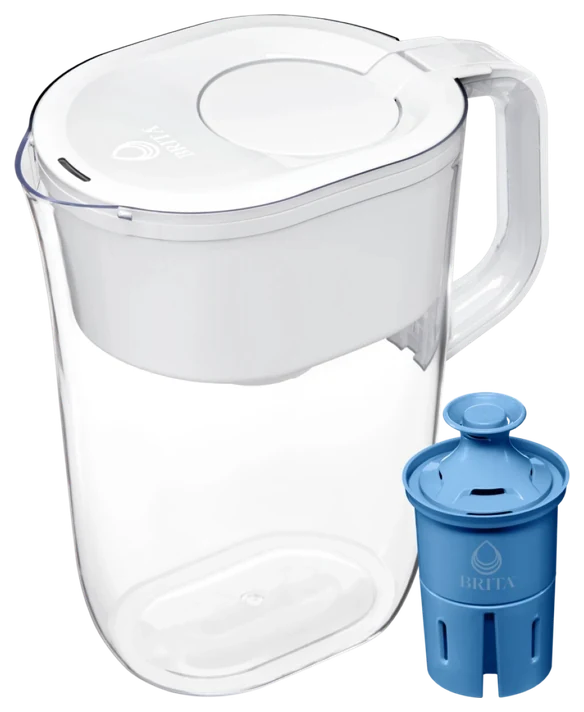
The Brita everyone already knows quietly got serious. The Elite pitcher pairs the familiar 10-cup fridge pitcher with a filter certified by the Water Quality Association against NSF/ANSI Standard 53 for lead reduction and rated for 120 gallons, or roughly six months, against the two-month standard cartridge that turned pitcher ownership into a recurring errand nobody enjoyed.
That combination fixes credibility and annoyance at the same time: real certification where it counts, and two filter changes a year instead of six. For renters, for anyone with hard or off-tasting water, and for anyone who drinks more water when it tastes better, the pitcher format remains unbeatable: no installation, no conversation with a landlord.
The limit is throughput: pitchers filter slowly and hold ten cups, so a heavy-drinking household outgrows one and wants an under-sink option instead. At $32–41, it is the rational default that finally earned the trust the brand always had. One naming note: Elite is the filter, packaged in Brita’s Large 10-Cup Elite pitcher — not the differently shaped Tahoe, which still ships with Brita’s older Standard filter.
Get it if they complain about how the tap water tastes. It is the cheapest thing on this page and the only one with a certification standing behind the claim.
Skip it if they already have an under-sink filter, or the household drinks more than a pitcher a day.
The Brita everyone already knows quietly got serious. The Elite pitcher pairs the familiar 10-cup fridge pitcher with a filter certified by the Water Quality Association against NSF/ANSI Standard 53 for lead reduction and rated for 120 gallons, or roughly six months, against the two-month standard cartridge that turned pitcher ownership into a recurring errand nobody enjoyed.
Read the full case
That combination fixes credibility and annoyance at the same time: real certification where it counts, and two filter changes a year instead of six. For renters, for anyone with hard or off-tasting water, and for anyone who drinks more water when it tastes better, the pitcher format remains unbeatable: no installation, no conversation with a landlord.
The limit is throughput: pitchers filter slowly and hold ten cups, so a heavy-drinking household outgrows one and wants an under-sink option instead. At $32–41, it is the rational default that finally earned the trust the brand always had. One naming note: Elite is the filter, packaged in Brita’s Large 10-Cup Elite pitcher — not the differently shaped Tahoe, which still ships with Brita’s older Standard filter.
Strengths
NSF-certified for lead reduction
Six-month filter, not two
No installation, so it suits renters
Tradeoffs
Filters slowly
Ten cups is small for a busy household
Filters are an ongoing cost
Pick 5 of 6: No. 5Best payback
5
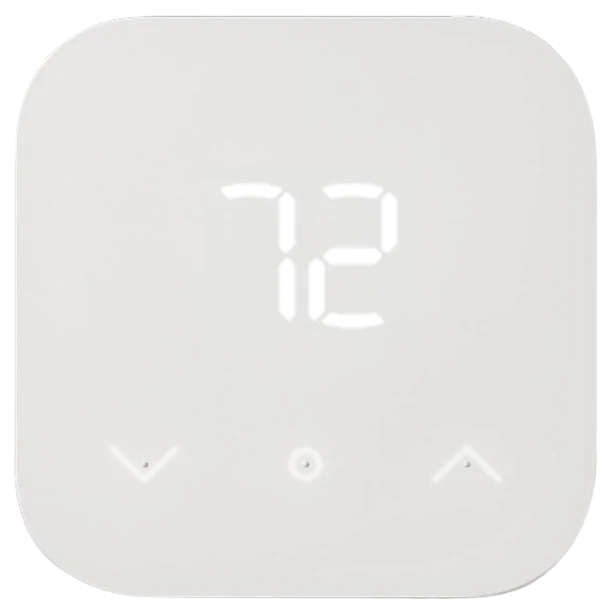
Amazon Smart Thermostat
Best payback
The one gift on this page that pays itself back
Get it if they are on Alexa and still have a dial thermostat
Amazon commissioned Honeywell to build a simple, reliable smart thermostat and then priced it like an accessory. The Amazon Smart Thermostat runs $60 to $80 and frequently less, which is the lowest entry price this category has ever had, and it is the only gift on this page with a genuine financial payback rather than a comfort one.
Alexa Hunches handle the away-and-home scheduling that generates most of any smart thermostat’s savings, so the saving does not depend on the recipient learning to program anything, which matters for a gift. The Honeywell hardware underneath has the reliability record you would hope for, and the EPA’s ENERGY STAR product finder lists it among certified connected thermostats exactly as it does the flagships, a mark awarded on measured performance rather than on a manufacturer’s estimate.
What you skip at this price is room sensors, a fancy display and any depth outside Alexa, so this assumes an Alexa household and is the wrong gift for anyone in Google or Apple’s ecosystem.
The other thing to check before buying is HVAC compatibility, since conventional, heat-pump and high-voltage systems are not interchangeable and every major brand publishes a compatibility checker for exactly this reason.
Get it if they are on Alexa and still have a dial thermostat
Skip it if they use Google Home or Apple Home
Amazon commissioned Honeywell to build a simple, reliable smart thermostat and then priced it like an accessory. The Amazon Smart Thermostat runs $60 to $80 and frequently less, which is the lowest entry price this category has ever had, and it is the only gift on this page with a genuine financial payback rather than a comfort one.
Read the full case
Alexa Hunches handle the away-and-home scheduling that generates most of any smart thermostat’s savings, so the saving does not depend on the recipient learning to program anything, which matters for a gift. The Honeywell hardware underneath has the reliability record you would hope for, and the EPA’s ENERGY STAR product finder lists it among certified connected thermostats exactly as it does the flagships, a mark awarded on measured performance rather than on a manufacturer’s estimate.
What you skip at this price is room sensors, a fancy display and any depth outside Alexa, so this assumes an Alexa household and is the wrong gift for anyone in Google or Apple’s ecosystem.
The other thing to check before buying is HVAC compatibility, since conventional, heat-pump and high-voltage systems are not interchangeable and every major brand publishes a compatibility checker for exactly this reason.
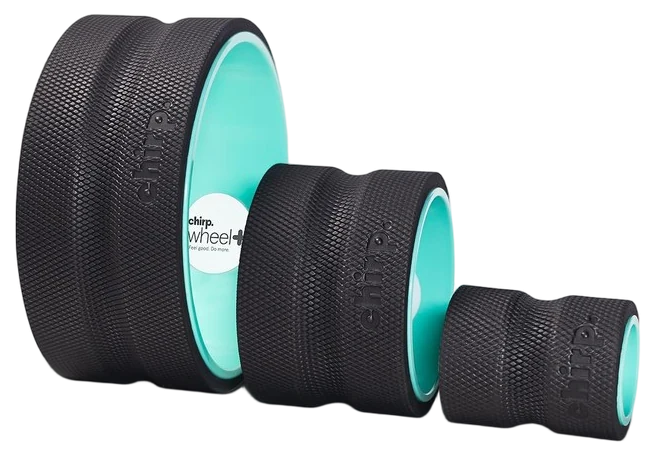
The Chirp Wheel targets what a foam roller reaches awkwardly, which is rolling the spine into extension against the hunch a desk builds. A center groove spares the vertebrae while the padded rim works the muscles alongside them, and that geometry is the entire difference between this and a plain cylinder.
The testimonials around it are unusually emotional, but the mechanism underneath is legitimate: thoracic extension and mobility work, and the satisfying mid-back release tends to convert skeptics inside one session.
Well+Good put it to both a physical therapist and a chiropractor, and the two landed in the same place, that the center groove keeping pressure off the vertebrae is the real design difference, and that it belongs in the mobility category rather than the treatment one. Three sizes trade intensity, and the counterintuitive rule is that bigger is gentler, so start with the largest wheel and short sessions rather than the smallest.
Five minutes against the floor or a wall covers the whole routine, which is short enough that it happens. Be clear about the boundary when you give it: this is a mobility tool, not a treatment for an actual back condition, and anything persistent deserves a professional rather than a gadget. At $40 to $130 by set it is the desk worker’s five-minute counterpose. Price turns entirely on set size: a single wheel is about $40, while Chirp’s own three-wheel pack lists at $129.99 and is almost always discounted.
Strengths
Groove spares the spine, unlike a plain roller
Five-minute routine gets done
Converts skeptics in one session
Tradeoffs
A mobility tool, not a treatment
Start with the largest wheel or it is harsh
Takes floor space to use
Pick 6 of 6: No. 6Best for a stiff back
Chirp Wheel
Five minutes against the floor, for a desk-hunched back
Get it if they sit at a desk and mention their back
Skip it if they have a diagnosed back condition
The Chirp Wheel targets what a foam roller reaches awkwardly, which is rolling the spine into extension against the hunch a desk builds. A center groove spares the vertebrae while the padded rim works the muscles alongside them, and that geometry is the entire difference between this and a plain cylinder.
Read the full case
The testimonials around it are unusually emotional, but the mechanism underneath is legitimate: thoracic extension and mobility work, and the satisfying mid-back release tends to convert skeptics inside one session.
Well+Good put it to both a physical therapist and a chiropractor, and the two landed in the same place, that the center groove keeping pressure off the vertebrae is the real design difference, and that it belongs in the mobility category rather than the treatment one. Three sizes trade intensity, and the counterintuitive rule is that bigger is gentler, so start with the largest wheel and short sessions rather than the smallest.
Five minutes against the floor or a wall covers the whole routine, which is short enough that it happens. Be clear about the boundary when you give it: this is a mobility tool, not a treatment for an actual back condition, and anything persistent deserves a professional rather than a gadget. At $40 to $130 by set it is the desk worker’s five-minute counterpose. Price turns entirely on set size: a single wheel is about $40, while Chirp’s own three-wheel pack lists at $129.99 and is almost always discounted.
Strengths
Groove spares the spine, unlike a plain roller
Five-minute routine gets done
Converts skeptics in one session
Tradeoffs
A mobility tool, not a treatment
Start with the largest wheel or it is harsh
Takes floor space to use
Parents are hard to shop for because they’ve already bought what they want, so fix an annoyance instead.
Fix a small daily irritation: the stiff neck, the bad tap water, the tiny print; solving it beats adding a new thing to their life.
Nothing that needs an account or learning: if it only works after an app sign-up, it’ll sit in the box.
Buy what they won’t buy themselves: the small comfort they’d never justify spending on is the sweet spot.
Steer clear of their taste: skip decor and clothing, where their preferences matter more than yours.
Photo mugs and frames: sweet for a moment, then they’re gathering dust on a shelf.
Subscription boxes: they start fun, quietly become a chore, and get cancelled by spring.
Decor and candles: too tied to their taste in a home they’ve already set up exactly how they like it.
Smart-home gear that needs setup: anything fiddly turns you into their permanent tech support.
Gifting for parents
6 common questions, answered.
Why is buying for parents so hard?
Because they have already bought what they wanted, and anything they have not bought they decided against deliberately. That rules out most of the obvious categories. What survives is the fix for something small that irritates them daily and never quite justifies a trip of its own, which is why this list is pillows, water and eye strain rather than hobbies.
Should I buy something they have to set up?
Only if you are willing to set it up. A gift that arrives needing an account, an app and a compatibility check is a chore wearing wrapping paper, and it is the most common way well-meant tech gifts end up in a cupboard. The thermostat on this list is the one with real setup, and it is worth giving only if you will do the install or know they enjoy that sort of thing.
What about a subscription or an experience?
Both are often better than an object, and neither is something we can sell you. A meal delivery block, a cleaning service, or tickets to something they mentioned once are frequently the best gift for someone who has everything. If you go that way, pay for a defined period rather than setting up a rolling subscription in their name.
Is tech a bad gift for older parents?
Not inherently, but the failure mode is specific: anything that requires ongoing account management, password resets or firmware updates tends to become the giver’s support job. The e-reader on this list is the exception because once it is set up it behaves like a book. Judge by how much maintenance a thing needs, not by how complicated it looks.
How much should I spend?
There is no correct number, but the useful reframe is cost per use. A $70 pillow used every night for three years costs pennies a day and gets noticed every morning. A $200 object used twice does not. That maths is why this list leans toward things with a daily role rather than occasional ones.
When do these discount?
The e-reader is the one to time, since it routinely drops 20 to 30% below list during major sales and is among the most reliably discounted devices we cover. The thermostat and the eye massager also see frequent cuts in late November. The pillow and the pitcher sell close to the same price all year, so there is nothing to wait for on those.
Sources
Who the write-ups above lean on, and where each one is cited.
Tom’s GuideCited for Coop pillow.
ENERGY STARCited for Amazon Smart Thermostat, and in the buying advice.
NSFCited for Brita Large 10-Cup Elite Water Filter Pitcher, and in the buying advice.
EPACited for Amazon Smart Thermostat, and in the buying advice.
23Sep 2026Correction, 23 September 2026Brita doesn’t sell the Tahoe pitcher with an Elite filter; the Tahoe ships with its Standard filter. The pick is now the Brita Large 10-Cup Elite pitcher at about $35–41.Every correction we’ve made ›
7Oct 2026Correction, 7 October 2026The Brita Large 10-Cup Elite pitcher was listed at about $35–41 here. Its range is now about $32–41, the same as in our water-filters guide.Every correction we’ve made ›
Prices on this page are re-checked weekly — see the full Gifts price index for every product we cover.
Keep reading
Where to go next.
Related guides, then every guide in the department.
New guides, re-ranked picks and the month's notable changes. No weekly filler, ever.
Unsubscribe any time. Your address goes to our newsletter provider and nowhere else — see our privacy policy.
Manage Consent
To provide the best experiences, we use technologies like cookies to store and/or access device information. Consenting to these technologies will allow us to process data such as browsing behavior or unique IDs on this site. Not consenting or withdrawing consent, may adversely affect certain features and functions.
Functional
Always active
The technical storage or access is strictly necessary for the legitimate purpose of enabling the use of a specific service explicitly requested by the subscriber or user, or for the sole purpose of carrying out the transmission of a communication over an electronic communications network.
Preferences
The technical storage or access is necessary for the legitimate purpose of storing preferences that are not requested by the subscriber or user.
Statistics
The technical storage or access that is used exclusively for statistical purposes.The technical storage or access that is used exclusively for anonymous statistical purposes. Without a subpoena, voluntary compliance on the part of your Internet Service Provider, or additional records from a third party, information stored or retrieved for this purpose alone cannot usually be used to identify you.
Marketing
The technical storage or access is required to create user profiles to send advertising, or to track the user on a website or across several websites for similar marketing purposes.