The Best Beauty Tools of 2026:Six That Earn Their Drawer Space
Beauty tools now range from $30 wands to $600 stylers. We compared expert reviews, dermatologist commentary and thousands of owner ratings to find the six devices that earn their price, and flagged the ones where a cheaper pick does the same job.
By the BYB Editorial Team
Published July 28, 2026 · Updated · Prices checked OctoberOct 5, 2026
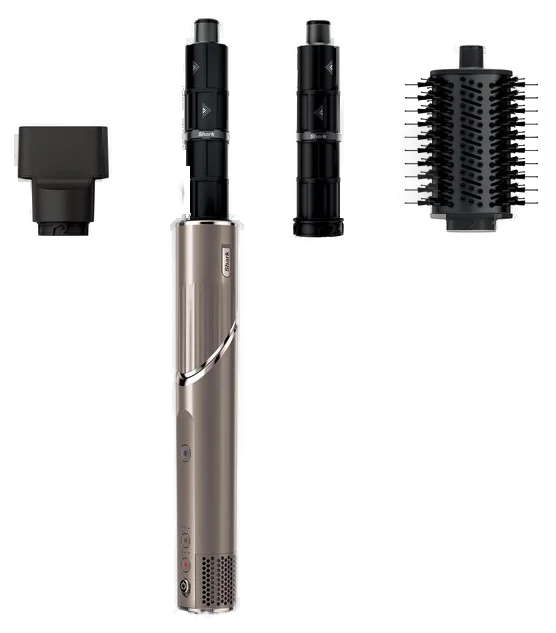
Shark FlexStyle$250–300The Shark FlexStyle, about $250–300 — does most of what the Dyson Airwrap does for roughly half the money.Check price
Price not the question
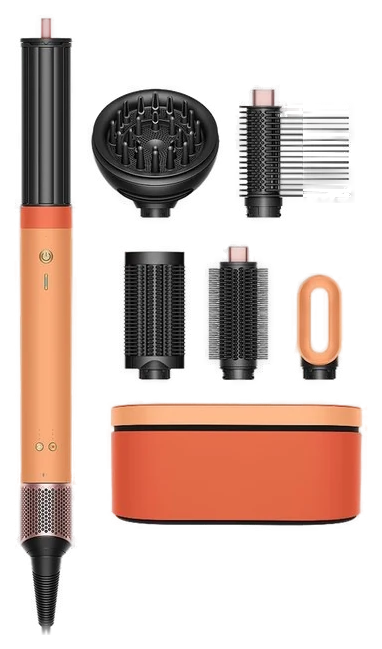
Dyson Airwrap$500–650Dyson Airwrap, $500–650 — more attachments, a quieter motor, still the better tool.Check price
For skin
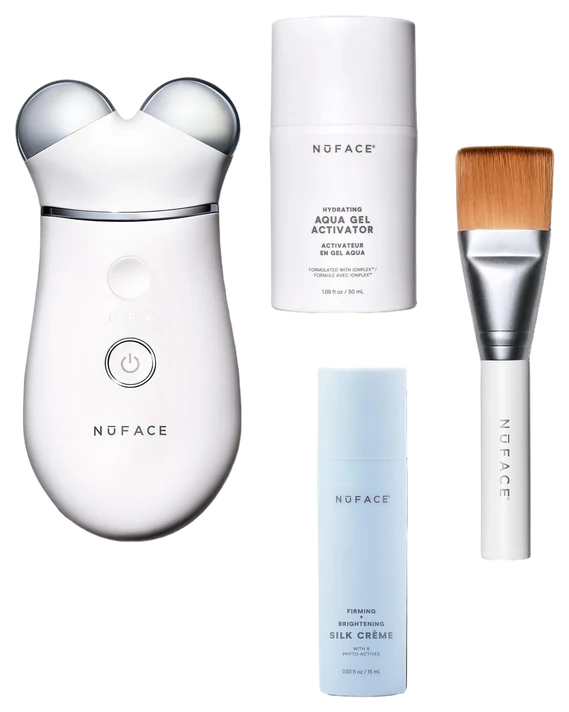
NuFACE Trinity+$395NuFACE Trinity+, about $395 — has the microcurrent evidence behind it.Check price
Set your expectations
Nothing here works overnight.
We compared Allure’s, Byrdie’s and Wirecutter’s professional reviews against FDA-clearance status and verified owner ratings rather than lab-testing these ourselves, and we link the primary source wherever testing matters.How we chose·How we verify·Corrections logged publicly
Beauty tools now range from $30 wands to $600 stylers. We compared expert reviews, dermatologist commentary and thousands of owner ratings to find the six devices that earn their price, and flagged the ones where a cheaper pick does the same job.
How we choseWhat we compared, and how we rank
We compared Allure’s, Byrdie’s and Wirecutter’s professional reviews against FDA-clearance status and verified owner ratings rather than lab-testing these ourselves, and we link the primary source wherever testing matters. Prices are always moving, so every button and link pulls the live listing.
How we rank
Published specifications, verified owner reviews, and independent safety or standards data where it applies — weighted the same for every pick, never sponsored placement.
What changed1 dated note · latest 5 September 2026
CorrectedThe Solawave compare card said “Best under $150”; its $130–170 range and the rest of this page say under $200, and the card now matches. Logged on the corrections page.
Dated notes already published on this page, newest first. Every correction we make is logged on the corrections page.
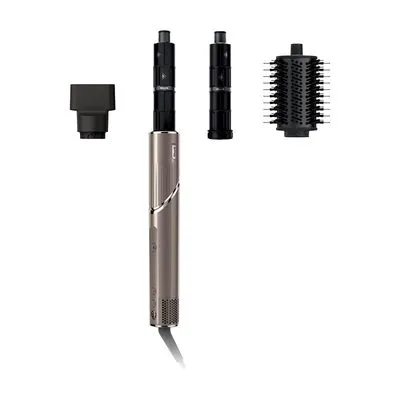
The Shark FlexStyle is the value answer to the Airwrap question: air styling that curls, smooths, and dries without extreme heat, at a price that doesn’t require a payment plan. Reviewers keep landing on the same verdict, most of the Dyson result for half the money.
The FlexStyle runs on a 1300 watt motor, matching the Airwrap’s output, with four heat settings, three airflow speeds, and a cool shot button for locking a finished style. Two 1.25 inch curling barrels power the auto wrap function, and Shark caps airflow at roughly 203 degrees Fahrenheit, the hair safe ceiling that defines the category. At just over 1.5 pounds it is noticeably lighter than most blow dryers. WWD’s beauty reviewers called it the closest thing to Airwrap results they had tried, and it works equally well on fine hair as on thicker, coarser textures.
The twistable head is the cleverness: straighten it and it’s a good hair dryer; bend it and the attachment system covers auto-wrap curls, volumizing brushes, and smoothing. Heat stays in the hair-safe zone that makes air styling the damage-avoidance category.
Strengths
Most of the Airwrap for half price
Doubles as a true hair dryer
Low-heat styling protects hair
Real sale-season discounts
Tradeoffs
Louder than the Dyson
Attachment swaps less refined
Curl learning curve remains
Pick 2 of 6: No. 2The premium pick~$500–650
2
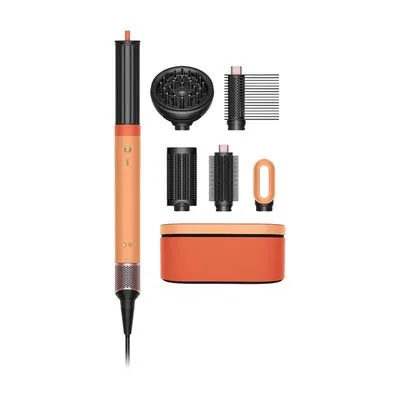
Dyson Airwrap
Upgrade pickThe premium pick
The category king, if the budget allows
Get it if you style often and the budget stretches.
Skip it if $550 stings at all, the Shark closes most of the gap.
Six years on, the Dyson Airwrap remains the tool every competitor is measured against: Coanda airflow that wraps hair around the barrel by itself, curling at temperatures that leave hair glossy instead of fried.
The core engineering is a 1300 watt digital V9 motor spinning up to 110,000 RPM, generating the air pressure that creates the Coanda effect and pulls hair onto the barrel without contact from a heating plate. Three heat settings plus a cold shot cover most routines, and barrel attachments range from about 1.2 inch up to 1.6 inch. In Good Housekeeping Institute Beauty Lab testing, the round brush attachment topped out near 158 degrees Fahrenheit at its highest setting, well below the 350 degree range a flat iron or curling iron typically reaches, the basis for its damage reputation.
The attachment ecosystem keeps growing, the engineering feel is luxurious, and long-term owners report the thing marketing can’t fake: hair health visibly better than their flat-iron years. For daily stylers, the damage math eventually favors it.
Strengths
Benchmark air-styling engineering
Auto-wrap Coanda curls
Visibly gentler on hair over time
Growing attachment ecosystem
Tradeoffs
The price is the con
Rarely meaningfully discounted
Still a technique to learn
Pick 3 of 6: No. 3Best blowout brush
3
T3 AireBrush Duo
Best blowout brush
The blowout brush upgrade
Get it if smooth volume is your look and you style often, at $150–180.
Skip it if curls are the goal, the multi-stylers own that.
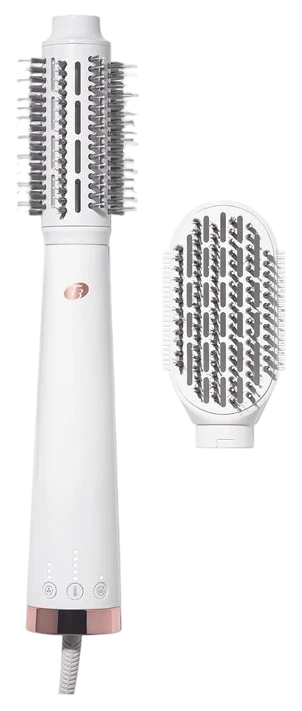
Hot-air brushes are the fastest route to a salon-ish blowout at home, and the T3 AireBrush Duo is the one professionals keep recommending over the viral drugstore options: lighter, quieter, with heat control that styles without cooking.
Underneath, the AireBrush Duo runs a 900 watt motor across five heat settings and three speeds for fifteen combinations, with T3’s IonFlow technology pushing out negative ions to fight frizz and add shine as hair dries. The round attachment builds volume at the root while the paddle head smooths length and ends, and a cool shot button locks the finish in place.
It runs cooler than most blow dryers at full output, topping out around 200 degrees Fahrenheit on its highest setting. The AireBrush Duo also won an Allure Best of Beauty award, the category’s clearest signal that stylists rate it above viral drugstore alternatives.
If the goal is smooth volume rather than curls, this beats a multi-styler. The round and paddle heads cover the two blowout shapes, and the ion generator knocks down frizz on the way. The refined heat is the long-run difference for frequent stylers.
Strengths
Pro-endorsed over viral options
Gentle, controlled heat
Round + paddle heads included
Light and quiet in hand
Tradeoffs
No curling ambitions
Boutique pricing
Extra heads cost extra
Also on the shortlist
Three more, in brief
Pick 4 of 6: No. 4Best microcurrent
4
NuFACE Trinity+
Best microcurrent
The microcurrent standard
Get it if you’ll honestly do five minutes a day, most days, and $395 is within reach.
Skip it if routines slip through your fingers. Start cheaper.
Microcurrent is one of the few home skincare-device categories with real clinical literature, and the NuFACE Trinity+ is the device that built the category: FDA-cleared, five minutes a day, with the visible-lift results estheticians describe as “real but temporary.”
Specs matter here because the device is a genuine clinical tool: it is FDA cleared for temporary improvement in the appearance of facial wrinkles, ships with the Facial Trainer, Wrinkle Reducer LED, and Lip and Eye attachments, and includes a Boost Button that adds 25 percent more microcurrent output for shorter, more intense sessions.
NuFACE’s own clinical study data, cited across its published spec sheet, reports the majority of users saw a more lifted jaw line and reduced sagging around the neck after consistent use. The device targets all 69 muscles across the face and neck in the standard five minute routine, which is longer than most microcurrent competitors ask for.
That honesty is the buying criterion: consistency is everything, near-daily users see and keep the firming; drawer-storers see nothing. NuFACE retired its companion app in 2026, so the guided routines now run on the device itself after a firmware update, and the conductive-gel ritual still takes five focused minutes.
Get it if you’ll honestly do five minutes a day, most days, and $395 is within reach.
Skip it if routines slip through your fingers. Start cheaper.
Microcurrent is one of the few home skincare-device categories with real clinical literature, and the NuFACE Trinity+ is the device that built the category: FDA-cleared, five minutes a day, with the visible-lift results estheticians describe as “real but temporary.”
Read the full case
Specs matter here because the device is a genuine clinical tool: it is FDA cleared for temporary improvement in the appearance of facial wrinkles, ships with the Facial Trainer, Wrinkle Reducer LED, and Lip and Eye attachments, and includes a Boost Button that adds 25 percent more microcurrent output for shorter, more intense sessions.
NuFACE’s own clinical study data, cited across its published spec sheet, reports the majority of users saw a more lifted jaw line and reduced sagging around the neck after consistent use. The device targets all 69 muscles across the face and neck in the standard five minute routine, which is longer than most microcurrent competitors ask for.
That honesty is the buying criterion: consistency is everything, near-daily users see and keep the firming; drawer-storers see nothing. NuFACE retired its companion app in 2026, so the guided routines now run on the device itself after a firmware update, and the conductive-gel ritual still takes five focused minutes.
Strengths
FDA-cleared, literature-backed
Visible short-term lift
Five-minute daily routine
Category-defining pedigree
Tradeoffs
Results demand daily consistency
Conductive gel is a running cost
Premium commitment price
Pick 5 of 6: No. 5Best under $200~$130–170
5
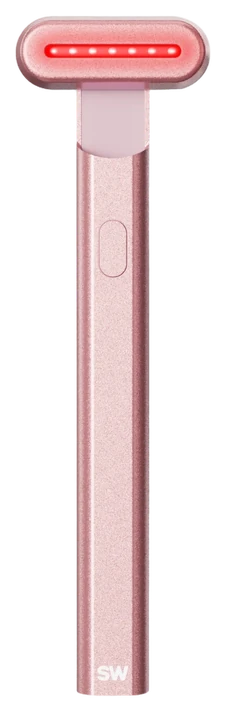
Solawave 4-in-1 Wand
Budget pickBest under $200
Red light on a budget
Get it if you’re device-curious without device-budget conviction, at $130–170.
Skip it if you want maximum-evidence lift. That’s the NuFACE lane.
The Solawave wand is the entry point for light-therapy skincare: red light, gentle warmth, galvanic current, and facial massage in a pen-sized device, at a price where “worth a try” is a rational decision rather than a leap.
The core specs explain how this differs from professional grade equipment: 630 nanometer red light delivered through 14 LEDs, paired with gentle warmth, galvanic current, and vibration massage in one pen sized head, all FDA cleared for the temporary reduction of fine lines.
Sessions run about three minutes, five times a week, with a full charge from the magnetic USB-A cable lasting roughly a week of that use. In a review for Today, the wand was praised as an easy add to an existing routine rather than a replacement for one, with visible changes typically appearing after four to eight weeks of consistent use.
The evidence base for red light keeps improving, and owner reviews skew notably positive for fine lines and post-blemish marks. Five minutes over a serum, a few times weekly, it slots into an existing routine instead of demanding a new one.
Get it if you’re device-curious without device-budget conviction, at $130–170.
Skip it if you want maximum-evidence lift. That’s the NuFACE lane.
The Solawave wand is the entry point for light-therapy skincare: red light, gentle warmth, galvanic current, and facial massage in a pen-sized device, at a price where “worth a try” is a rational decision rather than a leap.
Read the full case
The core specs explain how this differs from professional grade equipment: 630 nanometer red light delivered through 14 LEDs, paired with gentle warmth, galvanic current, and vibration massage in one pen sized head, all FDA cleared for the temporary reduction of fine lines.
Sessions run about three minutes, five times a week, with a full charge from the magnetic USB-A cable lasting roughly a week of that use. In a review for Today, the wand was praised as an easy add to an existing routine rather than a replacement for one, with visible changes typically appearing after four to eight weeks of consistent use.
The evidence base for red light keeps improving, and owner reviews skew notably positive for fine lines and post-blemish marks. Five minutes over a serum, a few times weekly, it slots into an existing routine instead of demanding a new one.
Strengths
Cheapest credible light therapy
Slots into existing routines
Travel-friendly pen size
Positive owner-review skew
Tradeoffs
Gentlest-dose version of the science
Results are gradual and subtle
USB charging to remember
Pick 6 of 6: No. 6Best flat iron
6
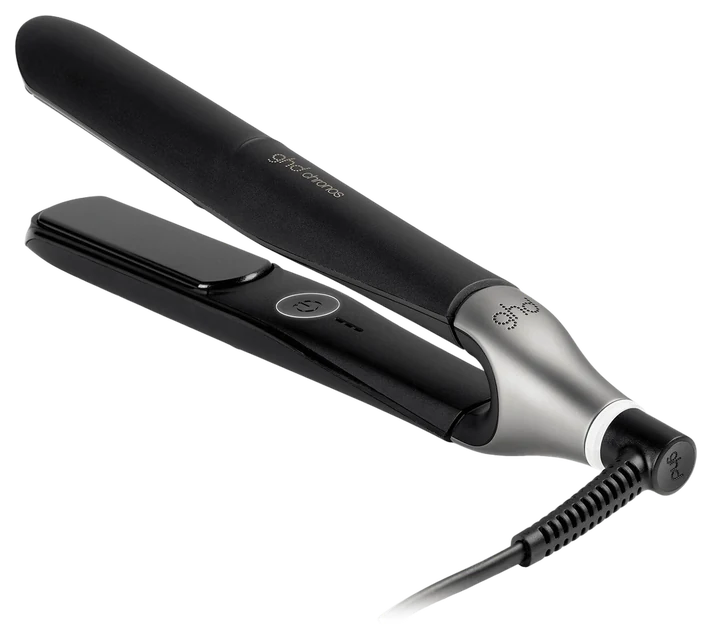
ghd Chronos
Best flat iron
The flat iron that respects your hair
Get it if straight-and-smooth is your daily signature, worth $300–350.
Skip it if the iron is an occasional guest. Save the money.
The ghd Chronos runs on one engineering conviction: 365°F is the optimal styling temperature (one-pass effective, safely under the ~400°F cliff where keratin damage accelerates) and it holds that number with motion-responsive precision.
The plates measure a standard one inch, heat up in about 20 seconds, and hold that fixed 365°F reading through HD motion responsive sensors that recheck plate temperature 250 times per second as the iron moves, rather than relying on fixed heat zones like older ghd generations.
A new ultra gloss plate coating is the other change this generation, which ghd’s own spec sheet credits with up to 85 percent more shine compared to the Platinum Plus. There is no boost mode and no way to increase heat for coarse or curly hair, which is the tradeoff for that single, closely held number.
Styling runs roughly three times faster than older plate generations, and stylists have voted with their kit bags: this is the iron working behind chairs. For the glass-straight finish air stylers can’t press, it’s the healthiest route there.
Get it if straight-and-smooth is your daily signature, worth $300–350.
Skip it if the iron is an occasional guest. Save the money.
The ghd Chronos runs on one engineering conviction: 365°F is the optimal styling temperature (one-pass effective, safely under the ~400°F cliff where keratin damage accelerates) and it holds that number with motion-responsive precision.
Read the full case
The plates measure a standard one inch, heat up in about 20 seconds, and hold that fixed 365°F reading through HD motion responsive sensors that recheck plate temperature 250 times per second as the iron moves, rather than relying on fixed heat zones like older ghd generations.
A new ultra gloss plate coating is the other change this generation, which ghd’s own spec sheet credits with up to 85 percent more shine compared to the Platinum Plus. There is no boost mode and no way to increase heat for coarse or curly hair, which is the tradeoff for that single, closely held number.
Styling runs roughly three times faster than older plate generations, and stylists have voted with their kit bags: this is the iron working behind chairs. For the glass-straight finish air stylers can’t press, it’s the healthiest route there.
Strengths
One-pass styling at safe heat
3x faster than older plates
Stylist kit-bag standard
Motion-responsive heat hold
Tradeoffs
No adjustable temperature
Premium price
Specialist tool, one job
The right tool comes down to your hair and skin, and how often you’ll pick it up.
Match the heat to your hair: fine or color-treated hair takes damage fast, so you want lower temperatures and adjustable heat, while thick or coarse hair needs more to hold a style.
Corded power vs. cordless convenience: plug-in stylers tend to run hotter and more consistently, and cordless tools trade some of that for grabbing on the go, so be honest about how you’ll use it.
For skincare devices, look for real evidence: check for FDA clearance or actual studies on microcurrent and red-light tools, and know that any results build slowly over weeks of steady use, not overnight.
The common mistake: spending big on a do-it-all styler that lives in a drawer; a cheaper single-purpose tool you reach for every day beats a $500 kit you never open.
Dyson Corrale — a nice cordless straightener, but it’s pricey and single-purpose next to the multi-stylers we already cover, so it’s a want, not a need.
Drybar The Buttercup Blow Dryer — a well-liked standalone dryer, but if you’re buying an air styler you’ve mostly already got drying handled.
Foreo Luna 4 — a durable silicone cleansing device, but a good cleanser and your hands do the same job for a lot less, so it’s a nice extra rather than essential.
CurrentBody Skin LED Light Therapy Mask — a full-face red-light mask with a real following, but it’s a serious splurge and only pays off if you’ll wear it several times a week for months.
Beauty tool FAQs
6 common questions, answered.
Are expensive hair stylers better for your hair?
Generally yes, for one reason: heat control. Premium stylers like the Airwrap and FlexStyle style with air instead of extreme heat, and tools like the ghd Chronos cap plate temperature at 365°F. The damage difference over months of use is real and visible.
Do at-home red light and microcurrent devices work?
The answer is “modestly, with consistency.” Both have supporting clinical studies, but home devices are lower-powered than in-office equipment. Expect gradual improvement over 8–12 weeks of near-daily use, not an overnight transformation.
Which beauty tool is the best gift?
The Shark FlexStyle is the safe luxury gift: universally useful, visibly premium, and half the price of the Dyson it imitates. For skincare lovers, the Solawave wand is the low-risk option.
What’s the difference between air styling and a flat iron?
Temperature philosophy. Air stylers (FlexStyle, Airwrap) shape hair with directed airflow at temperatures far below plate tools, that’s the entire damage-avoidance pitch, while irons like the ghd press a polished finish no airflow can replicate. Curl-and-volume routines belong to air; glass-straight and precision waves belong to plates. Many kits eventually hold one of each, used on different days.
How long until skincare devices show results?
Set calendars, not hopes: microcurrent shows its temporary lift within sessions but needs near-daily use to maintain; red-light wands want six-to-twelve weeks of consistency before judging fine-line changes; and any device promising visible change in days is marketing. The predictor of results is boring: whichever device slots into a routine you already keep. That’s why five-minute tools out-perform elaborate ones in owner satisfaction.
Which of these tools travel well?
The Solawave (pen-sized, USB) and the ghd (dual-voltage, worldwide) are the true travelers. The multi-stylers are the opposite: bulky cases, and voltage matters. Check the plate before packing an Airwrap or FlexStyle abroad, since heat tools and voltage converters are a famously bad combination. The NuFACE travels fine but its gel and charging routine prefer a bathroom counter that stays put.
Sources
Who the write-ups above lean on, and where each one is cited.
AllureCited for T3 AireBrush Duo, and in the buying advice.
Good HousekeepingCited for Dyson Airwrap.
WirecutterCited in the buying advice.
ByrdieCited in the buying advice.
FDACited for NuFACE Trinity+ and Solawave 4-in-1 Wand, and in the buying advice.
5Sep 2026Correction, 5 September 2026The Solawave compare card said “Best under $150”; its $130–170 range and the rest of this page say under $200, and the card now matches. Logged on the corrections page.Every correction we’ve made ›
Prices on this page are re-checked weekly — see the full Beauty price index for every product we cover.
Keep reading
Where to go next.
The close calls side by side, then related guides.
New guides, re-ranked picks and the month's notable changes. No weekly filler, ever.
Unsubscribe any time. Your address goes to our newsletter provider and nowhere else — see our privacy policy.
Manage Consent
To provide the best experiences, we use technologies like cookies to store and/or access device information. Consenting to these technologies will allow us to process data such as browsing behavior or unique IDs on this site. Not consenting or withdrawing consent, may adversely affect certain features and functions.
Functional
Always active
The technical storage or access is strictly necessary for the legitimate purpose of enabling the use of a specific service explicitly requested by the subscriber or user, or for the sole purpose of carrying out the transmission of a communication over an electronic communications network.
Preferences
The technical storage or access is necessary for the legitimate purpose of storing preferences that are not requested by the subscriber or user.
Statistics
The technical storage or access that is used exclusively for statistical purposes.The technical storage or access that is used exclusively for anonymous statistical purposes. Without a subpoena, voluntary compliance on the part of your Internet Service Provider, or additional records from a third party, information stored or retrieved for this purpose alone cannot usually be used to identify you.
Marketing
The technical storage or access is required to create user profiles to send advertising, or to track the user on a website or across several websites for similar marketing purposes.