Nest Learning Thermostat (4th Gen) vs. Ecobee Premium: Which One Saves More?
Our verdict
Buy the Ecobee Premium. Nest’s savings figure is smaller but outside-verified; ecobee’s larger one is its own, yet its room sensor is a real reason to expect more.
Best for Google Home
~$260–280Estimated price
View on AmazonBest for saving the most
~$210–250Estimated price
View on Amazon
Side by side
Best for
Google Home households
Room-by-room accuracy, HomeKit
Standout
Auto-learning schedule, Matter
SmartSensor + Alexa built in
The price gap: ~$30–50 more for the Nest Learning Thermostat.
Which one fits you
Best for Google Home
Nest Learning Thermostat
Get it ifyou’re anchored to Google Home or want the sharper screen.
Skip it ifthe bigger savings claim decides it, or you want native HomeKit support.
Best for saving the most
Ecobee Premium
Get it ifyou have a room that’s always too hot or cold, or you’re on Apple HomeKit.
Skip it ifyou want Matter’s universal hub support or the more minimal, polished display.
What changed1 dated note · latest 7 October 2026
The Ecobee Smart Thermostat Premium was listed at about $230–260 here. Its Amazon listing read $209.99 on 7 October (list price about $250), so the range is now about $210–250, the same as in our other guides that list it.
Dated notes already published on this page, newest first. Every correction we make is logged on the corrections page.
Pick 1 of 2: Best for Google Home
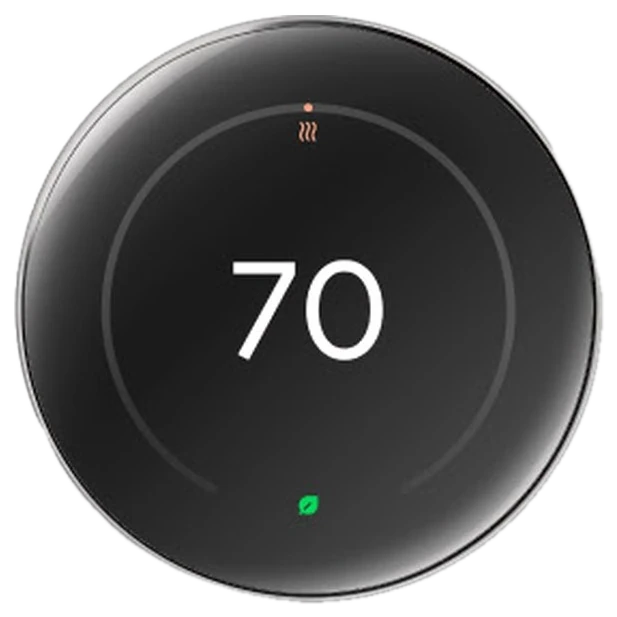
Google Nest Learning Thermostat (4th gen)
Sharper screen, deeper Google Home fit
~$260–280Estimated price
View on AmazonThe Nest Learning Thermostat (4th gen) is the better-looking of these two. The larger, borderless color touchscreen is easier to read across a room, the auto-learning schedule builds itself from how you adjust the temperature over the first week, and it comes with one Nest Temperature Sensor to even out a room that runs hotter or colder than where the thermostat is mounted. It is Matter-certified, beyond the Google Home app it also bridges into Apple Home and Samsung SmartThings.
On savings, Nest cites its multi-year studies, independently verified by the Energy Trust of Oregon and Indiana-based Vectren — see the FAQ below for how that compares to ecobee’s own number. Most homes install it without a C-wire, though heating-only or zoned systems may need a separate power accessory. It has no built-in mic, and Apple Home support runs through Matter, not natively. At $260–280, it’s the pick for a household already in Google’s ecosystem.
Strengths
- Matter-certified; bridges into Apple Home, SmartThings
- Larger, sharper display, more refined design
- Ships with one sensor for problem rooms
- Savings verified by two utility-backed studies
Tradeoffs
- No built-in microphone or voice assistant
- Apple Home runs through Matter, not native
- Heating-only, zoned systems may need extra power
- Only one sensor; more rooms cost more
Pick 2 of 2: Best for saving the most
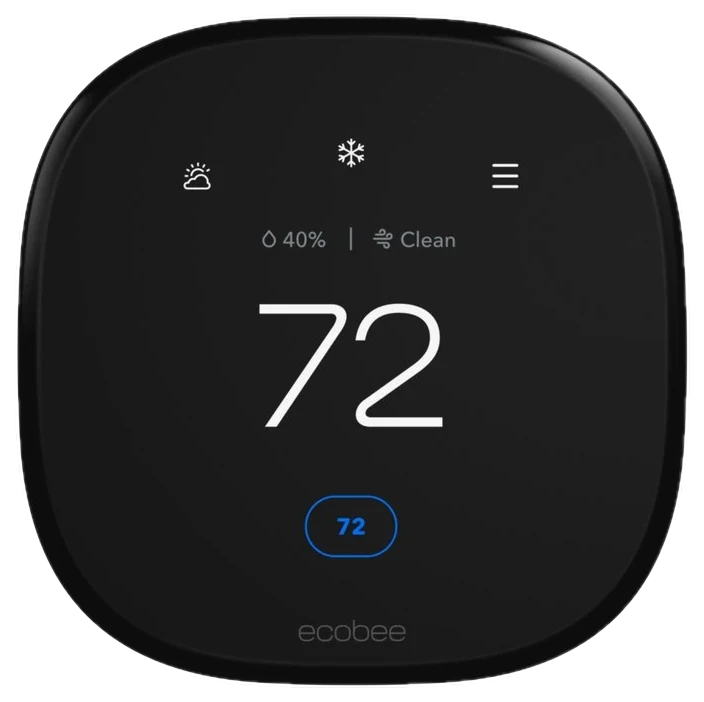
Ecobee Smart Thermostat Premium
Built to stop heating empty rooms
~$210–250Estimated price
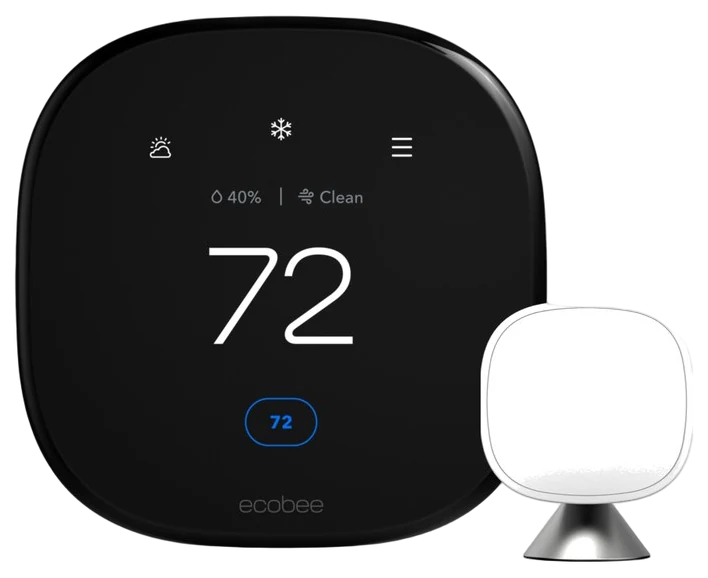
View on AmazonThe Ecobee Smart Thermostat Premium ships with one SmartSensor, a wireless puck reading temperature and occupancy anywhere it’s placed, and the thermostat runs off that reading, not the hallway temperature. That’s the savings mechanism: it stops conditioning a room nobody is in. Alexa is built into the unit with a microphone and speaker, Siri works through a paired HomePod, and it lists native Apple HomeKit support alongside Alexa and SmartThings, not routed through Matter. A Power Extender Kit is included, covering most C-wire-free installs.
Ecobee cites its own analysis of customer data for its savings claim — see the FAQ below for how that compares to Nest’s independently verified number. It also adds a built-in VOC and CO2 air-quality monitor, covering only the main thermostat’s room, not each SmartSensor. It is not Matter-certified, so a future Matter-only hub may skip it, and extra SmartSensors are sold separately. At $210–250, it’s the pick built around not wasting energy on empty rooms.
Strengths
- SmartSensor stops conditioning empty rooms
- Alexa built in; Siri via HomePod
- Native Apple HomeKit support, not a Matter bridge
- Power Extender Kit covers most C-wire-free installs
- Higher self-published savings figure than Nest
Tradeoffs
- 26 percent figure is ecobee’s own analysis
- Not Matter-certified for future Matter-only hubs
- Extra SmartSensors sold separately for other rooms
- Air-quality monitoring covers only the main room
Smart thermostat FAQs
6 common questions, answered.
Do I need a C-wire to install either of these?
Most homes don’t, but the two handle it differently. Nest works without a C-wire in the majority of installs, though heating-only or zoned HVAC systems sometimes need a separate power accessory bought on top. Ecobee includes a Power Extender Kit in the box specifically to cover C-wire-free installs, so the fix ships with the thermostat rather than being an extra purchase. Either way, check your furnace or air handler’s wiring compartment before buying, since a small number of older or unusual systems need a licensed HVAC technician regardless of which thermostat you pick.
Which one saves more on energy bills?
On the numbers each brand publishes, ecobee claims the bigger figure: its own analysis of North American customer data put average savings as high as 26 percent on heating and cooling costs. Nest’s published numbers are smaller but independently checked — the Energy Trust of Oregon and Vectren separately verified average savings of 10 to 12 percent on heating and about 15 percent on cooling. Ecobee’s SmartSensor, which prevents the system conditioning an empty room, is the specific mechanism behind its larger claim. Either number assumes you use the scheduling features rather than overriding them constantly.
Is the ecobee SmartSensor worth it, or is one thermostat sensor enough?
If your home has one room that consistently runs hotter or colder than wherever the thermostat is mounted, a room sensor solves a real problem rather than a theoretical one, and both brands sell one. Ecobee includes its first SmartSensor in the box with the Premium; Nest includes one Temperature Sensor with this bundle too. For a single-story home with even airflow, the included sensor may go mostly unused. For a multi-story home, a finished basement, or a bedroom over a garage, it typically pays for the comfort difference alone, savings aside.
Does either work natively with Apple HomeKit?
Only one does. Ecobee lists Apple HomeKit as a direct, native integration alongside Alexa and Samsung SmartThings. Nest’s HomeKit support comes through Matter, the cross-brand smart-home standard it is certified for — which works well day to day, but a Matter bridge can lag a native integration when Apple ships new HomeKit features, since the manufacturer has to update the Matter layer rather than a first-party Apple integration. If you’re specifically building around Apple Home, that difference is worth knowing before you buy.
What does ENERGY STAR certification verify?
ENERGY STAR only certifies a smart thermostat after it demonstrates real, program-verified savings across installed homes in the United States, not just a lab estimate — the published floor for that certification is an average of about 8 percent off heating and cooling costs. Both of these models are ENERGY STAR certified, so both clear that verified minimum. The bigger numbers each brand advertises on its own site are the manufacturers’ own separate studies layered on top of that baseline certification, not the ENERGY STAR figure itself — see the savings FAQ above for how those two compare.
When do these go on sale?
Both discount during the same windows as most smart-home hardware: the late-November sales period and the mid-year sales event are the two reliable dips, commonly $30 to $60 off list on either model. Open-box units at Best Buy and other electronics retailers can go considerably further below list, though condition and included accessories vary listing to listing, so check what’s in the box before buying open-box. Neither brand’s previous generation has fully left the market, and last-generation Nest and ecobee models get discounted further whenever a new one ships.
How we chose
We didn’t install either thermostat ourselves.
We compared published specs, ENERGY STAR certification, each brand’s own savings studies, smart-home platform compatibility, and C-wire installation requirements. We didn’t install either thermostat ourselves; where a savings percentage rests on a utility study rather than the brand’s own analysis, we say so beside the figure. Updated September 2026. Prices are always moving, so every button and link pulls the live listing.
How we rank
Published specifications, verified owner reviews, and independent safety or standards data where it applies — weighted the same for every pick, never sponsored placement.
Corrections on this guide
Correction, 22 September 2026: The “Updated” date on this guide previously read July 2026. The guide was first published on 14 September 2026; the July date came from a template shared with older guides. No pick, price or ranking was affected.
Every correction we’ve madeCorrection, 7 October 2026: The Ecobee Smart Thermostat Premium was listed at about $230–260 here. Its Amazon listing read $209.99 on 7 October (list price about $250), so the range is now about $210–250, the same as in our other guides that list it.
Every correction we’ve made
Where to go next.
Related guides, then every guide in the department.
- GuideThe Best Smart Thermostats for 2026, With the Energy Savings Compared
- GuideBest Smart Plugs and Switches: A $30 Starting Point for 2026
- GuideThe Best Smart Home Devices of 2026: Seven That Pay for Themselves
- GuideThe Best Smart Home Hubs and Displays: Alexa, Google or Apple
- GuideThe $150 Smart Home Starter Kit: Four Devices, in the Order to Buy Them
- DepartmentEvery Smart Home guide