Gift finderFind a gift in three tapsNot sure this list fits? Say who it’s for and what you want to spend.OpenClose
Gift finder
Find a gift in three taps
Say who it is for and what you want to spend. You get three to six picks from our gift guides, each with the guide’s own reason.
The short answer
For most people
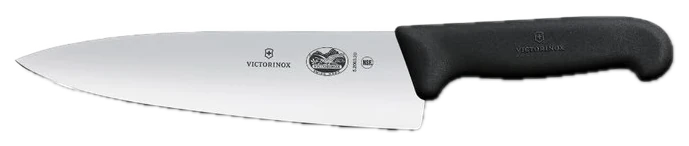
Victorinox Fibrox Chef’s Knife$50–67The Victorinox Fibrox Chef’s Knife, $50–67 — the day is won here; every bottleneck downstream starts with someone slowly dicing onions on a dull blade.Check price
For gravy
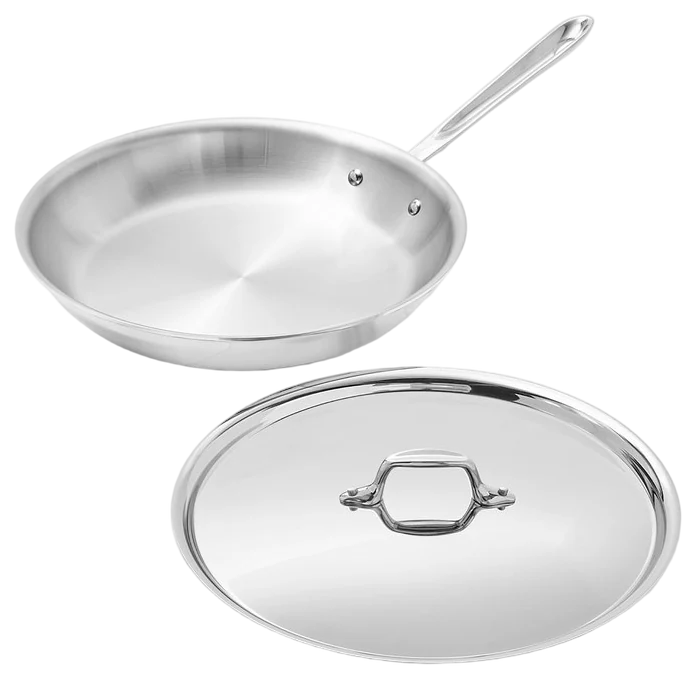
All-Clad D3 Stainless Pan$110–160The All-Clad D3, $110–160 — the pan you need to deglaze.Check price
Then the pot
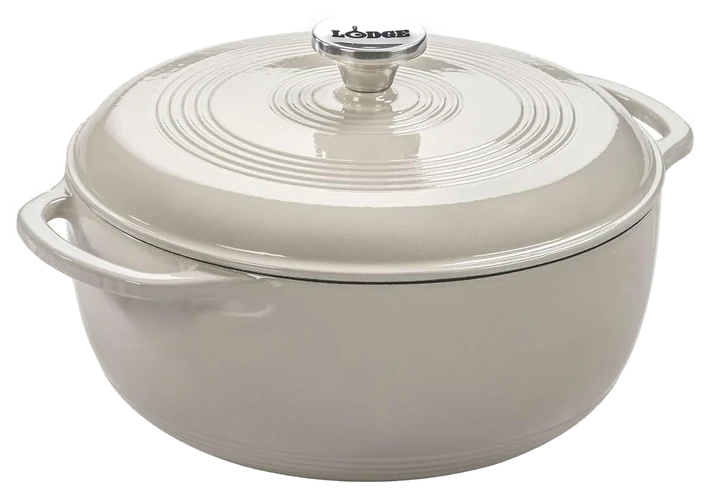
A Lodge enameled Dutch oven, $70–100 — handles braises and sides for a quarter of what the French version costs.
Thanksgiving is the one day a year a home kitchen runs like a restaurant, and it exposes exactly which pans and tools were never up to it.
How we choseWhat we compared, and how we rank
Every piece here already earned a recommendation in one of our kitchen guides. For a Thanksgiving list we applied a second filter: does it solve a bottleneck that only appears when four dishes are running at once, and is it still worth owning in February. Nothing seasonal, nothing single-use. Prices are always moving, so every button and link pulls the live listing.
How we rank
Published specifications, verified owner reviews, and independent safety or standards data where it applies — weighted the same for every pick, never sponsored placement.
Thanksgiving is mostly prep, and prep is mostly one knife. The Victorinox Fibrox is the worst-kept secret in professional kitchens: a grippy, perfectly balanced, scary-sharp eight-inch blade at a price that lets you learn on it guilt-free, which is why culinary schools hand one to every incoming class. America’s Test Kitchen has named it a favorite chef’s knife for nearly three decades running.
Knife skills matter more than knife spend, and this is the blade to build them on. It is light enough for the hours of chopping this day involves, and tough enough to survive home sharpening mistakes, which is not true of a delicate Japanese edge. Many cooks who could afford anything never leave it. What it lacks is forged-steel romance, and the handle is cafeteria-practical rather than beautiful. That is the point: it is a tool bought to be used hard.
If you are giving it, a cheap honing steel alongside is the addition that keeps it sharp, since the single biggest cause of a dull knife is not use but never honing it. At $50 to $67 it out-prepares knives at five times the price in every hand that has not trained for years.
Strengths
The blade culinary schools issue to students
Light enough for hours of prep
Cheap enough to learn on without guilt
Tradeoffs
No forged-steel looks, and a plain plastic handle
Still needs honing like any knife
Not a heirloom piece if that is what you want
Pick 2 of 6: No. 2Best for sides
2
Lodge Enameled Dutch Oven
Best for sides
Braises, stocks and the bread, in one pot
Get it if you braise, stew or bake bread more than twice a year, and you don’t want to spend $300+ on the French version
Skip it if you already own a Dutch oven of any brand
The Dutch oven handles everything liquid and slow, which on this day means the braise, the stock made from the carcass, and the no-knead bread that made these pots famous in the first place. The Lodge enameled version keeps pace with the far pricier French pots in side-by-side testing from outlets like CNN Underscored and The Kitchn, at roughly a fifth of the price.
Enameled means no seasoning ritual and no acid anxiety, so tomato, wine braises and citrus are all welcome, which matters because the acidic dishes are exactly the ones a bare cast iron pan cannot take. Six quarts is the family sweet spot: one pot roast, one batch of chili, or one boule at a time.
It also does the thing worth planning around on a crowded day, which is going from stovetop to oven to table without a transfer, so it occupies one surface instead of three. The enamel asks for wooden utensils and no thermal shock, and preheating it empty is its one real taboo. At $70 to $100 it is the pot that turns Sunday cooking into a habit rather than an event.
Strengths
Blind-test equal to pots at five times the price
No seasoning, and acid-safe
Stovetop to oven to table in one vessel
Tradeoffs
Enamel chips if you thermal-shock it
Heavy when full
Six quarts is too big for one or two people
Pick 3 of 6: No. 3Best value~$25–45
3
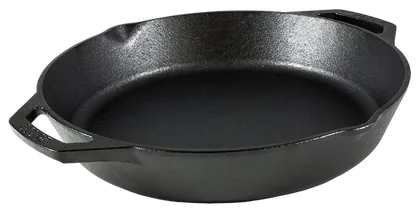
Lodge Cast Iron Skillet
Budget pickBest value
Cornbread, and anything that needs a real crust
Get it if you want the single highest return per dollar in the kitchen, full stop
Skip it if wrist strength makes a heavy pan a genuine problem
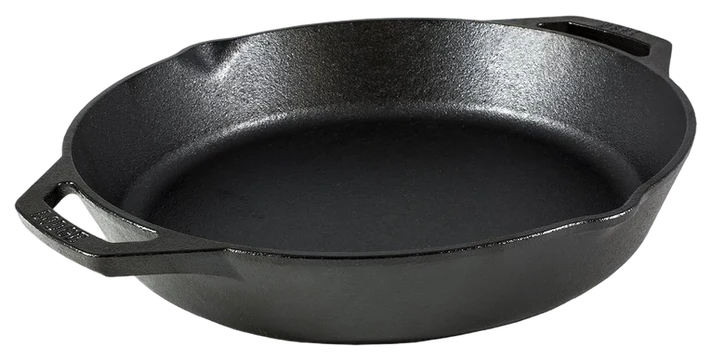
The Lodge cast iron skillet is the best value in any kitchen category. Cast iron holds an enormous amount of heat relative to its surface, which is exactly what searing requires: when a cold piece of food hits the pan the surface temperature barely drops, so you get a crust rather than a slow grey steam. On this particular day it is the cornbread pan, and it is the thing you sear on before the braise goes in the oven.
It is also effectively permanent. There is no coating to fail and no bonded layer to separate, and a neglected rusted pan can be stripped and re-seasoned back to new, which is why a hundred-year-old example is as good as a new one. It also goes straight from the stovetop into the oven, which matters when the oven is the bottleneck.
What it punishes is inattention and acidity: it must be dried properly or it rusts, a long-simmered tomato sauce will strip the seasoning and pick up a metallic taste, and a loaded 12-inch pan is heavy enough that some people struggle with it. At $25 to $45 none of that is much of an argument against owning one.
Strengths
Holds heat like nothing else at the price
Effectively permanent, and restorable from rust
Stovetop to oven without a second dish
Tradeoffs
Rusts if not dried properly
Acidic sauces strip the seasoning
Heavy when loaded
Also on the shortlist
Three more, in brief
Pick 4 of 6: No. 4Best for gravy~$110–160
4
All-Clad D3 Stainless Pan
Upgrade pickBest for gravy
The gravy pan, because gravy is a fond problem
Get it if you make pan sauces and gravy from scratch and $110–160 is worth it to stop babysitting fond
Skip it if the cast iron already covers everything you cook
Gravy is a fond problem, and fond is a stainless problem. The All-Clad D3 solves what cast iron creates: its tri-ply construction bonds an aluminum core between stainless layers across the entire pan rather than the base, so heat spreads evenly and, crucially, responds quickly when you change the burner. That responsiveness is what you want when a sauce is about to break, which is why Wirecutter and Cook’s Illustrated have both put the D3 12-inch fry pan at the top of their stainless-skillet testing.
Because the cooking surface is inert stainless, acidity is a non-issue, so tomato, wine, lemon and vinegar are all fine, and the browned fond left behind is the entire basis of a pan sauce. That single capability is why professional kitchens run on stainless, and it is why this is the pan the gravy gets made in rather than the one the turkey was seared in. It is dishwasher safe, which on this day is not a small thing.
The price is the objection and it is a fair one, since this is roughly four times the cast iron. Food also sticks if you use it wrongly, which is the number one complaint and almost always comes down to not preheating properly or adding food while the pan is cold.
Get it if you make pan sauces and gravy from scratch and $110–160 is worth it to stop babysitting fond
Skip it if the cast iron already covers everything you cook
Gravy is a fond problem, and fond is a stainless problem. The All-Clad D3 solves what cast iron creates: its tri-ply construction bonds an aluminum core between stainless layers across the entire pan rather than the base, so heat spreads evenly and, crucially, responds quickly when you change the burner. That responsiveness is what you want when a sauce is about to break, which is why Wirecutter and Cook’s Illustrated have both put the D3 12-inch fry pan at the top of their stainless-skillet testing.
Read the full case
Because the cooking surface is inert stainless, acidity is a non-issue, so tomato, wine, lemon and vinegar are all fine, and the browned fond left behind is the entire basis of a pan sauce. That single capability is why professional kitchens run on stainless, and it is why this is the pan the gravy gets made in rather than the one the turkey was seared in. It is dishwasher safe, which on this day is not a small thing.
The price is the objection and it is a fair one, since this is roughly four times the cast iron. Food also sticks if you use it wrongly, which is the number one complaint and almost always comes down to not preheating properly or adding food while the pan is cold.
Strengths
Fond becomes a sauce rather than a stain
Responds fast when you change the heat
Dishwasher safe
Tradeoffs
Four times the price of the cast iron
Sticks if you add food to a cold pan
Handles get hot
Pick 5 of 6: No. 5Best oven overflow
5
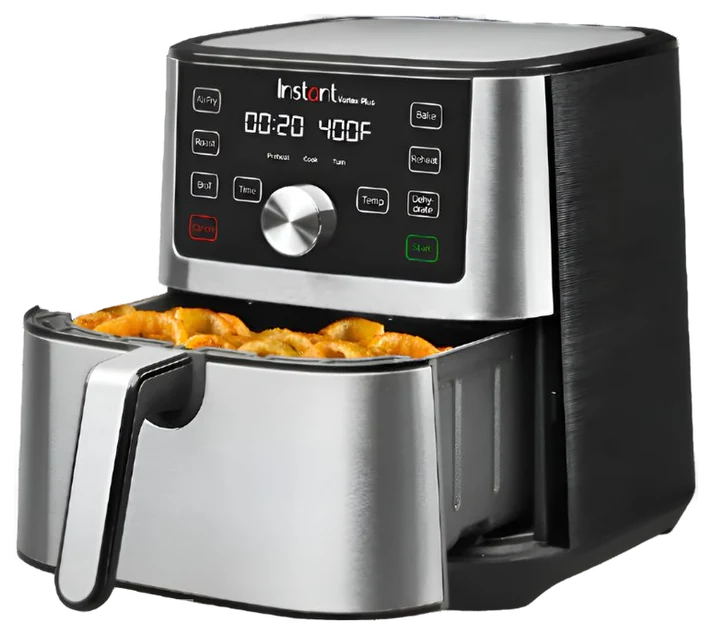
Instant Vortex Plus 6QT ClearCook
Best oven overflow
A second oven, on the day the oven is the bottleneck
Get it if your oven is the bottleneck every single year and $100–140 for a second one sounds cheap by comparison
Skip it if you have a double oven or a second kitchen
The real Thanksgiving constraint is not skill or time, it is oven shelves. Something large occupies the oven for hours while four side dishes need heat, and every year that arithmetic is what makes dinner late. The Instant Vortex Plus 6QT ClearCook is the cheapest way to add a second, independent source of heat to the room.
It is the pick for the widest range of kitchens because it fixes the common annoyances without doing anything strange. Six quarts comfortably feeds a family of three, and the ClearCook window with an interior light ends the open-the-drawer-and-lose-your-heat inspection cycle, which matters more when you are running two ovens at once.
The window is the feature owners mention first, but the quiet is what they keep mentioning after six months: Good Housekeeping’s Lab testers singled out both the viewing window and the low noise level, since most air fryers sound like small jet engines and this one hums. Controls are simple presets rather than an app, and the nonstick basket wipes out easily.
The catch is that six quarts takes real counter space, and on this particular day counter space is also in short supply, so it wants a plan for where it lives.
Strengths
A whole second oven for the price of a side dish
Window and light, so you stop losing heat
Among the quieter units made
Tradeoffs
Six quarts takes real counter space
Overkill for one person the rest of the year
Presets only, no app control
Pick 5 of 6: No. 5Best oven overflow
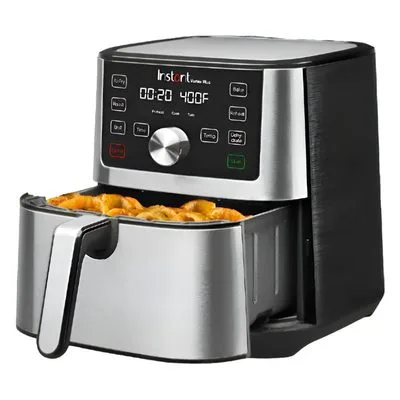
Instant Vortex Plus 6QT ClearCook
A second oven, on the day the oven is the bottleneck
Get it if your oven is the bottleneck every single year and $100–140 for a second one sounds cheap by comparison
Skip it if you have a double oven or a second kitchen
The real Thanksgiving constraint is not skill or time, it is oven shelves. Something large occupies the oven for hours while four side dishes need heat, and every year that arithmetic is what makes dinner late. The Instant Vortex Plus 6QT ClearCook is the cheapest way to add a second, independent source of heat to the room.
Read the full case
It is the pick for the widest range of kitchens because it fixes the common annoyances without doing anything strange. Six quarts comfortably feeds a family of three, and the ClearCook window with an interior light ends the open-the-drawer-and-lose-your-heat inspection cycle, which matters more when you are running two ovens at once.
The window is the feature owners mention first, but the quiet is what they keep mentioning after six months: Good Housekeeping’s Lab testers singled out both the viewing window and the low noise level, since most air fryers sound like small jet engines and this one hums. Controls are simple presets rather than an app, and the nonstick basket wipes out easily.
The catch is that six quarts takes real counter space, and on this particular day counter space is also in short supply, so it wants a plan for where it lives.
Strengths
A whole second oven for the price of a side dish
Window and light, so you stop losing heat
Among the quieter units made
Tradeoffs
Six quarts takes real counter space
Overkill for one person the rest of the year
Presets only, no app control
Pick 6 of 6: No. 6Best for after
6
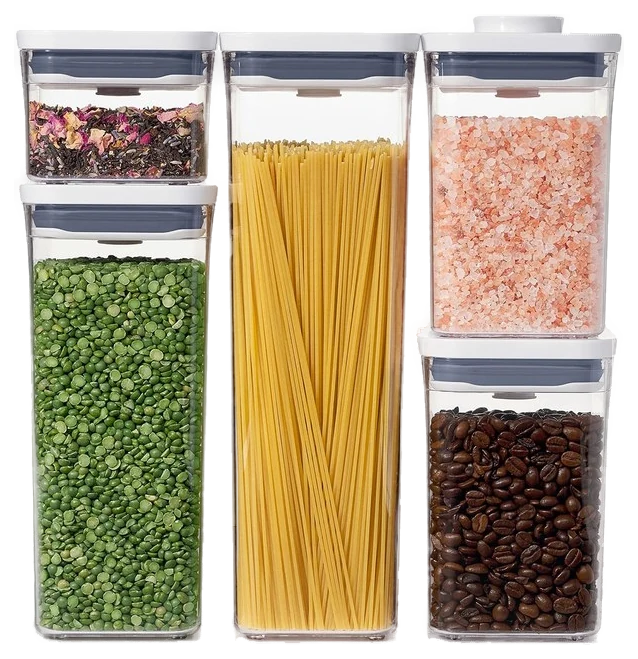
OXO POP Containers
Best for after
Where the leftovers and the prep end up
Get it if prep-ahead and leftovers are where your kitchen falls apart, and you’re ready to commit to one system
Skip it if you are happy with mismatched tubs and bag clips
Half of a calm Thanksgiving happens two days early, and the other half happens the night after. Both are storage problems. The OXO POP system endures because it solves all three pantry failures at once: staleness, through one-touch airtight seals; chaos, through modular sizes that stack true; and buying a third bag of flour because the first two were hiding behind something.
The push-button lid is the habit-former, since it is one hand and one touch to seal, which is the difference between a container system that gets used and one that gets abandoned by December. The clear walls turn a pantry into an inventory you can read at a glance, which is exactly what you want when you are checking whether you have enough of something at nine at night.
Wirecutter has named the OXO POP system its top pick for food storage six years running, and owner reviews run years deep with the same arc: started with five, now the whole shelf matches. They are premium per container, and hand-washing the lids preserves the seals, so this is not a fill-the-dishwasher item. At $33 to $113 by set the sensible move is to start with five staples and let the system expand on its own merits.
Get it if prep-ahead and leftovers are where your kitchen falls apart, and you’re ready to commit to one system
Skip it if you are happy with mismatched tubs and bag clips
Half of a calm Thanksgiving happens two days early, and the other half happens the night after. Both are storage problems. The OXO POP system endures because it solves all three pantry failures at once: staleness, through one-touch airtight seals; chaos, through modular sizes that stack true; and buying a third bag of flour because the first two were hiding behind something.
Read the full case
The push-button lid is the habit-former, since it is one hand and one touch to seal, which is the difference between a container system that gets used and one that gets abandoned by December. The clear walls turn a pantry into an inventory you can read at a glance, which is exactly what you want when you are checking whether you have enough of something at nine at night.
Wirecutter has named the OXO POP system its top pick for food storage six years running, and owner reviews run years deep with the same arc: started with five, now the whole shelf matches. They are premium per container, and hand-washing the lids preserves the seals, so this is not a fill-the-dishwasher item. At $33 to $113 by set the sensible move is to start with five staples and let the system expand on its own merits.
Strengths
One-handed push-button seal, so it gets used
Modular sizes that stack
Clear walls turn a pantry into an inventory
Tradeoffs
Premium price per container
Lids want hand-washing to preserve the seal
Buying the whole shelf at once is expensive
The gear that saves your Thanksgiving is whatever fixes your actual bottleneck, which is usually oven space and a dry bird.
Free up oven shelves: your real constraint is heat, so a second source like an air fryer or slow cooker does more for you than another pan.
Get an instant-read thermometer: it’s the cheapest insurance against a dry turkey, since you pull the bird at temperature, not by the clock.
Favor year-round tools: a gadget you use once a year rarely justifies the storage, so lean toward things you’ll reach for in March too.
Buy the knife and cookware for everyday: the turkey is one meal, but a good chef’s knife and pans earn their keep all year, so choose for daily cooking.
ThermoWorks Thermapen ONE — a 1-second instant-read that’s the single best tool against a dry turkey, but at around $100 it’s hard to justify for occasional cooks, so a cheaper instant-read does the same job here.
Cuisinart Chef’s Classic Roasting Pan with Rack — it handles a 25-pound bird with a proper rack, but a big roaster only comes out once or twice a year, and a foil pan or your Dutch oven covers most cooks.
OXO Good Grips Good Gravy Fat Separator — the top-rated way to skim fat for smooth gravy, but it’s a once-a-year single-tasker, and a spoon or a zip bag with the corner snipped does the trick.
Cuisinart 14-Cup Food Processor — it shreds and slices for stuffing, sides, and pie crust in seconds, but it’s a bigger investment than a one-day feast needs unless you’ll use it year-round.
Thanksgiving kitchen questions
6 common questions, answered.
What goes wrong on Thanksgiving?
Oven shelves, almost always. One large item occupies the oven for hours while four side dishes also need heat, and everything after that is queueing. The second most common failure is prep taking twice as long as planned because the only sharp knife is small. Those are the two bottlenecks worth spending money on, and they are why a second heat source and a proper chef’s knife lead this list.
Do I need both the cast iron and the stainless pan?
They solve opposite problems, which is why our cookware guide recommends owning both eventually. Cast iron holds heat, so it sears and it bakes cornbread. Stainless is inert and responsive, so it makes pan sauces and handles anything acidic without picking up a metallic taste. If you buy one, buy the cast iron first on price alone. If gravy from scratch matters to you, the stainless is the one that makes it.
Is an air fryer an oven?
It is a compact convection oven, which is what you need on this day. It will not roast a large bird, but it will handle sides, reheats and anything that wants crisping while the main oven is occupied, and it does that without heating the whole kitchen. Treat it as the second shelf you do not have rather than as a novelty appliance.
How far ahead can I prep?
Most sides tolerate being made a day or two early far better than people expect, which is the whole reason the storage pick is on this list. Anything with a crust or a fried element is the exception and wants doing on the day. Airtight storage matters more than the fridge shelf it sits on, because staleness and absorbed fridge smells are what ruin prepped food.
What is the best gift here for a new cook?
The knife, comfortably. It is the piece that improves every single thing they cook rather than one dish a year, it needs no technique to appreciate, and it is cheap enough that they will use it hard rather than saving it. The cast iron skillet is the runner-up for the same reason and at half the price.
When does this gear discount?
Cookware and small appliances discount hardest from late November through Cyber Monday, which is unhelpfully just after Thanksgiving itself. If you are buying for next year rather than this one, that is the window. The knife and the cast iron are the exceptions: both sell close to the same price all year, so there is nothing to wait for.
Sources
Who the write-ups above lean on, and where each one is cited.
WirecutterCited for All-Clad D3 Stainless Pan and OXO POP Containers, and in the buying advice.
Cook’s IllustratedCited for All-Clad D3 Stainless Pan, and in the buying advice.
Good HousekeepingCited for Instant Vortex Plus 6QT ClearCook, and in the buying advice.
America’s Test KitchenCited for Victorinox Fibrox.
CNN UnderscoredCited for Lodge Dutch oven.
KitchnCited for Lodge Dutch oven.
Prices on this page are re-checked weekly — see the full Home & Kitchen price index for every product we cover.
Keep reading
Where to go next.
The close calls side by side, then related guides.
New guides, re-ranked picks and the month's notable changes. No weekly filler, ever.
Unsubscribe any time. Your address goes to our newsletter provider and nowhere else — see our privacy policy.
Manage Consent
To provide the best experiences, we use technologies like cookies to store and/or access device information. Consenting to these technologies will allow us to process data such as browsing behavior or unique IDs on this site. Not consenting or withdrawing consent, may adversely affect certain features and functions.
Functional
Always active
The technical storage or access is strictly necessary for the legitimate purpose of enabling the use of a specific service explicitly requested by the subscriber or user, or for the sole purpose of carrying out the transmission of a communication over an electronic communications network.
Preferences
The technical storage or access is necessary for the legitimate purpose of storing preferences that are not requested by the subscriber or user.
Statistics
The technical storage or access that is used exclusively for statistical purposes.The technical storage or access that is used exclusively for anonymous statistical purposes. Without a subpoena, voluntary compliance on the part of your Internet Service Provider, or additional records from a third party, information stored or retrieved for this purpose alone cannot usually be used to identify you.
Marketing
The technical storage or access is required to create user profiles to send advertising, or to track the user on a website or across several websites for similar marketing purposes.