Each bar is an estimated price range, on one scale from ~$130 to ~$329.
How we choseWe haven’t worn either device ourselves.
We compared published sensor sets and battery figures, platform and subscription requirements, independent accuracy reporting on heart rate and sleep, and long-term owner reports on band wear and battery aging. We haven’t worn either device ourselves; the heart-rate and sleep-accuracy figures come from independent accuracy reporting and long-term owner reports we drew on. Prices are always moving, so every button and link pulls the live listing.
How we rank
Published specifications, verified owner reviews, and independent safety or standards data where it applies — weighted the same for every pick, never sponsored placement.
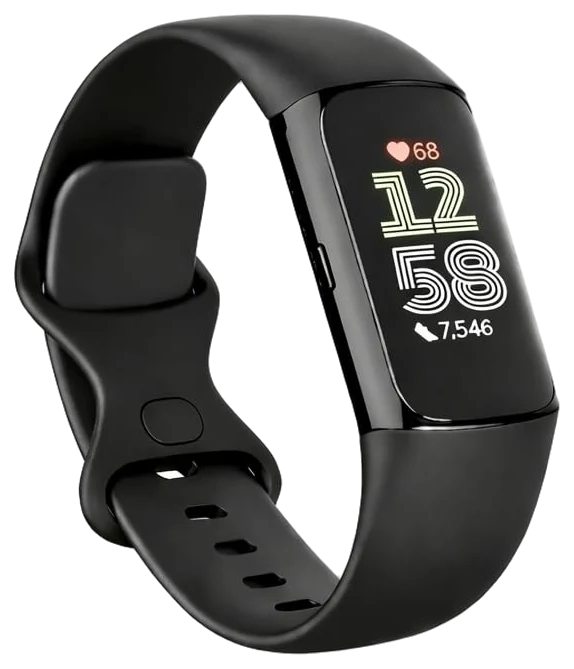
Battery life is not a spec on the Fitbit Charge 6 so much as the entire point. Sleep tracking only works if the device is on your wrist at night, and a device you charge nightly is a device that spends nights on a bedside table. At roughly a week per charge, the Charge 6 collects continuous data in a way a smartwatch structurally cannot.
What it does with that data is the other half. Fitbit’s sleep reporting is the most readable in the category: stages, a nightly score, and long-run trends that mean something after a month. DC Rainmaker’s in-depth testing found the Charge 6 nails sleep and wake times within a couple of minutes, and its readiness-style scoring gives a sane answer to whether to train hard today. It works with Android and iPhone equally, it is small enough to wear overnight without noticing, and it now includes on-wrist Google Maps directions and YouTube Music control.
The limits are deliberate. The screen is small, the app selection is essentially nil, and the most useful analytics sit behind Fitbit Premium: the free tier gives you the basics but the trend depth is subscription-gated, which is a genuine ongoing cost. Bands also wear and need replacing; third-party bands are cheap. At $130–160, it is the better instrument, and the worse computer.
Strengths
About a week of battery, so sleep data is continuous
Clearest sleep reporting in the category
Works equally with Android and iPhone
Small enough to wear comfortably overnight
Tradeoffs
Best analytics sit behind a subscription
Tiny screen, effectively no apps
Bands wear and need replacing
Best for iPhone owners~$219–329
2
Apple Watch SE
Best for iPhone owners
A wrist computer that happens to track workouts well
Get it if you have an iPhone and $219–329 buys you a smartwatch first, a tracker second.
Skip it if you use Android, or sleep data is the main reason you are buying.
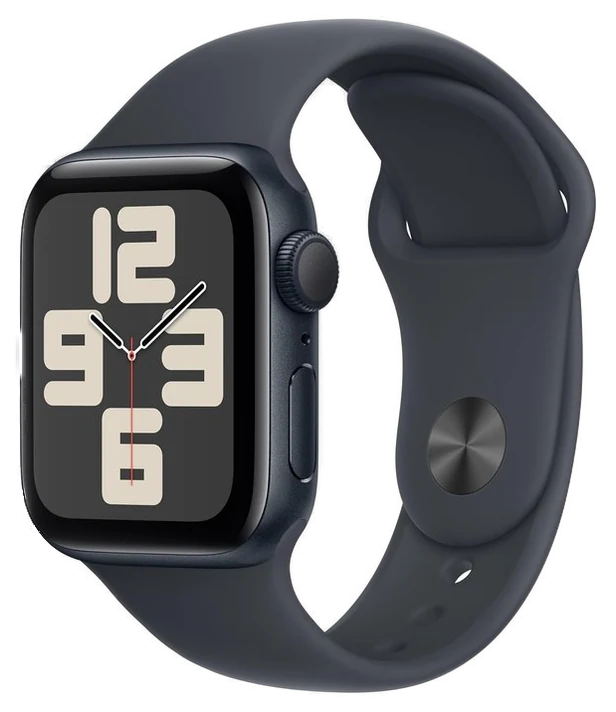
The Apple Watch SE is a different category of object. It runs apps, replies to messages, takes calls, pays for things, and, the standout feature for many buyers, detects hard falls and car crashes and can call emergency services with your location. For an older relative or someone who exercises alone, that is not a gimmick.
As a fitness device it is capable. Workout tracking is accurate and well presented, Wareable’s testing found the heart-rate sensor holds up well against a chest strap outside of interval-training spikes, and the ecosystem of third-party training apps is far deeper than anything on a tracker. The larger screen makes mid-workout data readable, and closing the rings motivates a lot of people to keep going.
Two hard limits. It requires an iPhone. There is no Android support at all, so if you might switch phones this is a dead end. And battery is around eighteen hours, which means charging most nights and therefore either skipping sleep tracking or charging during the day instead. If sleep is your goal, that is disqualifying, and a dedicated sleep tracker is the better tool. At $219–329, buy it as a smartwatch first.
Strengths
Fall and crash detection with emergency calling
Full app ecosystem and readable screen
Excellent workout tracking and presentation
Deep integration with iPhone
Tradeoffs
Requires an iPhone, no Android support
About 18 hours of battery
Nightly charging makes sleep tracking awkward
Verdict
Is the Apple Watch SE worth it on its own?
Yes, if you carry an iPhone and want a smartwatch first, a fitness tracker second. ~$219–329, depending on case size and cellular, buys apps, calls, payments, and fall and crash detection that can call emergency services with your location. Wareable found the heart-rate sensor holds up against a chest strap outside of interval-training spikes. No, if you use Android (it does not work at all) or if sleep tracking is the reason you are shopping: about 18 hours of battery means charging most nights.
Swipe the table sideways for the rest of the columns →
Is the Apple Watch SE worth it on its own? at a glance
Situation
Our call
Buy it if
you own an iPhone and want notifications, apps and a real screen. The safety features are the reason to buy one for an older relative or anyone who exercises alone.
Skip it if
you use Android, might switch phones (Apple Health history does not transfer), or sleep data is the point. The Fitbit Charge 6 lasts about a week per charge.
Cheaper if
you take the GPS-only model at the low end of the range and skip cellular, or wait for the late-November sales and the autumn launch, when the previous generation drops.
Fitness tracker FAQs
7 common questions, answered.
Do I need the Fitbit subscription?
Not for the basics. Free Fitbit gives you steps, heart rate, workouts, and a nightly sleep score. Premium adds the deeper sleep analysis, longer trend history, readiness scoring and guided content. Whether that is worth a monthly fee depends entirely on whether you act on data or glance at it. Most people do not, and cancel within a few months. Buy the device on the assumption you will use the free tier, and treat Premium as an experiment.
How accurate is any of this?
Step counts and heart rate during steady activity are reliable on both. Heart rate during high-intensity interval training is noticeably less so on any wrist optical sensor. A chest strap remains meaningfully more accurate if you train seriously. Sleep duration is broadly trustworthy; sleep staging is an estimate derived from movement and heart rate, and should be read as a trend rather than a measurement. Calorie burn is the least reliable figure either device produces, and can be out by a wide margin.
What happens to my data if I switch phones?
This is the question people wish they had asked first. Fitbit works across Android and iPhone, so switching phones keeps your history intact. Apple Watch data lives in Apple Health and does not transfer to Android, if you switch, the watch stops working entirely and years of history become difficult to take with you. If there is any real chance you will change platform, that asymmetry should probably decide this comparison on its own.
Can either replace a medical device?
No. Both include features with genuine clinical grounding, irregular rhythm notifications in particular have real evidence behind them, but neither is a diagnostic tool, and neither should be used to rule anything out. They are good at flagging that something may warrant a conversation with a doctor. Treat an alert as a prompt to seek advice, and never treat a normal reading as reassurance about symptoms you are experiencing.
How long will these last?
Three to four years is realistic for both, and the limiting factor is the battery rather than the device. Expect noticeable capacity loss by year three with daily charging, which bites harder on the Apple Watch, since eighteen hours degrading to twelve changes how you can use it. Apple offers paid battery replacement; Fitbit generally does not, making the Charge effectively disposable at end of life. Factor that into the price difference.
When do these go on sale?
Fitbit discounts frequently and heavily. The Charge line regularly drops well below list during the late-November sales and around the mid-year sales event, and there is little reason ever to pay full price. Apple discounts less, but third-party retailers cut the Watch SE meaningfully in the same November window, and the previous generation drops sharply whenever a new model is announced in the autumn.
Is the Apple Watch SE worth it for sleep tracking?
Not as the main reason. Eighteen hours of battery means it charges most nights, exactly when a sleep tracker has to be on your wrist, and daily charging shrinks that runway toward twelve hours by year three. Buy it for apps, calls and the safety features and treat sleep data as a bonus. If sleep and recovery are the goal, the Charge 6 is the better instrument.
New guides, re-ranked picks and the month's notable changes. No weekly filler, ever.
Unsubscribe any time. Your address goes to our newsletter provider and nowhere else — see our privacy policy.
Manage Consent
To provide the best experiences, we use technologies like cookies to store and/or access device information. Consenting to these technologies will allow us to process data such as browsing behavior or unique IDs on this site. Not consenting or withdrawing consent, may adversely affect certain features and functions.
Functional
Always active
The technical storage or access is strictly necessary for the legitimate purpose of enabling the use of a specific service explicitly requested by the subscriber or user, or for the sole purpose of carrying out the transmission of a communication over an electronic communications network.
Preferences
The technical storage or access is necessary for the legitimate purpose of storing preferences that are not requested by the subscriber or user.
Statistics
The technical storage or access that is used exclusively for statistical purposes.The technical storage or access that is used exclusively for anonymous statistical purposes. Without a subpoena, voluntary compliance on the part of your Internet Service Provider, or additional records from a third party, information stored or retrieved for this purpose alone cannot usually be used to identify you.
Marketing
The technical storage or access is required to create user profiles to send advertising, or to track the user on a website or across several websites for similar marketing purposes.