No. 1: Apple iPad (11-inch, A16)
The Best Tablets and E-readers: Four Screens for Four Different Jobs
Smartwatch buying has one iron rule: the watch must match the phone. Within that constraint, we compared health-sensor accuracy, battery reality, and daily livability to pick the right watch for each ecosystem and budget.
No. 1 · Our pick · Buy (iPhone)
The sensible purchase if you carry an iPhone: it keeps the always-on display and sleep apnea notifications and drops ECG, Blood Oxygen and hypertension notifications.
~$329–449Estimated price
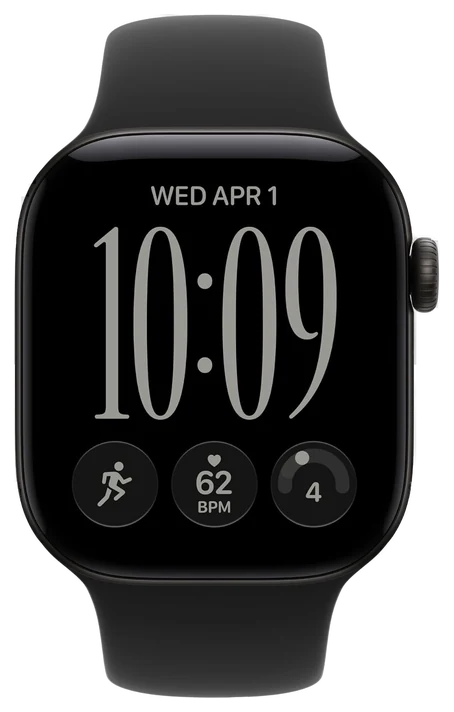 No. 1 · Best for iPhoneApple Watch Series 12~$329–449View on Amazon
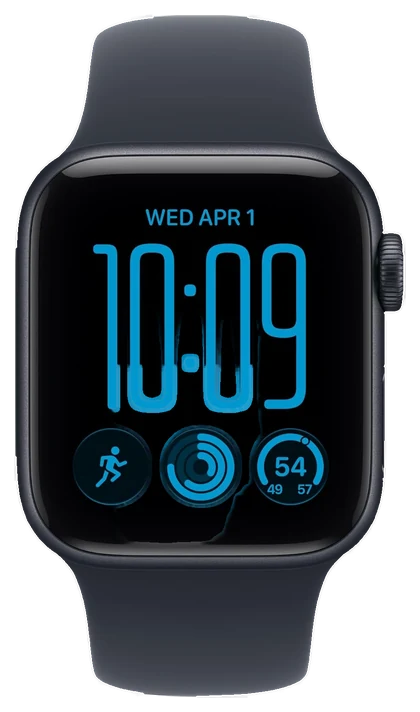 No. 2 · Best value for iPhoneApple Watch SE 3~$199–279View on Amazon
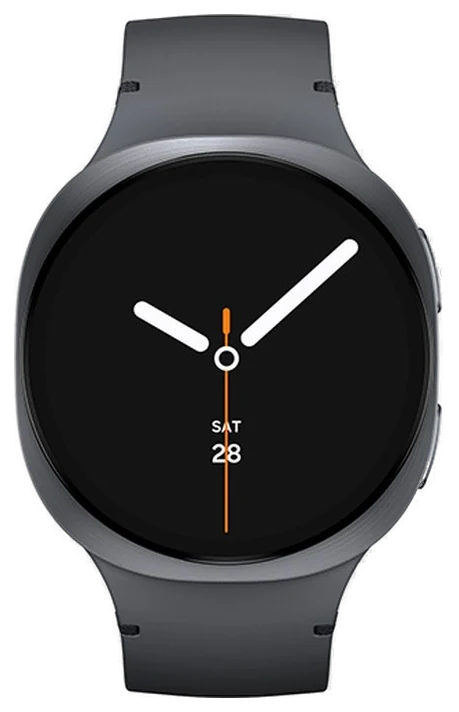 No. 3 · Best for AndroidSamsung Galaxy Watch 8~$300–330View on Amazon
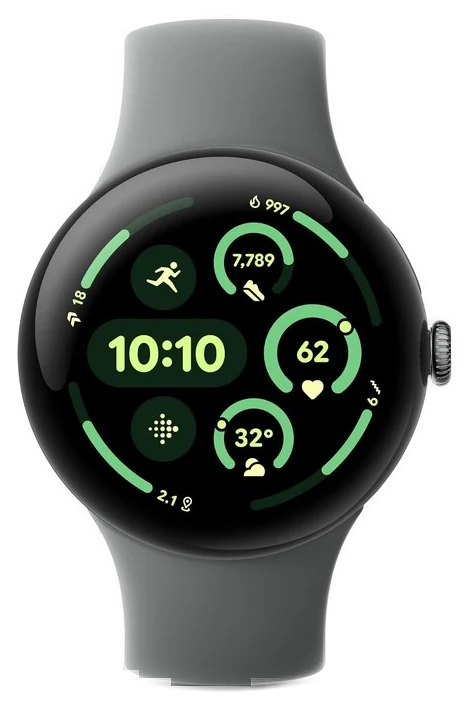 No. 4 · Best clearance valueGoogle Pixel Watch 3~$170–250View on Amazon
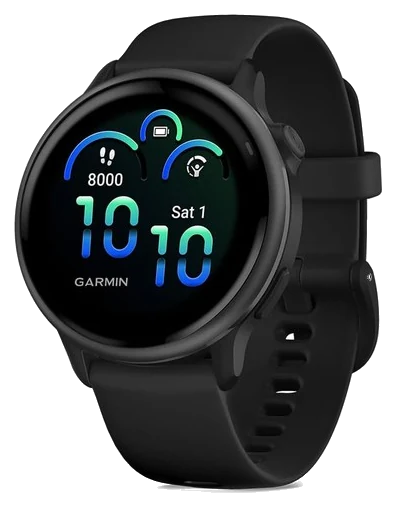 No. 5 · Best batteryGarmin Vivoactive 6~$250–300View on Amazon
| Differences | No. 1Apple Watch Series 12 | No. 2Apple Watch SE 3 | No. 3Samsung Galaxy Watch 8 | No. 4Google Pixel Watch 3 | No. 5Garmin Vivoactive 6 |
|---|---|---|---|---|---|
| Price rangeon one $170–449 scale | ~$329–449 | ~$199–279 | ~$300–330 | ~$170–250 | ~$250–300 |
| Works with | iPhone only | iPhone only | Android (best w/ Samsung) | Android | iPhone + Android |
| Battery | ~1 day | ~1 day | ~1–2 days | ~1–2 days | ~10–11 days |
| Standout | ECG, Blood Oxygen, hypertension alerts | Always-on screen, sleep apnea alerts | Full Wear OS + Samsung Health | Best sleep + readiness data | Real sport depth, no daily charge |
From each pick’s review below. We compared maker specs and listings, not readings we took.
We compiled sensor-accuracy studies, real-world battery testing, and long-term wear reviews across ecosystems. How we chose How we verify Corrections logged publicly
Our No. 1 pick is now the Apple Watch Series 12, which Apple sells in place of the Series 11; the Series 11 is still mentioned as a discounted option while Amazon has it. The short answer said the Apple Watch SE 3 drops the always-on display; Apple lists an always-on display on the SE 3, and the line now names what it does drop: ECG, Blood Oxygen and hypertension notifications. The SE 3 pick now shows the SE 3 itself, where it showed the previous SE, and its range is ~$199–279 from Amazon's prices, where it showed Apple's $249–329 list. In What we skipped, the Apple Watch Ultra 4 replaces the Ultra 3, which Apple no longer sells.
The photograph shown for the Samsung Galaxy Watch 8 was a previous-generation Galaxy Watch with a round case. The Galaxy Watch 8 uses the cushion-shaped case introduced on the Watch Ultra. The image has been replaced. The ranking and the price range were not affected.
This guide described the Apple Watch Series 11 as the most medically capable wearable you can buy and as everything a wrist can currently do. Apple announced the Series 12 on 9 September 2026, in stores from the 18th, with a new Health Sensing System, so those sentences no longer hold. The Series 11 remains our pick, now stated as the outgoing flagship and the better value while it is stocked, with the Series 12 named so readers can judge for themselves.
Dated notes already published on this page, newest first. Every correction we make is logged on the corrections page.
Pick 1 of 5: No. 1 · Best for iPhone
The iPhone flagship
The Apple Watch Series 12 is the watch to get if you carry an iPhone and want the full set of heart features. Apple lists an ECG app, a Blood Oxygen app (Apple says wellness use only) and hypertension notifications, which Apple’s footnote says aren’t for people under 22, during pregnancy or after a prior diagnosis. Sleep apnea notifications, crash detection and fall detection are there too. Apple also says its sensing gives the most accurate heart rate in a wearable, based on its own study; treat that as Apple’s claim until independent measurements appear.
Apple’s spec page lists an S11 chip, an always-on display up to 2,000 nits, up to 24 hours of battery (38 hours in Low Power Mode) and about 80% charge in 30 minutes. It’s water resistant to 50 meters with a depth gauge to 6 meters, and it comes in 42mm and 46mm aluminium or titanium, or in ceramic. If you’re choosing between it and the SE 3, our Apple Watch SE 3 vs. Series 12 page sets the two side by side.
The tax is charging: it’s a nightly charger, and the Garmin below is the escape hatch if battery rules your decision. Apple lists the 42mm at $399 and the 46mm at $449 with GPS, or $499 and $549 with cellular. Amazon showed the GPS models at $329 and $379 on 18 Nov 2026, deal prices that can move. Apple no longer sells the Series 11, but Amazon still had the 42mm GPS new at about $300. Apple’s compare page lists the same ECG, Blood Oxygen and hypertension notifications on it, without the Series 12’s high-frequency background heart rate tracking, so it’s a fair buy while stock lasts.
Pick 2 of 5: No. 2 · Best value for iPhone
The rational Apple pick
The Apple Watch SE 3 delivers the parts of the Apple Watch that change behavior (activity rings, notifications, Apple Pay, crash detection) for about $150 less than the Series 12 at Apple’s list. For a first smartwatch, it’s the rational entry point.
What you give up versus the Series 12 is the heart sensor suite: no ECG, Blood Oxygen or hypertension notifications, a screen half as bright (1,000 nits against 2,000) and up to 18 hours of battery against 24. Apple’s spec page still lists an always-on display, a sleep score and sleep apnea notifications. The core loop of ring-closing, message triage, and tap-to-pay is identical.
The buying logic writes itself: start here, and upgrade only when a specific health feature calls your name. Apple lists it at $249–329; Amazon showed $199–279 on 18 Nov 2026, from the 40mm GPS to the 44mm with cellular. The SE 3 is the best value in the Apple ecosystem.
Next: No. 3, Samsung Galaxy Watch 8Torn? Compare it with No. 3
Pick 3 of 5: No. 3 · Best for Android
The Android all-rounder, freshly discounted
For Android owners the Galaxy Watch 8 is the closest thing to the Apple Watch experience on the other side of the fence: the new cushion-shaped case, the full Wear OS catalog with Google Maps and Wallet, and, uniquely at this price, body-composition measurement from the wrist. Samsung’s health stack carries over deep: ECG, sleep coaching, and BioActive body-fat trends. Wareable’s review called Gemini’s on-wrist assistant support overdue and welcome, while flagging that some newer health and fitness features are still in beta on Android.
The timing is the story: with the Galaxy Watch 9 shipping August 7 at $379.99, Samsung now sells the 40mm Watch 8 at $299.99 on Amazon and the 44mm at $329.99, with years of software support left. Read the fine print, though: ECG and blood pressure still work only with a Samsung phone, and battery remains a day-and-a-bit. The Watch 9 adds a Snapdragon chip and a modestly bigger battery for $80 more; unless those matter, the discounted 8 is Android’s default answer.
Next: No. 4, Google Pixel Watch 3Torn? Compare it with No. 4
Pick 4 of 5: No. 4 · Best clearance value
The Fitbit brain, at half price
The Pixel Watch 3 just became the value play of this list: with the Pixel Watch 4 on shelves, Google cut every Watch 3 model by $80, and the 41mm Wi-Fi version has floated as low as $169.99 at clearance, under half its $349.99 launch price. What that buys is unchanged: the prettiest domed design here, the best sleep tracking and readiness scores in Wear OS, and loss-of-pulse detection that can call emergency services automatically.
Fitbit’s engine remains the differentiator, from daily readiness to run-form analysis. The catches carry over: some advanced insights sit behind a Fitbit Premium subscription, battery is a firm one day with the always-on display, and repairability stays a sore point. Clearance stock also moves, so colors and sizes come and go. The Pixel Watch 4 fixes battery life and charging speed for roughly $120 more; if those two complaints do not move you, the clearance Watch 3 on Amazon is the most watch per dollar on this page.
Pick 5 of 5: No. 5 · Best battery
The battery-and-sport outlier
Garmin plays a different game with the Vívoactive: less wrist computer, more training tool, with battery measured in weeks, around 11 days of normal use, and sport tracking that goes deeper than any mainstream watch here.
The multi-sport catalog covers everything from pool swims to golf with metrics the phone-brand watches approximate at best, and Garmin’s Body Battery energy score has a cult following for good reason. It turns recovery into one actionable number. DC Rainmaker’s coverage noted Garmin held pricing steady versus the previous Vivoactive generation while adding offline support for Spotify, Amazon Music, and YouTube Music. It’s also the rare watch that works fully with either an iPhone or an Android phone.
What you trade away is the app ecosystem: no rich third-party app store, simpler notifications, no wallet ubiquity. For people whose watch priority is fitness rather than apps, that trade is the point. If that fitness happens indoors, our best exercise bikes without a subscription compares bikes you can ride without paying for an app. At $250–300 at Amazon, it’s the escape hatch from nightly charging.
The watch has to match your phone first; everything else is secondary.
Pick any two of the five. Rows that match say so once; the rest sit side by side, as each review states them.
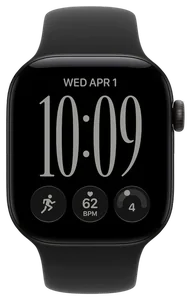
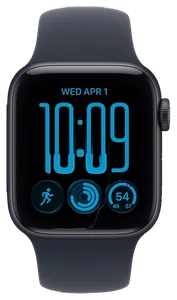
Price range
~$329–449
~$199–279
Works with
iPhone onlySame on both
Battery
~1 daySame on both
Standout
ECG, Blood Oxygen, hypertension alerts
Always-on screen, sleep apnea alerts
6 common questions, answered.
No. It requires an iPhone, full stop. Android owners choose among Wear OS (Samsung, Pixel) and cross-platform fitness brands like Garmin and Amazfit. This single constraint should start every smartwatch decision.
The evidence is strongest for the boring ones: activity nudges, heart-rhythm alerts that catch atrial fibrillation, and fall/crash detection. Treat wellness scores as trends, not diagnoses, and any alarming reading as a prompt to see a doctor, not a diagnosis.
Bright always-on screens and full app platforms cost power. The exceptions (Garmin, Amazfit) get days-to-weeks by running lighter software. Decide which side of that trade you’re on before buying; it’s the biggest daily-life difference between these watches.
Most people don’t. Cellular adds a monthly carrier fee and mainly matters if you want to leave the phone behind on runs while staying reachable. Runners, parents of kids with watches, and safety-focused buyers get real value; everyone else finds their phone is nearly always within Bluetooth range anyway. Buy GPS-only and put the savings toward a better band.
Good enough to spot trends, not to diagnose. Heart rate during steady exercise is solid across all five picks; sleep staging is an estimate; and features like ECG and sleep-apnea detection are screening tools that say “talk to a doctor,” not verdicts. The pattern that matters is change over time, a resting heart rate that quietly climbs is worth acting on regardless of brand.
Watch generations are incremental, a new sensor or a brightness bump, rarely a reason to wait. The smarter play is buying the current model on sale or last year’s at a discount; Samsung and Google models drop 20–30% within months of launch. The exception: if a specific announced health feature matters to you, buy the generation that has it.
We compiled sensor-accuracy studies, real-world battery testing, and long-term wear reviews across ecosystems. Prices are always moving, so every button and link pulls the live listing.
How we rank
Published specifications, verified owner reviews, and independent safety or standards data where it applies — weighted the same for every pick, never sponsored placement.
Correction, 12 September 2026: The photograph shown for the Samsung Galaxy Watch 8 was a previous-generation Galaxy Watch with a round case. The Galaxy Watch 8 uses the cushion-shaped case introduced on the Watch Ultra. The image has been replaced. The ranking and the price range were not affected.
Every correction we’ve made
Correction, 12 September 2026: This guide described the Apple Watch Series 11 as the most medically capable wearable you can buy and as everything a wrist can currently do. Apple announced the Series 12 on 9 September 2026, in stores from the 18th, with a new Health Sensing System, so those sentences no longer hold. The Series 11 remains our pick, now stated as the outgoing flagship and the better value while it is stocked, with the Series 12 named so readers can judge for themselves.
Every correction we’ve made
Correction, 18 November 2026: Our No. 1 pick is now the Apple Watch Series 12, which Apple sells in place of the Series 11; the Series 11 is still mentioned as a discounted option while Amazon has it. The short answer said the Apple Watch SE 3 drops the always-on display; Apple lists an always-on display on the SE 3, and the line now names what it does drop: ECG, Blood Oxygen and hypertension notifications. The SE 3 pick now shows the SE 3 itself, where it showed the previous SE, and its range is ~$199–279 from Amazon’s prices, where it showed Apple’s $249–329 list. In What we skipped, the Apple Watch Ultra 4 replaces the Ultra 3, which Apple no longer sells.
Every correction we’ve made