Osprey Farpoint 40 vs. Cotopaxi Allpa 35: The One-bag Travel Decision
Our verdict
Get the Osprey Farpoint 40 if you’ll be carrying it loaded for hours; get the Cotopaxi Allpa 35L if packing light and flat matters more than a padded hipbelt.
Best for carrying comfort
~$160–180Estimated price
View on AmazonBest for packing light
~$220–240Estimated price
View on Amazon
Side by side
The price gap: ~$60 more for the Allpa 35L.
Which one fits you
Best for carrying comfort
Farpoint 40
Get it ifyou’re carrying it loaded for hours and want a real frame.
Skip it ifyou’d rather have the lighter pack that opens completely flat.
Best for packing light
Allpa 35L
Get it ifyou want the lighter pack, better weather protection, and a flat opening.
Skip it ifyou’re loading it heavy and want a real frame on your hips.
Pick 1 of 2: Best for carrying comfort
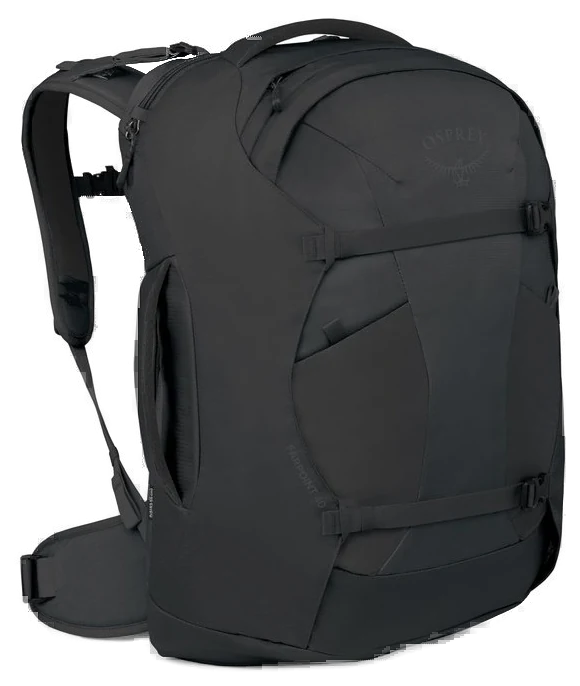
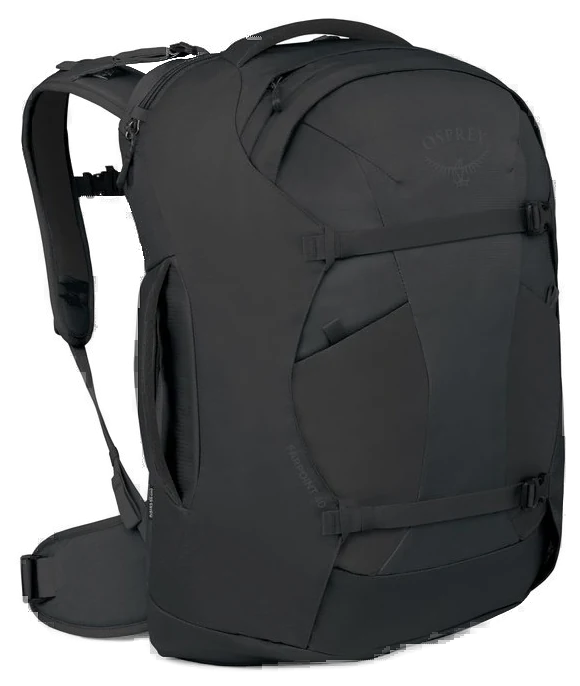
Osprey Farpoint 40 Travel Pack
The framed, backpacking-style pick
~$160–180Estimated price
View on AmazonThe Osprey Farpoint 40 is built like a scaled-down backpacking pack, not a suitcase with straps sewn on. Osprey’s LightWire frame moves the load onto a padded hipbelt, the system used in the brand’s trail packs. At 21.7 x 13.8 x 9.1 inches and 40 liters, it clears the roughly 22 x 14 x 9 inch sizer most U.S. airlines use, though the FAA notes rules are set by each airline.
Its shell is bluesign-approved recycled nylon — 210-denier on the main panel, 420-denier on the bottom — with a PFAS-free DWR coating, resisting a shower but not standing water. The laptop sleeve fits up to 16 inches, larger than most travel packs bother with. The harness zips away flush for gate-checking, and Osprey backs it with the All Mighty Guarantee: free repair for any damage, any reason, no receipt required.
At 3.3 pounds empty, the Farpoint 40 is nearly a full pound heavier than the Allpa 35L, the tradeoff for a real frame instead of foam padding. It opens from one side, making packing cubes slightly more fiddly than a true clamshell. Osprey’s own site lists it at $200, above typical street price. For anyone who’s finished a travel day with sore shoulders from a frameless bag, the extra weight buys real comfort.
Strengths
- Frame and hipbelt shift weight off shoulders
- 16-inch laptop sleeve, bigger than most
- Harness zips away flat for gate-checking
- Lifetime All Mighty repair guarantee
Tradeoffs
- Nearly a pound heavier than Cotopaxi
- Doesn’t open fully flat
- Lighter fabric, DWR coating only
- Matching daypack sold separately
Pick 2 of 2: Best for packing light
Cotopaxi Allpa 35L Travel Pack
The lighter, suitcase-style pick
~$220–240Estimated price
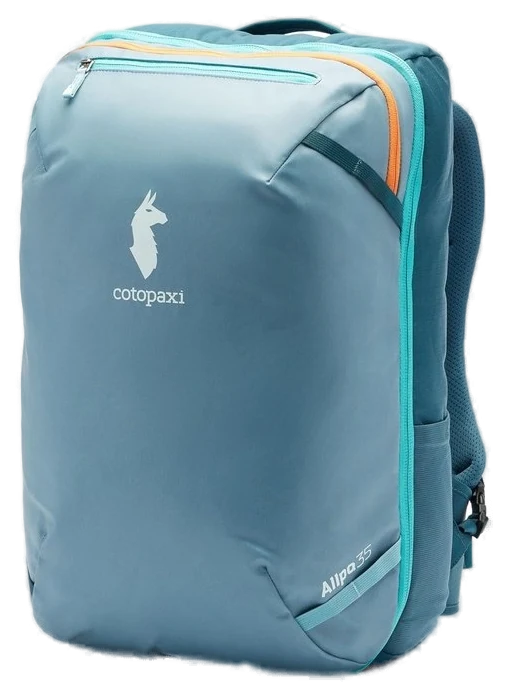
View on AmazonThe Cotopaxi Allpa 35L opens the way an actual suitcase does: a full wraparound zipper unzips three sides and the main compartment folds flat, instead of one front panel like most travel backpacks. At 22 x 12 x 10 inches and 35 liters, it clears the same rough 22 x 14 x 9 inch sizer as the Farpoint 40, though its 10-inch depth runs past what the TSA’s guidance describes as typical, so measure your airline first.
Cotopaxi builds the shell from 840-denier recycled nylon: a TPU-coated base plus a ballistic-ripstop layer with a PFAS-free DWR coating, heavier and more water-resistant than a DWR-only fabric. That shows up in bad weather — it sheds rain, snow and spills — and in the pass-through strap that slides over a rolling bag’s handle. The main compartment locks with anti-theft YKK zippers, plus a fleece-lined 15-inch laptop sleeve.
At 2 pounds 15 ounces empty, it undercuts the Farpoint 40 by nearly a full pound, partly because there’s no internal frame: the backpanel is padded foam, so weight rides more on your shoulders once loaded. The straps tuck away for checking it, and Cotopaxi’s Guaranteed for Good program backs it with a lifetime warranty and repairs. Cotopaxi’s own site lists it at $230, above its typical range elsewhere.
Strengths
- Nearly a pound lighter than Osprey
- Opens completely flat for packing cubes
- TPU-coated shell sheds rain and spills
- Lockable, anti-theft YKK zippers
Tradeoffs
- No frame, rides on shoulders
- 15 inches, smaller than Osprey’s sleeve
- Runs closer to $230 direct
- Fewer external organization pockets
Osprey vs. Cotopaxi FAQs
6 common questions, answered.
Are the Osprey Farpoint 40 and Cotopaxi Allpa 35L both carry-on compliant?
Both clear the roughly 22 x 14 x 9 inch sizer most U.S. domestic airlines use: the Farpoint 40 measures 21.7 x 13.8 x 9.1 inches and the Allpa 35L measures 22 x 12 x 10 inches. But airlines set their own carry-on rules rather than following one federal standard, and FAA and TSA size guidance is a general reference point, not a promise any specific airline will accept a bag at the gate. International and budget carriers often run tighter limits, so check your airline’s own page before flying with either.
Which one is more comfortable to carry for a full day?
The Osprey Farpoint 40, if you’re carrying it loaded rather than rolling it or shuttling it in a car. Its LightWire internal frame and padded hipbelt move weight onto your hips the way a backpacking pack does, which matters once you’ve packed close to 40 liters. The Cotopaxi Allpa 35L has no internal frame, just a padded foam backpanel, so a fully loaded pack rides more on your shoulders over a long carry, even though it’s nearly a pound lighter empty.
Which pack is more durable or weather-resistant?
The Cotopaxi Allpa 35L’s shell, a TPU-coated 840-denier recycled nylon with a second DWR-and-PU-backed layer, is built to shed light rain, snow and spills. The Osprey Farpoint 40 uses a lighter 210-denier main fabric, 420-denier on the bottom, with a PFAS-free DWR coating but no TPU layer, so it holds up fine day to day but is more likely to let a heavier downpour through. Neither pack is submersible or fully waterproof.
Can either bag be checked instead of carried on?
Yes, both are built for it. The Farpoint 40 zips its harness, hipbelt and backpanel flush against the pack so nothing snags on a baggage carousel or conveyor belt. The Allpa 35L tucks its shoulder straps and hipbelt away the same way, and its main compartment locks with anti-theft YKK zippers, which matters more once the bag leaves your hands at check-in.
What’s the real difference in how these two open?
The Farpoint 40 opens through one large front panel, similar to most backpacking-style travel packs, so it lays mostly flat but not completely. The Allpa 35L unzips on three sides in a full wraparound zipper and folds open like an actual suitcase, with the main compartment split into one large section plus a medium and small pocket. If you pack with cubes and like laying everything out at once, the Allpa’s opening is closer to a hard-sided suitcase.
Do either of these come with a real warranty?
Both do, and neither requires much to make a claim. Osprey’s All Mighty Guarantee repairs any damage or defect for any reason, free of charge, no matter how old the pack is or whether you still have a receipt. Cotopaxi’s Guaranteed for Good program covers a lifetime warranty and repairs on the Allpa line, plus an option to trade the bag in toward a future purchase once it’s finally worn out.
How we chose
We haven’t carried either pack loaded ourselves.
We compared published dimensions, weight, frame construction and fabric specs, current retail pricing, and the FAA’s carry-on baggage guidance plus TSA’s sizing rules. We haven’t carried either pack loaded ourselves; the frame, weight and capacity figures come from each brand’s published specs and the FAA/TSA sizing guidance we cite. Updated September 2026. Prices are always moving, so every button and link pulls the live listing.
How we rank
Published specifications, verified owner reviews, and independent safety or standards data where it applies — weighted the same for every pick, never sponsored placement.
Where to go next.
The close calls side by side, then related guides.