Best overall
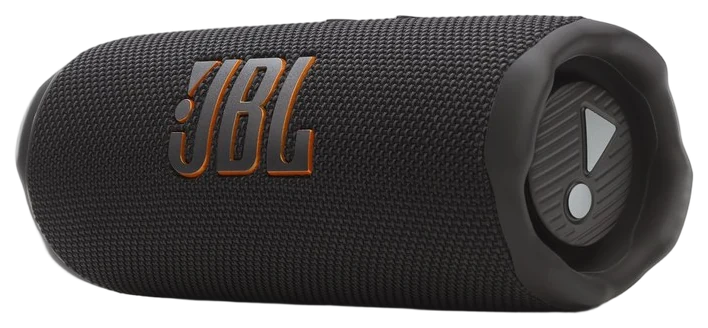
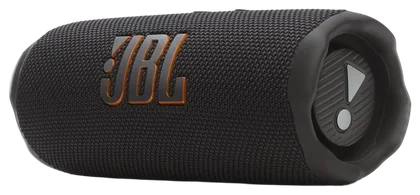
JBL Flip 7
~$100–130
Get it if you need to fill a yard, deck or beach full of people, or want to link multiple speakers together.
- Best for
- Filling a yard, deck or beach full of people
- Output
- 35W RMS
- Output power
- 35W RMS
- Battery
- ~14 hrs
The JBL Flip 7 is nearly twice the size of the UE Wonderboom 4 and rated at roughly four times the output. We compared loudness, battery, durability and price to find out who the extra $50 for the Flip is actually for.
Our verdict
Get the JBL Flip 7 if the speaker has to fill a yard rather than a shower; get the UE Wonderboom 4 if it needs to fit in a palm and float.
Best overall
~$100–130
Get it if you need to fill a yard, deck or beach full of people, or want to link multiple speakers together.
Best value
~$55–80 Lowest price
Get it if the speaker’s job is a backpack, a pool float, or a shower.
The price gap~$45–50 more for the JBL Flip 7
Each bar is an estimated price range, on one scale from ~$55 to ~$130.
Either way: Both run about 14 hours and both survive a drop or a splash, so battery and durability decide nothing here.
We compared published output, battery and durability specifications alongside independent size-and-spec comparisons from B&H Photo and ComparisonTables, weighed against the price ranges we publish for both speakers. We haven’t played either speaker ourselves; the output and durability figures come from each brand’s published specs and the independent comparisons we cite. Prices are always moving, so every button and link pulls the live listing.
How we rank
Published specifications, verified owner reviews, and independent safety or standards data where it applies — weighted the same for every pick, never sponsored placement.
Best overall~$100–130
Nearly four times the output, in a body that still fits in one hand
Get it if you need to fill a yard, deck or beach full of people, or want to link multiple speakers together.
Skip it if pack size and price matter more than maximum volume.
The gap between these two starts with raw numbers: the JBL Flip 7 is rated at 35W RMS against the Wonderboom 4’s 8.5W, a roughly fourfold difference that’s audible rather than theoretical. TechGearLab’s volume testing puts numbers on it: 99.8 decibels measured from the Flip 7 against 83.9 from the Wonderboom 4, a wider gap than the wattage ratio alone implies.
B&H Photo’s spec comparison confirms the Flip pairs a racetrack-shaped woofer with a separate tweeter and dual passive radiators, a three-way arrangement the single-driver Wonderboom doesn’t attempt, and the result is more defined highs and clearer vocals alongside the extra volume.
Durability moves up a notch too. The Flip 7 carries an IP68 rating, meaning it’s rated for actual submersion rather than splashes, versus the Wonderboom’s IP67. It also adds Auracast, JBL’s system for chaining multiple compatible speakers into one synchronized system, so two or more Flips out-fill a single larger speaker at a party, and the Bluetooth 5.4 radio behind it is a generation newer than the Wonderboom’s 5.2. None of that comes free: at 18.25cm long and 0.56kg, per ComparisonTables’ measurements, it’s nearly twice the Wonderboom’s length and about a third heavier, and it does not float.
Battery life is the one spec that doesn’t follow the size gap: both speakers run about 14 hours on a charge, because the Flip’s much larger 17.28Wh battery is working harder to drive its bigger output. At around $100 on Amazon against a $149.95 list, it remains pricier than the Wonderboom by roughly $50, but for anyone who has ever wished a portable speaker filled an outdoor space, that’s the whole trade.
Strengths
Tradeoffs
Best value~$55–80
The one that fits in a bag and floats in a pool
Get it if the speaker’s job is a backpack, a pool float, or a shower.
Skip it if you need to fill an outdoor space or host a group.
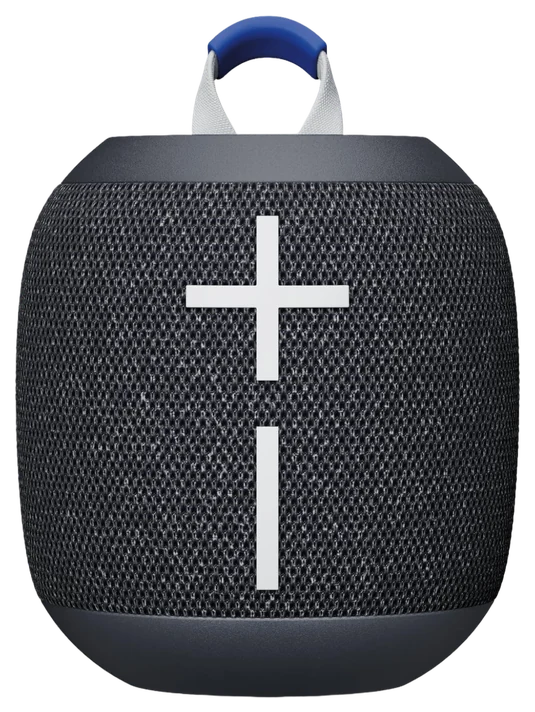
The UE Wonderboom 4 is built around a single idea the Flip doesn’t attempt: it floats. At 10.4cm across and 420g, per ComparisonTables’ measurements, it’s a fraction of the Flip’s size and doubles as a pool toy, something an actual sinking speaker can’t claim regardless of its IP rating. The spherical shape fires sound in every direction, so there’s no wrong side to point it at a group.
Sound leans punchy and bass-forward rather than accurate, which suits electronic, hip-hop and pop better than acoustic or classical listening, and there’s no companion app or EQ to adjust that signature. That’s a real limitation next to the Flip’s tunable, three-way setup, but it’s also the tradeoff that keeps the Wonderboom simple: it’s a one-button appliance you grab without thinking, not a speaker you configure.
An outdoor-tuned mode boosts mids and highs slightly for open-air listening, though TechGearLab still measured its ceiling at 83.9 decibels against the Flip 7’s 99.8, and the two large volume buttons on the front are usable by feel, which matters more than it sounds like it should when you’re wet and not looking at the thing.
Where it holds its own is battery and price. Despite an 8.5W output roughly a quarter of the Flip’s, the Wonderboom matches its 14-hour runway on a battery less than half the size, an efficient result. At $55 to $80 on Amazon, often under $70, against the Flip’s $100 to $130, it’s the clear pick for anyone who doesn’t need to fill more than a room or a backyard patio.
Strengths
Tradeoffs
6 common questions, answered.
The Flip 7, by a wide margin. It’s rated at 35W RMS against the Wonderboom’s 8.5W, roughly four times the output, and that difference is audible rather than a spec-sheet technicality, especially outdoors where sound has room to spread out.
Yes, it’s built to float and is used as a pool toy. The JBL Flip 7 does not float and will sink if dropped in water, even though its IP68 rating means it survives a dunk once retrieved.
Yes, through Auracast, JBL’s system for synchronizing multiple compatible speakers into one larger system. The Wonderboom 4 supports true wireless stereo pairing between two units, but it doesn’t have Auracast’s broader multi-speaker linking.
They’re effectively tied at around 14 hours each, despite the Flip’s much bigger output. The Flip’s battery is more than double the Wonderboom’s capacity, but it’s also working harder to drive that extra volume, so the runway comes out about the same on paper.
The JBL Flip 7 carries an IP68 rating, which covers actual submersion rather than splashes. The Wonderboom 4 is IP67, one step down, rated for accidental dunks rather than sustained underwater use, though its floating design means it’s rarely fully submerged in normal use anyway.
For most casual listening, the Wonderboom 4. It costs about $50 less, matches the Flip’s battery life, and covers pools, showers and backpacks without asking you to carry the bigger speaker. The Flip 7 earns its price back only when you need the extra volume to fill an outdoor space or a crowd.