The Best Sunglasses Under $100: Real UV400 Protection, No Gimmicks
A $100 budget buys real UV400 protection and a properly polarized lens if you know which spec matters. These six do the job without the gimmicks or the markup.
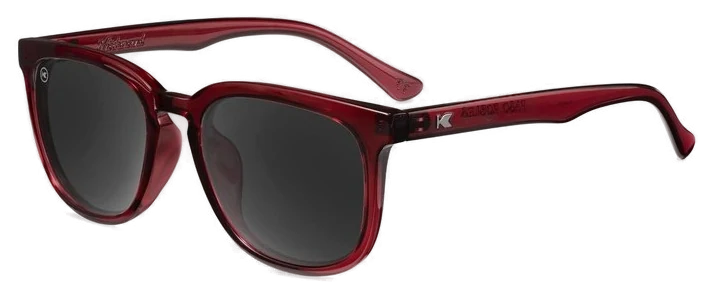
No. 1 · Our pickFor most people
Fully polarized and UV400 as standard, in the widest range of frame and lens combinations here.
Knockaround PremiumsNo. 1 · ~$35–45
View on AmazonThe rest, ranked
Every differenceNo. 5 · Best known brand
Polaroid PLD 2050/S
The brand that popularized polarized lenses
~$55–65
View on AmazonNo. 6 · Best novelty pick
Woodies Walnut Wood
Real walnut-wood temples, same UV400 baseline
~$22–28
View on Amazon
We compared published specs against the current ANSI Z80.3 sunglasses standard for UV attenuation, then ranked what was left on frame durability, fit for the activity, and warranty or repair coverage. How we chose How we verify Corrections logged publicly
What changed1 dated note · latest 23 September 2026
The Ray-Ban pick had risen to about $160–240, past this guide's $100 limit, and the Cali Life Co. frame isn't sold on Amazon. They are replaced by the Polaroid PLD 2050/S, at about $55–65, and Woodies walnut polarized sunglasses, at about $22–28.
Dated notes already published on this page, newest first. Every correction we make is logged on the corrections page.
Every difference, all six
| Differences | No. 1Knockaround Premiums | No. 2Goodr OG | No. 3Sunski Yuba | No. 4Wavy Label | No. 5Polaroid PLD 2050/S | No. 6Woodies Walnut Wood |
|---|---|---|---|---|---|---|
| Price rangeon one $22–65 scale | ~$35–45 | ~$25–35 | ~$55–65 | ~$55–65 | ~$55–65 | ~$22–28 |
| Sunglasses | Knockaround Premiums Polarized | Goodr OG | Sunski Yuba | Wavy Label Polarized | Polaroid PLD 2050/S Polarized | Woodies Walnut Wood Polarized |
| Best for | Everyday wear, any face shape | Running, workouts, active use | Anyone who wants a lighter, greener frame | Bold colors, statement frames | Brand recognition, priced well under the cap | A distinct look, beach and travel wear |
From each pick’s review below. We compared maker specs and listings, not readings we took.
Pick 1 of 6: No. 1 · Best overall
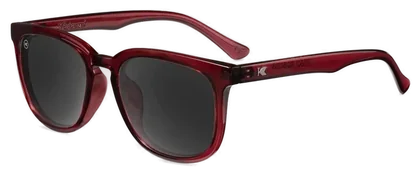
Knockaround Premiums Polarized
Everyday polarized pair, widest selection
~$35–45Estimated price
View on AmazonGet it ifyou want a reliable first pair of polarized sunglasses with real frame choice.
Skip it ifyou have a narrow or smaller face and need a closer fit.
Knockaround built its business around one idea: sunglasses don’t need a designer price to protect your eyes and stay on. The Knockaround Premiums Polarized has a rounded, slightly oversized frame that fits more face shapes than the brand’s smaller styles, with a polarized lens as the standard, not an upsell. Every pair blocks the same UVA/UVB range the ANSI Z80.3 standard sets as the US baseline, in dozens of frame-and-lens color combinations.
Build quality is where the Premiums line earns its name: metal spring hinges instead of plastic, a heavier polycarbonate lens, and a case included rather than sold separately. The polarized filter cuts the horizontal glare off pavement, water and car hoods, noticeable within the first week of daily wear. The lenses also carry an anti-scratch coating, useful once a pair starts riding in a bag next to keys and a phone.
The trade-offs are modest. The frame runs large, so a smaller face may find the fit loose at the temples, and the mirrored finishes show fingerprints more than a matte lens. Knockaround doesn’t publish independent certification beyond the UV number itself, standard for the price tier. For a first pair of polarized sunglasses that doesn’t ask you to guess at fit or protection, this is the safest place to start.
Strengths
- Polarized and UV protection standard, not upsell
- Metal spring hinges, case included
- Dozens of frame and lens combos
Tradeoffs
- Runs large, loose on smaller faces
- Mirrored finishes show fingerprints easily
- No independent certification beyond UV labeling
Pick 2 of 6: No. 2 · Best value
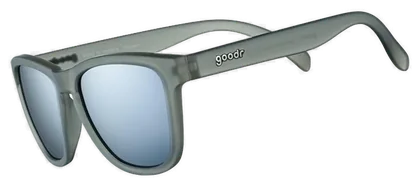
Goodr OG
Stays put when nothing else does
~$25–35Estimated price
View on AmazonGet it ifyou want a cheap pair that won’t slide off during a workout.
Skip it ifyou have a larger head or want an adjustable fit.
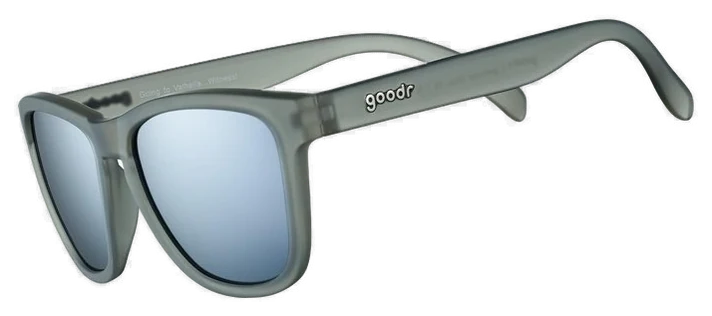
Goodr designed the OG around one failure point every cheap pair shares: they slide down your nose once you start sweating. The Goodr OG uses a no-slip nose pad and a wraparound temple grip so the frame stays put through a run or push-ups, without a strap. Every pair is polarized and rated UV400 as the base spec, not a paid upgrade, unusual where UV protection is often an afterthought.
The lenses cut glare off pavement and water the same way pricier polarized sunglasses do, and the polycarbonate build stays lightweight, which matters more than on a driving or errands pair. Goodr sells the OG in dozens of loud, single-color finishes with pun-heavy names, which also makes a $25 pair easy to spot on a picnic table or gym bench. The brand built its name in the running community, where staying put matters most.
The limits: there’s no case included, the frame isn’t adjustable at the hinge, and the arms run tight for a larger head, since the design leans snug rather than loose. The lenses are plastic rather than the more scratch-resistant coatings on pricier pairs, so carrying them uncased shortens their life. For anyone whose last three pairs ended up on the ground mid-run, that focus is worth more than a nicer case.
Strengths
- No-slip fit stays put during workouts
- Polarized and UV400 as base spec
- Cheapest pick, still checks every box
Tradeoffs
- No case, plastic lenses scratch loose
- Snug fit runs tight on larger head
- Frame isn’t adjustable at the hinge
Pick 3 of 6: No. 3 · Best sustainable pick
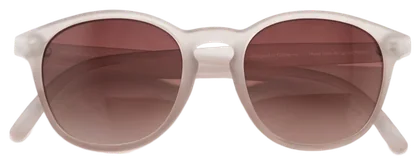
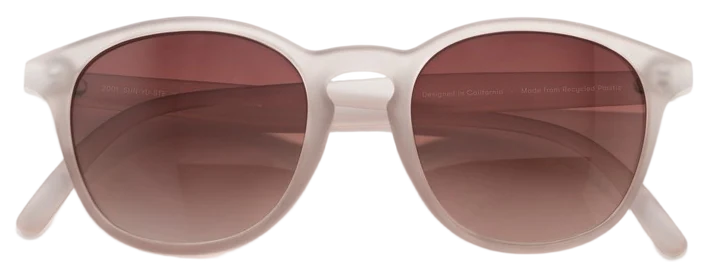
Sunski Yuba
Recycled plastic, not virgin acetate
~$55–65Estimated price
View on AmazonGet it ifyou want a lighter frame made from recycled material.
Skip it ifyou want a sport wraparound shape instead of a rounded everyday style.
Sunski built its frames around a recycled plastic it calls Res-Tec, made from reclaimed scrap rather than virgin acetate. The Sunski Yuba is one of its lighter, rounded styles, polarized and meeting the same UV400 baseline as the rest of this list. At under an ounce, the frame disappears on your face over a full day, in a shape closer to a 1970s silhouette than the sport-wraparound look most budget brands default to.
Sunski backs its frames with a low-cost replacement path if a pair breaks, an unusual policy for sunglasses at any price, since accidental breakage is the most common way a $60 pair fails. The rounded lens leans toward a retro look rather than a sport wraparound. Sunski also publishes the source of its recycled material on its own site, rather than leaving “recycled” as an unverifiable word on the box.
The trade-offs sit mostly in styling: the rounded frame won’t suit every face shape, and the recycled material, while sturdy, flexes differently than acetate. Sunski doesn’t publish independent certification beyond the UV400 labeling claim, standard for the category. For anyone who cares where a frame comes from as much as what it does for their eyes, this is the pick that answers both, well under the $100 ceiling.
Strengths
- Recycled-plastic frame that stays lightweight all day
- Polarized UV400, same as pricier pairs
- Low-cost replacement path if the frame breaks
Tradeoffs
- Rounded retro shape won’t suit every face
- Costs more than Knockaround or Goodr
- No independent certification beyond UV400 claim
Pick 4 of 6: No. 4 · Best for bold color
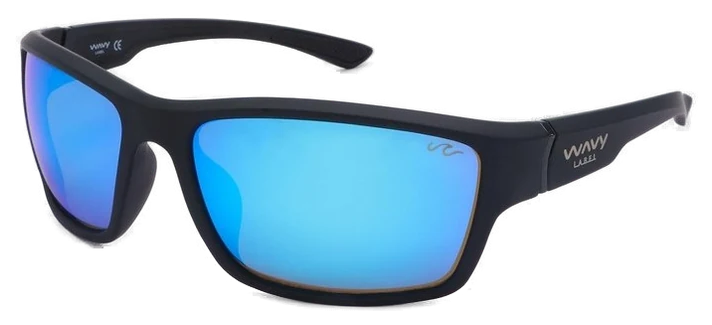
Wavy Label Polarized
Bold colorful frames, pricier-brand film
~$55–65Estimated price
View on AmazonGet it ifyou want a distinctive color or pattern instead of a plain frame.
Skip it ifyou want the most neutral, low-key pair on this list.
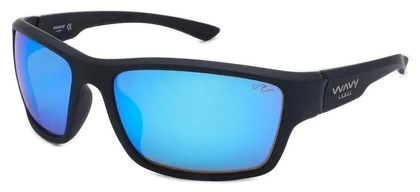
Most sunglasses brands under $100 pick a lens tint and a frame shape and call it done. Wavy Label leans the opposite direction: the Wavy Label Polarized line runs through gradient tints, two-tone frames and colorways most budget brands skip, while building on a nine-layer TAC polarized film, the same substrate used across much of the mid-range market. UV400 is the stated baseline across the line, meeting the current US labeling standard.
The nine-layer construction keeps the polarizing film bonded evenly across the lens rather than warping at the edges, a known failure point in cheap lenses. In daily wear that shows up as a lens that stays clear and flat rather than developing a warped, rainbow-tinted edge after a summer of use. The frames are acetate rather than the sportier polycarbonate wraparounds common at this price, closer to fashion sunglasses than gear built for running or cycling.
The catch is that a brand built around color and pattern won’t suit anyone who wants a neutral, disappear-into-the-background pair, and acetate is a little heavier than polycarbonate, noticeable after a few hours of wear. For anyone shopping for real personality rather than the safest choice, this is the one built for that job, and it still meets the same UV400 baseline every other pick here does.
Strengths
- Nine-layer film resists warping over time
- Wide range of bold colorways
- UV400 baseline across the whole line
Tradeoffs
- Acetate frame heavier than polycarbonate styles
- Bold colorways draw attention, not neutral
- Costs more than the cheapest picks
Pick 5 of 6: No. 5 · Best known brand
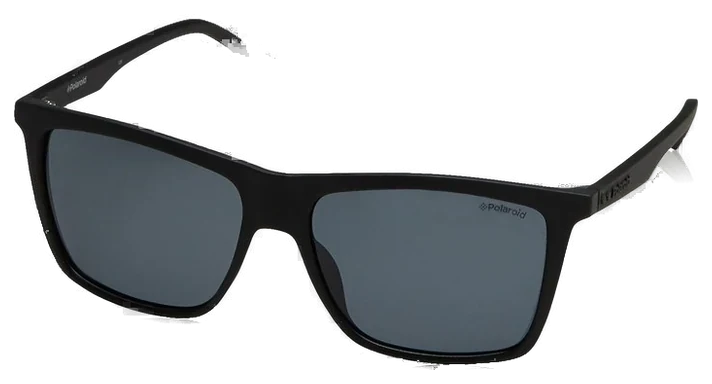
Polaroid PLD 2050/S Polarized Sunglasses
The brand that popularized polarized lenses
~$55–65Estimated price
View on AmazonGet it ifthe brand name and long-term parts availability matter to you.
Skip it ifyou only care about UV protection and polarization, not the name.
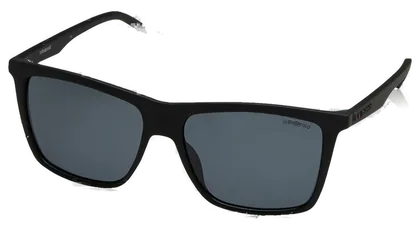
Every other pair on this list solves the UV400-and-polarized problem for less money. The Polaroid PLD 2050/S solves a different problem: Polaroid is the name that commercialized polarized-lens technology in the first place, and decades of retail and optical-shop distribution mean it’s a brand any optician recognizes on sight. At roughly $55–65, it comes in well under this list’s $100 ceiling rather than sitting at the top of it.
The rectangular triacetate frame carries 100% UV protection and true polarized lenses, the same baseline every pair on this list meets, sized 55-15-140 for a medium-to-large fit. Polaroid’s name recognition comes from decades as a mall-optical and department-store staple, the kind of brand a repair counter or an optician has seen a thousand times before, which matters if a screw or a nose pad ever needs replacing.
The trade-off is straightforward: you’re paying partly for the name and the easy servicing, not for materially better UV protection than the $25 pair earlier on this list, since both meet the same ANSI Z80.3 baseline. Frame styles at this price are simpler than Polaroid’s higher-end designer collaborations. For anyone who wants a recognized name without spending near the $100 ceiling, this is the way in.
Strengths
- Widely recognized, easy to repair anywhere
- Decades of mall-optical brand recognition
- Priced well under the $100 ceiling
Tradeoffs
- Costs roughly 2x the cheapest pick
- Frame styles limited versus the full catalog
- Paying largely for the name, not protection
Pick 6 of 6: No. 6 · Best novelty pick
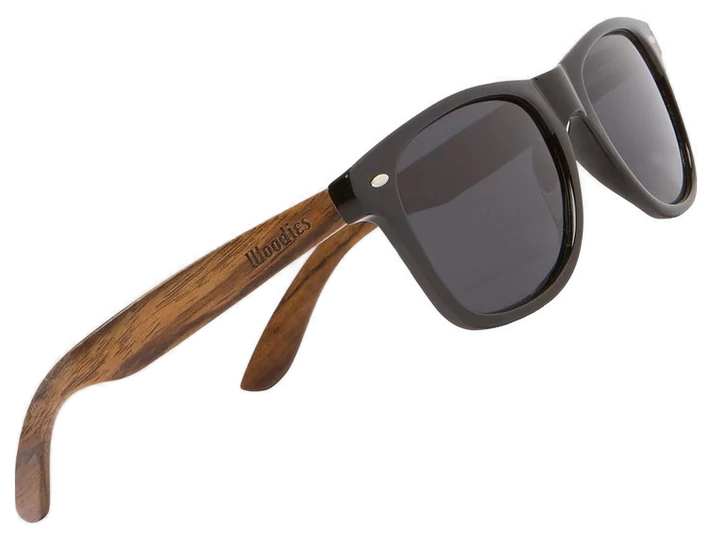
Woodies Walnut Wood Sunglasses with Black Polarized Lenses
Real walnut-wood temples, same UV400 baseline
~$22–28Estimated price
View on AmazonGet it ifyou want a distinctive look and still expect real UV protection.
Skip it ifyou need a frame that can take daily rough handling.
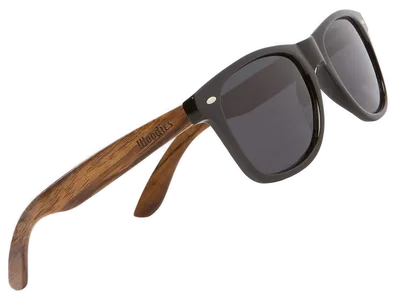
Wood-frame sunglasses read as a novelty item first, but the Woodies Walnut Wood Sunglasses pairs that look with the same polarized, UV400-rated lens spec as the plastic-framed pairs here. The temples and arms are real walnut wood over a thin plastic frame front, keeping the grain visible, at a price well inside the $100 ceiling.
That real-wood-and-plastic build is also why it stays light on the face despite the temples being solid walnut, since only the arms carry the wood. It’s built for a beach day or a vacation photo where the look matters as much as function, rather than daily commuter wear. The polarized lens still cuts glare off water and pavement the way any pair here does, so the frame doesn’t trade away protection.
Durability is the honest limit: real wood shows scuffs more visibly than plastic, since any mark stands out against the grain, and it isn’t something to toss uncased into a bag with keys or coins. Woodies is a smaller brand than Polaroid or Sunski, so parts are less standardized, though it backs the pair with a 30-day guarantee. For a distinctive pair that still checks the UV400 and polarized boxes, it’s built to be noticed, not blend in.
Strengths
- Distinct wood-and-plastic look, rare at budget
- Same polarized UV400 spec as plastic
- 30-day money-back guarantee included
Tradeoffs
- Real wood shows scuffs more than plastic
- Smaller brand, parts less standardized
- Suited to occasional wear, not daily commuting
Still deciding between two?
Pick any two of the six. Rows that match say so once; the rest sit side by side, as each review states them.
Price range
~$35–45
~$25–35
Sunglasses
Knockaround Premiums Polarized
Goodr OG
Best for
Everyday wear, any face shape
Running, workouts, active use
Sunglasses FAQs
6 common questions, answered.
What does UV400 mean on a pair of sunglasses?
UV400 means the lens blocks light wavelengths up to 400 nanometers, covering both UVA and UVB rays. The U.S. standard for sunglasses, ANSI Z80.3, requires compliant lenses to block a minimum share of UVB and UVA light, so UV400 is effectively that requirement stated as a wavelength number. ANSI’s 2025 revision updated how compliance is verified without lowering the protection level.
Does a polarized lens also mean better UV protection?
No. Polarization and UV protection are two different lens properties. A polarized filter cuts horizontal glare bouncing off water, pavement or a car hood; UV400 blocks harmful wavelengths. A lens can carry one property without the other, though most sunglasses sold as polarized today, including every pick on this list, also meet the UV400 baseline, so treat the two claims as separate checks rather than confirmation of the other.
Do more expensive sunglasses block more UV than cheap ones?
Not necessarily. Once a lens meets the ANSI Z80.3 UV400 baseline, it blocks essentially the same range of UV light regardless of price. What the extra cost on a pricier pair usually buys is frame durability, lens coating quality, brand recognition, or a replacement policy, not a meaningfully higher level of UV protection than a compliant $25 pair already provides.
How can you tell if a pair of sunglasses meets the UV400 standard?
Check the product listing or the frame itself for a UV400 label or an explicit ANSI Z80.3 reference; reputable brands print or list one or the other. A dark tint alone is not proof of UV blocking and can be worse than no sunglasses at all, since a dark lens without real UV filtering makes your pupils widen while doing nothing to stop the light that reaches your eyes.
Are polarized lenses safe to wear while driving?
Generally, yes, and many drivers prefer them for cutting glare off wet roads and other cars’ windshields. The one exception is checking your vehicle’s dashboard display: some LCD screens and older polarized car windshields can appear dim, distorted or invisible through polarized lenses at certain angles, so it is worth checking your own dashboard before relying on them for every drive.
How long should a pair of sunglasses under $100 last?
With normal daily use and a case rather than a loose bag or pocket, a well-made pair in this price range commonly lasts two to four years before the lens coating, hinge or nose pads start to wear out. Frame material matters more than price alone: polycarbonate and metal-hinge frames tend to outlast pure plastic or wood-frame builds under repeated on-off handling.
How we chose
We compared published specs against the current ANSI Z80.3 sunglasses standard for UV attenuation, then ranked what was left on frame durability, fit for the activity, and warranty or repair coverage. Updated September 2026. Prices are always moving, so every button and link pulls the live listing.
How we rank
Published specifications, verified owner reviews, and independent safety or standards data where it applies — weighted the same for every pick, never sponsored placement.
Corrections on this guide
Correction, 23 September 2026: The Ray-Ban pick had risen to about $160–240, past this guide’s $100 limit, and the Cali Life Co. frame isn’t sold on Amazon. They are replaced by the Polaroid PLD 2050/S, at about $55–65, and Woodies walnut polarized sunglasses, at about $22–28.
Every correction we’ve made
Where to go next.
The close calls side by side, then related guides.