No. 2 · Best value
Anker Nano 511 Charger
One small charger instead of a tangle of bricks
~$15–20
View on AmazonFifty dollars buys a real travel upgrade instead of another neck pillow that ends up in a seatback pocket, as long as it solves an actual travel problem. These seven get packed on every trip, not just the first one.
No. 1 · Our pickFor most people
Rides in Apple’s Find My network, so a lost bag turns up using the Bluetooth signal of every nearby iPhone, not just the traveler’s own.
Chipolo One SpotNo. 1 · ~$28–30
View on AmazonNo. 2 · Best value
One small charger instead of a tangle of bricks
~$15–20
View on AmazonNo. 3 · Best daypack
Packs down to nothing, carries a full day’s gear
~$35–40
View on AmazonNo. 4 · Best for keys and bags
Keeps keys and a bag zipper findable nearby
~$25–32
View on AmazonNo. 5 · Best hydration upgrade
Turns questionable tap water into something safe to drink
~$30–45
View on AmazonNo. 6 · Best for blocking light
Blocks light completely without pressing on the eyes
~$35–40
View on AmazonNo. 7 · Best packing upgrade
Zips a loosely packed bag down to size
~$25–35
View on AmazonWe compared published specs, manufacturer documentation and warranty terms, prioritizing gear that survives a checked bag over anything single-platform or subscription-gated. How we chose How we verify Corrections logged publicly
Two picks had risen past this guide's $50 limit: the Osprey Talon daypack, now about $175, and the LARQ self-cleaning bottle, about $99. They are replaced by the Eddie Bauer Stowaway 30L packable backpack and the LifeStraw Go 1L filter bottle. The Manta set is now the Manta Original Sleep Mask, the version Amazon sells, at about $35–40.
Dated notes already published on this page, newest first. Every correction we make is logged on the corrections page.
| Differences | No. 1Chipolo One Spot | No. 2Anker Nano 511 Charger | No. 3Eddie Bauer Stowaway Packable Backpack | No. 4Chipolo Pop | No. 5LifeStraw Go Series Water Filter Bottle | No. 6Manta Original Sleep Mask | No. 7Bagail Packing Cubes (6-Set) |
|---|---|---|---|---|---|---|---|
| Price rangeon one $15–45 scale | ~$28–30 | ~$15–20 | ~$35–40 | ~$25–32 | ~$30–45 | ~$35–40 | ~$25–35 |
| Best for | Luggage and carry-on bags | Anyone with a phone to charge | Day trips and layovers | Keys, small bags, everyday carry | Safe drinking water on the road | Sleeping on flights or in unfamiliar rooms | Anyone who packs a suitcase |
From each pick’s review below. We compared maker specs and listings, not readings we took.
Pick 1 of 7: No. 1 · Best overall
Finds a lost bag the way an iPhone finds itself
~$28–30Estimated price
View on AmazonGet it ifthey check a bag more than once a year and carry an iPhone.
Skip it ifthey use an Android phone, where the Find My network offers no benefit.
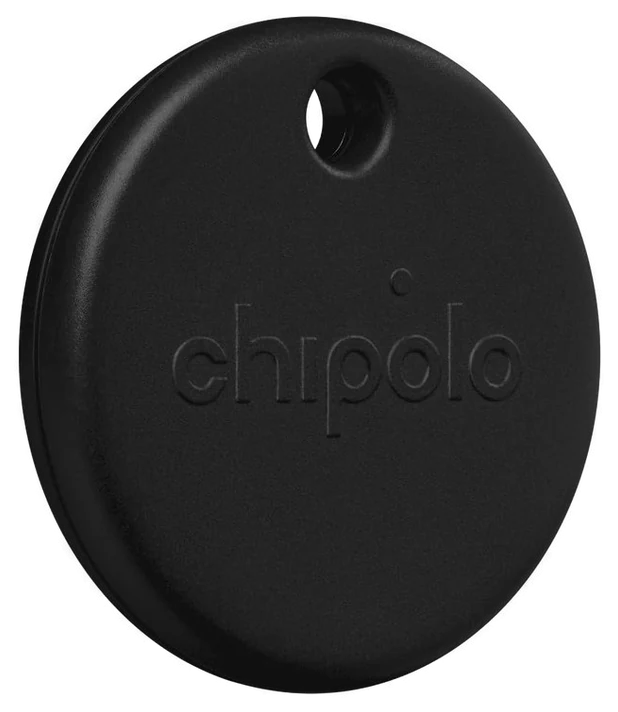
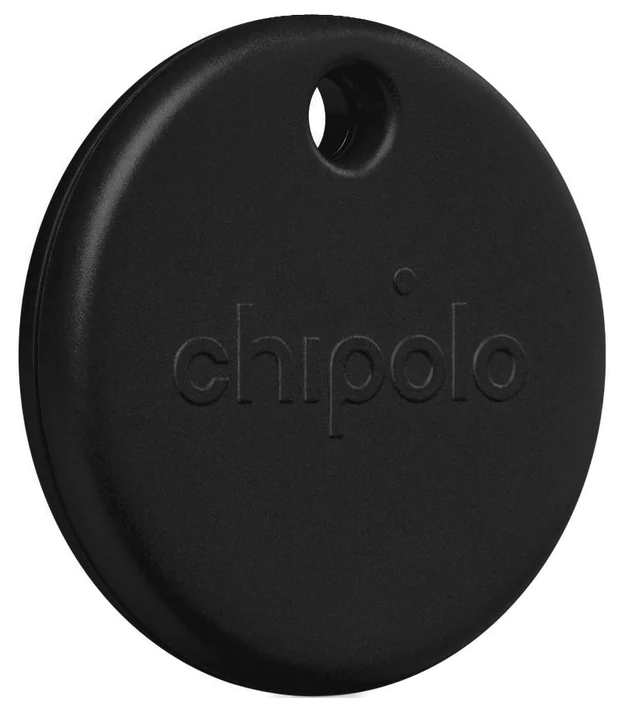
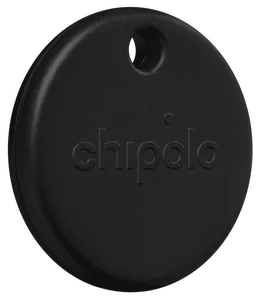
Checked luggage goes missing often enough that airlines publish mishandling rates every year, and a paper tag does nothing once a bag ends up on the wrong belt. The Chipolo One Spot clips into a side pocket or laptop sleeve and joins Apple’s Find My network the same way an AirTag does, so its last known location shows up using the Bluetooth signal of every nearby iPhone, not just the traveler’s own.
Its coin-cell battery is user-replaceable, unlike sealed-case rivals, and the shell survives a spilled drink in the same pocket. A physical button on the tracker also rings the paired phone, the more common way one of these gets used: finding a phone left in a hotel room, not just tracking a bag.
The tradeoff is coverage, not the device: Find My needs other Apple devices nearby to relay a location, dense in most US and European airports but thinner in rural areas or countries with lower iPhone use. It works with iPhones on a recent iOS version; there’s no Android equivalent. For anyone who checks a bag more than once a year, it’s cheap insurance against never finding out where it went.
Strengths
Tradeoffs
Pick 2 of 7: No. 2 · Best value
One small charger instead of a tangle of bricks
~$15–20Estimated price
View on AmazonGet it ifthey travel with just a phone or a phone and a tablet.
Skip it ifthey need to charge a laptop and want one charger to cover everything.
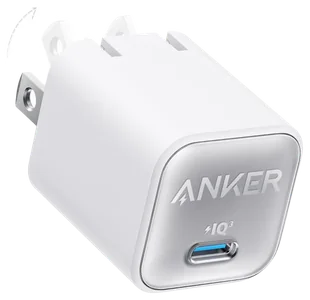
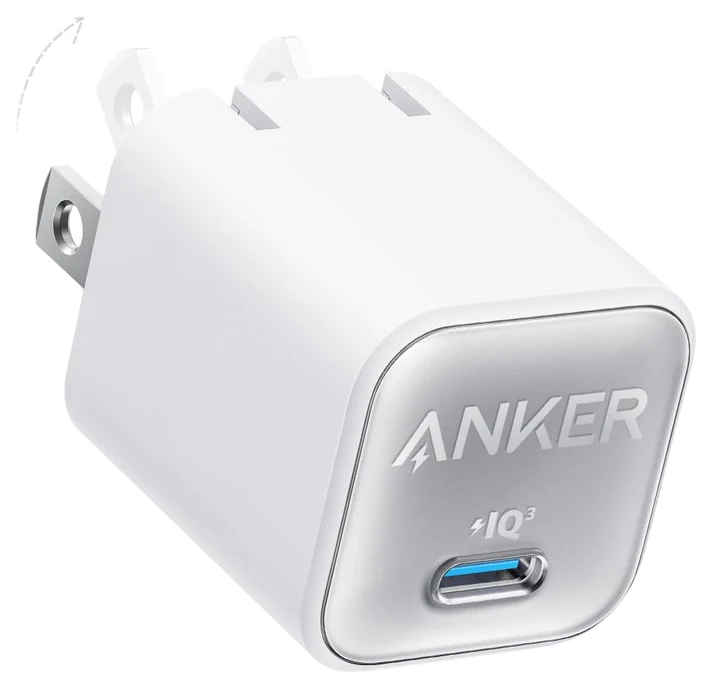
A travel bag usually ends up with two or three chargers fighting for one hotel outlet. The Anker Nano 511 Charger replaces the bulky brick that ships with most phones with a block barely bigger than the plug itself, built around gallium nitride components that push 30 watts out of one of the smallest 30W chargers on the market.
That’s enough to charge most current phones near full speed and top up a tablet or noise-canceling headphones overnight. The plug folds flat so it won’t snag in a packing cube, but it ships with a single USB-C port, so it charges one device at a time rather than a whole bag of gear.
The tradeoff for the small size is capacity: it isn’t enough to fast-charge a laptop that needs 65 watts or more, and it needs its own USB-C to USB-C cable, sold separately. There’s no built-in plug swap for other regions either. For anyone traveling with just a phone and maybe a tablet, it’s a rare charger upgrade that ends up smaller than what it replaces.
Strengths
Tradeoffs
Pick 3 of 7: No. 3 · Best daypack
Packs down to nothing, carries a full day’s gear
~$35–40Estimated price
View on AmazonGet it ifthey want a packable daypack for day trips, errands and airline personal-item duty.
Skip it ifthey need a hip belt and ventilated panel for serious trail hikes.
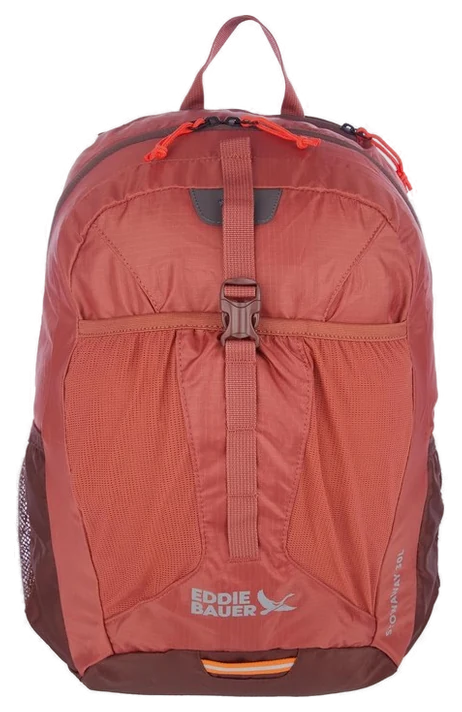
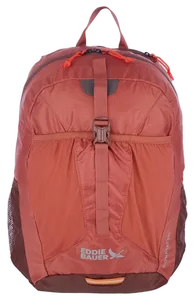
A checked bag or hotel room is only half a trip; the other half is what gets carried around during the day, and a flimsy tote usually fails by the second afternoon. The Eddie Bauer Stowaway Packable Backpack holds 30 liters unpacked, roughly 19 by 12 by 9 inches, then folds into its own pocket to about 9 by 8 by 2.5 inches.
The shell is a 200-denier ripstop polyester with a StormRepel DWR finish that sheds light rain, and at about a pound packed it barely registers in a suitcase until it’s needed. A padded back panel and adjustable shoulder straps both use mesh covers for breathability, and two external zip pockets plus two mesh side pockets and an exterior stretch pocket keep small items sorted.
It comes in one size rather than a range of hiking-daypack sizes, so there’s no liter count to get wrong, though it also skips a hip belt and the curved, ventilated panel a technical trail pack would add. Eddie Bauer has sold outdoor gear since 1920 with a large review base on its own Amazon storefront. For anything else a day away from a hotel needs, it folds flat enough to disappear into a suitcase.
Strengths
Tradeoffs
Pick 4 of 7: No. 4 · Best for keys and bags
Keeps keys and a bag zipper findable nearby
~$25–32Estimated price
View on AmazonGet it ifthey lose keys or small bags around the house or hotel room.
Skip it ifthey need to track something that might travel far from their phone.
Not every lost item is a suitcase on the wrong flight; most of the time it’s keys buried in a hotel duvet or a bag zipper that slid under a car seat. The Chipolo Pop clips onto a keyring or bag loop and connects through Chipolo’s own app over Bluetooth, working within roughly two hundred feet of the paired phone, simpler and cheaper than a Find My network tracker.
A loud ringer sounds from the tracker when the phone searches for it, and its button rings the phone back, the more common way people misplace things. The battery is replaceable, and it comes in bright colors that are easy to spot inside a bag rather than blending in with dark keys.
The tradeoff against the One Spot is real: once something with a Pop leaves Bluetooth range, the app has no way to update its last known location. It’s Bluetooth-only, so it works the same regardless of phone platform, making it the better gift for someone on Android. For not leaving keys behind at a hotel checkout, that tradeoff barely matters.
Strengths
Tradeoffs
Pick 5 of 7: No. 5 · Best hydration upgrade
Turns questionable tap water into something safe to drink
~$30–45Estimated price
View on AmazonGet it ifthey’d rather not guess whether a tap or fountain is safe to drink.
Skip it ifthey only drink bottled or already-filtered water on trips.
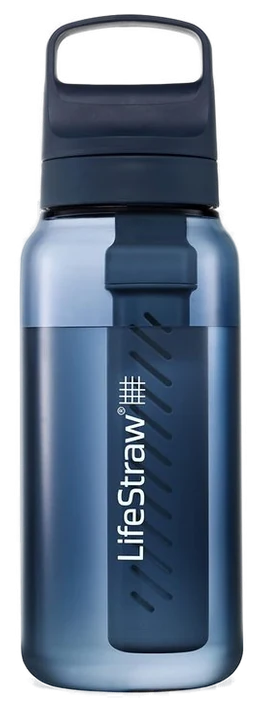
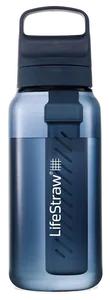
Refilling the same bottle from an airport fountain or an unfamiliar tap for a week straight only works if the water coming out of it is safe to drink. The LifeStraw Go Series builds a two-stage filter into the straw: a 0.2-micron membrane microfilter removes 99.999% of bacteria, parasites like Giardia and Cryptosporidium, and microplastics, then an activated carbon filter cuts chlorine taste and odor on the way through.
The membrane microfilter is rated for up to 1,000 gallons, about five years of daily use, while the smaller carbon filter needs replacing roughly every two months or 26 gallons. The 1-liter bottle is BPA-free plastic with a leakproof, silicone-covered mouthpiece and a built-in carry handle, and it’s dishwasher-safe once the filters are removed for the cycle.
It filters what’s already in the water rather than sanitizing the bottle itself, so it doesn’t remove viruses the way a UV-C treatment claims to, and it’s built for questionable tap or fountain water rather than backcountry streams a hiking-grade filter would tackle. For someone who’d rather not guess whether a hotel tap or an airport fountain is worth drinking from, it removes that question on every refill.
Strengths
Tradeoffs
Pick 6 of 7: No. 6 · Best for blocking light
Blocks light completely without pressing on the eyes
~$35–40Estimated price
View on AmazonGet it iflight is what keeps them up on flights and they sleep on their side.
Skip it ifthey need noise-blocking earplugs too; none are included with this mask.
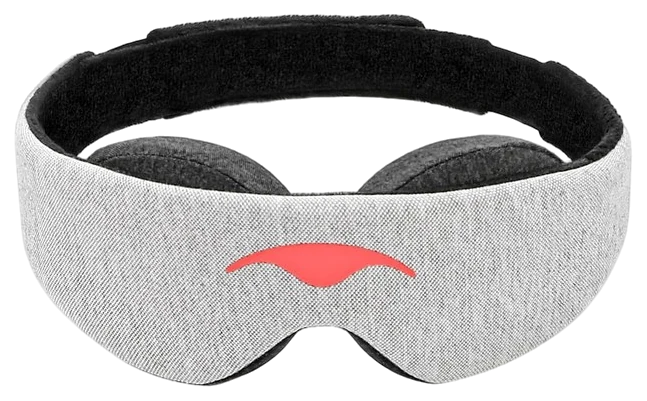
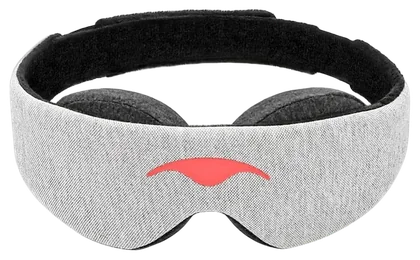
A flat sleep mask presses straight onto closed eyelids, uncomfortable for side sleepers, and does nothing for light that leaks in around the nose. The Manta Original Sleep Mask uses two detachable, contoured eye cups instead, so eyelashes have room to move and fabric never touches the eyes, while a wraparound strap with adjustable sections tightens unevenly to match a head shape.
Manta markets the mask for travel, shift work and daytime sleep, and the eye cups pop off the strap for cleaning or swapping without replacing the whole mask. The strap stays put face-down or on either side without sliding to the forehead, the main complaint people have with a basic elastic mask on a plane.
This listing is the mask alone, no earplugs or travel pouch bundled in, so pair it with a separate pair of earplugs if noise is as much of a problem as light on a flight. It takes a minute longer to put on than a basic elastic mask, since the eye cups need positioning first, and it’s bulkier to pack. It won’t fix jet lag or an upright airline seat, only the light half of the sleeping-somewhere-unfamiliar problem.
Strengths
Tradeoffs
Pick 7 of 7: No. 7 · Best packing upgrade
Zips a loosely packed bag down to size
~$25–35Estimated price
View on AmazonGet it ifthey pack a full suitcase often and hate unpacking everything to find one item.
Skip it ifthey only take short trips with a half-empty bag already.
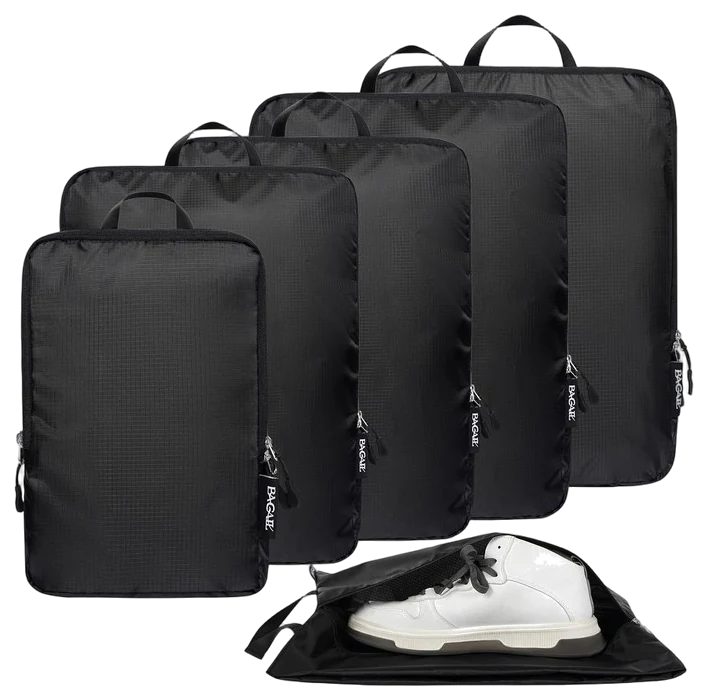
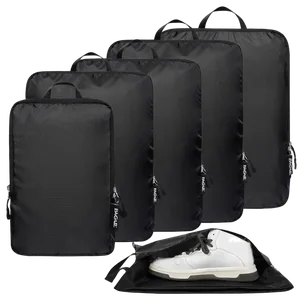
Loose clothes in a suitcase shift, wrinkle and eat up more space than they need to, and finding one shirt usually means unpacking half the bag. The Bagail Packing Cubes (6-Set) sorts everything into six zippered cubes of mixed sizes, so shirts, underwear and shoes each get their own compartment, and pulling one cube out at a hotel dresser leaves the rest of the suitcase packed.
A second zipper on each cube squeezes out the extra air around folded clothes, shrinking the same pile into meaningfully less suitcase space, which matters most on a carry-on-only trip. The mesh top panel also shows what’s inside without unzipping every cube.
Compressing clothes down does add wrinkles, so this suits casual clothing and athletic wear better than a dress shirt that needs to come out pressed. The zippers and mesh are lighter-duty than a premium brand’s, the expected tradeoff at this price, and six cubes is more than a short trip usually needs. For a frequent traveler tired of unpacking everything to find one item, it’s a small investment that speeds up both jobs.
Strengths
Tradeoffs
6 common questions, answered.
Something that solves a repeat travel problem rather than a one-trip novelty: a way to find a checked bag, a smaller charger, a better daypack, or something that makes sleeping in an unfamiliar place easier. The picks here are all under $50, need no size or destination to guess, and get used on every trip rather than sitting unopened after the first one.
Yes, as long as other Apple devices are nearby to relay its position, since it runs on Apple’s crowd-sourced Find My network rather than its own cellular or GPS signal. Coverage is strongest in the US and Western Europe, where iPhone use is high, and thinner in places with fewer Apple devices around, so tracking can lag in more remote destinations.
If you don’t trust the tap or fountain water where you’re headed, yes. The LifeStraw’s two-stage filter removes bacteria, parasites and microplastics as you drink, which is a real convenience on a trip where bottled water isn’t always available, but it doesn’t filter out viruses and the carbon stage needs replacing every couple of months.
Anything sized to a specific bag, seat or destination, since it may not fit their next trip, and anything that needs a subscription or an account to use its main feature. Novelty travel gadgets sold mainly on social media also tend to break or go unused after one trip; a durable, everyday-use item at this price range holds up better.
The charger, the sleep mask and the packing cubes are the safest picks, since none depends on a climate, an airline or a specific kind of trip. The Eddie Bauer daypack and the LifeStraw bottle assume some amount of walking or daily refilling, which fits most trips but is worth thinking through if the destination is unusually specific.
Late November through Cyber Monday is the deepest discount window for most of these categories, with a smaller dip around back-to-school season for daypacks and chargers. Travel gear brands also run their own site sales tied to holiday and spring-break travel seasons, so check the brand page directly if a specific pick isn’t discounted through a retailer yet.
We compared published specs, manufacturer documentation and warranty terms, prioritizing gear that survives a checked bag over anything single-platform or subscription-gated. Updated September 2026. Prices are always moving, so every button and link pulls the live listing.
How we rank
Published specifications, verified owner reviews, and independent safety or standards data where it applies — weighted the same for every pick, never sponsored placement.
Correction, 23 September 2026: Two picks had risen past this guide’s $50 limit: the Osprey Talon daypack, now about $175, and the LARQ self-cleaning bottle, about $99. They are replaced by the Eddie Bauer Stowaway 30L packable backpack and the LifeStraw Go 1L filter bottle. The Manta set is now the Manta Original Sleep Mask, the version Amazon sells, at about $35–40.
Every correction we’ve made
Related guides, then every guide in the department.