The Best Electric Toothbrushes for 2026, and What Dentists Keep Saying
Electric brushes clean better than manual, and that part is settled. What is not needed is $300 of app coaching. We compared the evidence-backed tiers and the flosser that changes checkups.
By the BYB Editorial Team
Published July 28, 2026 · Prices checked OctoberOct 5, 2026
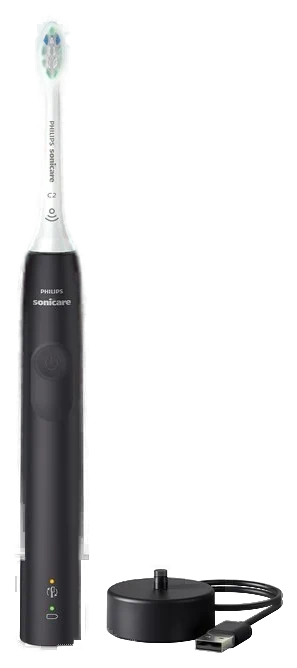
Philips Sonicare 4100$40–50The Philips Sonicare 4100, about $40–50 — the cheapest brush here being the headline pick tells you most of what the dental evidence says about spending more.Check price
Want the add-on that matters
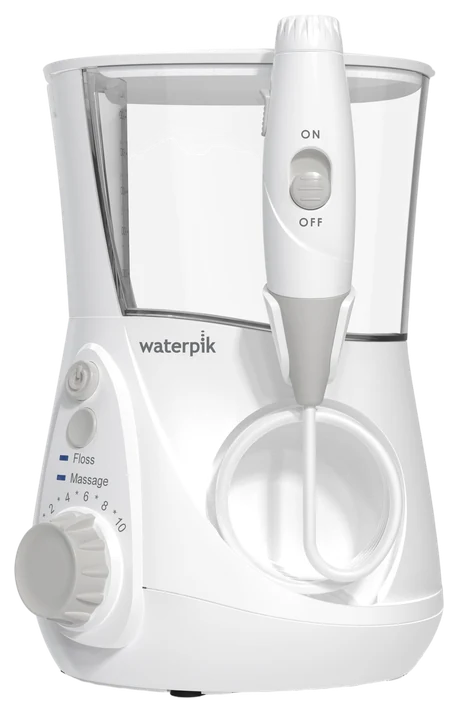
Waterpik Aquarius$60–90Waterpik Aquarius, $60–90 — flossing is the step most people skip.Check price
Budget for the long run
Replacement heads, not the handle, are the real running cost.
Electric brushes clean better than manual, and that part is settled. What is not needed is $300 of app coaching. We compared the evidence-backed tiers and the flosser that changes checkups.
How we choseWhat we compared, and how we rank
We read the dental research, including Cochrane reviews on powered brushing, alongside dentist recommendations and brush-head cost math. Prices move constantly, so every button pulls the live listing.
How we rank
Published specifications, verified owner reviews, and independent safety or standards data where it applies — weighted the same for every pick, never sponsored placement.
The Sonicare 4100 is the answer to which one you should buy. You get Sonicare’s sonic motion, the two-minute quadrant timer that does most of the behavioral work, and a pressure sensor that protects your gums.
Dentists point at this tier because results plateau here. Consumer Reports has tested and rated the 4100 series, and above it, plaque-removal differences are small once technique is equal. The battery runs about two weeks per charge and it is quiet.
There is no app and one mode. Heads cost less than Oral-B’s premium line and the handle lasts years. At $40 to $50 on Amazon, it is the sensible default for everyone in the house.
Strengths
Everything that clinically matters
Pressure sensor guards gums
Two-week battery life
Nothing-to-justify pricing
Tradeoffs
Single mode, no frills
No travel case at this tier
Quiet hum bothers some ASMR-averse
Pick 2 of 5: No. 2Best premium~$60–400 by tier
2
Oral-B iO Series
Upgrade pickBest premium
The premium clean feel
Get it if you want the pressure coaching and the nicer ritual, and $60–400 for the mid-tier is the sweet spot.
Skip it if you judge by outcomes per dollar. The 4100 already plateaus.
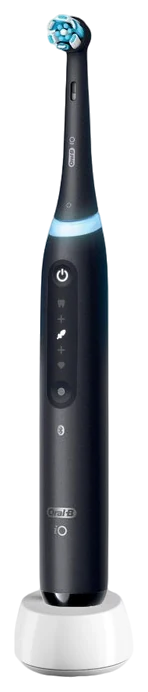
If the 4100 is the rational buy, the Oral-B iO is the nicer one. The magnetic drive feels closer to a dental polish than a buzzing brush, and a light ring shows pressure as you go: green when you are right, red when you are pushing too hard.
That ring is the part that changes behavior, since over-brushing recedes gums faster than under-brushing misses plaque, and TechRadar’s reviews of the iO line have consistently praised the pressure sensor for changing how hard people brush. The round oscillating head suits people who like the scrubbed feeling. The mid-tier Series 5 to 7 models include all of it.
The app coaching is skippable and the top tiers with screens are for enthusiasts. Buy mid-tier and budget for premium heads, which are the real running cost. At $60 to $400 by tier on Amazon, with frequent sales, it is a genuine upgrade to a daily habit.
Strengths
Magnetic drive feels premium
Real-time pressure coaching ring
Hygienist-favored round head
Frequent deep sale pricing
Tradeoffs
Priciest heads in the aisle
App adds little after week two
Top tiers are pure indulgence
Pick 3 of 5: No. 3Best add-on
3
Waterpik Aquarius
Best add-on
The checkup changer
Get it if your flossing habit is theoretical and your gums know it, and $60–90 is worth it for ADA-backed results.
Skip it if you already floss daily. Nothing here beats that.
Most people do not floss. The Waterpik Aquarius is the compromise: thirty seconds of water along the gumline each day, with ADA acceptance behind it and gum improvements hygienists tend to notice at the next cleaning.
Ten pressure settings run from gentle to firm and the reservoir covers a full session. For braces, bridges and implants it stops being optional, because string floss cannot follow that hardware.
It takes counter space, and the first week is splashy until you learn to lean over the sink and close your lips around the tip. At $60 to $90 on Amazon, it is the add-on most likely to improve your next checkup.
Strengths
Flossing people do
ADA-accepted gum benefits
Essential with braces or implants
Ten pressure settings
Tradeoffs
Counter footprint
Week-one splash learning curve
Doesn’t fully replace string floss
Also on the shortlist
Two more, in brief
Pick 4 of 5: No. 4Best budget~$25–40
4
Philips Sonicare 2100
Budget pickBest budget
The cheapest way to stop brushing manually
Get it if you still brush manually and want the cheapest way to stop, at $25–40
Skip it if you brush hard and need a pressure sensor
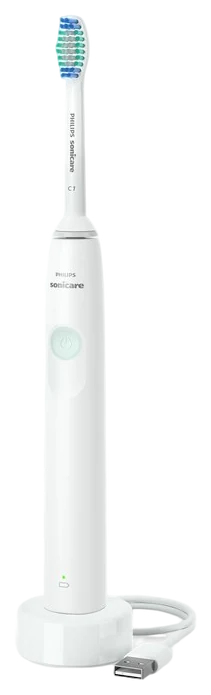
The picks above start at $40, and the single biggest jump in cleaning is not between a good electric brush and a better one. It is between a manual brush and any electric brush at all. The Philips Sonicare 2100 is the cheapest credible way across that line, and it is the pick for anyone who has been meaning to switch for years and never has.
It keeps the two features dentists ask for out of the sonic range: a two-minute SmarTimer, and a 30-second QuadPacer that nudges you to move to the next quadrant so you stop spending ninety seconds on the same four teeth. Battery life runs about two weeks per charge, which is useful for travel, and an LED in the handle changes color to show what is left rather than dying without warning. EasyStart ramps the intensity gently over the first fourteen uses, which is the thing that stops people abandoning an electric brush in week one.
The honest gap, and it matters: there is no pressure sensor at this price. Dentists name that alongside the timer as the feature worth having, because brushing too hard is what wears enamel and recedes gums, and the 4100 above adds it for about fifteen dollars more. If you know you are heavy-handed, spend the extra. If you are trying to stop brushing manually, the 2100 at $25 to $40 is the entry point.
Strengths
The cheapest credible step up from a manual brush
Timer and quadrant pacer, the two features dentists name
About two weeks of battery per charge
EasyStart ramps intensity so you do not quit in week one
Get it if you still brush manually and want the cheapest way to stop, at $25–40
Skip it if you brush hard and need a pressure sensor
The picks above start at $40, and the single biggest jump in cleaning is not between a good electric brush and a better one. It is between a manual brush and any electric brush at all. The Philips Sonicare 2100 is the cheapest credible way across that line, and it is the pick for anyone who has been meaning to switch for years and never has.
Read the full case
It keeps the two features dentists ask for out of the sonic range: a two-minute SmarTimer, and a 30-second QuadPacer that nudges you to move to the next quadrant so you stop spending ninety seconds on the same four teeth. Battery life runs about two weeks per charge, which is useful for travel, and an LED in the handle changes color to show what is left rather than dying without warning. EasyStart ramps the intensity gently over the first fourteen uses, which is the thing that stops people abandoning an electric brush in week one.
The honest gap, and it matters: there is no pressure sensor at this price. Dentists name that alongside the timer as the feature worth having, because brushing too hard is what wears enamel and recedes gums, and the 4100 above adds it for about fifteen dollars more. If you know you are heavy-handed, spend the extra. If you are trying to stop brushing manually, the 2100 at $25 to $40 is the entry point.
Strengths
The cheapest credible step up from a manual brush
Timer and quadrant pacer, the two features dentists name
About two weeks of battery per charge
EasyStart ramps intensity so you do not quit in week one
Tradeoffs
No pressure sensor, which is a real omission
Two intensity settings and nothing else
Brush heads still cost $30 to $40 a year
Pick 5 of 5: No. 5Best for kids
5
Philips Sonicare for Kids
Best for kids
The one that makes a child brush for the full two minutes
Get it if a child in the house brushes for twenty seconds and stops, and $30–35 beats a filling
Skip it if you do not want a screen involved at the sink
Every brush above is bought for an adult, and the hardest brushing problem in most households is not the adults. The Philips Sonicare for Kids exists for the specific failure where a child brushes for twenty seconds, declares it done, and nobody has the energy for the third argument that week.
It pairs over Bluetooth to a coaching app that turns the two minutes into a game, which is the mechanism that works, because the problem was never the brush and always the attention span. Two intensity modes let it start gentler for a younger mouth, and it ships with a brush head and ten stickers so the handle gets customized, which sounds trivial and is a large part of why children keep using it.
Be realistic about what you are buying. The app is the feature, so if screens at the sink are a hard no in your house, most of the value goes with it and a cheap timer brush does the mechanical part. It is also more expensive than an adult budget brush for less hardware. What it buys is compliance, and for a child who currently brushes badly, $30 to $35 against a filling is not a close call.
Strengths
Turns the two minutes into something a child will finish
Two intensity modes for younger mouths
Stickers and app coaching keep it in use past week one
Cheaper than the fillings it helps avoid
Tradeoffs
The app is the feature, so screen-free homes lose most of it
Costs more than an adult budget brush for less hardware
Child-sized heads are another size to keep stocked
Pick 5 of 5: No. 5Best for kids
Philips Sonicare for Kids
The one that makes a child brush for the full two minutes
Get it if a child in the house brushes for twenty seconds and stops, and $30–35 beats a filling
Skip it if you do not want a screen involved at the sink
Every brush above is bought for an adult, and the hardest brushing problem in most households is not the adults. The Philips Sonicare for Kids exists for the specific failure where a child brushes for twenty seconds, declares it done, and nobody has the energy for the third argument that week.
Read the full case
It pairs over Bluetooth to a coaching app that turns the two minutes into a game, which is the mechanism that works, because the problem was never the brush and always the attention span. Two intensity modes let it start gentler for a younger mouth, and it ships with a brush head and ten stickers so the handle gets customized, which sounds trivial and is a large part of why children keep using it.
Be realistic about what you are buying. The app is the feature, so if screens at the sink are a hard no in your house, most of the value goes with it and a cheap timer brush does the mechanical part. It is also more expensive than an adult budget brush for less hardware. What it buys is compliance, and for a child who currently brushes badly, $30 to $35 against a filling is not a close call.
Strengths
Turns the two minutes into something a child will finish
Two intensity modes for younger mouths
Stickers and app coaching keep it in use past week one
Cheaper than the fillings it helps avoid
Tradeoffs
The app is the feature, so screen-free homes lose most of it
Costs more than an adult budget brush for less hardware
Child-sized heads are another size to keep stocked
The best electric toothbrush is mostly the one you’ll use twice a day, and a few features matter more than the price tag.
Sonic or oscillating, both work: Philips Sonicare uses vibration and Oral-B uses a spinning round head, and both clean plaque well, so pick the feel you prefer rather than chasing a “winner.”
Get a pressure sensor: brushing too hard over time can wear enamel and push gums back, and a sensor that warns you is one of the useful features to pay for.
A two-minute timer helps: the built-in timer and 30-second quadrant pacer keep you brushing long enough and evenly, which is the part most people cut short.
The common mistake: overpaying for app connectivity and travel cases you won’t use, while forgetting that replacement heads are the real ongoing cost at roughly $20–40 a year.
Oral-B Pro 1000 — a solid budget oscillating brush with a pressure sensor and timer, but it lands so close to our main picks on price and features that it was a near-miss rather than a clear add.
Quip Electric Toothbrush — slim, cheap, and a real upgrade over a manual, but its gentle vibration doesn’t clear plaque as well as a proper sonic or oscillating brush.
Waterpik Cordless Advanced — a handy countertop-free water flosser, but the smaller reservoir needs refilling mid-use, so it’s a travel and small-bathroom pick more than a daily driver.
Burst Sonic Toothbrush — a well-reviewed sonic brush, but it leans on a replacement-head subscription, and you can get the same clean without signing up for anything.
Oral care FAQs
6 common questions, answered.
Are electric toothbrushes better than manual?
Yes. Cochrane’s meta-analysis found powered brushes reduce plaque and gingivitis measurably more than manual brushing over time. The mechanism is ordinary: consistent motion plus a two-minute timer. It is also why $50 brushes match $250 ones clinically.
Sonicare or Oral-B?
Both clean well and the difference is feel. Sonicare’s high-frequency vibration feels gentler. Oral-B’s oscillating round head feels more scrubbed. Dentist recommendations split about evenly, so pick the sensation you will use twice a day and budget for heads either way.
Does a water flosser replace string floss?
The ADA treats it as an effective alternative for people who will not use string floss, and better than string for braces, implants and bridges. String still edges it for tight contacts, but a flosser you use daily beats floss you leave in the drawer.
How often should brush heads be replaced?
Every three months, or sooner once the bristles splay, since a worn head cleans measurably worse and the fraying is visible. Budget $20 to $40 a year per person depending on brand. Generic-compatible heads cut that further, though quality varies, so stick to well-reviewed ones.
Are the app-connected brushing features worth paying for?
Mostly no. The coaching apps get about two weeks of use before the phone stays on the counter, which is why the mid-tier iO Series 5 to 7 range is the sweet spot and the $300 screen-in-handle models are for enthusiasts. The features that change behavior are hardware: the two-minute timer, the quadrant pacer and the pressure sensor. All three are in every pick here.
Can kids use electric toothbrushes?
Yes. Dentists generally encourage it from around age three with kid-sized heads, and the built-in timer settles the are-you-brushing question better than nagging does. Sonicare and Oral-B both make kid lines with smaller heads and gentler modes. Buy one handle per person, since heads are personal and handles should not be shared. The Waterpik earns its place the day braces arrive.
Sources
Who the write-ups above lean on, and where each one is cited.
Consumer ReportsCited for Philips Sonicare 4100.
TechRadarCited for Oral-B iO Series.
Prices on this page are re-checked weekly — see the full Beauty price index for every product we cover.
Keep reading
Where to go next.
Related guides, then every guide in the department.
New guides, re-ranked picks and the month's notable changes. No weekly filler, ever.
Unsubscribe any time. Your address goes to our newsletter provider and nowhere else — see our privacy policy.
Manage Consent
To provide the best experiences, we use technologies like cookies to store and/or access device information. Consenting to these technologies will allow us to process data such as browsing behavior or unique IDs on this site. Not consenting or withdrawing consent, may adversely affect certain features and functions.
Functional
Always active
The technical storage or access is strictly necessary for the legitimate purpose of enabling the use of a specific service explicitly requested by the subscriber or user, or for the sole purpose of carrying out the transmission of a communication over an electronic communications network.
Preferences
The technical storage or access is necessary for the legitimate purpose of storing preferences that are not requested by the subscriber or user.
Statistics
The technical storage or access that is used exclusively for statistical purposes.The technical storage or access that is used exclusively for anonymous statistical purposes. Without a subpoena, voluntary compliance on the part of your Internet Service Provider, or additional records from a third party, information stored or retrieved for this purpose alone cannot usually be used to identify you.
Marketing
The technical storage or access is required to create user profiles to send advertising, or to track the user on a website or across several websites for similar marketing purposes.